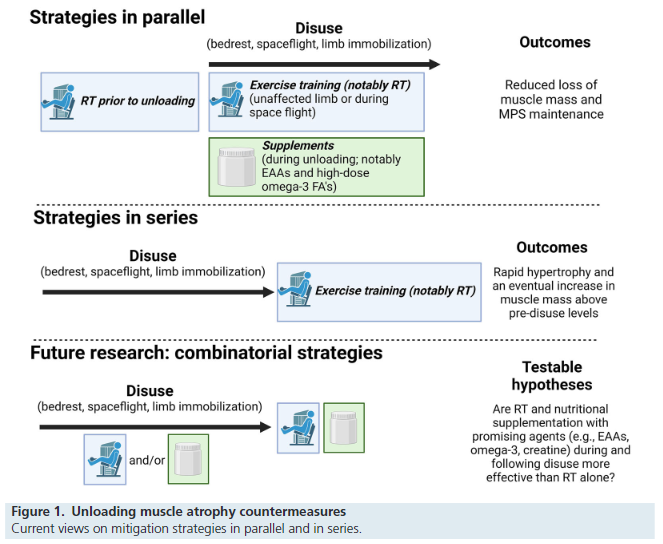
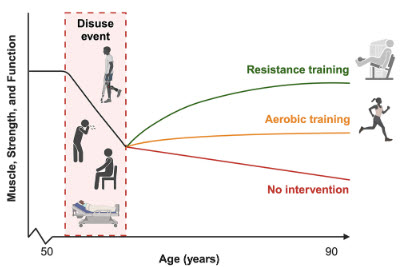
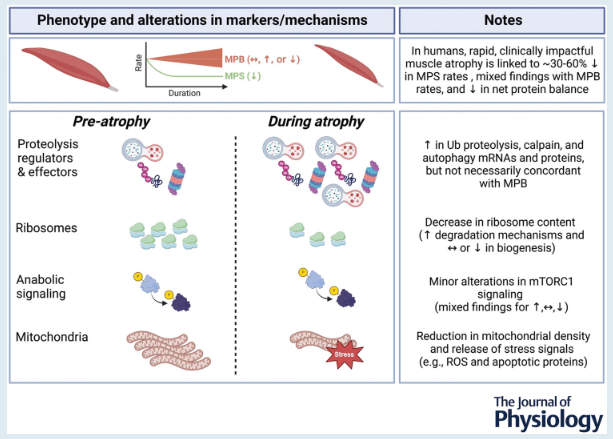
Thrilled to see our topical review “Mitigating skeletal muscle wasting in unloading and augmenting subsequent recovery” published in @JPhysiol. Big thanks to @MarcasBamman for coordinating this project!
https://t.co/V7Od2MC0v2
NEW PREPRINT (bioRxiv)
A one-time 120% increase in weekly set volume did not promote greater hypertrophy than a 20% increase.
First authors: Júlio Camargo & Diego Bittencourt
Great collab with @DrMikeRoberts and the Auburn team (@maxmichel_ et al.)
https://t.co/IFPSFiN207
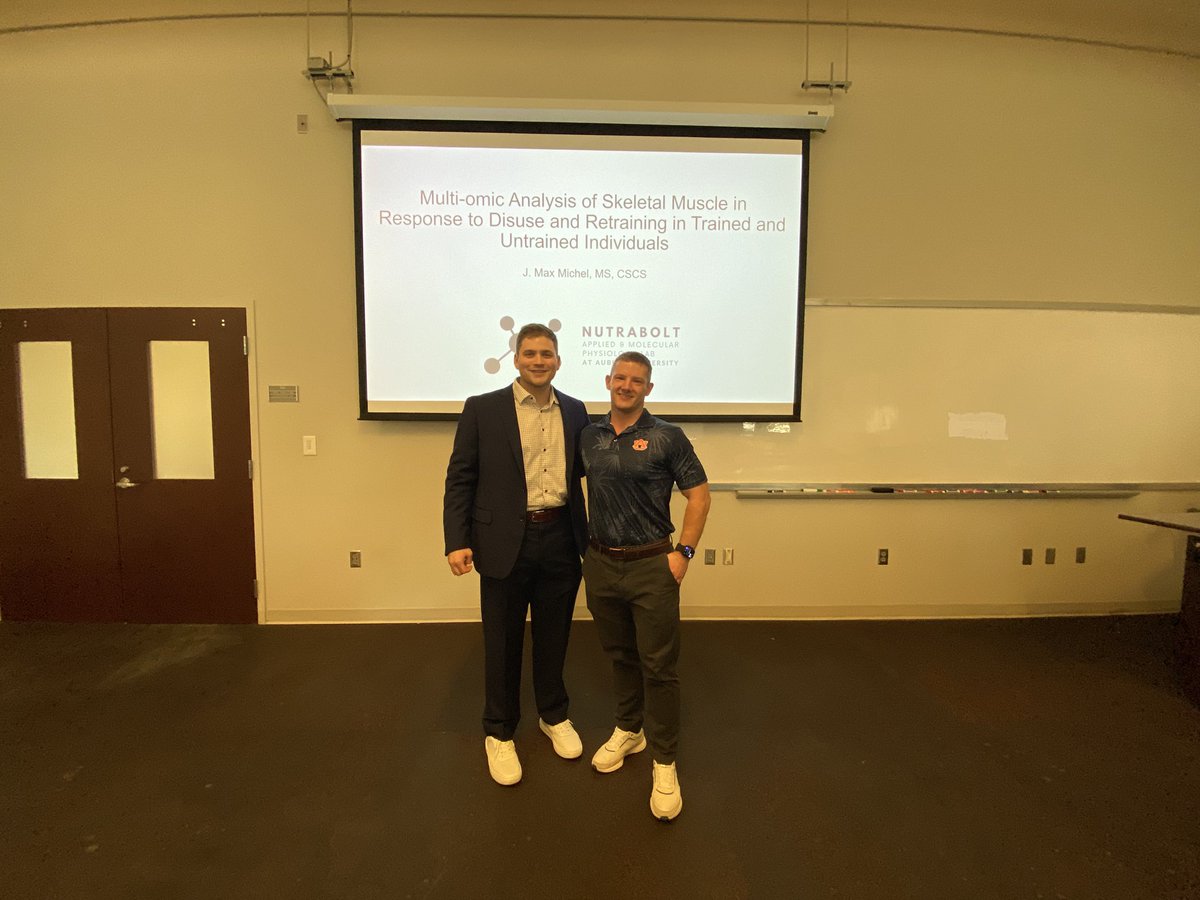
Very thankful for great mentors that made defending my dissertation an awesome experience. Hard to believe it’s finally done, but very much looking forward to the next chapter.
Great technique pioneered by @maxmichel_ building on work by @godwinjs71 with minimal input tissue. (Preprint): Proteomic profiling of ribosomes from higher versus lower responders to 10 weeks of resistance training https://t.co/ttMx2hqFHX
Our new paper is out in Eur J Appl Physiol:
“Is there a volume saturation point for muscle hypertrophy in resistance-trained individuals? A narrative review”
Congrats to Júlio (first author), MuscuLab team, @maxmichel_ & @DrMikeRoberts
https://t.co/iTRjzWfmTY
New research with @HughesDC_Muscle
We've shown UBR5 links to human muscle growth & memory. Now his lab has investigated most UBR proteins-finding-ALL are regulated by growth &regrowth
UBRs maybe key to protein quality control!
UBR5 https://t.co/huINKP3Wwe
https://t.co/IrBD3QQsUY
Response of UBR-box E3 ubiquitin ligases and protein quality control pathways to perturbations in protein synthesis and skeletal muscle size
New Preprint & first senior author article 🚨 | @CraigAGoodman1 @DrAdamPSharples @scbodine https://t.co/K3DW2oQ0A4
New career chapter 🔓 | Thankful for my mentors and support network after this 10 year post doc journey, which I wouldn’t change for the world 🌎. Excited for all the new challenges ahead 💪🏼.
https://t.co/4wLavvJ2sV
From JM Michel et al (@AuburnU@UCF@DrMikeRoberts@MattStockPhD@mads) Effects of leg immobilization and recovery resistance training on skeletal muscle-molecular markers in previously resistance-trained vs untrained adults
🔒https://t.co/ACPhzVhaDQ
It took a little while, but our website is finally up! Please take a look at what we’re establishing and working on in the future at UC Santa Cruz! https://t.co/jtxLdwpx3P
Awesome new paper from @MVFranchi and team. Conveys an excellent story and sheds light on disuse (mal)adaptation along with shorter term recovery mechanisms.
🚨New article from our lab!🚨
-Previous short-term disuse dictates muscle gene expression and physiological adaptations to subsequent resistance exercise-
A true collaborative effort! (see the thread below for more)
Now out in @JPhysiol
https://t.co/o9YoXGRBYE
🚨Retweets appreciated!🚨
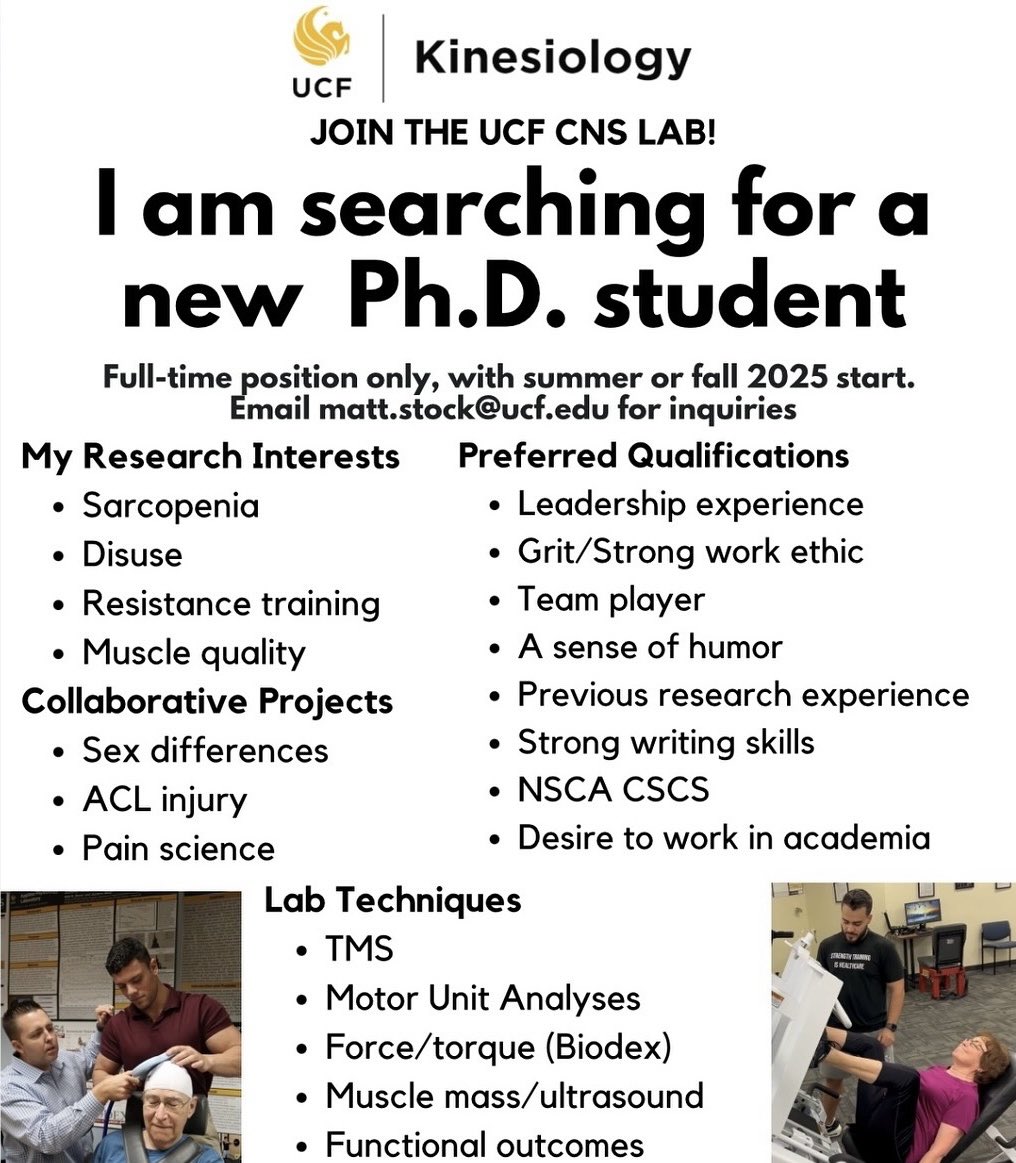
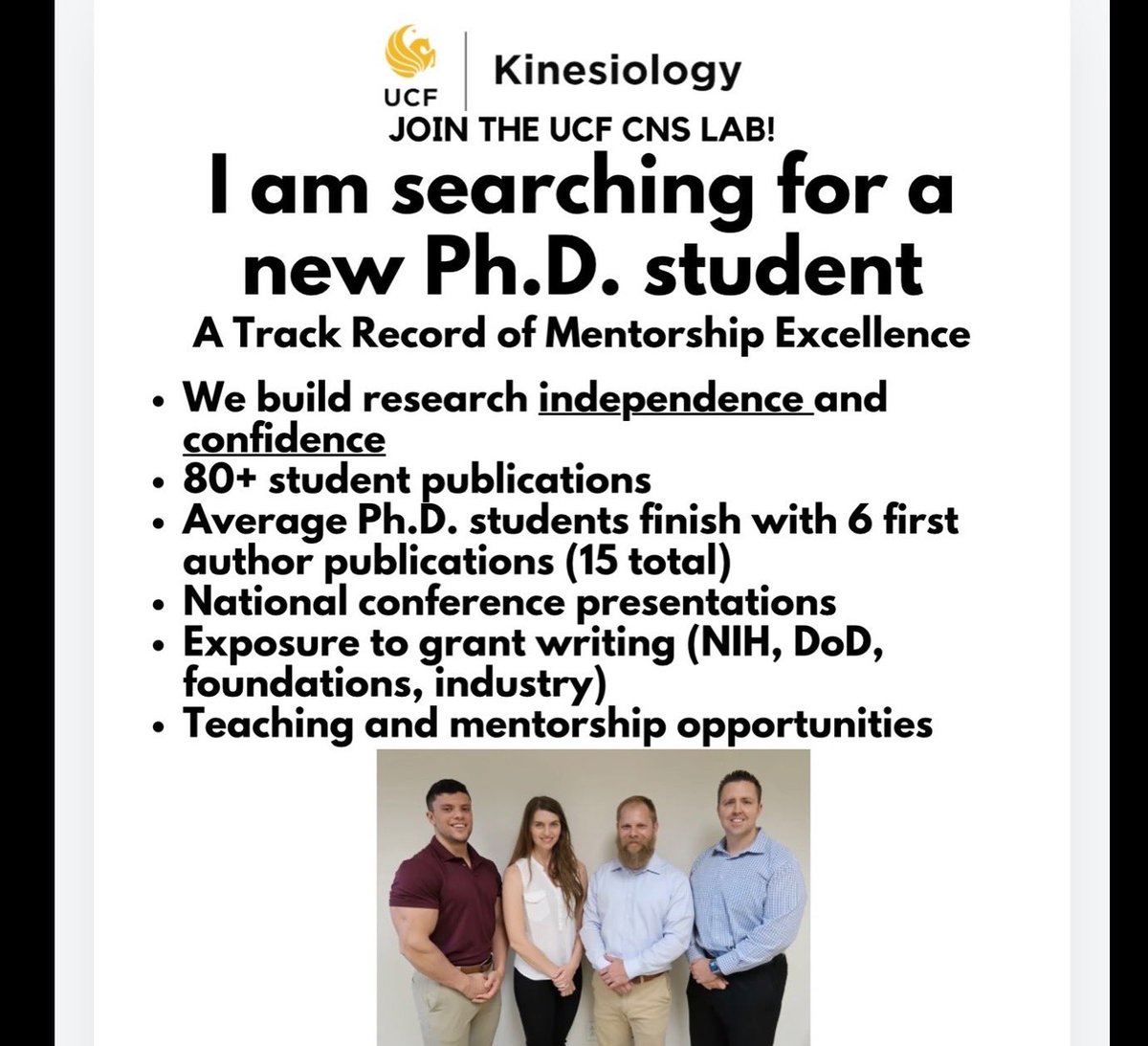
I’m searching for my next rockstar PhD student @UCF_Kinesiology! Join @UCF_CNSlab in sunny Orlando ☀️ where we work hard but laugh at our failures along the way. Future work will primarily focus on neuromuscular aging and disuse.
Interested in the mechanisms that regulate myogenesis? If so, I think that you will enjoy our recent study in which we explore why the expression of TRIM28 in satellite cells is required for regeneration. The KO phenotype is simply stunning 1/ https://t.co/jIoPUvQK9V
Mitigating skeletal muscle wasting in unloading and augmenting subsequent recovery
Good read from @maxmichel_@DrMikeRoberts@MarcasBamman et al
https://t.co/OE1YrXu00T
Huge joint effort here. Big thanks to external collaborators from UCF - @MattStockPhD and IHMC - @MarcasBamman and Dr. Zachary Graham. Big thanks all around and very excited to work toward seeing this published.
Effects of training status on atrophy-hypertrophy outcomes with leg immobilization & recovery resistance training. Awesome pre-print led by @maxmichel_ and help from @godwinjs71@DanielPlotkin_ and others with collab from @MattStockPhD & @MarcasBamman https://t.co/4ZkrB18mVV