Forty+ years working in the field of exercise science and I cannot believe that this turf war between allied health professions is still being perpetuated. This is so damaging to Australian health care.
I was very disappointed and frustrated this week when the Australian Physiotherapy Association released a “factsheet” denigrating Accredited Exercise Physiologists (AEPs) with a series of inaccurate and misleading statements.
AEPs are the most qualified and experienced allied health professional for assessment, prescription, and monitoring of clinical exercise. AEPs are especially effective in supporting patients with chronic diseases such as cancer, cardiovascular disease, diabetes, overweight and obesity, osteoporosis, sarcopenia, hypertension, chronic kidney disease, COPD, stress, anxiety, and depression. It should be noted that these are the diseases causing most of the health burden in Australia and clinical exercise has been proven through extensive research to be one of and in some cases THE most effective treatment.
AEPs receive far more university education, training, and clinical practice in exercise than ANY other medical or allied health profession. University degrees in exercise physiology are accredited by the professional association, Exercise & Sports Science Australia (ESSA), under stringent requirements. AEPs must be graduates of accredited degrees and meet yearly requirements to retain accreditation.
Medical and allied health professionals should be referring patients to an AEP for clinical exercise because it is a highly complex and specialised field. A cardiologist would never attempt to manage chemotherapy for a patient with cancer. For safety and effectiveness, it is crucial that medical and allied health professionals work within their scope of practice. It is also critical that we don’t denigrate other accredited professions.
The President of Exercise and Sports Science Australia has released a statement https://t.co/aWGswXIWar
Here is a link to the APA factsheet https://t.co/90yq2SUeCC
@ESSA_NEWS@apaphysio
New Research: Combined effects of exercise and different levels of acute hypoxic severity: A randomized crossover study on glucose regulation in adults with overweight https://t.co/Srlkso8Fkh #Physiology
Our recently published paper on "Physiological characteristic and performance of a world-record breaking tower runner"
📄Gets free online copies at limited copies https://t.co/YreEYcWNt3
@CJsportsci@dr_o_girard@JSportsSci
Join us for #ANZSEV#ECR workshop!
JEV vs JEx Bio- What’s the difference? When to submit, where and why?
Virtual- Friday 30th June 2023 1-2pm AEST/ 3-4pm NZST
For details: https://t.co/HujEaA95Fi
Register here: https://t.co/l8pZUrIGhG
#JEV#JExBio
Check out our latest narrative review in @SportsMedicineJ
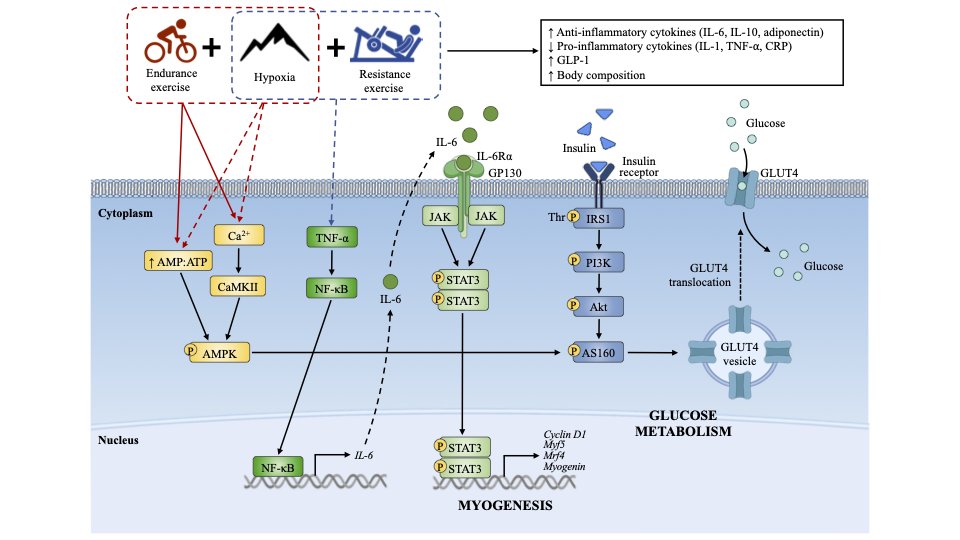
Mechanisms for combined HC and divergent exercise modes to regulate inflammation, body composition, appetite, and blood glucose homeostasis in overweight and obese adults
https://t.co/4DFIA2L1it
Apologies for the belated tweet:
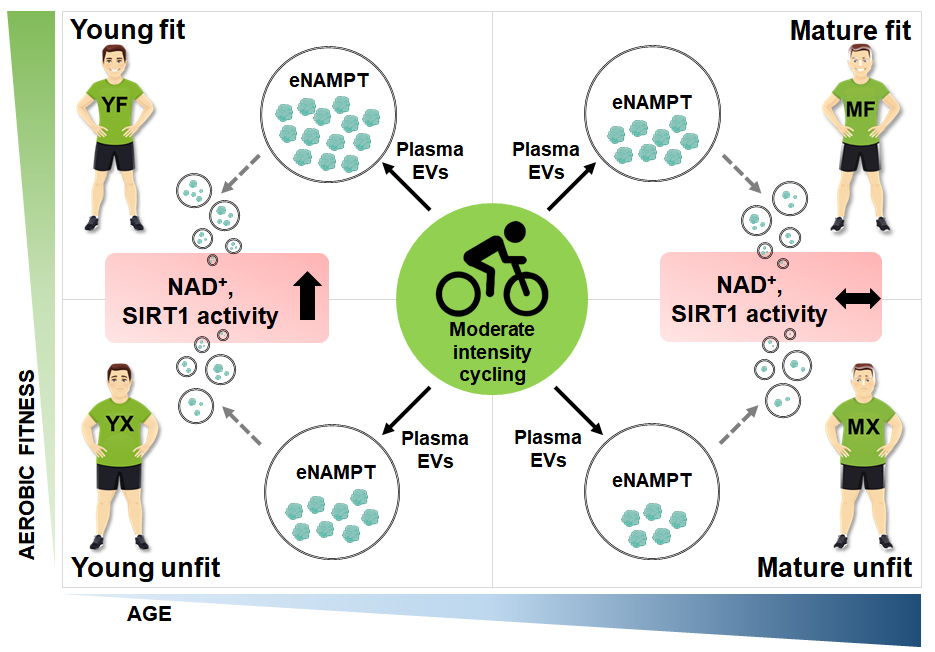
It was an excellent opportunity to present some of my PhD work on exercise, extracellular vesicles and healthy aging at #ComBio2022! 😊
Researchers report the formation of toxic clumps of protein, similar to amyloid assemblies found in Alzheimer’s disease and suggest their possible role for some of the neurological symptoms 2 of long-COVID. @nickrey11 @LIMSLTU@latrobe @MirrenCharnley
https://t.co/jzacBh9Pqf
Excited to share our now-published @ISEV_JEV paper on Extracellular Vesicle storage conditions! Should be of interest to anyone who stores EV preps, or dilutes EVs, in PBS, even short-term. We identified suitable alternatives.
Please share - thanks! 🧵1/7
https://t.co/tMEOlnEqxP