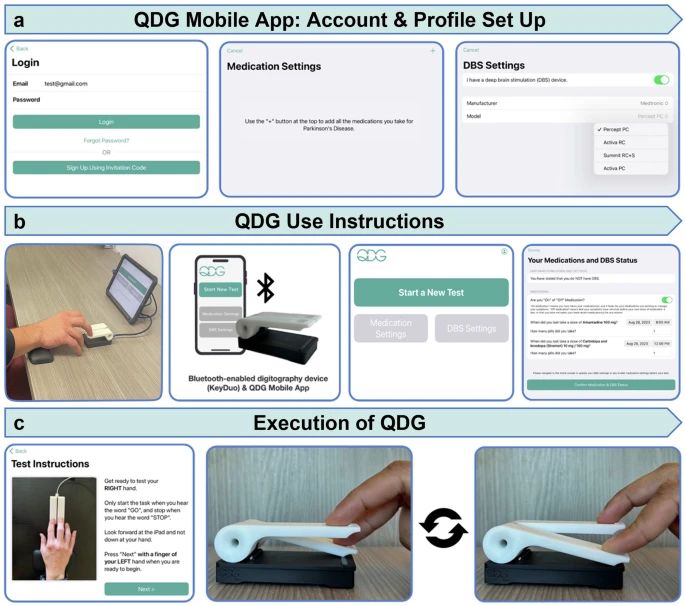
It is my pleasure to congratulate the QDG team on our first remote monitoring study, now published in Nature Parkinson's Disease! 🎉
I'm especially proud of our software work that was essential to making this study possible. The research validated that when remote monitoring tools are intuitive and easy to use, patients actually use them consistently. The study demonstrated 100% compliance with the CMS requirement of 16/30 days of testing.
As we continue to scale QDG and help more patients with Parkinson's disease, we're looking for talented software engineers who want to build technology that truly makes a difference in people's lives. If you're interested or know someone who might be, I'd love to connect!
https://t.co/SBA3CMyhhN
i see all your DMs and i have an update!!
i'm refreshing the Starter Guide to SF to ensure it has the most up-to-date info and the site will be back up shortly - i wrote this over a year ago and as you can imagine, SF is quite dynamic!
in the meantime, if you have any recommendations to share..
- best people in SF to follow
- must-attend events + communities
- founder-first workspaces
- startup & accelerator programs
- active VCs
- finding housing
please comment any resources & tag people that should be included in this guide (i'll also mention you as a contributor on the guide)
stay tuned!
The meme might not might sense to you yet, but it will. I'm finally writing a piece on one of the most common themes of questions I get - partnering/connecting/integrating/app ecosysteming with Epic
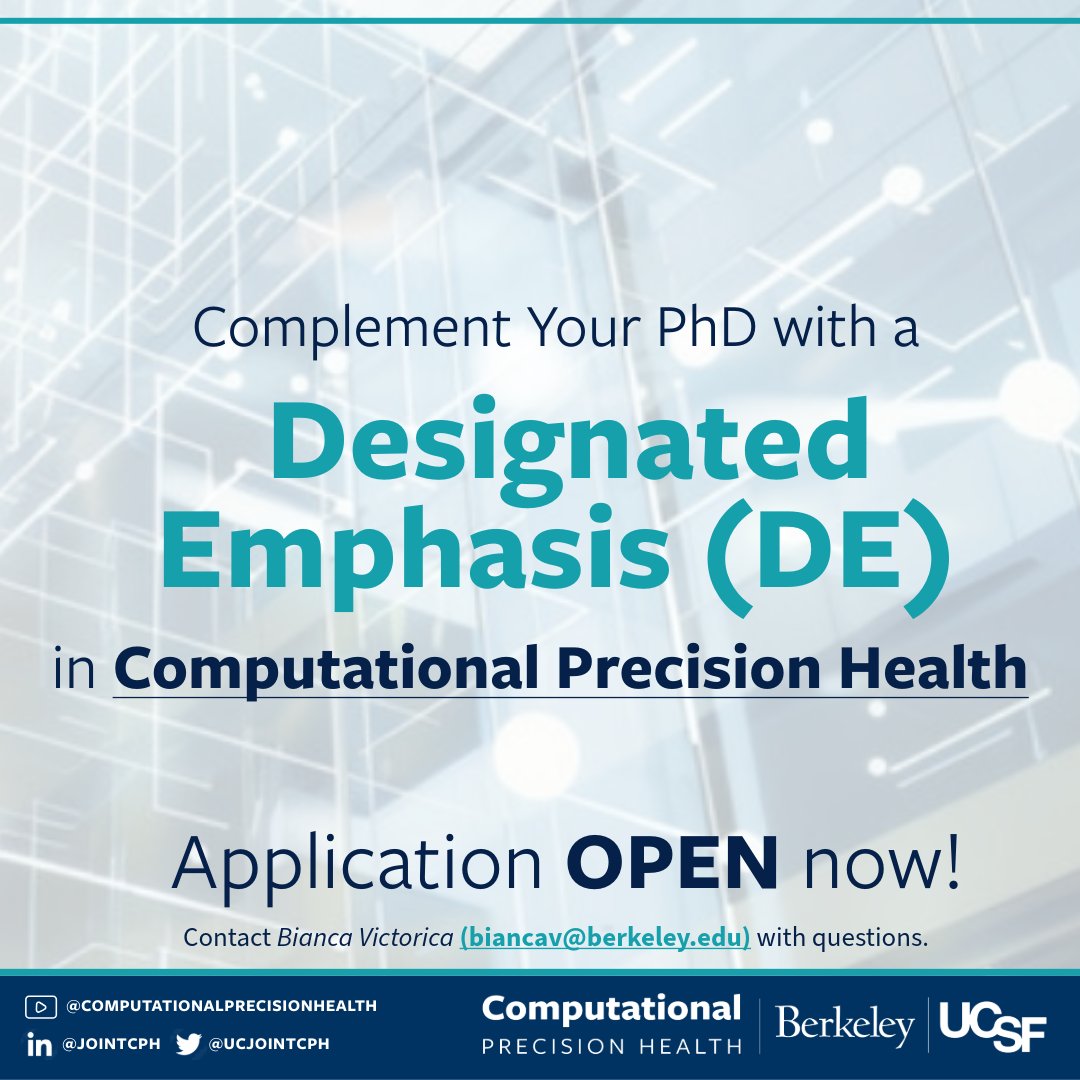
Are you a current #ucberkeley or #ucsf grad student interested the exciting field of computational precision health? If so, a designated emphasis may be for you! #research#phdchat#computation#healthcare Reach more: https://t.co/q6iEXZmBCZ
THE LITTLE TECH AGENDA
Marc Andreessen & Ben Horowitz
July 5, 2024
Little Tech is our term for tech startups, as contrasted to Big Tech incumbents.
Little Tech has run independent of politics for our entire careers. But, as the old Soviet joke goes, “You may not be interested in politics, but politics is interested in you.”
We believe bad government policies are now the #1 threat to Little Tech.
We believe American technology supremacy, and the critical role that Little Tech startups play in ensuring that supremacy, is a first class political issue on par with any other.
The time has come to stand up for Little Tech.
Our political efforts as a firm are entirely focused on defending Little Tech.[1] We do not engage in political fights outside of issues directly relevant to Little Tech. But we will fight for Little Tech – for the freedom to research, to invent, to create jobs, to build the future – with all of our resources.
We find there are three kinds of politicians:
* Those who support Little Tech. We support them.
* Those who oppose Little Tech. We oppose them.
* Those who are somewhere in the middle – they want to be supportive, but they have concerns. We work with them in good faith.
We support or oppose politicians regardless of party and regardless of their positions on other issues.
We are in this for the long haul.
[1] https://t.co/GQUw4sI99c
Q-For the global burden of disease, what is the leading contributor?
—Systolic blood pressure
—Smoking
—High fasting blood glucose
—Low birthweight
—Air pollution
A-AIr pollution
https://t.co/qnDdDIN8It @TheLancet
New short course on Building Applications with Vector Databases, taught by @pinecone’s @timt! At the heart of a vector database is the ability to store a collection of vectors and then query against that, meaning input a new vector and find similar ones. This is useful for many AI applications. In this course, you'll learn how to use vector databases to build:
(i) Semantic Search: Create a text search tool that goes beyond keyword matching, and instead focuses on the meaning of content.
(ii) RAG (retrieval augmented generation): Enhance your LLM output by incorporating context from sources the model wasn't trained on.
(iii) Recommender System: Combine semantic search and RAG to recommend topics, and demonstrate it with a news article recommender.
(iv) Hybrid Search: Build an application that finds items using both images and descriptive text -- by combining both sparse and dense vector representations of the data -- using an eCommerce dataset as an example.
(v) Image Similarity: Use image vector embeddings to create an app to compare facial features, using a database of public figures to determine the likeness between them.
(vi) Anomaly Detection: Build an anomaly detection app that identifies unusual patterns in network communication logs.
I hope you’ll enjoy learning how to build all these types of applications! Please sign up here: https://t.co/nginq45FAf
It's fantastic to share this milestone; a massive team effort! 🚀
Thank you to @DrAalami, @vishnuravi, @andreas_bauer_, @PhilippZagar, @AdritRao, and all other contributors to the open-source repositories! 🎉
For those who missed this amazing lecture, Decarbonizing Oncology: Navigating Emissions Reduction and Equitable Care by @LichterKatie, it is now up on YouTube!
https://t.co/5UoKKMJXJq
Today! @LichterKatie will be speaking at
@UCSF Grand Rounds discussing the critical issue of #ClimateChange & Health - with a focus on marginalized & vulnerable communities. Use the QR code below to watch and learn!
In this week's newsletter from CHILL, we dive into AI's impact on healthcare and climate, focusing on strategies for balancing tech innovation with environmental responsibility 🌐 🌿
#climatechange#climatehealth#climatetech#healthtech
https://t.co/zGVO6aoCLY
🌟Heading to #COP28 with CHILL!🌟
☝️ For the 1st time, health takes center stage with a dedicated Health Day.
📈 Track WHO's climate health events and the Global Stocktake insights.
💡 Witness the intersection of climate & health like never before.
https://t.co/yeM7DZIFDA