November surprise
Amazon Keyspaces (for Apache Cassandra) has reduced prices by up to 75% on some key dimensions.
* Single-Region read and write request reduced by 13%-56%
* Multi-region read and write request reduced by 20%-65%
* Storage and Backups reduced by 16%-19%
* Time-to-live is reduced by 75%
https://t.co/GV4JqIxxzE
Mistral—a company based in France—had to copy Palantir’s FDE model to get customers.
They probably don’t even realize the idea originated from their own country…
Alex Karp and @ssankar invented the FDE model after discussing French restaurants:
“Forward-deployed engineers are stolen from French restaurants. That’s where the whole idea came from.”
“You sit in a French restaurant and you’re like, ‘why is the food so good?’”
“It’s because the waiter is an expert in the food and is preparing the food all the way to the end.”
“And if you ask for the craziest, dumbest thing that would blow up the restaurant, they’re like, ‘go somewhere else.’”
Hi. Professional C/C++ programmer here. The open-source code I can find written by Adam Back and Satoshi Nakamoto don't look remotely similar.
Back's code looks typical of academic Unix programmers who also hack their code to run on Windows.
Satoshi code was written by a professional Windows programmer who also wrote for Unix.
Stylistically, they look nothing alike. There's not enough time between 2005 when I can find the newest Adam Back and January 2009 when Satoshi published Bitcoin/0.1 to account for the change. Both are perfectly competent programmers, but stylistically, they are completely different.
The NYTimes tried to compare their English language in posts/emails. I'm compare their C/C++ language in their open-source code. The NYTimes merely points out they both use C++ as if that's another corroborating detail, when the actual code seems to disqualify Adam Back.
For two decades, S3 has been an object store, but today it's something broader. S3 Files lets you mount any bucket as a filesystem—no copies, no sync scripts, no choosing between file and object. @andywarfield tells the full story, including the "filerectories" that almost made the cut. https://t.co/zrkLOZS5Qe
I realized something else AI has changed about coding: you don't get stuck anymore.
Programming used to be punctuated by episodes of extreme frustration, when a tricky bug ground things to a halt. That doesn't happen anymore.
What if a codebase was actually stored in Postgres and agents directly modified files by reading/writing to the DB?
Code velocity has increased 3-5x. This will undoubtedly continue. PR review has already become a bottleneck for high output teams.
Codebase checked-out on filesystem seems like a terrible primitive when you have 10-100-1000 agents writing code.
Code is now high velocity data and should be modeled at such. Bare minimum, we need write-level atomicity and better coordination across agents, better synchronization primitives for subscribing to codebase state changes and real-time time file-level code lint/fmt/review.
The current ~20 year old paradigm of git checkout/branch/push/pr/review/rebase ended Jan 2026. We need an entirely new foundational system for writing code if we’re really going to keep pace with scale laws.
@elonmusk The downside is being locked into hardware 4 (HW4). Similar to HW3 today, future FSD updates will most likely not work on older versions of the hardware.
Here is my latest article on the world of databases: https://t.co/hngkeN0dlN
All the hot topics from the last year:
• More Postgres action!
• MCP for everyone!
• MongoDB gets litigious with FerretDB!
• File formats!
• Market movements!
• The richest person in the world!
Early networking is the key to getting the most out of re:Invent.
Today, I’ll be joining Greg Krumm for an AWS Meetup on NoSQL databases. I’m looking forward to connecting, swapping war stories, and helping folks think through their next database move.
If you’re at re:Invent and working with DynamoDB, Amazon Keyspaces, Cassandra, DocumentDB, and other NoSQL stores, come say hi 👋
Mandalay Bay 1:30 pst | Level 2 south | Oceanside C | Builders Loft | Meetup area | MUP115
https://t.co/XvsPqoWVy0
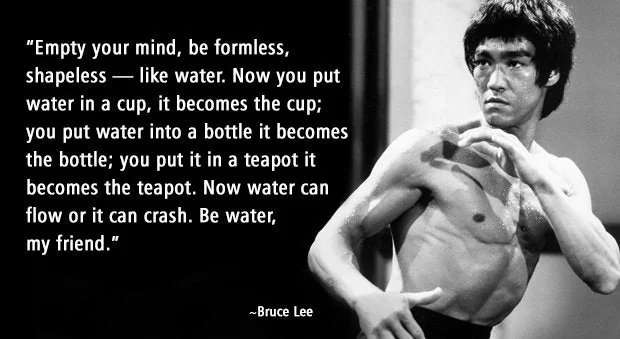
Today’s apps are static, reshaped only through slow monolithic updates. Tomorrow, they’ll be formless—redesigned on the fly.
Data has long been compared to water—we talk about flows, pipelines, lakes, and streams. Amazon Keyspaces CDC Streams is a key step forward, bringing true modernization to Cassandra workloads.
I’ve built a connector library that leverages Keyspaces CDC Streams to transform data into different AWS targets, unlocking thousands of new capabilities and new architectures for your Cassandra workloads. As functionality becomes more generalized across connectors, LLMs make it easier than ever to generate new ones for different targets.
Currently, supported targets include S3, S3 Vector, Keyspaces (Materialized View), and SQS. https://t.co/b2iYJzL3JZ