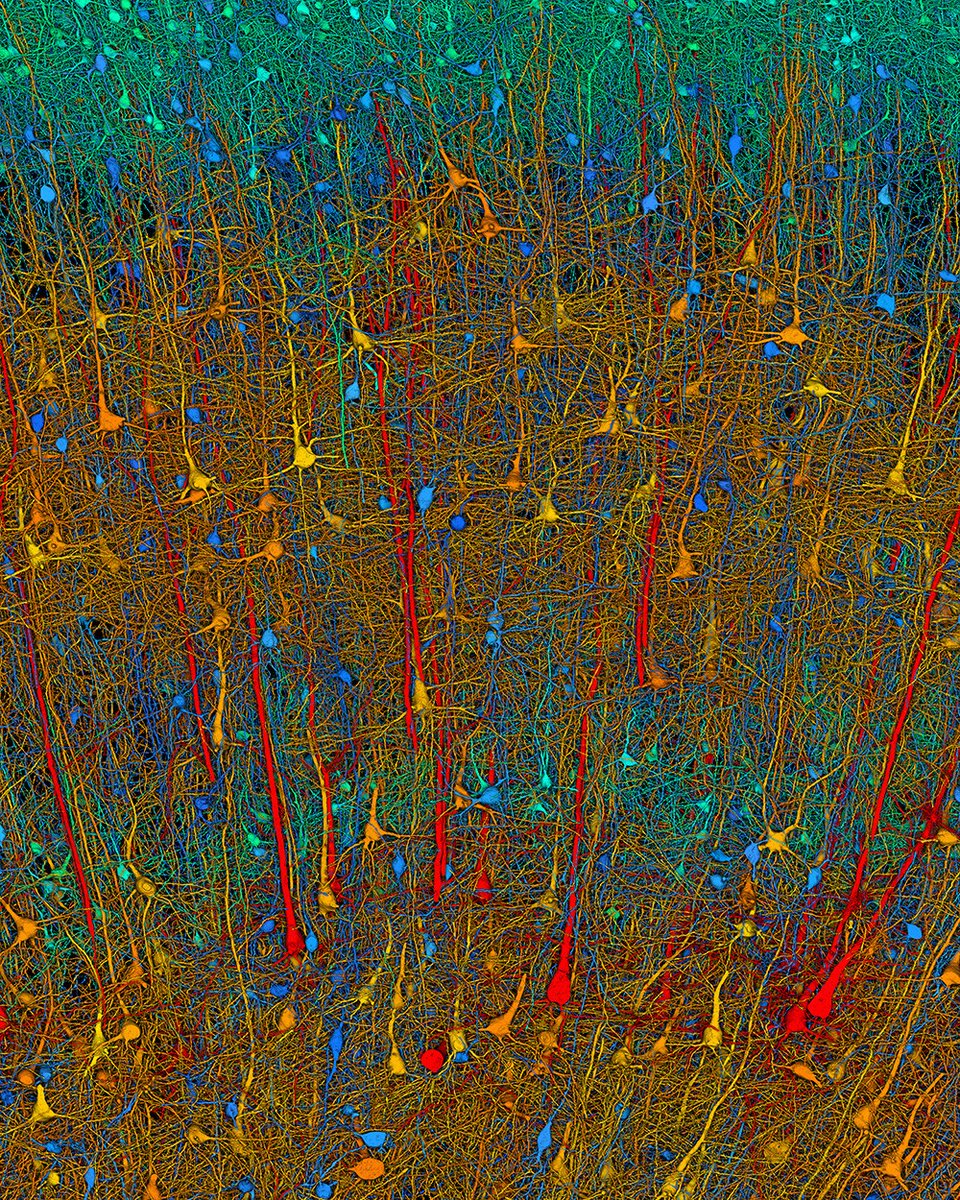
Using more than 1.4 petabytes of electron microscopy (EM) imaging data, researchers generated a nanoscale-resolution reconstruction of a millimeter-scale fragment of human cerebral cortex, providing an unprecedented view into the structural organization of brain tissue at the supracellular, cellular, and subcellular levels.
The human brain is a vastly complex organ and, to date, little is known about its cellular microstructure, including the synaptic and neural circuits it supports. Disruption of these circuits is known to play a role in myriad brain disorders. Yet studying human brain samples in such great detail comes with a host of challenges, ranging from technological limitations to the availability and preservation of tissue samples from healthy individuals.
In a 2024 Science study, researchers performed a high-resolution EM reconstruction of the ultrastructure of a cubic millimeter of human temporal cortex. According to the authors, the reconstruction contains roughly 57,000 cells, about 230 millimeters of blood vessels, and nearly 150 million synapses, comprising 1400 terabytes of data. The authors generated a three-dimensional reconstruction of nearly every cell and process in the cubic millimeter sample and developed a freely available tool for visualizing and analyzing the vast dataset.
Learn more on #WorldBrainDay: https://t.co/ye8JncNkrJ
🚨 New research reveals that birdwatching can literally rewire the human brain.
For years, enthusiasts have touted the peaceful nature of birdwatching, but new neuroscientific evidence suggests the hobby offers far more than just relaxation. Researchers have discovered that expert birders possess significant structural differences in their brains compared to novices. These specialized neural pathways allow them to identify even unfamiliar species with remarkable speed and accuracy. Much like the cognitive shifts seen in polyglots or professional pianists, the act of birding appears to fine-tune the brain's visual and auditory processing centers, turning a casual interest into a powerful exercise in neuroplasticity.
This discovery highlights the brain's incredible ability to adapt and specialize based on our environment and interests. By consistently distinguishing subtle variations in plumage, song, and flight patterns, birdwatchers effectively rewire their minds to perceive details that others might miss. The study suggests that such expertise is not an innate talent but rather a result of prolonged practice that reshapes the cortex. Whether you are a seasoned field guide or a backyard enthusiast, this research reinforces the idea that engaging deeply with the natural world is not just a pastime—it is a cognitive investment that sharpens the mind for a lifetime.
source: University of Zurich. Birdwatching reshapes the brain in a similar way to learning a language or instrument. ScienceDaily.
OPINION
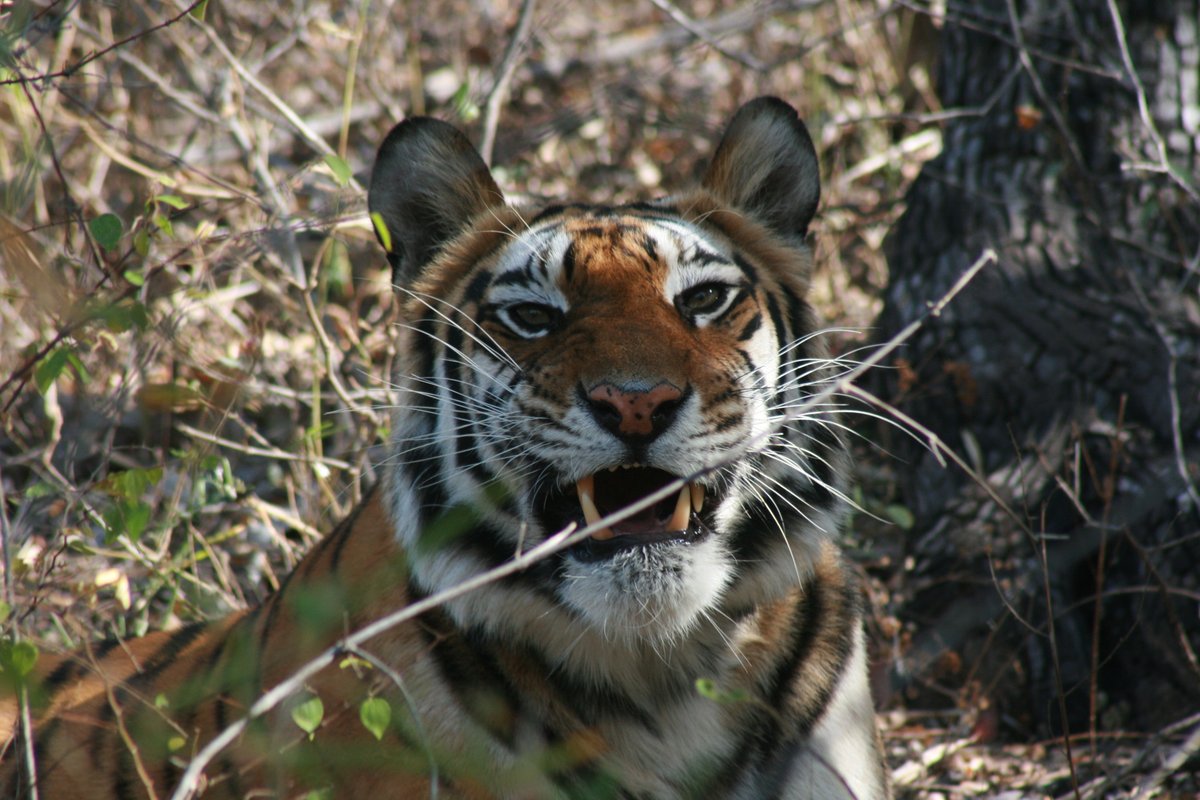
Big cat diplomacy: Protecting tigers, lions, leopards and other big cats is not just about saving iconic species. It is about safeguarding ecosystems, securing livelihoods and strengthening planetary health.
India’s conservation experience shows that large carnivores can survive — and recover — even in densely populated and development-intensive landscapes. But this success depends on more than numbers. It requires habitat protection, community participation, conflict mitigation and policies that recognise the needs of people living alongside wildlife.
S P Yadav, director general of the International Big Cat Alliance, argues that big cat conservation must be seen as a global ecological and developmental priority — one that links biodiversity, climate resilience and human wellbeing.
https://t.co/6zJOboFZkp
#BigCats #TigerConservation #WildlifeConservation #Biodiversity #PlanetaryHealth #HumanWildlifeConflict #Ecosystems #Conservation #India #InternationalBigCatAlliance
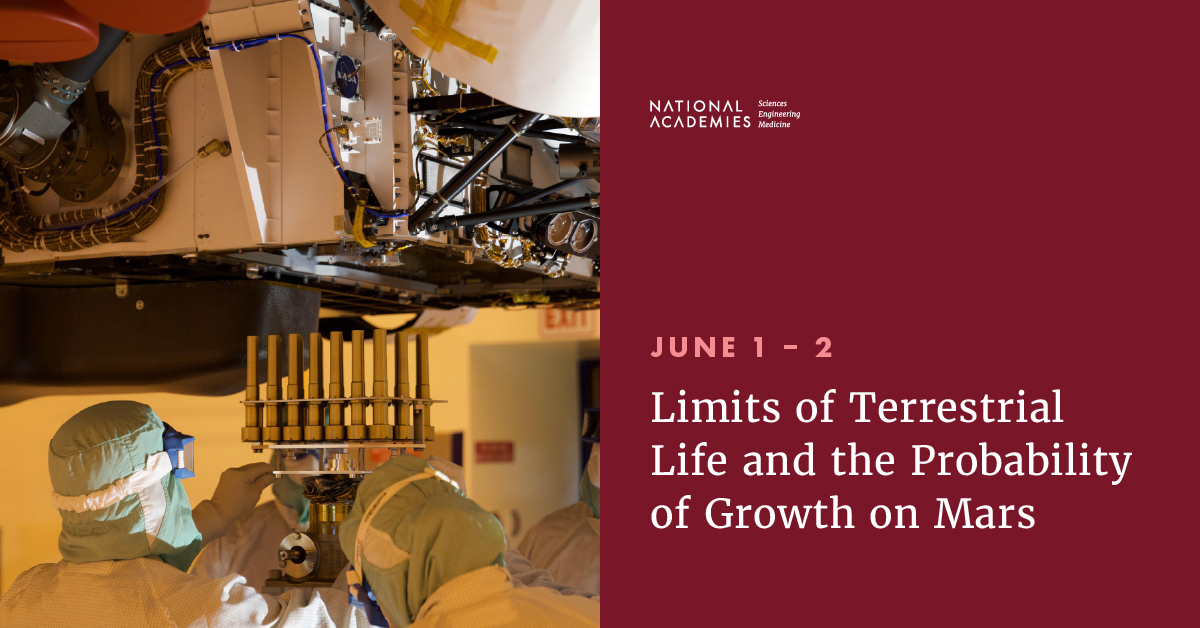
As plans for #MarsExploration advance, planetary protection questions are becoming more urgent.
Join us June 1 and 2 for a discussion on the limits of terrestrial life on #Mars and important factors for avoiding contamination during future Mars missions: https://t.co/sSW5378V4x
Bees do so much for us, and we can do something to help them out in return.
This World Bee Day, learn more about how we can bee good to the bees by watching #SecretsOfTheBees, now streaming on @DisneyPlus and @hulu.
Farmers are rediscovering something nature understood long before modern agriculture:
The cheapest pesticide in the world is often a strip of flowers. 🌼🌾
When wildflower strips are planted not only around the edge of a field, but woven directly through the crop itself, the entire biology of the field changes.
Ladybirds arrive.
Lacewings settle in.
Hoverflies patrol the canopy.
Parasitic wasps begin hunting between the rows.
These insects are not pests — they are predators of pests.
They feed on aphids, caterpillars, whiteflies, mites, and leaf beetles continuously, every single day, without fuel, without machinery, and without chemical residue.
In controlled field trials, carefully selected flower strips reduced leaf-beetle populations by 40–50%, while crop damage dropped by nearly 60% — often below the economic threshold where pesticide spraying was even considered necessary.
The flowers are not decoration.
They are infrastructure.
A flowering strip becomes a living reservoir of beneficial insects, keeping natural enemies inside the field instead of hoping they arrive from elsewhere.
For decades we engineered stronger chemicals to kill the insects eating our crops, while overlooking the insects already designed to do the same work for the price of seed.
Most advanced agricultural technology is simply restoring the ecology we removed.
A case of NWS may have been detected in South Texas. The sample is now at USDA's National Veterinary Services Laboratories (NVSL) in Ames, lowa for confirmatory testing. We will provide updates the moment results are available.
We have already activated personnel on the ground and are working with local partners.
What you can expect from us is transparency, candor, and most important — action.
https://t.co/MrhuQr9UbN
Most of us have read the story of Beck Weathers' survival on Everest. In an era before social media, his ordeal became one of the mountain's famous stories of staying alive against impossible odds.
Today, we have witnessed Dawa Sherpa's survival unfold almost in real time. Time has carried us from then to now, but Dawa's story may stand as the greatest survival story Everest has ever seen.
Left behind high on the mountain and exposed to the elements, Dawa somehow found the strength to descend alone from near the death zone without assistance. Days later, he was found alive while crawling toward base camp.
People often say Sherpas are a different breed. Stories like this remind us why. For generations, they have shown a level of grit, and willpower rarely seen anywhere else on Earth. They keep moving where most would stop, and survive where few others could. Yet even by Sherpa standards, what Dawa survived is difficult to comprehend.
Everest has witnessed countless tragedies and only a handful of miracles. Dawa Sherpa's survival belongs among the greatest ever seen on the world's highest mountain.
The only thing this train leaves behind? Water vapor!
India’s first-ever indigenous Hydrogen Train has officially been approved! It’s set to operate as a pilot on the Jind-Sonipat section in Haryana.
With this massive milestone, the 10-car green machine officially puts India into an elite global club alongside Germany, Japan, and the United States.
@RailMinIndia@AshwiniVaishnaw #IndianRailways #HydrogenTrain #HydrogenPoweredTrain
"After months of warnings and increased activity in neighboring Mexican states, the New World screwworm has been detected in a three-week-old calf in Zavala County, Texas, near the US-Mexico border."
https://t.co/oEYztd1Exx
𝗧𝗵𝗲 𝗦𝗰𝗶𝗲𝗻𝘁𝗶𝘀𝘁 𝗪𝗵𝗼 𝗧𝗲𝘀𝘁𝗲𝗱 𝗮 𝗩𝗮𝗰𝗰𝗶𝗻𝗲 𝗼𝗻 𝗛𝗶𝗺𝘀𝗲𝗹𝗳 𝗕𝗲𝗳𝗼𝗿𝗲 𝗕𝗿𝗶𝗻𝗴𝗶𝗻𝗴 𝗜𝘁 𝘁𝗼 𝗜𝗻𝗱𝗶𝗮
1894: When Dr. Haffkine brought cholera vaccination to Calcutta
Before developing a plague vaccine in Bombay, Dr.Waldemar Haffkine was fighting another deadly disease cholera.
After creating a cholera vaccine at the Pasteur Institute in Paris in 1892, Haffkine tested it on himself before travelling to India. In March 1894, He led a major anti Cholera inocukationb campaign in Calcutta during an outbreak of the disease.
His working in India helped demonstrate the effectiveness of vaccination at a time when cholera was claiming thousands of live across the subcontinent.
A few year later, he would develop a plague vaccine and establish the laboratory that eventually becaame the Haffkine Institute in Bombay.
Image Credt - Welcome Collection
- 𝑴𝒆𝒅𝒊𝒄𝒂𝒍 𝑯𝒆𝒓𝒊𝒕𝒂𝒈𝒆 𝑻𝒊𝒎𝒆𝒔
Technical Brief: Ebola Outbreak Status and U.S. Response
As of June 10, 2026, the Bundibugyo Ebola outbreak centered in eastern Democratic Republic of the Congo, with linked cases in Uganda, remains a serious regional emergency but has not produced any confirmed cases in the United States.
CDC’s latest public update reports 598 confirmed cases and 115 confirmed deaths in the DRC, plus 19 confirmed cases and 2 confirmed deaths in Uganda.
Uganda also reports 1 probable case and 1 probable death.
On confirmed cases alone, the combined case fatality rate is approximately 19.0%. WHO declared the event a Public Health Emergency of International Concern on May 17, 2026.
This outbreak is unusually challenging because Bundibugyo virus has no licensed vaccine and no specific approved therapy. Early diagnosis, supportive care, infection prevention, safe burials, community engagement, and rigorous contact tracing are therefore the core tools of control. Transmission is occurring in a region affected by insecurity, population movement, limited health infrastructure, and cross-border travel. These conditions increase delays in case finding and complicate isolation, referral, and follow-up of contacts.
The U.S. response has been stronger than broad political criticism suggests.
The Department of State announced nearly $38 million in additional response funding on June 5, bringing direct State Department Ebola response funding to more than $200 million, in addition to broader humanitarian assistance. CDC has activated an emergency response, is supporting surveillance, laboratory testing and sequencing, infection control, border health, and community engagement in the DRC and Uganda, and has expanded traveler screening and monitoring for the United States. NIH and HHS contribute through the scientific and medical-countermeasure base, including work related to experimental Ebola therapeutics. The central point is that the United States is helping contain the outbreak at the source while maintaining low domestic risk.
Thank you @StateDept@HHSGov@HHSResponse@NIHDirector_Jay@NIH@CDCgov@CDCemergency
India-based drone startup Airbound has unveiled a lightweight autonomous drone with vertical takeoff and airplane-like forward flight capabilities.
Built using carbon fiber composites, the 2.5 kg drone can carry nearly 1 kg payload while maintaining efficient and stable flight.
It can cruise at around 60 km/h and cover distances of up to 40 km using its autonomous electric-powered system.
Let me explain what just happened today because it deserves so much recognition.
GalaxEye is a Bengaluru startup founded in 2021 by IIT Madras engineers. Today they launched Mission Drishti on a SpaceX Falcon 9. It is India's largest privately built satellite at 190 kg. And it carries a technology that no commercial satellite has ever carried before.
Normal satellites take photos of the Earth using optical cameras. Like your phone camera, but from 500 km up. The problem is obvious. Clouds. Night. Fog. Smoke. If any of these are in the way, the photo is useless. India has monsoon cover for 4 months a year. That is 4 months where optical satellites are partially or fully blind over large parts of the country.
The alternative is SAR. Synthetic Aperture Radar. Instead of taking photos with light, it sends radar waves down and reads what bounces back. Radar goes through clouds, through darkness, through smoke. A SAR satellite can image a flooded village at 2 AM during a cyclone when no optical satellite can see anything.
The problem with SAR is that the images look nothing like photos. They look like grainy black-and-white radar maps. A military analyst or a trained geospatial engineer can read them. A farmer, a disaster response team, or a city planner cannot.
Until today, if you wanted both optical and SAR data for the same location, you needed two different satellites, passing over at different times, at different angles. Then someone had to manually align and fuse the two datasets. Expensive, slow, and the data never perfectly matched because the satellites saw the same spot minutes or hours apart.
GalaxEye put both sensors on one satellite. Optical and SAR, fused into what they call OptoSAR. Three times more information than a single sensor. Processed onboard by an NVIDIA AI chip at 1.8 metre resolution.
Now in practice, during the next cyclone hitting Odisha, one satellite pass gives you a clear image of which villages are flooded, which roads are cut, and which buildings are standing. Day or night. Cloud or clear. In near real-time.
For defence, it means you can monitor a border area 24/7 regardless of weather. For agriculture, it means tracking crop health across an entire monsoon season without a single cloud gap. For infrastructure, it means monitoring construction progress on highways and bridges without waiting for a clear day.
GalaxEye tested their SAR tech on ISRO's POEM orbital platform. The satellite was tested at ISRO facilities. IN-SPACe provided regulatory clearance. NSIL, ISRO's commercial arm, will distribute the imagery globally. And it launched on SpaceX because ISRO's PSLV doesn't have the right orbit slot for this mission.
Yes, four IIT Madras graduates built a world-first satellite in 4 years in Bengaluru.
Take a bow!
Bees are saving our world and how !
On this #WorldBeeDay, here are some astonishing truths about one of Earth’s most extraordinary life forms:
• Bees evolved millions of years ago alongside flowering plants
• Royal jelly transforms ordinary larvae into queen bee through epigenetic changes.
• Bee antennae detect invisible chemical signals used for communication and navigation.
• Bees can see ultraviolet floral patterns invisible to humans.
• Their hexagonal honeycombs remain masterpieces of natural engineering.
• India is home to remarkable native bees, Apis dorsata, Apis cerana indica, Apis florea and stingless bees.
• Nearly 75% of global food crop types depend partly on pollinators like bees.
Perhaps bees teach us life’s greatest lesson: the smallest beings often carry the greatest responsibility on their tiny wings ❤️
Data source @FAOForestry photos and videos Credits Shawn Stephen @keystone_kf #bees