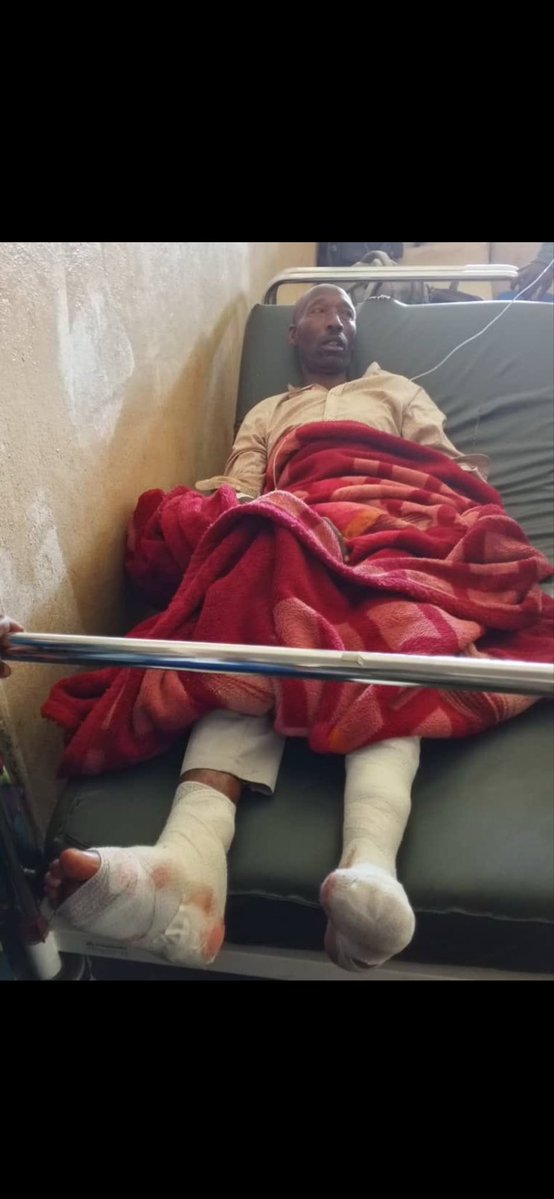
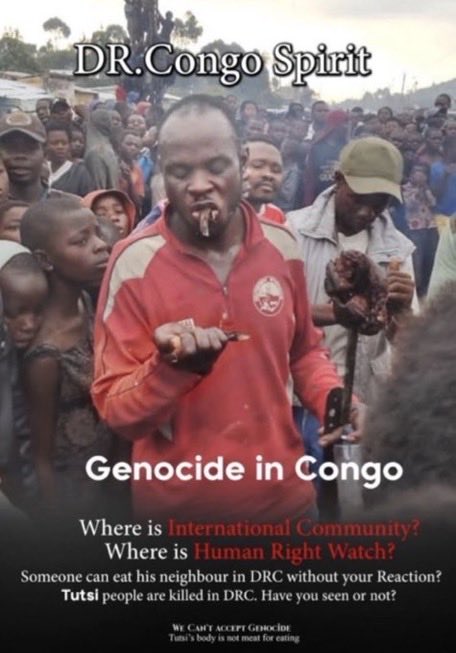
Les Banyamulenge sont attaqués depuis 2017 par des milices Mai-Mai et le Red-Tabara burundais, avec une complicité documentée des FARDC et non par l’armée rwandaise. Nous protéger était le devoir du Congo,et il y a failli.@SecRubio@US_SrAdvisorAF@USUN@hrw@UN_HRC@StateDept.
À la suite de l’interview du ministre des Affaires étrangères du Rwanda, Olivier Nduhungirehe, qui prétend défendre la communauté banyamulenge, je tiens à lui rappeler que les massacres ayant visé la communauté banyamulenge, de 2017 jusqu’à ce jour, ont été préparés et exécutés par l’armée rwandaise, agissant au sein d’une coalition comprenant RED-Tabara, un groupe armé de l’opposition burundaise. Cette mémoire demeure vivante, et la communauté banyamulenge ne l’oubliera jamais.
Prétendre aujourd’hui que le Président Félix Tshisekedi serait responsable de ces massacres relève d’une tentative de diversion visant à réécrire les faits.
Nous, Banyamulenge, connaissons ceux qui nous ont fait du mal. Nous voyons également comment certains cherchent aujourd’hui à se présenter comme des amis afin d’effacer les responsabilités du passé et de dissimuler les véritables intentions qu’ils nourrissent à l’égard de notre communauté.
La communauté banyamulenge est congolaise, et c’est le gouvernement congolais qui a l’obligation de la protéger, et non le Rwanda. Le ministre devrait plutôt parler des Hutus qui continuent à souffrir dans les camps de réfugiés et dans les forêts du monde, par crainte du pouvoir qu’il continue à défendre.
La vérité historique ne doit être ni déformée ni instrumentalisée à des fins politiques. @SecRubio@US_SrAdvisorAF@HouseForeignGOP@StateDept@SenateGOP@SenateForeign@USEmbKinshasa@USAmbUN@USUN@AsstSecStateAF@hrw@UNHumanRights@_AfricanUnion@UN_HRC@UKinDRC@unjhro@realDonaldTrump@HarianaVeras@BBCWorld
Today, we are pleased to share encouraging news regarding our response to the Ebola outbreak in AFC/M23/Twirwaneho-administered areas.
Following weeks of coordinated surveillance, case management, contact tracing, laboratory testing, and community engagement, we are pleased to announce that all identified contacts have successfully completed their follow-up period.
Over the course of the response, more than 400 contacts were monitored with a daily follow-up completion rate exceeding 98 percent. Throughout this intensive surveillance period, no additional Ebola cases were detected among those under follow-up. At this time, there are no confirmed Ebola patients receiving treatment and no contacts currently under active monitoring within our jurisdiction.
This marks the successful containment of the first wave of the outbreak in the areas under our administration.
This achievement would not have been possible without the dedication and sacrifice of our frontline healthcare workers, surveillance teams, laboratory personnel, community health volunteers, local leaders, and all those who worked tirelessly under challenging circumstances to protect our communities.
We also extend our sincere appreciation to our humanitarian and technical partners whose expertise, logistical support, and collaboration were essential to this successful response.
A key lesson from this response has been the importance of people-centered interventions. Through sustained door-to-door community engagement, health education, and close collaboration with local communities, we strengthened public trust, encouraged early reporting of suspected cases, and promoted adherence to public health measures. These efforts were instrumental in successfully containing the outbreak.
Today's announcement should not be interpreted as the end of the Ebola threat.
The Ebola virus remains active in other parts of eastern Democratic Republic of the Congo, where ongoing transmission continues to pose a regional public health risk. As long as transmission persists elsewhere, there remains the possibility of imported cases into our communities through population movement.
For this reason, we will remain vigilant.
#TogetherAgainstEbola
@WHO@AfricaCDC @
For nearly a decade,Banyamulenge civilians have endured violence, displacement, and loss while much of the international community has remained silent.Every community deserves protection, justice, and the right to live in peace.The world must not look away any longer.
🚨 “THE DIASPORA AT THE TABLE” — BUT WHOSE DIASPORA?
Atlanta, 6/27/2026
At the US‑DRC Strategic Partnership Forum in Atlanta, the truth was impossible to ignore.
Minister @PatrickMuyaya, the event’s featured speaker — never showed up.
The DRC Ambassador and delegation arrived over an hour late, and the second session was canceled altogether.
Even worse, Banyamulenge community members were largely barred from entering.
When one courageous Mahoro Peace Association (MPA) Georgia member finally took the microphone, he asked the question that mattered:
👉 “How can investors trust a government that bombs hospitals and schools in Minembwe, imposes a humanitarian blockade, and persecutes its own citizen, the Banyamulenge and Tutsi civilians?”
His microphone was snatched away. His question ignored.
Outside, a spontaneous protest erupted — proof that silenced voices will always find a way to be heard.
This pattern repeats at every international forum: Banyamulenge and Tutsi diaspora voices are muted, excluded, and dismissed.
We condemn this silencing and demand action:
✊ End the humanitarian blockade on Minembwe
✊ Stop drone attacks on civilians and hospitals
✊ Guarantee humanitarian access to eastern DRC
✊ End ethnic persecution and ensure real diaspora inclusion
We thank the MPA Georgia, Tennessee, Ohio members and others for standing tall — the voice of the voiceless, speaking for every child near a bombed school and every family trapped behind the blocus.
The diaspora deserves a real seat at the table — not a staged forum where truth is silenced.
We will keep showing up. We will not be erased. ✊🏿
@marcorubio@StateDept@US_SrAdvisorAF@USAmbUN@USAmbDRC@MONUSCO@amnestyusa@jumuiya@DiplomatieTogo@_AfricanUnion@angola_Mirex@WilliamsRuto@KagutaMuseveni@PaulKagame@IsokoUSA@MaishaRdc@wembi_steve@benbabunga@ScoviaMutesi@bbcgahuza@cnni@JulianPecquet@CoulibalyBojana@DougGasore@ORuhumuriza
Afande Makanika, a man who inspired us to stand up and defend ourselves through Twirwaneho. While the spirit of self-defense has existed for generations ever since our ancestors like Mushishi and others fought to protect our people and our rights Afande Makanika rekindled that spirit for a new generation.
He did not fight only with weapons. More importantly, he instilled in us a spirit of courage, unity, resilience, and self-belief that will live on in our hearts for generations to come.
His famous words, “Ntituzatega amajosi ngo bateme” (“We will not stretch out our necks to be slaughtered”), became more than a quote they became a mindset. He taught us that we are capable, that nothing is impossible, and that a united people can overcome even the greatest challenges.
His legacy is not only found on the battlefield but in the determination he inspired in those who believe in defending their community and preserving their identity. That spirit will never fade.
We, the Banyamulenge, carry that lesson with us. We remain united, resilient, and committed to our future. Afande Makanika’s legacy will continue to inspire generations to come.
Twirwaneho forever.
Apres la réunion de Kinshasa entre Ndayishimiye et Tshisekedi, les drones redoublent d’ardeur et bombardent les hôpitaux, écoles et d’autres infrastructures de base à Minembwe.
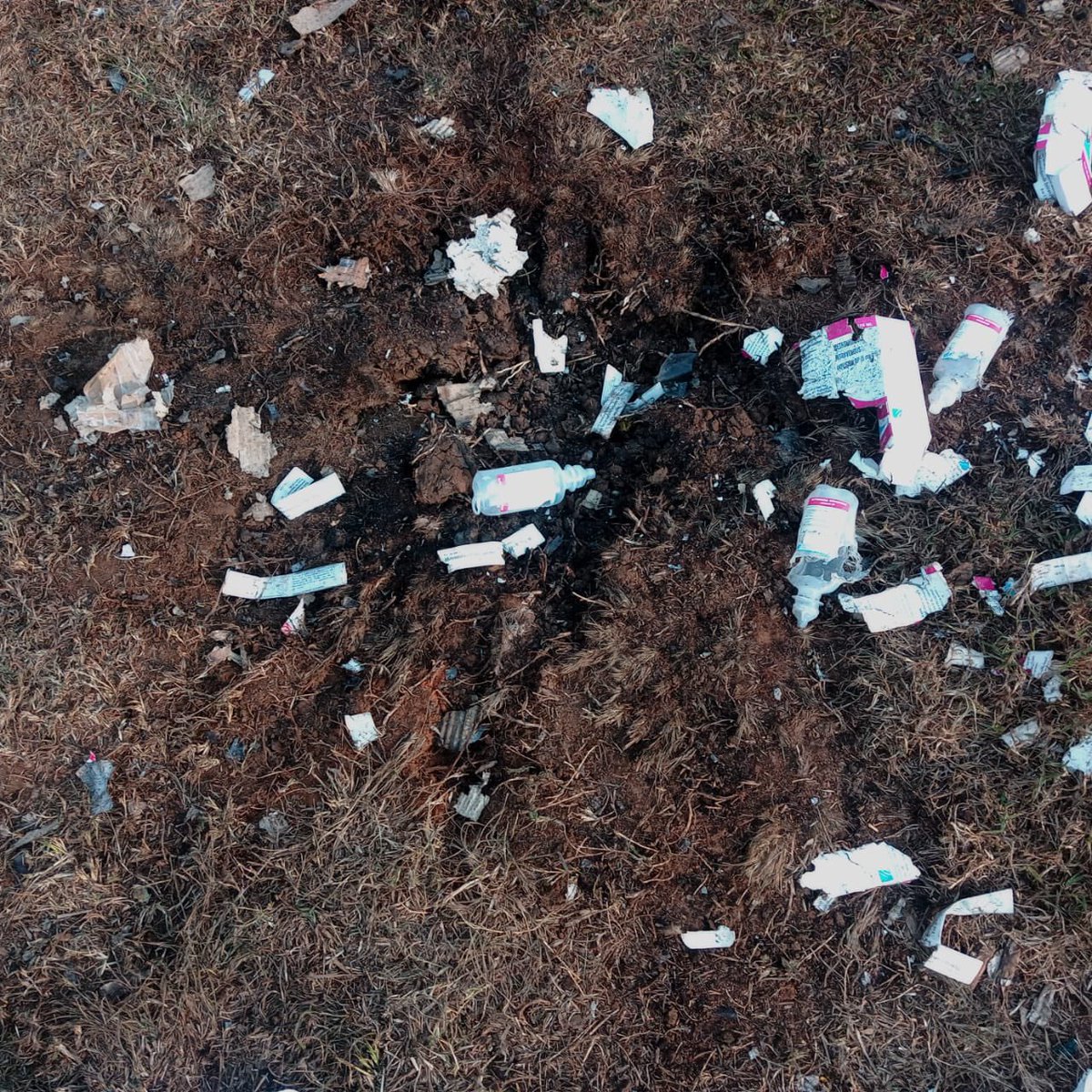
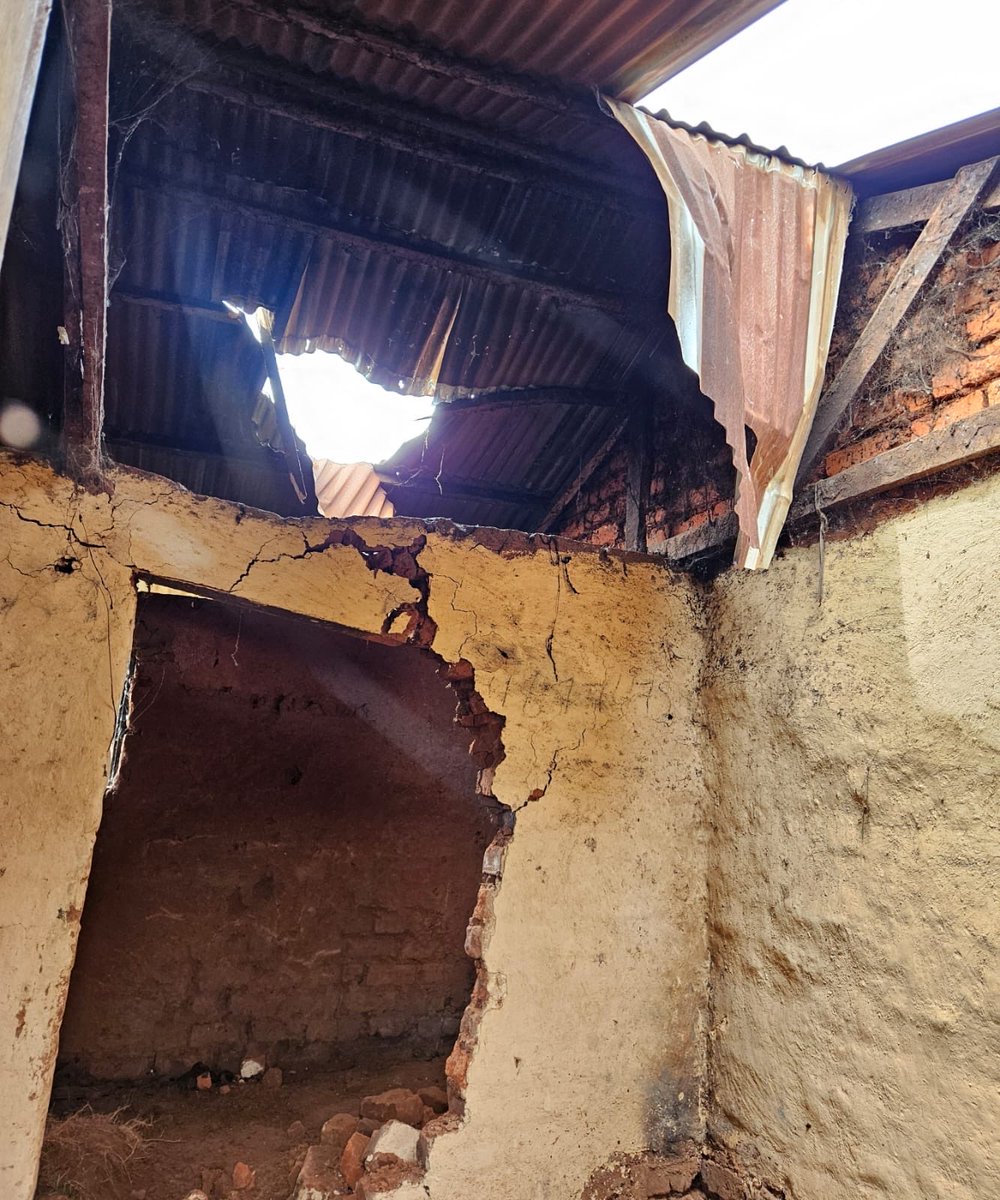
Cet après-midi du jeudi 25 juin 2026, les drones de ces deux hommes et leurs armées ont largué 4 bombes sur l’hôpital général de Minembwe. Les images vont vous montrer la pharmacie détruite et les médicaments en feu. Ils ont largué 12 bombes à Ilundu notamment sur l’Institut Ilundu.
Hier mercredi 24/06/26 les drones de ces régimes avaient bombardé pour la nième fois la piste de de l’aérodrome de Minembwe et l’hôpital général une fois encore.
À défaut de prendre et d’occuper Minembwe par les FARDC et les FDNB, malgré l’encerclement et le blocus qui privent la population de l’accès au marché et aux denrées de première nécessité comme le sel, sucre, médicaments etc, les d’eux Présidents décident de détruire les hôpitaux, les écoles, les églises, aédrome, les maisons d’habitations et autres.
Et la déclaration de Londres d’hier 24 juin on en fait quoi ? Elle est ignorée ou les deux Présidents n’en sont pas encore informés ? @realDonaldTrump, @StateDept , @US_SrAdvisorAF, @_AfricanUnion, @ymahmoudali, @antonioguterres, @WilliamsRuto , @PaulKagame, @edmnangagwa, @KagutaMuseveni, @SuluhuSamia, @FelixTshis13, @GeneralNeva, @MofaQatar_EN, @jumuiya, @SADC_News, @JDVance@CyrilRamaphosa, @onduhungirehe, @marcorubio, @EmmanuelMacron, @MONUSCO,@PresidenceTg, @FEGnassingbe, @FelixTshis13 , @kajakallas, @eucopresident, @volker_turk, @HuangXia16, @prevotmaxime, @kikayabinkarubi.
#DRCongo#Minembwe
🚨 URGENT APPEAL FOR MINEMBWE — CONTINUE READING
@marcorubio@StateDept@US_SrAdvisorAF
As the Joint Oversight Committee welcomes new commitments to peace and expresses concern over drone strikes on civilians and the worsening humanitarian crisis in eastern DRC, the reality on the ground tells a different story.
While agreements are being signed to give the Banyamulenge and other civilians in Minembwe a chance to live in peace and dignity, violence continues unabated.
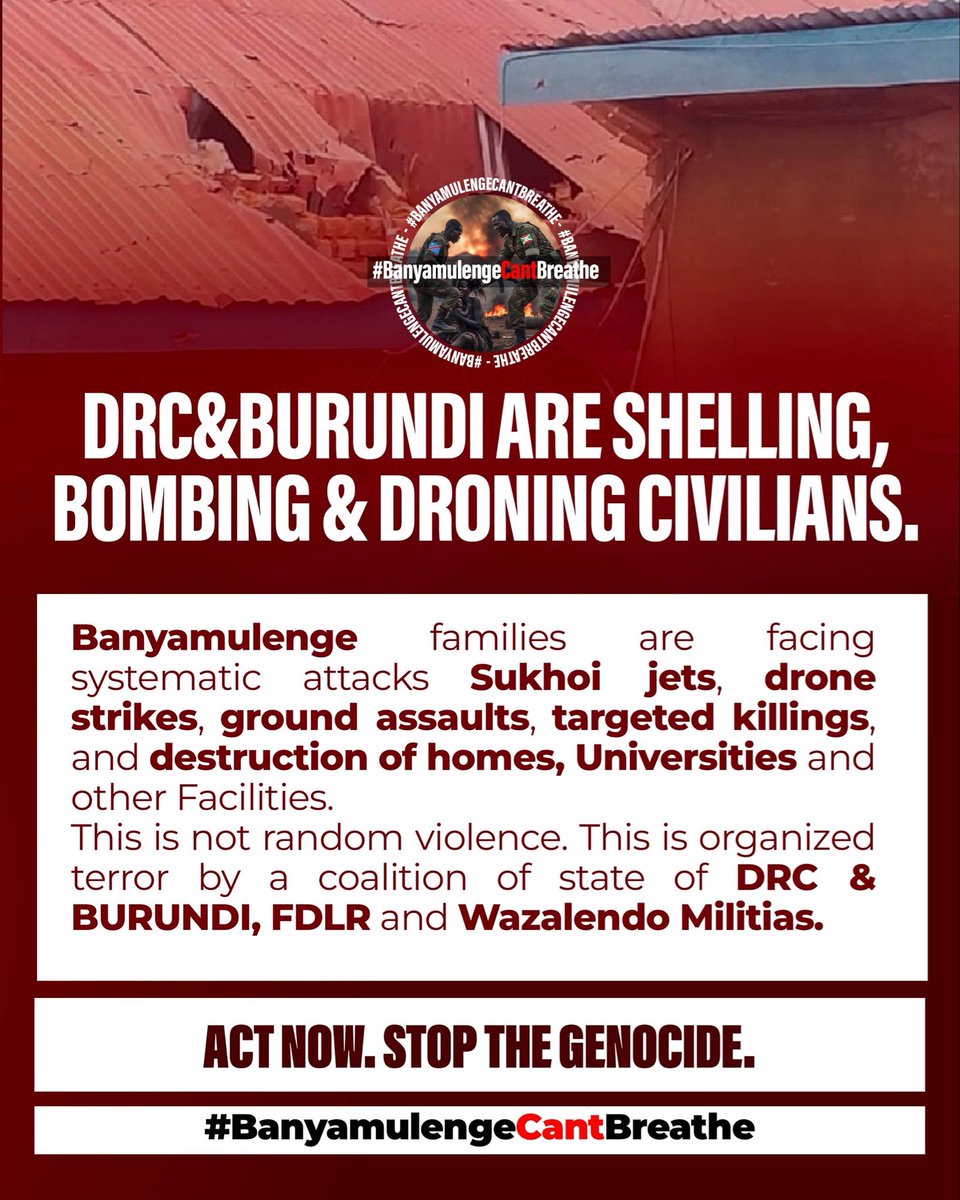
According to local sources, FARDC, together with Burundian forces, FDLR, and Wazalendo militias, continue attacks on Banyamulenge villages. Hospitals and civilian infrastructure have reportedly been damaged, and lifesaving medications stored in medical facilities destroyed—leaving mothers, newborn babies, the elderly, and the wounded without the care they desperately need.
Peace is not achieved through signatures alone. It is achieved when bombs stop falling, hospitals are protected, humanitarian aid reaches those in need, and civilians can live without fear.
The people of Minembwe are pleading for urgent humanitarian assistance and meaningful protection. The international community must ensure that the commitments made at the negotiating table are reflected in the lives of those trapped by the violence. Lives cannot wait.
@USAmbUN@USAmbDRC@MONUSCO@amnestyusa@jumuiya@DiplomatieTogo@_AfricanUnion@angola_Mirex@WilliamsRuto@KagutaMuseveni@PaulKagame@presidence_rdc@GeneralNeva
https://t.co/o9hBvJg3at
@HassanNiyonkur You speak of Banyamulenge youth as if they are helpless victims, yet ignore the reality that drove them to fight. They did not leave their homes for slogans; they stood up to defend their people, their identity, and their future. As you should be doing it!!
@mkainerugaba Dear general @mkainerugaba please tell him to stop killing banyamulenge it has now been almost a decade innocent people being killed and families being displaced #banyamulengecantbreathe
The people of Minembwe are facing a humanitarian catastrophe that cannot be ignored.
For years, Banyamulenge civilians and other communities in the highlands of South Kivu have lived under the constant threat of violence, displacement, and insecurity. Today, many families are trapped between armed conflict, food shortages, and the fear of attacks. Villages have been destroyed, thousands have been displaced from their homes, and many civilians are struggling to access food, clean water, healthcare, and education.
Children who should be in school are growing up surrounded by conflict. Mothers are forced to flee with their families in search of safety. Elderly people are left without the basic necessities needed to survive. Communities that once depended on farming and livestock have seen their livelihoods devastated.
The world speaks of human rights, but where is the protection for vulnerable civilians in Minembwe? Where is the urgent humanitarian assistance for families who have lost everything? Where are the investigations into alleged abuses committed against innocent people?
We call on the international community, humanitarian organizations, governments, and human rights defenders to pay attention to the suffering of civilians in Minembwe. Every life has value. Every child deserves a future. Every family deserves safety and dignity.
Silence helps no one. Awareness is the first step toward justice, protection, and peace.
#Minembwe #Banyamulenge #stopgenocideinminebwe #HumanRights #ProtectCivilians #SouthKivu #DRC #PeaceAndJustice #NeverAgain @marcorubio@StateDept@US_SrAdvisorAF@USAmbUN@USAmbDRC@MONUSCO@amnestyusa@jumuiya@DiplomatieTogo@_AfricanUnion@angola_Mirex@WilliamsRuto@KagutaMuseveni@PaulKagame@IsokoUSA@MaishaRdc@wembi_steve@ScoviaMutesi@bbcgahuza@cnni@JulianPecquet@CoulibalyBojana@DougGasore@ORuhumuriza@kweziFaustin1@lemessager24
@9yanke Fake news❌❌❌❌ Saying FARDC has taken over Minembwe is misleading.Twirwaneho remains in Minembwe and will never leave . Mr @9yanke try to verify information before sharing it, especially on sensitive security issues.
Lets talk about the June 2026 Human Rights Watch (HRW) report @hrw on the Great Lakes Region of Africa.
It demonstrates what I consider to be not only a profound bias and irresponsibility in the investigation and reporting of violence, but also the adoption of ethno-nationalist perspectives that, in my view, reinforce narratives associated with genocide ideology.
HRW has increasingly become a platform through which perspectives aligned with the FDLR's ideological framework are amplified. As a result, it is perceived as rarely acting as an independent or impartial observer of violence in the region.
A few months ago, a friend encouraged me to engage with HRW leadership and discuss human rights issues in the DRC. During these exchanges, I shared several concerns.
1. Methodological shortcomings
I argued that HRW's methodology is seriously flawed and often produce unreliable and ethically problematic findings. In my view, there is often a failure to align research methods with rigorous ethical standards and sound scientific principles. Given the sensitivity of conflict environments, such methodological weaknesses can have significant consequences. HRW's response was that it is not primarily a research institution.
2. The problem of omission
I also raised concerns about what I consider to be a pattern of selective omission. In conflict reporting, the deliberate exclusion of crucial context, motives, or relevant facts can shape public perception in a particular direction. I argued that this tendency is particularly visible in HRW's reporting on the DRC conflict. From this perspective, the struggle over narratives is as important as the struggle over physical territory, and the presentation of information can significantly influence international understanding of the conflict.
3. The issue of "good victims," "bad victims," "good perpetrators," and "bad perpetrators"
HRW's reporting appears to apply different standards to different categories of actors. In my own research on the DRC, I described how agencies such as HRW developed a practice of "good victims," "bad victims," "good perpetrators," and "bad perpetrators."
In this framework, I argued that Congolese Tutsi are often treated as "good victims." - the "unwanted or deserved to be killed". When they are subjected to violence, their identity is frequently omitted and they are described simply as "civilians." Pleased check the April 2026 HRW report on South Kivu. HRW describes a few years old humanitarian blockade as "interfering". Likewise, the perpetrators responsible for attacks against them are often not clearly identified. Instead, the violence is sometimes justified.
By contrast, when HRW is reporting on what I termed "bood victims," they are more willing to identify victims by their communal or ethnic identity and to attribute responsibility directly, often to Rwanda or the M23.
Similarly, I argued that certain actors are consistently viewed as "bad perpetrators" and are explicitly named and condemned, while others—including the FARDC, FDLR, Burundian forces, and Wazalendo groups—are "good perpetrators". HRW describes them in ways that appear more justified.
4. Source verification and witness reliability
HRW often relies on witness testimony without being on the ground and sufficient cross-examination or corroboration. As a researcher working on the DRC, I am aware that conflict environments characterised by corruption, political polarisation, and insecurity require particularly rigorous verification procedures.
Participants in such contexts are not merely passive observers; they are often social and political actors whose perspectives are shaped by racial prejudices or personal grievances. Consequently, witness accounts require multiple layers of scrutiny, triangulation, and independent verification before being presented as factual findings.
5. Report on Rwanda is influenced by HRW contentious positionality
HRW representatives stated that Rwanda does not allow the organisation to operate freely within the country. In response, I argued that this situation should not influence the organisation's objectivity or reporting.
Rwanda is a post-genocide society in which media narratives, academic discourse, and public communication are particularly sensitive issues. The 1994 Genocide against the Tutsi demonstrated the devastating role that propaganda, media, and intellectual discourse can play in facilitating mass violence.
For this reason, I believe it is legitimate to examine whether certain forms of reporting, analysis, or framing may unintentionally reinforce hostile narratives or ideological frameworks that contribute to ethnic polarisation in the region.
6. HRW has omitted the Banyamulenge persecution
I also questioned why HRW has devoted relatively no attention to the persecution of the Banyamulenge, which has been ongoing since 2017. In response, HRW representatives referred to their previous reporting on attacks against the Banyamulenge by forces associated with Yakutumba in 2011 and argued that obtaining reliable information from the Minembwe High Plateau has been extremely difficult in recent years.
I found this explanation unconvincing. In my view, despite years of reported violence, repeated military operations, aerial bombardments, and the worsening humanitarian situation in the High Plateau region, HRW appears to have limited awareness of events affecting Banyamulenge communities.
HRW is not merely an external observer but has become a social actor whose reporting influences the political and informational environment surrounding the conflict. Its narratives align more closely with the perspectives advanced by the FARDC, Wazalendo groups, Burundian forces, Imbonerakure elements, and the FDLR than with the experiences and grievances expressed by the tartgeted communities.
Whether one agrees with this assessment or not, these concerns raise broader questions about source selection, representation of victims, balance in conflict reporting, and the responsibility of international human rights organisations operating in highly polarised environments.