BREAKING: A first look with renders at Apple’s upcoming iOS 27, completely revamped Siri, major new AI features, enhanced photo editing, a customizable Camera app aimed at pros and more. https://t.co/RvKch3m67S
Looking forward to WWDC this year, I think so many interesting use cases would open up if shortcuts were easier to install and customize. I had a cool idea at the start of the year but I found URL params in the install hyperlink didn’t carry over into the first launch. Also waiting to see how Apple handles the policy of vibe coded software running on device. This might tie into shortcuts so let’s see!
Thrilled to announce I'm joining @WorksInProgMag and @stripe to continue my research and writing on clinical trials & biotech innovation, with many more articles to come. (If you haven't already, subscribe to the magazine. It's great in terms of content and very beautiful.)
My work is driven by a core conviction: in the years and decades ahead, we will be far more constrained by the quality of our culture and institutions than by technology itself. In biology, a remarkable convergence is underway. AI, alongside a wave of other emerging tools, is fundamentally expanding what science can do.
But beneath this sizzling potential, something is going wrong in Western biotechnology. China is pulling ahead and companies are increasingly moving clinical trials there, drawn by faster clinical trial timelines and a more dynamic ecosystem. Promising therapies sit in limbo for years. Despite the science being here, personalized cancer therapies are not viable to anyone but a few who can afford to navigate the labyrinthine regulatory apparatus. And pharmaceutical R&D productivity has remained stubbornly flat in the last 10 years, after decades of decline.
And I can't imagine a better home for my research and writing on what can be done to accelerate biomedical progress than Works in Progress. This is a magazine that has published some of the most important writing on why the physical world has stopped working, including "The Housing Theory of Everything," which became one of those rare pieces that actually changed how people think about a problem.
But this is not just about my desire to study biotech innovation.
Biotech is not an anomaly. The same pattern: technology outrunning the institutions meant to govern it, is playing out across society. And now AI is compressing the timeline, accelerating pressures that were already straining the system.
When people ask what I worry about when it comes to AI, I tell them it’s not the usual things. I'm not losing sleep as much over AI taking my job. I am more worried that we will lose our appetite for depth and that long-form thought, serious reading, sustained attention, the very things that make culture worth having, will erode faster than we notice. That our collective intelligence will hollow out, gradually. And the very problems we have now will only accelerate.
@WorksInProgMag is a resistance movement against that, condensed in the form of magazine. It stands for long-form, in-depth writing. It stands for beauty. It is fundamentally anti-slop.
In that sense, it's a natural fit with @stripe. A payments company publishing a magazine might seem like an odd pairing. That is, until you understand what kind of payments company @stripe actually is. It has always been driven by a genuine passion for craft and for getting small things exactly right.
I am really proud to be part of something that embodies my own values in such a deep way, especially at a turning point in history.
Christopher Nolan explains why he cast Travis Scott in ‘THE ODYSSEY’:
“I cast him because I wanted to nod towards the idea that this story has been handed down as oral poetry, which is analogous to rap.”
(Source: https://t.co/sETFoGm4KF)
For the last three years, a startup in Bangalore has been obsessed with a pursuit that typically invites raised eyebrows, naked skepticism, and accusations of stealing from sci-fi:
@dognosis is training dogs to detect cancer.
And until you've spent time at their facility - a former pomegranate farm in the outskirts of Bangalore - perhaps skepticism is the rational response.
But Dognosis isn't betting on some pie-in-the-sky idea or some charming novelty act, they're betting on evolution.
@akadogluk and @Itamar_Bitan based their company on the fact that the dog's nose - a product of fifteen millennia of co-evolution with humans - can detect the faint chemical trace of cancer in your breath at a resolution that our machines, algorithms, and laboratory tests have never come close to matching.
We've known this fact for decades. We've consistently failed to do anything meaningful with that knowledge.
The missing link has been figuring out what the dog's nose knows, and applying it in a standardised, scalable, and clinically validated way.
Dognosis is building this missing piece of the equation i.e. the translation layer that allows the dog's nose to speak a language medicine can understand, enabling us to harness an ancient biological intelligence and plug it into our modern medical infrastructure.
Maybe you've read the paragraphs above and retained your skepticism. That's fair. But this past Friday, the Journal of Clinical Oncology - the world's most influential cancer journal - opted to make life much harder for the skeptics.
On Friday, the JCO published Dognosis' landmark study on breath-based multi-cancer detection - the largest of its kind ever conducted - showing that a team of trained dogs, equipped with sensors and AI, could detect multiple cancers from breath alone at 90%+ accuracy - including at Stage I, when it matters most - for $2 a test.
According to Akash, it proved "that everything we’ve known about the dogs is true".
Needless to say, it's a genuine milestone for Indian healthcare, health-tech, deep-tech, and, uh, dog-tech, that deserves far more attention than it's gotten so far.
To help change that, we were lucky to have Akash stop by the Tigerfeathers editorial desk this past week to unpack the Dognosis journey - helping us understand what they're building, how they're doing it, why it matters, and what comes next.
From where we're sitting, Dognosis is an n-of-1 Indian startup with an n-of-1 story that everyone in the Indian tech ecosystem should be aware of. If you've been intrigued by what you've read so far and you're keen to go deeper, dive into our piece here👇
https://t.co/limlGrgxJ1
This is Callie. She is trained to accurately detect bowel cancer in order to provide rapid diagnoses through non-invasive testing. Some might call it lab work, but Callie is actually a sprocker spaniel. 14/10 incredible job, Callie
Dogs and cancer are trending again.
In exchange for one snack, Callie can use her nose to help detect cancer.
So instead of e/acc
What if this is e/snack
This is Callie. She is trained to accurately detect bowel cancer in order to provide rapid diagnoses through non-invasive testing. Some might call it lab work, but Callie is actually a sprocker spaniel. 14/10 incredible job, Callie
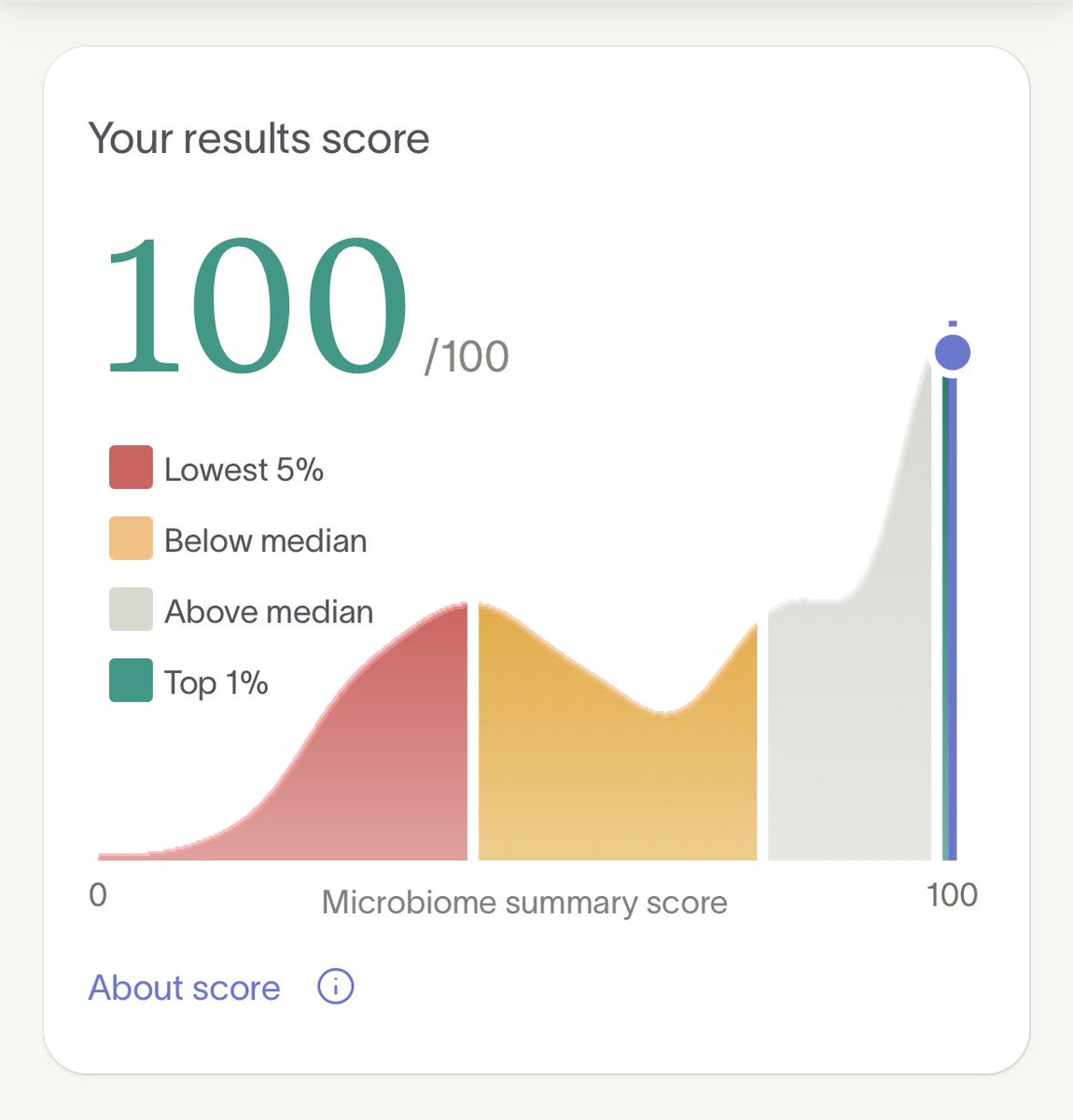
This is her vaginal microbiome report. 100/100 score.
Top 1% of all vaginas.
Her sample is dominated by the single most protective bacterial species a vagina can host (Lactobacillus crispatus).
Only about 25-30% of reproductive age women globally are L. crispatus-dominant, and “dominant” usually means above 50%. Kate is at 98.7%.
The lab found nothing bad to report. (no gardnerella, Candida, STIs, opportunistic pathogens, aerobic vaginitis markers, etc.)
This is linked to lower risk of BV, UTIs, yeast infections, HPV persistence, HSV-2 and HIV acquisition, preterm birth, and improved IVF outcomes.
A vaginal microbiome is downstream of everything: sleep, glucose control, stress, gut health, sexual health, immune function, what you eat, and what you put in it.
SpaceXAI and @cursor_ai are now working closely together to create the world’s best coding and knowledge work AI.
The combination of Cursor’s leading product and distribution to expert software engineers with SpaceX’s million H100 equivalent Colossus training supercomputer will allow us to build the world’s most useful models.
Cursor has also given SpaceX the right to acquire Cursor later this year for $60 billion or pay $10 billion for our work together.
idk how else to say this, but... build your dream projects now.
I feel like all the tools are giving away a LOT for free/cheap now. It's only gotten more pricey over time, and will keep getting more expensive. Your ideas are subsidized now, think of it as a fire sale and build!
Introducing EmDash — the spiritual successor to WordPress.
Serverless. TypeScript. Securely sandboxed plugins via Dynamic Workers.
https://t.co/AQorxEmiKM
Google just published a paper on quantum vulnerabilities in crypto, estimating a 2029 post-quantum transition. Their findings are so sensitive that Google decided to publish a ZK proof instead of the actual circuits.
@Google generated their ZK proof using @succinctlabs SP1 zkVM.
This is one of the most consequential applications of ZK proofs ever. Responsible disclosure of a novel vulnerability protecting trillions of dollars in digital assets.
New supply chain attack this time for npm axios, the most popular HTTP client library with 300M weekly downloads.
Scanning my system I found a use imported from googleworkspace/cli from a few days ago when I was experimenting with gmail/gcal cli. The installed version (luckily) resolved to an unaffected 1.13.5, but the project dependency is not pinned, meaning that if I did this earlier today the code would have resolved to latest and I'd be pwned.
It's possible to personally defend against these to some extent with local settings e.g. release-age constraints, or containers or etc, but I think ultimately the defaults of package management projects (pip, npm etc) have to change so that a single infection (usually luckily fairly temporary in nature due to security scanning) does not spread through users at random and at scale via unpinned dependencies.
More comprehensive article:
https://t.co/EJAZbqAPIQ