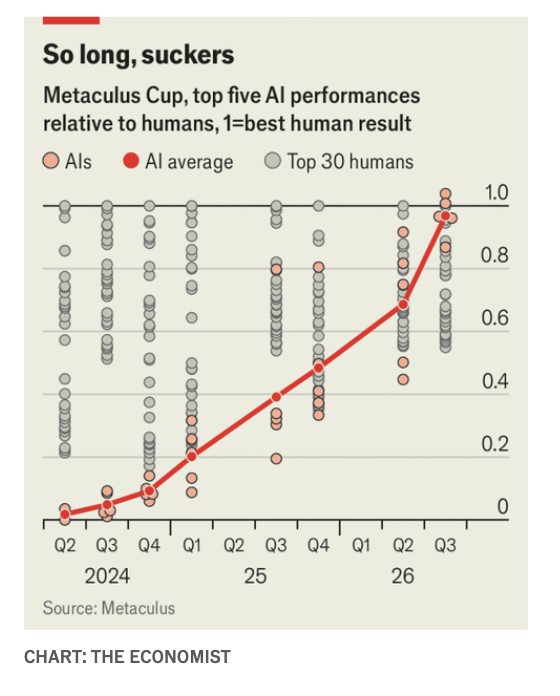
AIs cracking short-term superforecasting is such an important (and, still, under-discussed) trend.
Via a new piece from @nikostro https://t.co/EuVP7FyfbD
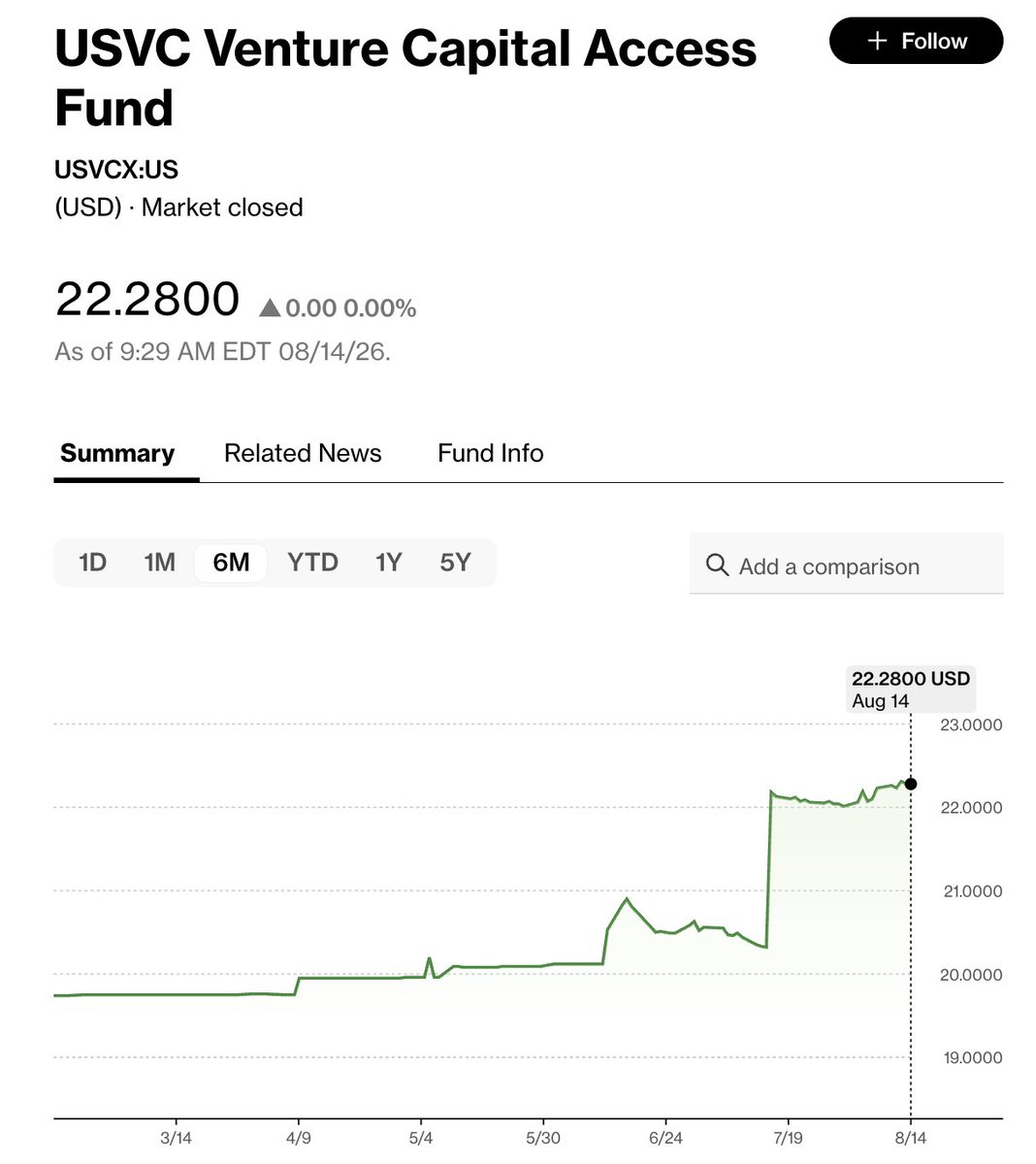
We launched USVC, our venture fund available to the public four months ago
Since then, we have:
- Raised $50M+ from almost 5,000 investors
- Grown our NAV per share by 12%+ since launch (30%+ annualized)
- Successfully completed our first tender offer
And on the investment side:
- We got exposure to some of my favorite companies like Supabase, Mercor and Mercury
- Existing companies in the fund like Anthropic, OpenAI, Sierra and Crusoe went on to raise more money at higher prices
- We also backed some of the most accomplished early-stage fund managers investing in the next generation of startups
Full portfolio here: https://t.co/vRLeRbxRBE
--
We're in the middle of one of the most exciting technological revolutions of our lifetime
And the majority of wealth creation from that revolution could be in private markets
Fired up to allow retail investors access to private markets with as little as $500: https://t.co/cvXKvUFfbd
AngelList frequently conducts distributions when a company is acquired or IPOs.
For most companies, 98% of shareholders request cash and 2% request stock.
For SpaceX, it's flipped: 75% of shareholders request stock and 25% request cash.
Strong signal that upcoming lockups won’t add selling pressure on the stock.
USVC, our public venture fund, is up 10%+ in the last few weeks
We also completed our first tender offer a few weeks ago, buying back everyone who wanted out
Here's a quick FAQ for people wondering exactly how all of this works before the upcoming Anthropic IPO:
the engineer's job is shifting: stop performing the task, start optimizing the factory that does it.
excited to share https://t.co/owFg3AWHEf — a programmable platform for building richly configurable software factories.
sign up for the waitlist and DM me if you're interested
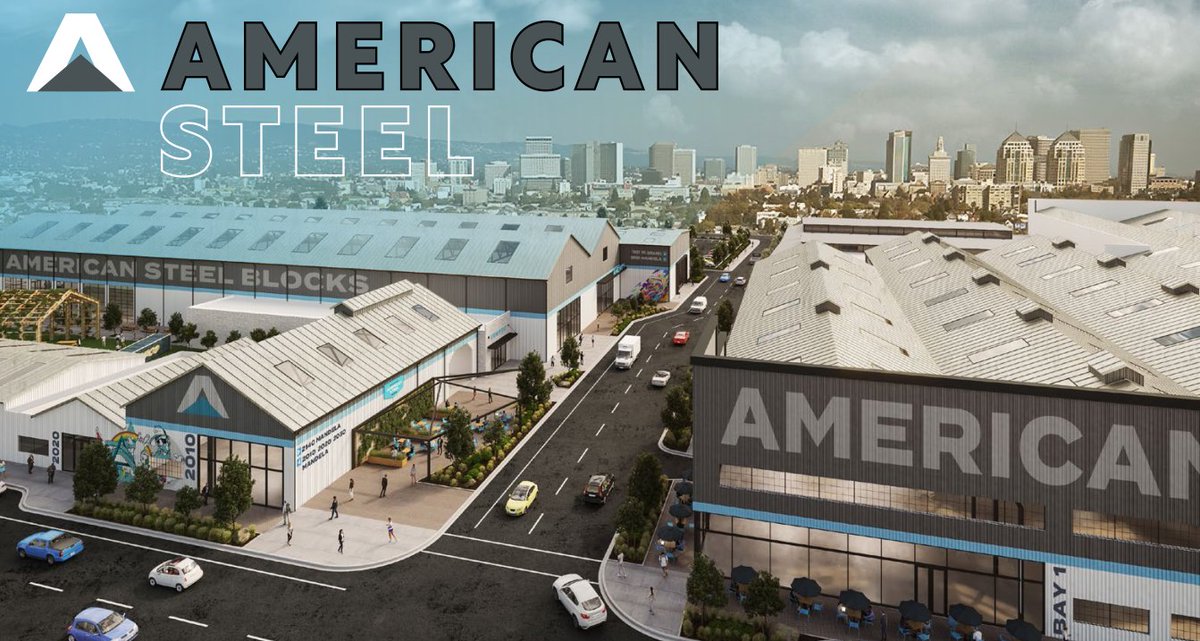
Jeff Bezos is bringing his new AI company to Oakland.
Project Prometheus just signed a massive 100,000 sq ft lease, at a former steel complex that's becoming a hub for advanced manufacturing, robotics, clean energy and R&D.
Project Prometheus, co-founded and led by Bezos and Vik Bajaj, is building what it calls an “artificial general engineer” for the physical world.
Their vision is to build AI that doesn't just understand text and digital information, but can understand the physical world and help design, engineer and manufacture real things...from jet engines and automobiles to computers, medical devices and other complex products.
The company has already raised $12 BILLION at a $41 billion valuation.
Now it's taking 100,000 SF of industrial space in West Oakland.
That location makes a lot of sense.
It's minutes from UC Berkeley, Berkeley Lab, the Port of Oakland and San Francisco, with the kind of power, high ceilings and industrial infrastructure that physical AI companies need.
The Bay Area AI boom has been a San Francisco office story so far.
But the next wave of AI may need warehouses, labs, manufacturing space, robotics facilities and places where AI can interact with the physical world.
And the East Bay has a LOT of that.
Awesome to see one of the best-capitalized AI startups in the world choosing Oakland as part of that vision. 👀
📍 Oakland
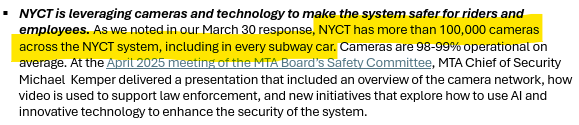
There are roughly as many Flock license plate readers installed across the entire US (120k) as NYC has video cameras installed just in its transit system, let alone on the streets. Do opponents of Flock want those removed, too? Does anyone think that'd be a good idea?
Cameras are enormously valuable for solving, and hence deterring, crime. The real debate shouldn’t be cameras vs. no cameras. It should be about guardrails: what data is collected, how long it’s kept, who can search it, and for what purpose.
These questions are addressable. The medical field had to deal with these w/r/t access to electronic medical records. There were some early abuses. But the medical field created rules, tech restrictions, and a culture to address these risks. Inappropriately snoop on a med record today, if you even can, and the standard is instant termination.
There are enormous benefits to solving and deterring crime. Technology can complement humans to create a safer, more equitable, and more just society while preserving constitutional protections for privacy.
Would love to hire someone (or multiple people?) to make short-form videos for tech and VC
There are so many cool companies now in the @usvc_ portfolio and we'd love to tell their story better
DM me your best work or recommend someone dope in the comments
Your startup can easily accept smaller checks from many strategic angels while also keeping the cap table tight.
It's called a Roll Up Vehicle, and you should basically have an open RUV at all times.
It's free to open a RUV, takes 3 mins to launch, and it makes your startup approachable 24/7/365 to smaller checks from potential key hires, target customers, etc.
https://t.co/SVGUmqZfAq
I mildly think that startups should keep a roll-up vehicle around and take as many $5k checks from engineers/etc as people want to offer.
This is less about the money and more like “Why yes we *do* accept superfans.”
(Plausible recruiting targets even if not today, etc etc.)
Someone asked me recently why I’ve become interested in aesthetics after having spent most of my life more interested in STEM-adjacent topics. I hadn’t really considered the question consciously before, but I’m certainly thinking about aesthetics more than I used to. I think it’s a confluence of things:
• Many things today are ugly and far uglier than they used to be or need to be. Once you see this, it’s kinda hard to stop perceiving it. (Early twentieth century phone boxes versus modern phone boxes; old water fountains versus new water fountains; etc.) As someone with a naively meliorist assumption that most things should be getting better rather than worse, it’s all a bit perplexing: why did we stop doing things nicely? Is it a choice? Was there a malevolent spell cast upon us? This vein led me to think more about modernism and why much of art became more intentionally "challenging", grotesque, opposed to prettiness, rebarbative, dissonant, etc. Can or should anything be done about this? Is this just how things ought to be?
• Relatedly, much of modernism involved a kind of explicit repudiation of cultural continuity and represented a schism with prior practices. This is maybe most evident in American architecture, where the International Style exhibition in 1932 initiated the displacement of a rich tapestry of prior styles. This cultural break seems important and interesting to me, and I suspect that the rejection had important consequences outside of the aesthetic domain. Samuel Hughes has been exploring this question in his recent writing at @WorksInProgMag; @RuxandraTeslo is also pulling on this thread. Elaine Scarry wrote about how beauty inspires creation. If so, the inverse may also be true: ugliness inhibits it.
• It’s clearly the case that changes in the aesthetic domain can at least inspire progress in other places. Petrarch helped set some of the preconditions for the Renaissance which in turn fostered the scientific revolution and Enlightenment. Things like World Fairs (the 1851 Fair at the Crystal Palace recorded 6 million admissions when the population was 21 million) reflect the popular interdependency that used to exist between aesthetics and material development.
• @tedgioia and others have written about stuck culture and how so many domains seem to have ceased to straightforwardly advance in the way that they did up until the nineties or thereabouts. This is obviously peculiar and interesting. What changed, and what does it mean? Is it about the internet and fragmentation? Is it about a loss of supply? Is it just about having reached the zenith of various mediums?
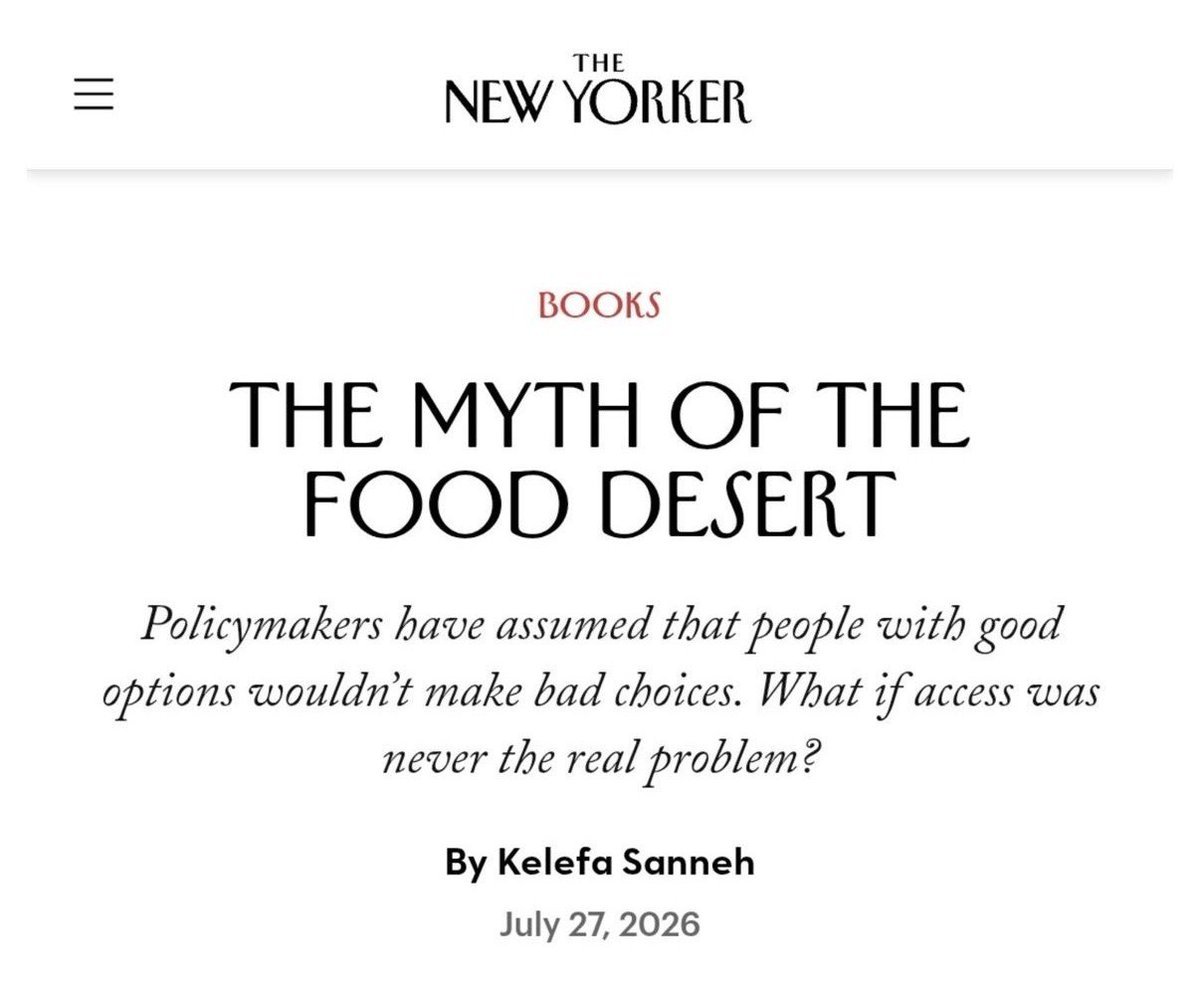
• I’m generally interested in markets and the dynamics of creation. In aesthetics broadly, I find the reflexivity between supply- and demand-side factors to be very thought-provoking. There’s a natural desire to view satisfaction of individual preferences as the yardstick to measure market success, but things get interesting and even a bit unsettling when we start to think about how the supply might start to shape the demand. I often think about this in the context of food. Why is food so much worse in Germany than many of its neighbors? Germany certainly doesn’t have less material ability to produce good food; indeed, Germany is richer than the countries around it. There’s probably something about German food supply chains that is impoverished relative to France and Italy, but the Germans themselves don’t seem too upset about it. It just seems that the Germans are stuck in an objectively worse market equilibrium than their neighbors: the food is bad and they’ve gotten used to it. The obvious question then is where else these kinds of reflexive patterns apply, and where else we’re stuck in some objectively inferior equilibrium, even if preferences are in some superficial sense being sated.
• While this is an extremely banal and obvious point, I hadn’t until recently thought much about or internalized how much one can study reasonably objective things ("the status of women in society", say) through artwork. (Thanks to @_alice_evans for opening my eyes here.) In this vein, I’m pretty excited about the possibilities over the coming years in computational art analysis. I want something that’s conceptually similar to Google Ngram timelines but for the visual arts.
• We've always tried to do things well at Stripe. I've come to see that attempting to do them beautifully is often a helpful way to break out of standard practices and to do something with greater novelty and in a way that might have other benefits besides. (Also, excellent people want to do great work because it is intrinsically satisfying. Explicitly allowing aesthetic considerations to carry weight avoids having to justify every assessment with some kind of torturous empiricism.)
• In his Nobel Lecture, Solzhenitsyn said that, among the Platonic virtues of goodness, truth, and beauty, that beauty is special, for it possesses a unique kind of irrefutability. He notes that arguments, writing, and philosophical systems can all be predicated on misapprehensions, but that “a true work of art carries its verification within itself.” He proceeds to observe that when goodness and truth are threatened, the “ever surprising shoots of beauty will still force their way through.” There is a lot of specious and motivated reasoning in the world today and plenty of questionable value systems. I don’t think that beauty directly reflects any definitive trait, but I’m intrigued by the idea that it can be a marker of deeper metaphysical coherence.
72% of immigrant founders of top AI companies first came to the US on student visas. OPT is the acronym that made this possible.
The Bay Area could lose thousands of STEM PhDs. That's thousands of the smartest people in the world, building frontier models at AI labs.
I spent a year of my life building https://t.co/o1KoSaxNOH, and know the data as well as anyone. Fees meant to restrict Optional Practical Training will increase tuition for Americans, make the H-1B program lower-skilled and lower paid, and slash annual GDP by hundreds of billions of dollars.
What does your city, state, or university stand to lose? How many STEM PhDs? How many founders? And where will they go, if not the US? Look at the microdata on the website yourself, and realize that yes: it's really bad.