Improving Creative Problem Solving in LLMs
@SeeItCreatively is looking for #AI#LLM subject-matter experts, skilled in quantitative methods, and willing to test and improve the theoretical propositions outlined in the working paper: https://t.co/kLmRKCzWJn.
@opensimcc is this weekend!
You can watch the live stream at https://t.co/rM1YCC7Jz0
or if you are an OpenSim native you can Hypergrid, address: https://t.co/JUvzzn5s9A .
If you want a local account created you can register at https://t.co/0NSLYzNXDQ
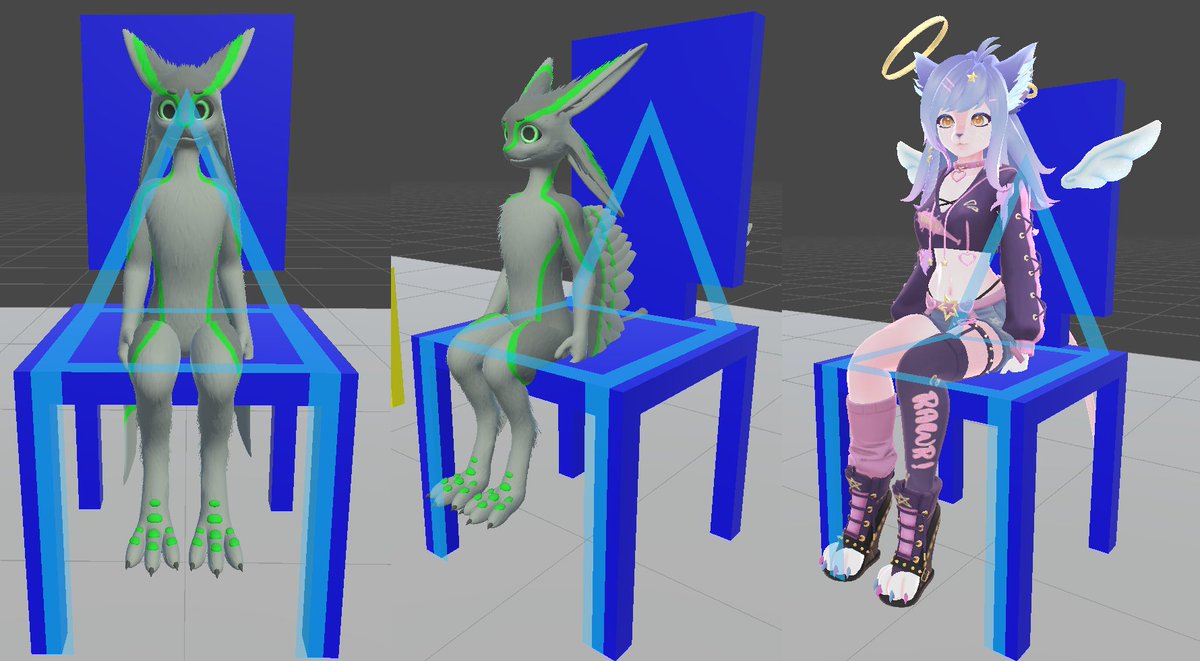
A new dynamic seat system is coming to Basis VR @BasisVR! It includes support for any size avatars on any size seats, in any orientation, with the legs and spine at any angle. This uses the same data as in the @open_metaverse OMI_seat standard. PR: https://t.co/guw95ApGEa
What does it mean to preserve digital culture? 💫
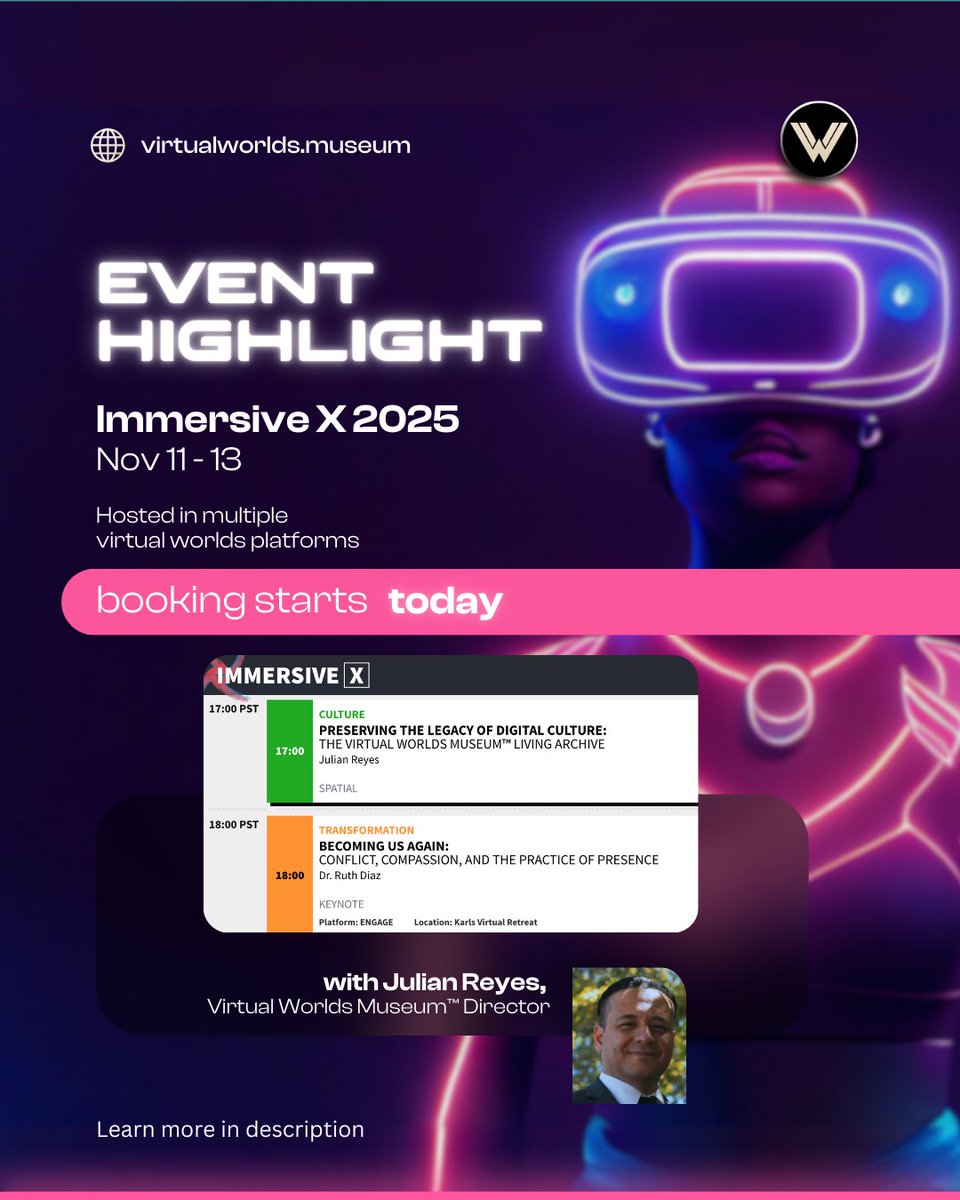
At Immersive X 2025, our director Julian Reyes will share the journey of the Virtual Worlds Museum™ Living Archive, mapping the history and future of virtual platforms.
Preserving the Legacy of Digital Culture panel
🗓️ Nov 11th, at 5pm PST, hosted in @Spatial_io
Shoutout to our team members and partners that will be part of this gathering!
Learn more about Immersive X and join us on November 11th:
https://t.co/yv8ji3LtH0
#VirtualWorldsMuseum #preservingvirtualworlds #ImmersiveX2025 #XR
Immersive X 2025 is coming! From Nov 11–13, global innovators will gather to explore how XR reshapes the way we live, learn, and connect.
We’re thrilled that our director, Julian Reyes, will join the stage to speak on Preserving the Legacy of Digital Culture through the Virtual Worlds Museum™ Living Archive, in a session hosted in Spatial.
This is one of the most important conversations of our time: how we ensure immersive worlds are remembered, celebrated, and accessible for the future.
💫 Shoutout to our team members and partners that will be part of this gathering! Full session details and booking options start today.
Learn more about Immersive X: https://t.co/yv8ji3KVRs
#VirtualWorldsMuseum #preservingvirtualworlds #ImmersiveX2025 #XR #digitalculture
WMS Tiled Image Overlays are now in 3d-tiles-renderer! This new feature, made possible by "SoftwareMechanic" on Github, unlocks a whole suite of new data, including this USGS Hydrography dataset 🌊
Demo in thread 👇
#gis#threejs#3dtiles#nasajpl#maps#webgl
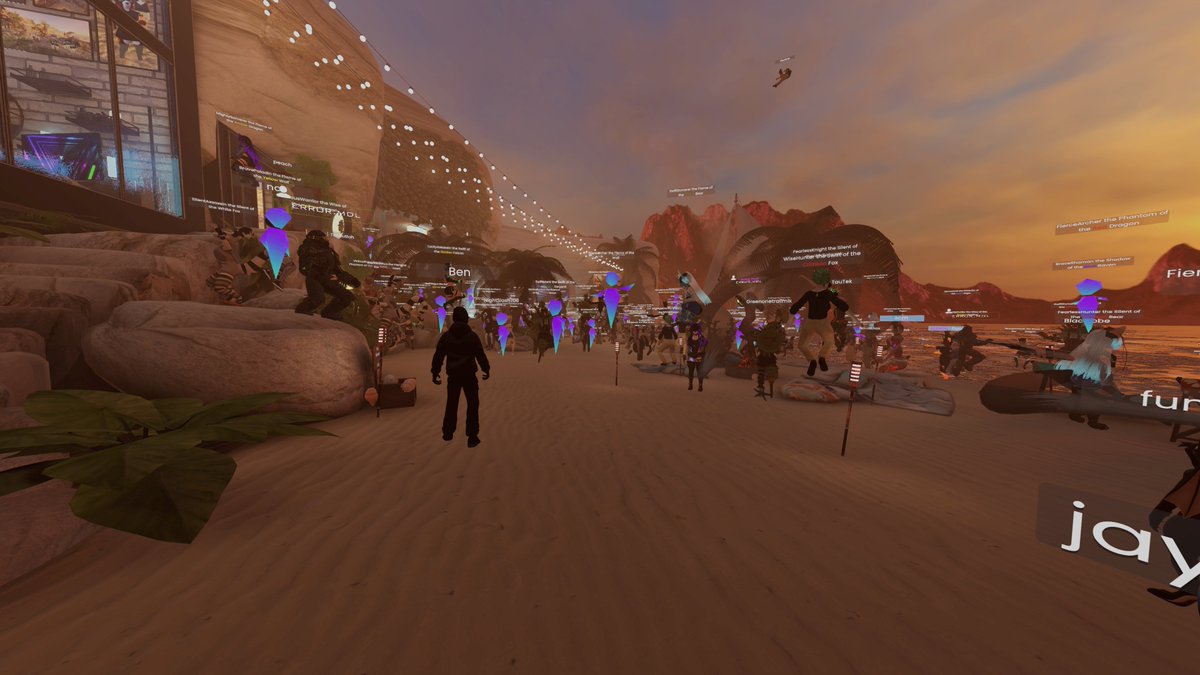
545, that's how many we had at our load test today; there's still lots more to do. Basis is a VR game and social framework. Everything is open source; check it out at https://t.co/sVoFTPKt7Q
Matrix-Game 2.0 — The FIRST open-source, real-time, long-sequence interactive world model
Last week, DeepMind's Genie 3 shook the AI world with real-time interactive world models.
But... it wasn't open-sourced.
Today, Matrix-Game 2.0 changed the game. 🚀
25FPS. Minutes-long interaction. Fully open-source.
🚀We're bringing Gaussian Splats to glTF with Khronos Group, Open Geospatial Consortium, Esri & Cesium. This is how open standards win. Let’s build the future of 3D together.
🔗https://t.co/olyFjodNE9
#GaussianSplats #NianticSpatial #glTF #SPZ #3DStandards #GeospatialAI #RealityCapture #OpenSource3D #SpatialComputing #OGC #Khronos #Cesium #Esri
Genie-3 just achieved what AAA game engines do - but WITHOUT any 3D models. Interactive REAL-TIME video generation @ 24 fps
Wild how this model figured out complex effects like exposure shifts, volumetric god rays, and phenomena we need to code explicitly in 3D engines
TL;DR 🧵
Genie-3 just achieved what AAA game engines do - but WITHOUT any 3D models. Interactive REAL-TIME video generation @ 24 fps
Wild how this model figured out complex effects like exposure shifts, volumetric god rays, and phenomena we need to code explicitly in 3D engines
TL;DR 🧵
I pitched this idea to Meta for @BeatSaber , but there are other games it could also work for.
The Global Frequency
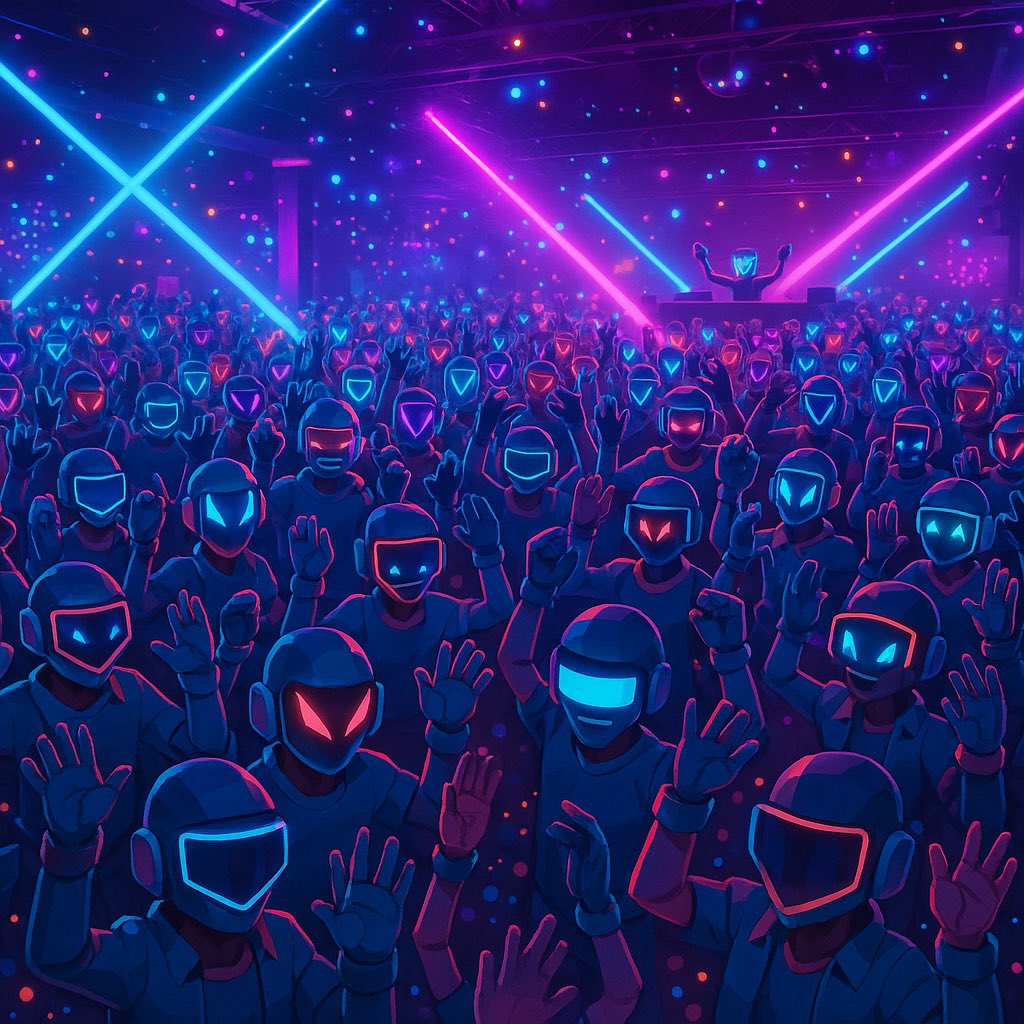
The fuzzy abstract vision of the Metaverse, and cinematic visions like Ready Player One, almost always involve crowds of people having a great time. While I remain “the champion of the power of isolation”, I acknowledge that there is real value there, and VR has so far failed to deliver it.
For a lot of reasons, it isn’t going to happen inside Horizon Worlds.
I propose a concrete, focused experience built on Beat Saber.
Playing with friends is great, but the random online servers are tough to match paid music packs on, and the current players tend to converge on Camillia songs, which is offputting for casual players.
My suggestion: In addition to the current online play modes, offer a “global frequency” that plays a schedule of songs that an arbitrary number of people can join at once. Thousands. Tens of thousands.
Actually, two frequencies: one with just the free tracks, and one with all the paid music packs. The schedule should be viewable in game and on the web, so you could decide to join when your favorite music pack is playing.
The nature of Beat Saber offers a unique capability for multiplayer – you can switch difficulty or modifiers between songs at will, and still be playing with the same crowd. The song is forced, but it doesn’t matter how you play. This is key for the Global Frequency, but I would also suggest it as an option for regular multiplayer.
In the 60 second intermission between songs, everyone is in “the club”. If you sit out a song, or fail out (and don’t have no-fail enabled), you also drop into the club. Music is always playing in the club, either the current song, or the hook from the song just completed, so everyone has something to move to.
Beat Saber avatars are very lightweight, and it should be possible to render hundreds of them, giving a good palette to render the optimally cool crowd scene, which would be the core design question. It would be a fun tech challenge to represent the entire set of thousands of players, but just intelligently picking a hundred good neighbors would still look amazing.
Any explicit friends you have that are also playing should be near you, and some effort should be made to allow you to “recognize regulars” that you have played together with before. You should probably be able to walk around and even fly up in the air like Walkabout Mini Golf so you can appreciate the crowd.
There are leaderboards up in the sky, with spotlights and other effects highlighting players in the crowd. Someone “wins” the song on each difficulty level, and is celebrated, but everyone has the opportunity to achieve first-completions, personal bests, and full-combo perfection, which result in visible effects for all to see. Every intermission manifests joy for some of the players, which is contagious.
The play field should default to the multi player field, with the giant avatar hologram of the global lead player (for your difficulty level), and the other players that were closest to you in score on the last song surrounding you, automatically giving you a competitive field and ephemeral rivalries, but there should be an option to let people play with the single player environments if they want.
I would play the hell out of that, and I suspect potentially millions of others would too.
To be honest, when I started @threejs I didn't know the handedness concept yet.
But even if I had mostly used 3dsMax up until that point, I knew Y up was the way to go.
The Z to "coming out" of the screen felt good too.
I'm glad glTF and USD also went with right handed Y up.
At @theworldlabs, we built a new Gaussian splatting web renderer with all the bells and whistles we needed to make splats a first-class citizen of the incredible @threejs ecosystem. Today, we're open sourcing Forge under the MIT license.
Join us tomorrow for the next Gaussian Splats Town Hall! This town hall will delve into the research world of Gaussian splats and also review the latest progress made in interoperability.
See agenda and register: https://t.co/qaY2RN3KEd