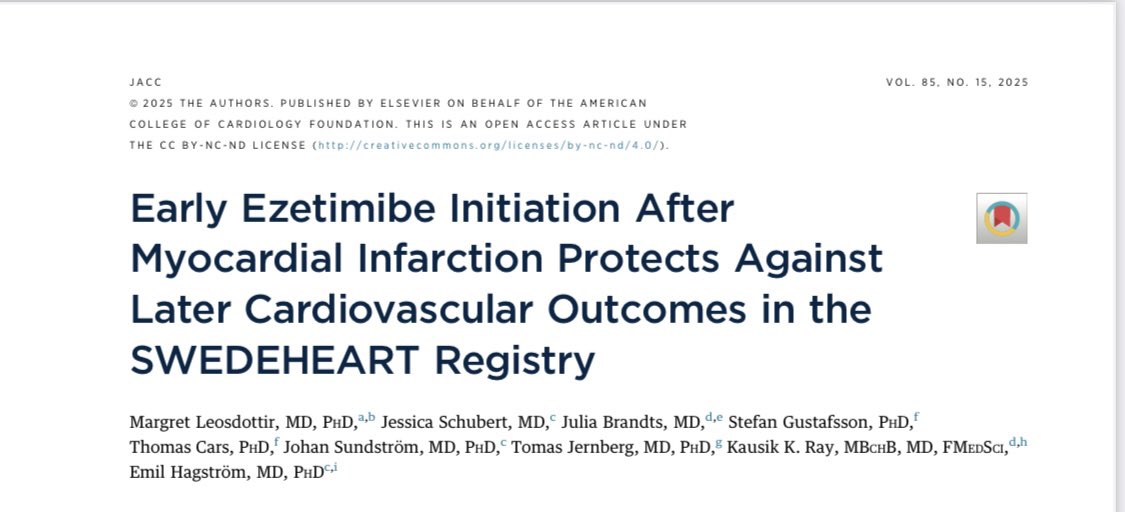
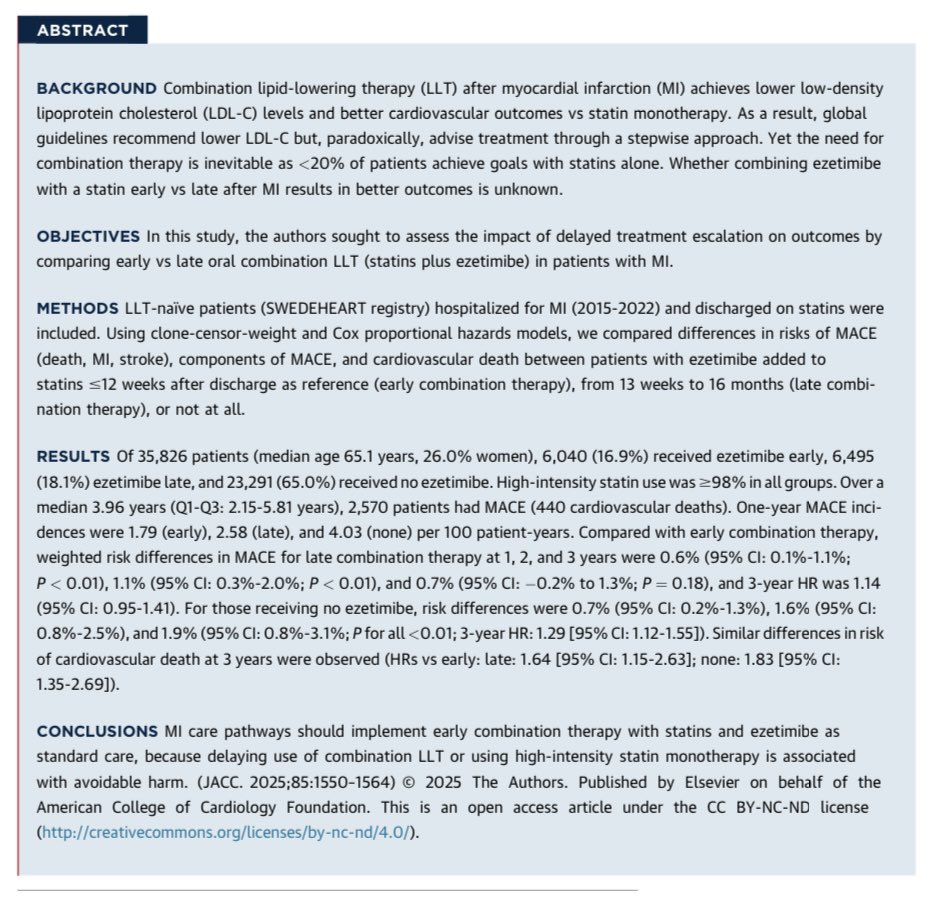
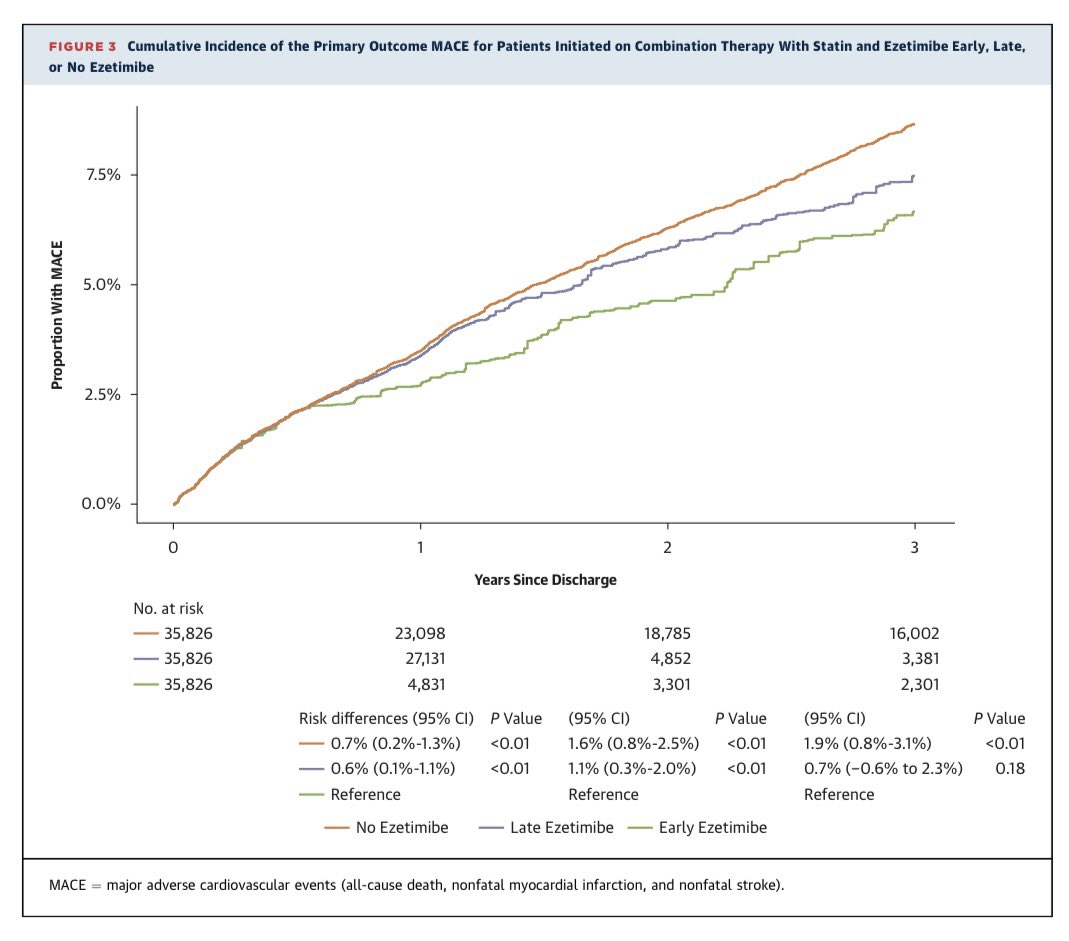
Since 2016 and the Improve It trial we have known that two drugs statins and ezetimibe combination therapy were better than statin monotherapy after an MI for CVD prevention. We also have had PCSK9i trials showing other combination therapies also reduce CVD when added to statins.
Efficacy and safety of angiotensin receptor–neprilysin inhibition in HF patients with ESKD on maintenance dialysis
improving left ventricular function, reversing left ventricular remodelling, and reducing the risk of all-cause mortality
https://t.co/cNzyIg54zl
Easy to show added value on top of redundant risk tool (risk scores)
Smartly these trials not comparing Vs CAC, as very unlikely to add on a simple surrogate of athero burden and especially when cac zero
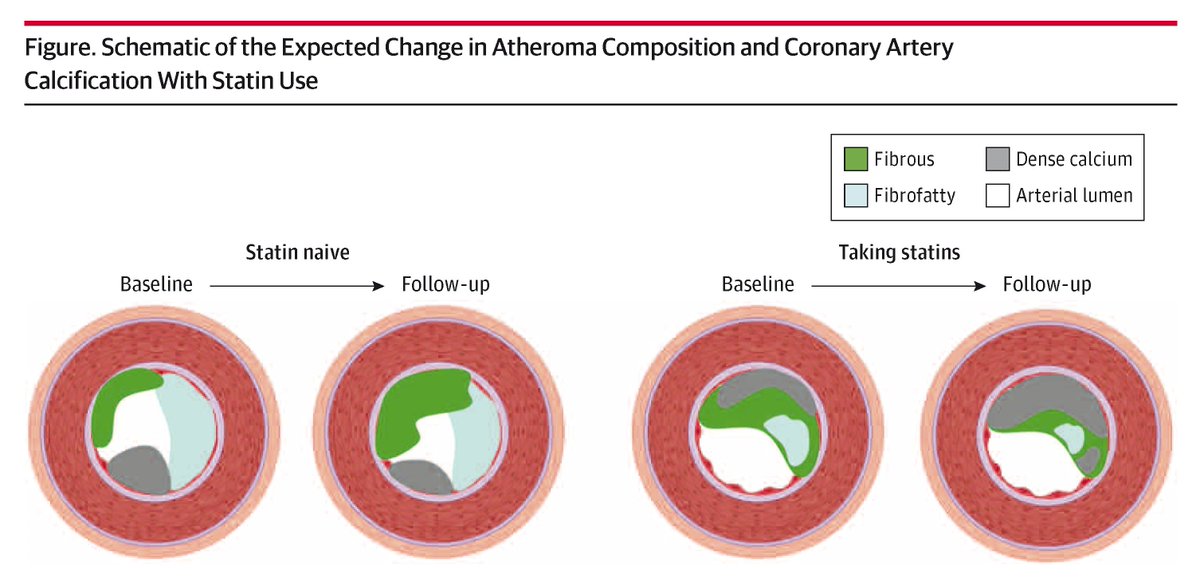
Despite this great tool at look at plaque changes
Most viewed from @JAMACardio:
Measurement of coronary artery calcium (CAC) score among adults without ASCVD and of intermediate risk, as well as borderline risk in certain cases, can help refine risk stratification when a clinical decision is uncertain.
https://t.co/FdWsH2M1iN
The available evidence suggests that intensification of loop diuretic agents produces relief of physical signs of decongestion, but the importance of different strategies for short-term decongestion strategy for health status and long-term outcomes has not been established
Outcomes of Reinitiating Direct Oral Anticoagulants After Intracranial Hemorrhage: A Sequential Target Trial Emulation Study
DOAC is associated with lower risk of all-cause mortality. The optimal timing of DOAC reinitiation varies by ICH severity
https://t.co/JXMhbUh08e
@hillypaige2@khurramn1@RonBlankstein CAC is to disease detection as Mammogram is to breast cancer. It detects disease, but is the start of the process, not the end. CCTA with AI quantitative plaque analysis is analogous to the biopsy for breast cancer. As I learned as a medical student, “No meat, no treat”!
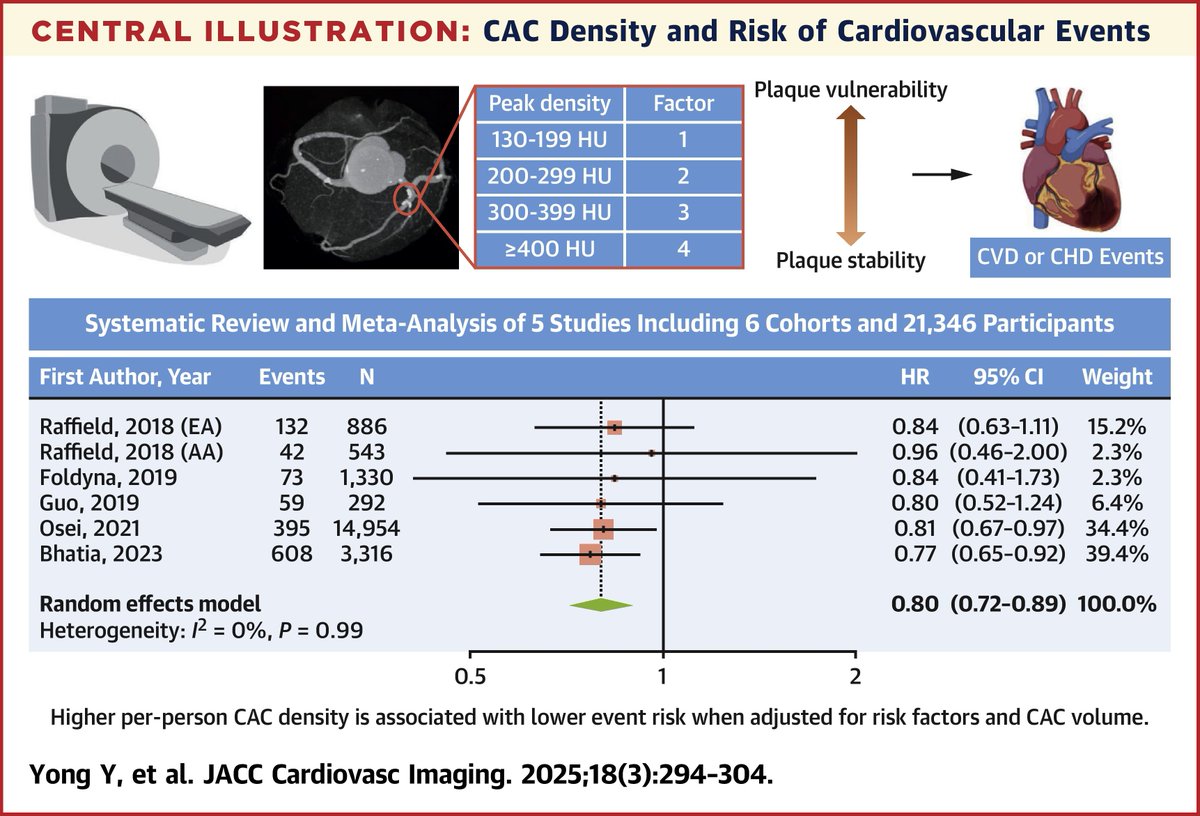
Higher density, lower risk #cvCAD plaque? Higher #CAC density confers a lower risk of future #CVD events with a ~20% lower risk for each standard deviation increase in density in this systemic review and meta-analysis https://t.co/kkMCjQdq1c
#YesCCT#JACCIMG@DrAndrewLin
An important article demonstrating utility of CAC to improve outcomes in JAMA today
doi:10.1001/jama.2025.0584
with great editorials by @RonBlankstein and @MichaelJBlaha
To add context
Usually greater distribution reflects higher burden as u can see significant attenuation of risk in fully adjusted models
Also in case of mismatch, CHD risk higher with burden vs distribution
@DrRumberger@MichaelJBlaha@RonBlankstein
#LpaAwarenessMonth
✅ @FamilyHeartFdn Cholesterol Connect test kit returned on Monday
✅ Results received Friday!
✅ Personalized LDL-C Safe Zone
✅ Lp(a) normal
✅ Crestor 20mg still doing its job!
➡️ Order your free kit today:
https://t.co/bxlUfWlvne
@endless_health@Amgen
Alternative LDL Cholesterol–Lowering Strategy vs High-Intensity Statins in Atherosclerotic Cardiovascular Disease: A Systematic Review and Individual Patient Data Meta-Analysis
https://t.co/QzmuO4wgfT @SABOURETCardio@gbiondizoccai@Coronary4front@cpgale3
High-intensity statins lower LDL cholesterol in high-risk ASCVD patients, but combining moderate-intensity statins with ezetimibe offers similar benefits with a lower risk of new-onset diabetes and statin intolerance. https://t.co/p0OrAKjTEC @CardioSSoon