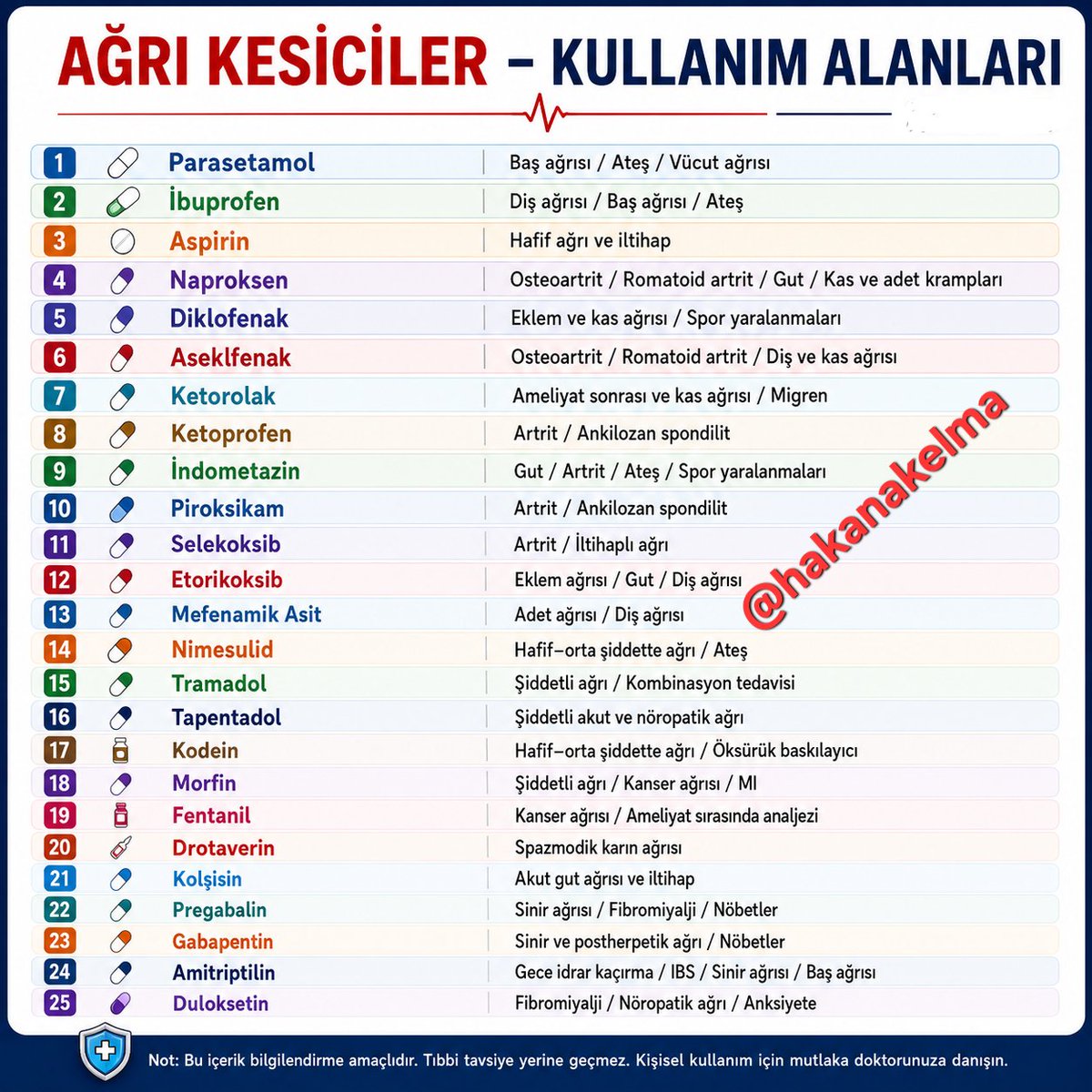
Ağrı kesiciler hastalığı değil, ağrıyı kontrol altına alır.
Bu nedenle her ağrı için aynı ilaç doğru değildir.
‼️‼️Yanlış ağrı kesici seçimi; mide kanaması, böbrek hasarı, karaciğer toksisitesi, alerjik reaksiyonlar ve ilaç etkileşimleri gibi ciddi sonuçlara yol açabilir.
‼️ Özellikle antibiyotik gibi "komşudan ilaç alma" alışkanlığı, ağrı kesiciler için de tehlikelidir.
UNUTMAYIN ‼️Doğru ağrı kesici, doğru hasta, doğru doz ve doğru süre. Gereksiz ve bilinçsiz kullanım, faydadan çok zarar getirir.
#Sağlık #AğrıKesici #AkılcıİlaçKullanımı
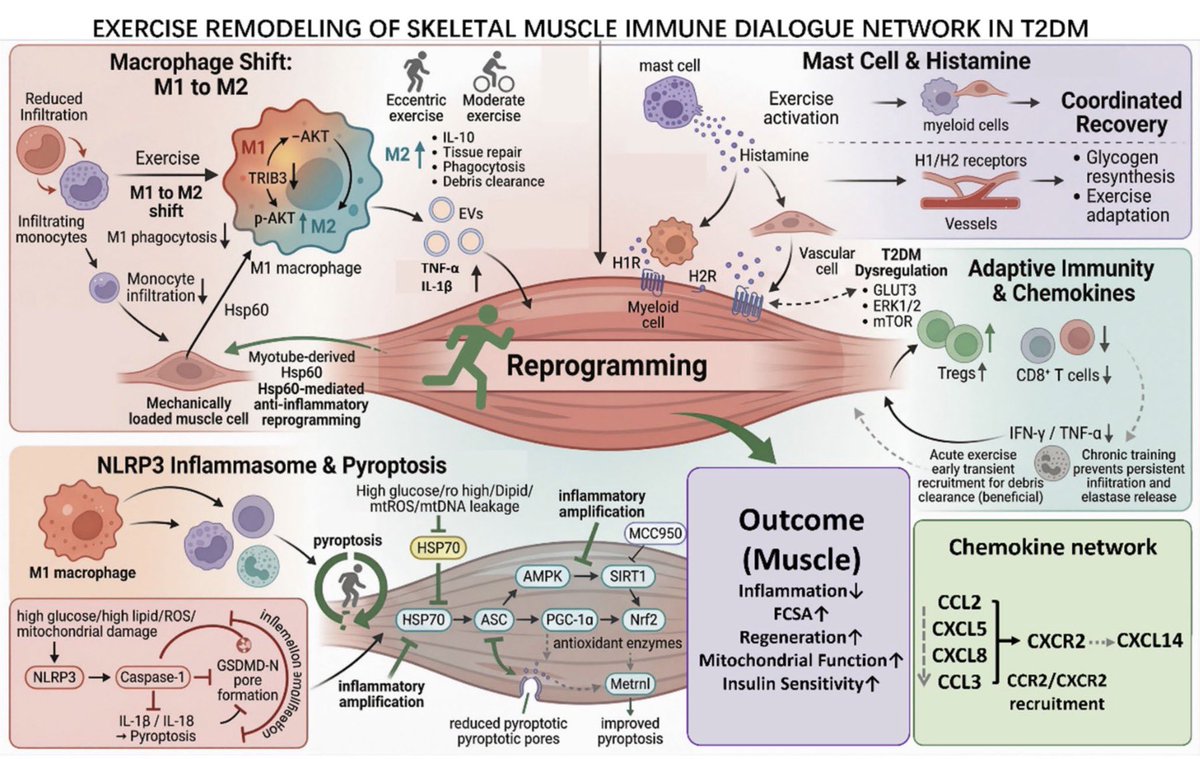
Exercise remodels the skeletal muscle immune microenvironment to ameliorate type 2 diabetes mellitus-induced muscle atrophy: From immunometabolism to organ crosstalk
https://t.co/sFCDPT3VlQ
Guía metodológica completa para investigadores que realizan revisiones sistemáticas cuantitativas y metaanálisis utilizando el lenguaje de programación R e introduce el metaanálisis multinivel.
🔗https://t.co/iJ43AEF92w
A proud milestone for PCP!
Psychiatry and Clinical Psychopharmacology(PCP) has achieved a 2025 Journal Impact Factor of 1.6and advanced to Q3 in the Psychiatry category.
Our sincere thanks to our authors, reviewers, editors, and readers.
https://t.co/QFqysnhYSg
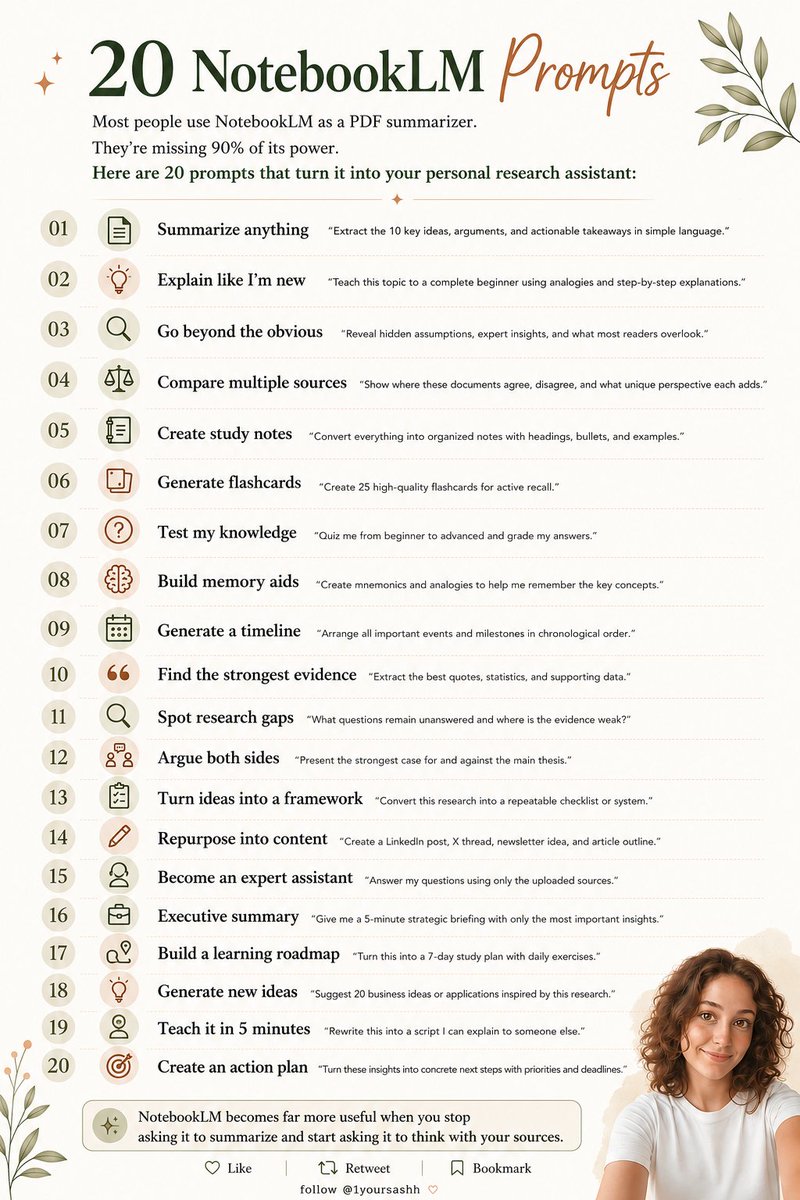
Most people use NotebookLM as a PDF summarizer.
They're missing 90% of its power.
Here are 20 prompts that turn it into your personal research assistant:
Summarize anything
"Extract the 10 key ideas, arguments, and actionable takeaways in simple language."
Explain like I'm new
"Teach this topic to a complete beginner using analogies and step-by-step explanations."
Go beyond the obvious
"Reveal hidden assumptions, expert insights, and what most readers overlook."
Compare multiple sources
"Show where these documents agree, disagree, and what unique perspective each adds."
Create study notes
"Convert everything into organized notes with headings, bullets, and examples."
Generate flashcards
"Create 25 high-quality flashcards for active recall."
Test my knowledge
"Quiz me from beginner to advanced and grade my answers."
Build memory aids
"Create mnemonics and analogies to help me remember the key concepts."
Generate a timeline
"Arrange all important events and milestones in chronological order."
Find the strongest evidence
"Extract the best quotes, statistics, and supporting data."
Spot research gaps
"What questions remain unanswered and where is the evidence weak?"
Argue both sides
"Present the strongest case for and against the main thesis."
Turn ideas into a framework
"Convert this research into a repeatable checklist or system."
Repurpose into content
"Create a LinkedIn post, X thread, newsletter idea, and article outline."
Become an expert assistant
"Answer my questions using only the uploaded sources."
Executive summary
"Give me a 5-minute strategic briefing with only the most important insights."
Build a learning roadmap
"Turn this into a 7-day study plan with daily exercises."
Generate new ideas
"Suggest 20 business ideas or applications inspired by this research."
Teach it in 5 minutes
"Rewrite this into a script I can explain to someone else."
Create an action plan
"Turn these insights into concrete next steps with priorities and deadlines."
NotebookLM becomes far more useful when you stop asking it to summarize and start asking it to think with your sources.
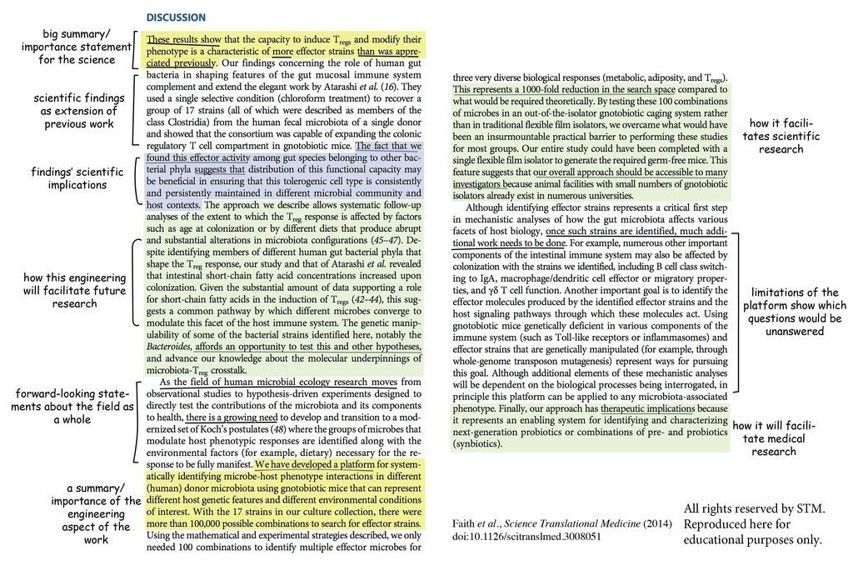
PhD Students - Here is an example of a good discussion section.
A good discussion section should answer 6 questions.
1. What is different in your findings compared to previous research?
2. What is similar in your findings compared to previous research?
3. How different sections of your results section correlate?
4. What are the implications of your findings for practitioners?
5. What are the implications of your findings for researchers?
6. What are the limitations or threats to the validity of your findings?
Anything you'd like to add?
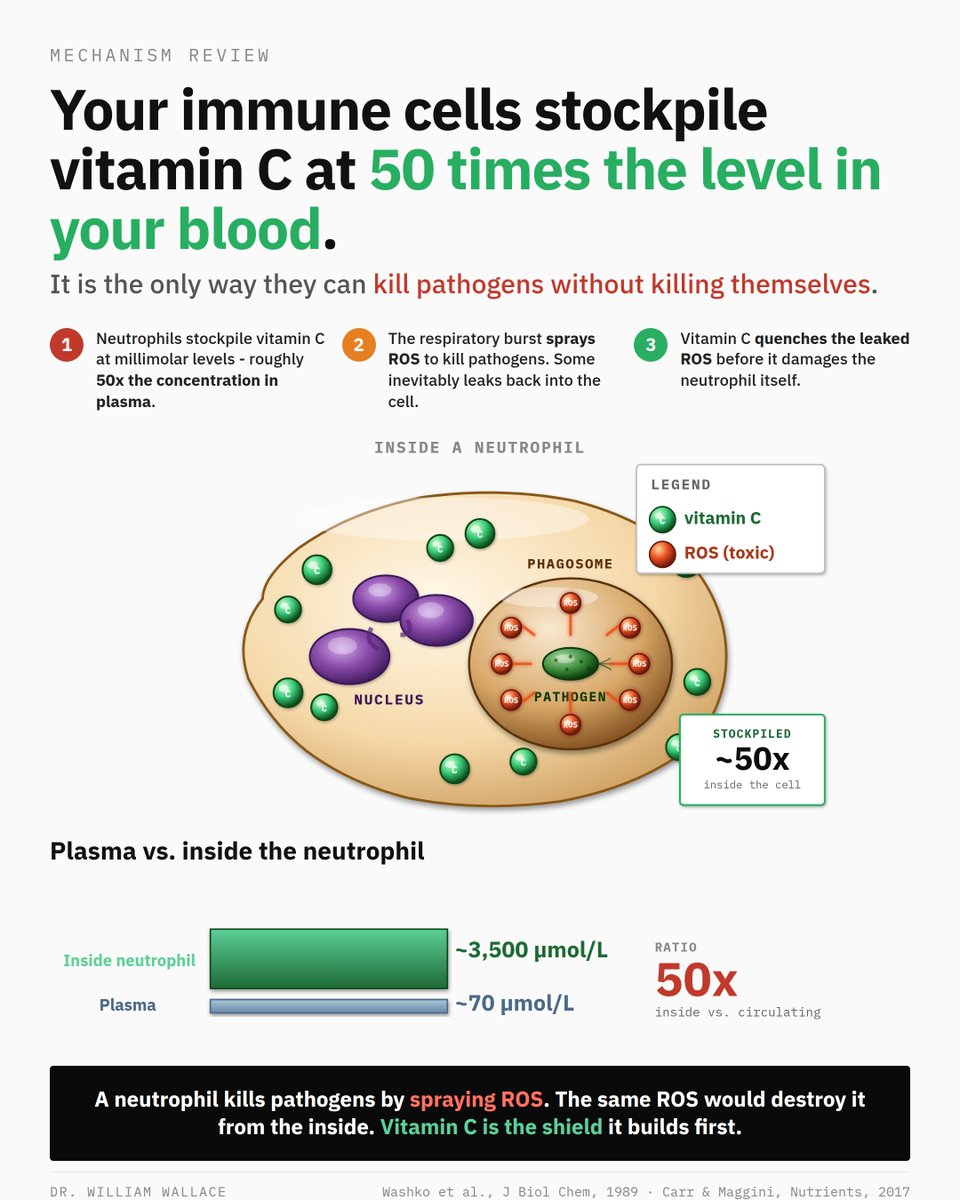
Vitamin C is famous as an antioxidant. That framing understates what it does inside your immune cells.
When a neutrophil hunts down a bacterium, it does not chew it apart. It engulfs the pathogen into a sealed compartment called a phagosome and detonates a respiratory burst inside, spraying reactive oxygen species like superoxide, hydrogen peroxide, and hypochlorous acid onto the trapped organism. This is essentially the chemistry of industrial bleach, used in a controlled space. It works. It also creates a problem.
ROS does not stay neatly contained. Some of it leaks back into the neutrophil itself. A cell that produces enough oxidant to kill a pathogen produces enough to kill itself. The neutrophil needs an internal antioxidant pool large enough to neutralize the leakage without shutting down the kill. Vitamin C is a major component of that pool.
Resting plasma vitamin C tops out around 70 micromolar at saturation. Inside neutrophils, the concentration sits in the millimolar range, roughly 50 times higher. This is not passive equilibrium. Neutrophils pump vitamin C across their membrane against a steep gradient using a sodium-dependent transporter called SVCT2, maintained at metabolic cost.
When neutrophils initiate a respiratory burst, their internal vitamin C drops sharply. Stankova 1975 and Winterbourn & Vissers 1983 documented this consumption during phagocytosis. The cell then needs to refill the reservoir. Repeated infection without dietary replenishment depletes the pool, and neutrophil function declines with it. Patients with severe infection routinely show plasma vitamin C well below healthy controls.
The practical question is dosing. Levine 1996 in PNAS measured this directly in seven healthy adults under controlled depletion-repletion. Neutrophils saturated at approximately 100 mg daily intake. Plasma saturated fully at 1000 mg daily. Single doses above 500 mg showed declining bioavailability with the excess excreted in urine. Above 400 mg daily, no measurable additional benefit appeared.
What this means: roughly 200 mg daily, split into two doses, keeps your neutrophil and plasma pools comfortably saturated. That is achievable from food alone. A red bell pepper, two kiwifruit, or an orange plus a cup of strawberries each put you in the range. The 1,000 mg pills do not get more vitamin C into your cells than the pepper does. They just produce more expensive urine.
Cellular vitamin C does not fall during infection because the immune system is broken. It falls because the system is working as designed and burning through its reserves to do it. Refilling the tank is one of the few interventions with mechanism, pharmacokinetics, and clinical context all aligned.
Washko et al., J Biol Chem, 1989
Levine et al., PNAS, 1996
Carr & Maggini, Nutrients, 2017
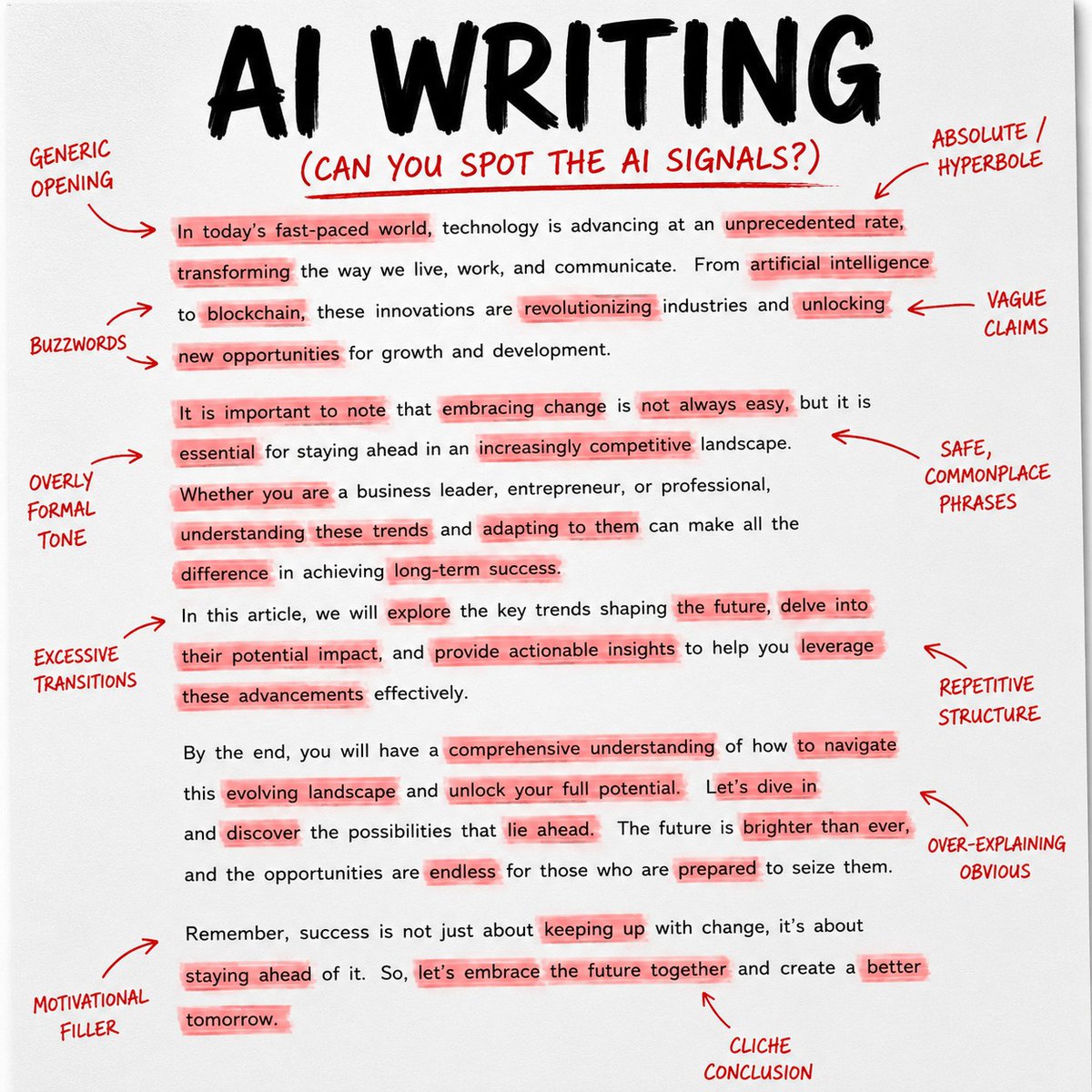
BAD NEWS: YOUR CHATGPT OR CLAUDE WRITING IS OBVIOUS
Most people won't say it, But they spot it instantly.
Here are 7 Claude Anti-AI Writing System Prompts that remove the AI fingerprints from your writing:
20 YouTube channels that teach AI better than most CS degrees.
Free. No application required. No tuition.
This list covers everything: theory, intuition, implementation, research.
Here's the full list:
👇
1. Andrej Karpathy
Deep, intuitive walkthroughs of neural networks and modern LLMs
Link: https://t.co/H9AgOyTCj4
2. 3Blue1Brown
Visual intuition for math, linear algebra, and neural networks
Link: https://t.co/ze5LcRnNHp
3. StatQuest with Josh Starmer
Clear, friendly explanations of statistics and ML fundamentals
Link: https://t.co/M5jtPVttRZ
4. Stanford Online
University-grade ML and AI lecture series (Andrew Ng, CS229, etc.)
Link: https://t.co/Ti25hM9EkC
5. freeCodeCamp
Full-length AI and ML courses — structured, free, and constantly updated
Link: https://t.co/2uMVYisl8F
6. sentdex
Practical machine learning and Python projects
Link: https://t.co/VQXlDiozDh
7. Yannic Kilcher
Deep dives into ML and AI research papers
Link: https://t.co/rwZxpWbvWp
8. MIT OpenCourseWare
Rigorous academic courses on ML, AI, and applied mathematics
Link: https://t.co/xbUkfCAoF2
9. DeepLearningAI
Structured learning paths for deep learning and generative AI
Link: https://t.co/gJoTzrFmpR
10. Two Minute Papers
Fast, accessible summaries of cutting-edge AI research
Link: https://t.co/4i9pKWy9RJ
11. Umar Jamil
Clear, implementation-focused explanations of transformers and LLMs
Link: https://t.co/5CmgDnIfE1
12. Hugging Face
Open-source LLMs, transformers, and modern NLP tooling
Link: https://t.co/DGd8Adb7WU
13. AI Explained
Accessible breakdowns of the latest AI research and model releases
Link: https://t.co/6mkVa1ZVym
14. Lex Fridman
Long-form conversations with top AI researchers and practitioners
Link: https://t.co/Eq85AneyMr
15. Matt Wolfe
The fastest way to stay current on AI tools, news, and releases
Link: https://t.co/0tH8oo7iVj
16. Machine Learning Street Talk
Unfiltered, technical discussions on AI research and theory
Link: https://t.co/V0NT3LmEjW
17. Jeremy Howard
Practical deep learning with strong intuition
Link: https://t.co/4wFb2D0Qih
18. Kaggle
Applied ML, competitions, notebooks, and real-world workflows
Link: https://t.co/3QVGG2Z5Me
19. Tina Huang
Career-focused AI and data science from an ex-Meta data scientist
Link: https://t.co/KlEr9jW7Ob
20. Anthropic
AI safety, model research, and how frontier AI actually gets built
Link: https://t.co/qZiz2RFwfy
The best AI education isn't behind a paywall.
It never was.
While people debate which bootcamp to buy,
the best instructors in the world are uploading for free.
Every week.
♻️ Repost to give your network an unfair advantage.__
1. Follow @coder_surya
2. Save the post.
3. Repost to your network.
4. Join My AI Community: https://t.co/ioQEJKhR1q
...
Understanding the Interplay Between Obesity and Cancer: From Mechanisms to Therapeutic Opportunities
✅️ This review summarizes how these obesity-related changes contribute to cancer progression & treatment resistance, & It is discussed the potential strategies to improve therapy. A better understanding of these mechanisms may support the development of more effective treatments for patients w/obesity.
https://t.co/MOSw96OPBk @HealthyFellow
Obesity-driven mechanisms promoting tumorigenesis, progression & metastasis. Obesity contributes to cancer development & progression through multiple interconnected mechanisms. During tumorigenesis, adipose tissue expansion induces a pro-inflammatory microenvironment characterized by cytokine dysregulation (e.g., IL-6, TNF-α) & activation of insulin/IGF-1 signaling pathways, which promote cellular transformation & proliferation. In tumor growth, obesity-associated hypoxia leads to HIF-1α activation & drives aberrant angiogenesis & extracellular matrix (ECM) remodeling, resulting in enhanced tumor cell proliferation and invasion. As the disease progresses, these changes collectively facilitate metastasis. In metastatic stages, obesity promotes lipid metabolism & accumulation within tumor cells, supports inflammatory signaling & immune cell recruitment, & disrupts adipokine balance (e.g., leptin, adiponectin), thereby enhancing cancer cell survival, dissemination, and colonization of distant organs. Together, these processes establish a tumor-promoting environment that accelerates cancer progression & metastatic spread.
There's a Nature paper out this month that quietly rewrote what creatine does in your body.
For thirty years the story has been simple. Creatine powers short, hard efforts in muscle. It tops off the energy system your body uses for sprints and heavy lifts. That part is real. It's been studied to death. It's why creatine sits in millions of cabinets.
What the new paper shows is that this is half the story. Your brown fat, the kind your body uses to make heat when it's cold, has a second engine that runs on the same molecule. When you get cold, stored fat breaks down inside brown fat cells and releases a small molecule called glycerol. Glycerol flips a switch that turns on a heat-producing cycle. Creatine moves through that cycle, getting charged with energy and releasing the energy as heat, over and over. Each loop burns calories.
This was not a sudden discovery. The cycle was first described in 2015. The proteins that run it were identified in 2021. The switch that activates it is what got solved this month, in mice, with the same machinery confirmed in humans.
So what's actually useful here.
Your body already has creatine. You make about a gram a day on your own and get another gram from meat and fish if you eat them. Vegetarians and vegans run on the low end of normal because plants don't carry it. Three to five grams a day from outside the diet tops off your muscle stores in about four weeks. Whether it tops off this brown fat cycle the same way has not been tested in people yet. We don't know.
What is tested in people is the trigger. Cold air activates brown fat. You don't need an ice bath. Sixty to ninety minutes in a room around 60 to 65 degrees, repeated regularly, measurably turns it on under a PET scan. That's been replicated in humans since 2009.
The bigger point is the framing. Creatine has been positioned as a workout ingredient for three decades. The biology says it does more than that, all day, in tissue most people don't think about. Whether you take it or not, your body is using it for this right now.
Bunk J, Hussain MF, Delgado-Martin M, Samborska B, Ersin M, Shaw A, Rahbani JF, Kazak L. The Futile Creatine Cycle powers UCP1-independent thermogenesis in classical BAT. Nat Commun. 2025;16(1):3221.
GOODBYE EXCEL 👋
No more hassle of creating Microsoft Excel from scratch.
With Claude 4.7, you can create a clean, automated spreadsheet in less than a minute.
Use these 5 prompts consistently, and you'll have a ready-to-use spreadsheet 👇👇
📌 Save it—it'll come in handy later.










![Onil_coder's tweet photo. Over 80 AI tools to finish months of work in mere minutes🪄
1. 𝐑𝐞𝐬𝐞𝐚𝐫𝐜𝐡
- ChatGPT
- Copilot
- Gemini
- Abacus
- Perplexity
2. 𝐈𝐦𝐚𝐠𝐞
- Fotor
- Dalle 3
- Stability AI
- Midjourney
- Microsoft Designer
3. 𝐂𝐨𝐩𝐲𝐖𝐫𝐢𝐭𝐢𝐧𝐠
- Rytr
- Copy AI
- Writesonic
- Adcreative AI
4. 𝐖𝐫𝐢𝐭𝐢𝐧𝐠
- Jasper
- HIX AI
- Jenny AI
- Textblaze
- Quillbot
5. 𝐖𝐞𝐛𝐬𝐢𝐭𝐞
- 10Web
- Durable
- Framer
- Style AI
6. 𝐕𝐢𝐝𝐞𝐨
- Klap
- Opus
- Eightify
- InVideo
- HeyGen
- Runway
- ImgCreator AI
- Morphstudio .xyz
7. 𝐌𝐞𝐞𝐭𝐢𝐧𝐠
- Tldv
- Otter
- Noty AI
- Fireflies
8. 𝐒𝐄𝐎
- VidIQ
- Seona AI
- BlogSEO
- Keywrds ai
9. 𝐂𝐡𝐚𝐭𝐛𝐨𝐭
- Droxy
- Chatbase
- Mutual info
- Chatsimple
10. 𝐏𝐫𝐞𝐬𝐞𝐧𝐭𝐚𝐭𝐢𝐨𝐧
- Decktopus
- Slides AI
- Gamma AI
- Designs AI
- Beautiful AI
11. 𝐀𝐮𝐭𝐨𝐦𝐚𝐭𝐢𝐨𝐧
- Make
- Zapier
- Xembly
- Bardeen
12. 𝐏𝐫𝐨𝐦𝐩𝐭𝐬
- FlowGPT
- Alicent AI
- PromptBox
- Promptbase
- Snack Prompt
13. 𝐔𝐈/𝐔𝐗
- Figma
- Uizard
- UiMagic
- Photoshop
14. 𝐃𝐞𝐬𝐢𝐠𝐧
- Canva
- Flair AI
- Designify
- Clipdrop
- Autodraw
- Magician design
15. 𝐋𝐨𝐠𝐨 𝐆𝐞𝐧𝐞𝐫𝐚𝐭𝐨𝐫
- Looka
- Designs AI
- Brandmark
- Stockimg AI
- Namecheap
16. 𝐀𝐮𝐝𝐢𝐨
- Lovo ai
- Eleven labs
- Songburst AI
- Adobe Podcast
17. 𝐏𝐫𝐨𝐝𝐮𝐜𝐭𝐢𝐯𝐢𝐭𝐲
- Merlin
- Tinywow
- Notion AI
- Adobe Sensei
- Personal AI
18. 𝐒𝐨𝐜𝐢𝐚𝐥 𝐦𝐞𝐝𝐢𝐚 𝐦𝐚𝐧𝐚𝐠𝐞𝐦𝐞𝐧𝐭
- Tapilo
- Typefully
- Hypefury
- TweetHunter
[Bookmark this post🔖]
Must follow @Onil_Coder for more AI tools smart creators use 🪄👇](https://pbs.twimg.com/media/HIf3VeNaAAA4E0N.jpg)


