Abdominal Movement Flushes Neural Waste
The brain is far more mechanically integrated with the rest of the body than scientists previously realized. In a study, researchers revealed a “hydraulic pump” mechanism that links physical activity to brain health.
When you contract your abdominal muscles, even during a light movement like taking a step, you compress blood vessels that push fluid into the spinal cavity. This pressure causes the brain to gently “sway” within the skull, a motion that acts like squeezing a dirty sponge to flush out toxic neural waste via the cerebrospinal fluid (CSF).
https://t.co/3tsUNEq9ar
#neuroscience #science #Exercise (1/3)
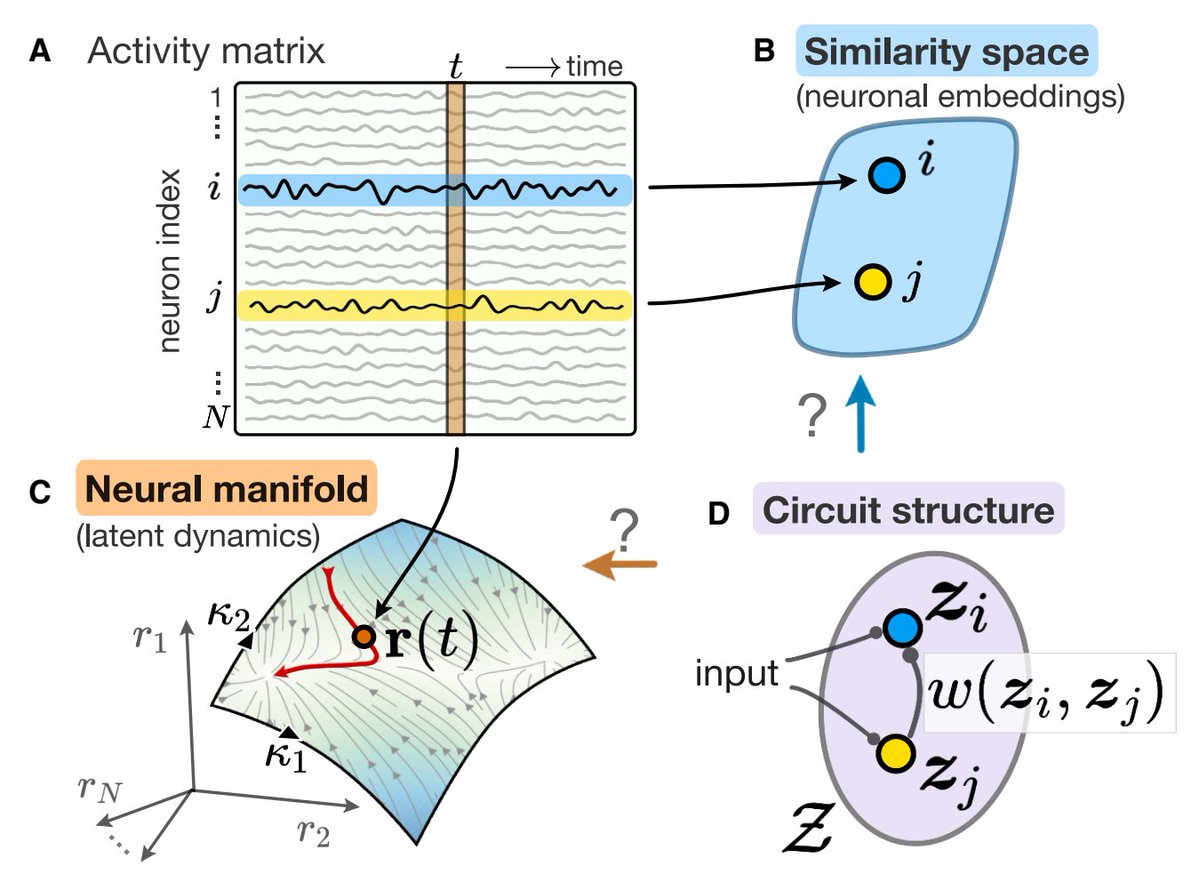
𝗪𝗵𝗮𝘁'𝘀 𝘁𝗵𝗲 𝗿𝗲𝗹𝗮𝘁𝗶𝗼𝗻𝘀𝗵𝗶𝗽 𝗯𝗲𝘁𝘄𝗲𝗲𝗻 𝗺𝗮𝗻𝗶𝗳𝗼𝗹𝗱𝘀 𝗮𝗻𝗱 𝗿𝗲𝗰𝘂𝗿𝗿𝗲𝗻𝘁 𝗻𝗲𝘁𝘄𝗼𝗿𝗸𝘀 𝗶𝗻 𝘁𝗵𝗲 𝗯𝗿𝗮𝗶𝗻?
This looks like a must read (suppl material bursting with goodies).
https://t.co/aMNOr9ReQV
Understanding the brain requites more than neuron connectivity:
> These waves of calcium, rippling across astrocytes, reflect signaling dynamics that modulate neurons.
Neuromodulation is necessary for keeping the brain’s activity level in a functional range, preventing it from either flatlining or erupting in seizures.
For years, neuromodulation was thought to be conducted by neurons themselves. While previous work has implicated astrocytes in some cellular signaling, the latest experiments use “advanced techniques to really pinpoint and satisfy beyond a doubt that astrocytes are having a key role in neuromodulation in the brain.
An excellent Quanta Magazine articles dives into the history and new evidence for the roles of astrocytes and their control over neurons. It has many implications:
"The results suggest that neuron-only brain models, such as connectomes, leave out a crucial layer of regulation."
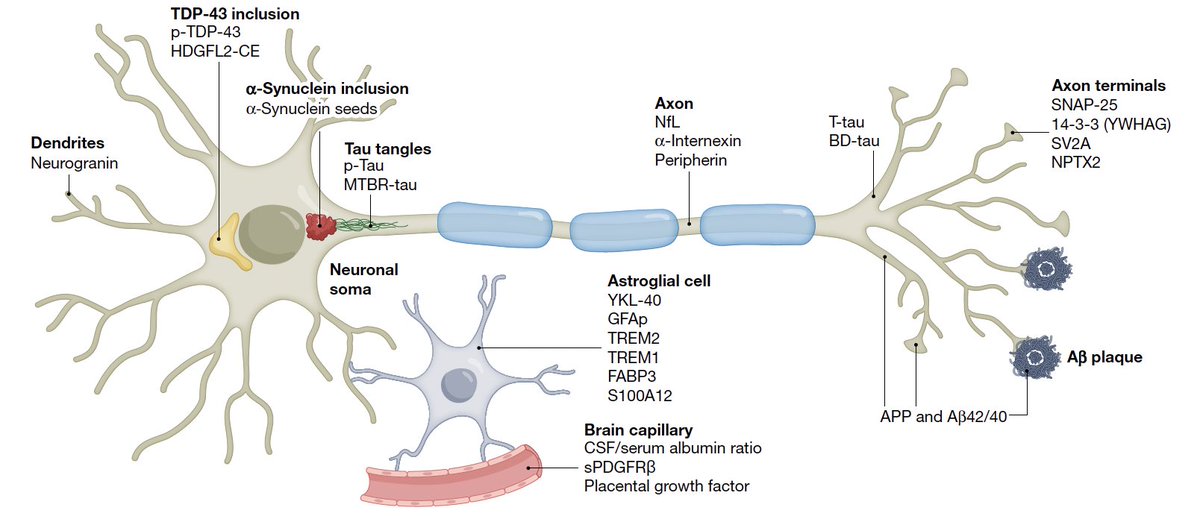
A new @Nature review on biomarkers for Alzheimer’s (AD) and other dementias
"Multiple studies now suggest that the most promising AD biomarker is plasma p-tau217, which captures both Aβ- and tau-related aspects of the disease and provides information on a neuronal response to Aβ that predicts neurodegeneration"
https://t.co/aZOLW7dEZ9
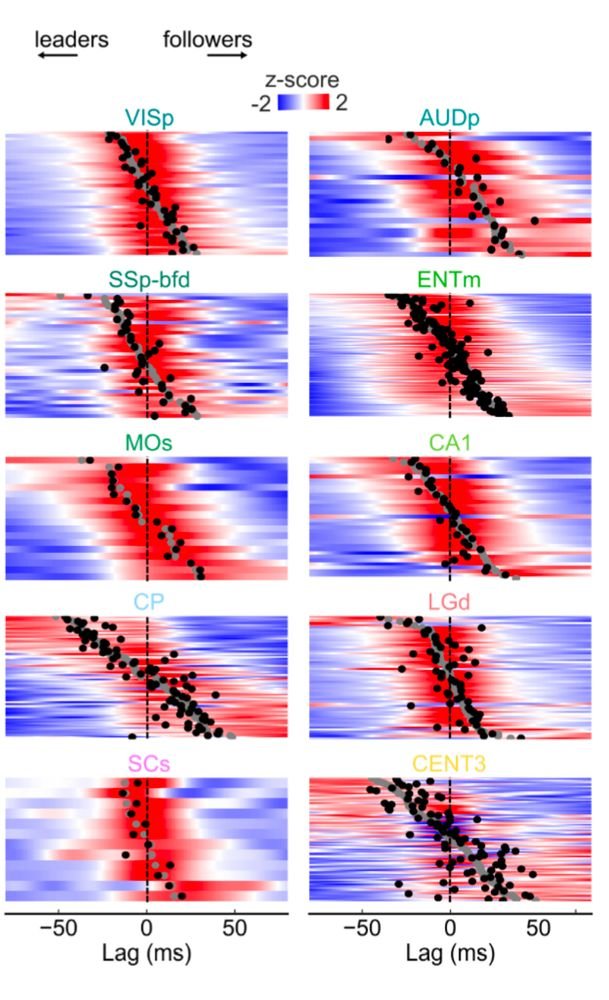
𝗦𝗽𝗮𝘁𝗶𝗮𝗹𝗹𝘆 𝗱𝗶𝘀𝘁𝗿𝗶𝗯𝘂𝘁𝗲𝗱 𝗽𝗿𝗼𝗰𝗲𝘀𝘀𝗶𝗻𝗴 𝗶𝗻 𝘁𝗵𝗲 𝗺𝗼𝘂𝘀𝗲 𝗯𝗿𝗮𝗶𝗻
Leaving aside the more extreme discussions about "everything everywhere" and modularity this is a very cool paper. Data from 260 regions and 60K neurons.
https://t.co/uVZ77bpLIE
For Alzheimer's disease, it's no longer a debate of amyloid (Aβ) versus tau. They are interactive drivers and this new, optimistic review maps out a path towards disease-halting therapies @CellCellPress
https://t.co/xl3IUSe2IX
New preprint on activity sequences: in every brain region, stable over weeks.
With Célian Bimbard and Matteo Carandini. Based on data from Célian and the International Brain Lab.
https://t.co/LUynqj1ph7
wow, so perceptual decisions are really not value decisions.
Selective engagement of the primate orbitofrontal cortex during value-based but not perceptual decisions
https://t.co/u82ZlYifR7
Neuroscience is finally beginning to treat time and space the way physics already does, not as fixed backgrounds, but as emergent products of rhythmic geometry.
Buzsáki’s new paper shows that memory, navigation, and the very experience of time arise from nested brain–body rhythms working together: slow oscillations setting context, fast oscillations carrying detail, with cross-frequency coupling binding them into a single coherent structure.
In this view, time isn’t a linear flow, it’s a measure of change.
Space isn’t a static map, it’s a relational scaffold built from oscillatory sequences.
Body rhythms aren’t peripheral, they provide the foundational reference frames that cognition builds on.
Once you see cognition as geometry in time rather than computation in space, its architecture becomes far clearer.
This shift, from static maps to rhythmic fields will reshape how we understand memory, experience, and eventually, consciousness itself.
Paper: “Time, space, memory and brain–body rhythms” – Nature Reviews Neuroscience (2025)
#neuroscience #brainrhythms #cognition #timespace #memoryresearch #systemsneuroscience #neurodynamics #complexsystems
@penrose@IvetteFuentesGu@MillerLabMIT@StuartHameroff@skdh@ericweinstein@drmichaellevin@MIT@Nature@KarlFristonNews@anilkseth@BrainInstitute@donalddhoffman@martinmbauer@tegmark@ylecun