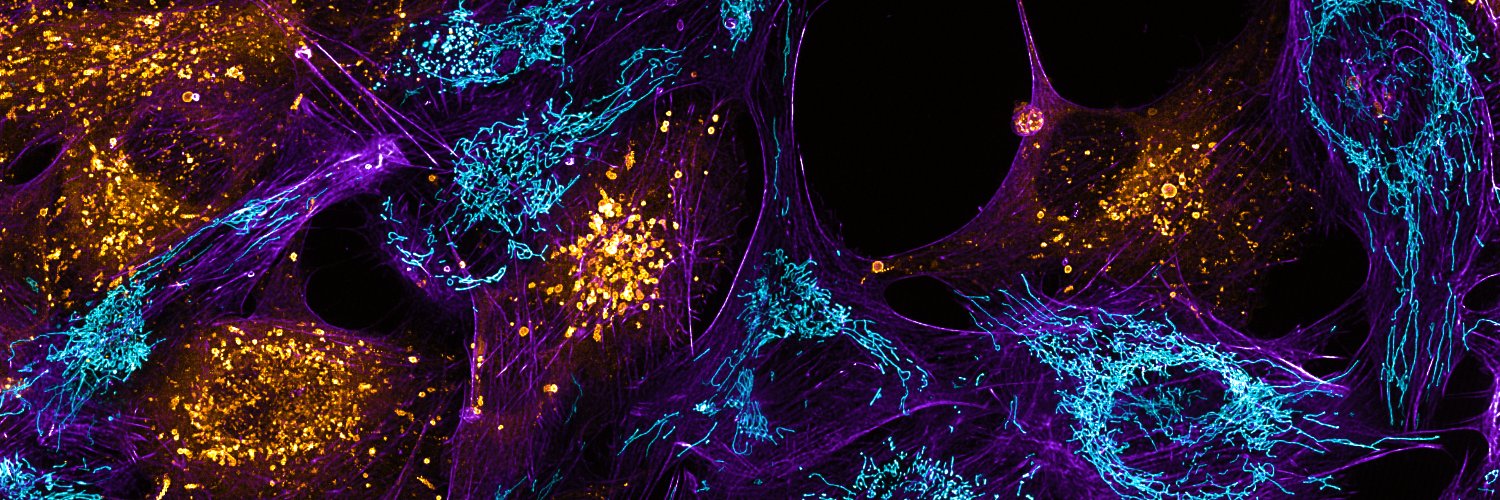
A multimodal perturbation atlas of 1,000 pooled CRISPR knockouts in A549 cells, profiled by fluorescence microscopy (39 live, 13 fixed markers), label-free phase imaging of the same live cells, and single-cell RNA sequencing (scRNA-seq)
Totaling ~57 million single-cell profiles
Preprint: https://t.co/8akaS91MfU
Today is the Day, CenSpark650 is available!
Time to get those centrioles and cilia shining under the 🔬objective!
https://t.co/crQ0DTqA2j
video: 20h imaging of primary cilium formation in a single RPE-1 cell stained with CenSpark650.
movie credits: Cédric Pourroy
In a paper just published in @sciencemagazine, we teamed up with @teichlab to construct the most detailed atlas to date of hormone production and action in humans at cellular resolution. (1/8)
Link: https://t.co/5iPOCq9yfu
📢On June 1st, we will be launching CenSpark650, the very first selective fluorescent probe for imaging centrioles and cilia in live cells.🔬
No transfection, zero genetic manipulation. Just Add & Image 1 hour later.
Learn more: https://t.co/1QQIO3TqVZ #Bioimaging
Antigen-stabilizable fluorescent nanobodies that become fluorescent upon binding intracellular targets enable background-free multicolor imaging and biosensing in living systems. @EinsteinMed@salkinstitute@animmerj
https://t.co/SdODbQg5KT
🚨Prime editing breakthrough (April 29, 2026)
Researchers at UMass Chan Medical School have developed “Prime Assembly”: a method to insert large DNA fragments (up to 11 kb) with high precision and without double-strand breaks in the genome.
They use two pegRNAs plus linear donor templates that assemble inside the cell. It works in quiescent cells and has already been demonstrated by inserting full genes such as dystrophin and CARs.
Prime Assembly (PA) perfectly complements their platform and PASSIGE technology for large insertions, opening the door to more indications (DMD, allogeneic CAR-T, etc.) with lower risk.
Another step that reinforces why prime editing remains the most versatile gene-editing technology.
Source: https://t.co/QbmNHCQGpz
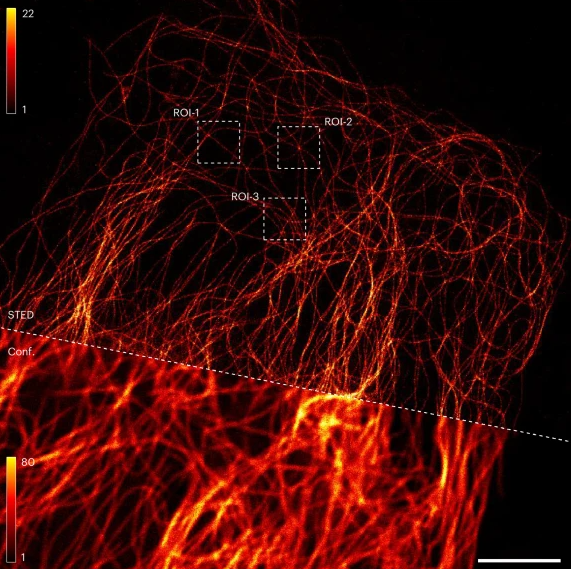
NirFAP680 is a near-IR fluorogen-activating protein with an order of magnitude greater cellular brightness and photostability than currently available NIR FAPs.
https://t.co/57TS0AF1aq
Excited to announce our study (w/ @RukmanThota & @MaxKrummel) published today @Nature:
Macrophages “hold our living identities” by taking tiny bites from living cells and presenting this information to CD8 T cells.
https://t.co/9XENtFrB4h
#immunology#cellbiology@immunox@ucsf
There is a tendency to minimise the implications of the recent retraction in PNAS of the Mariano Barbacid paper for non-declaring their conflicts of interest.
This is not a minor procedural oversight.
It touches a core structural principle of modern scientific practice: transparency as a prerequisite for credibility.
Conflict-of-interest disclosure is not a bureaucratic formality.
It is a mechanism designed to allow readers, reviewers, and the broader community to interpret data within its full economic and intellectual context. When omitted—particularly in cases where authors hold ownership stakes in companies positioned to commercially exploit the reported findings—the omission distorts the epistemic framework in which the results are evaluated.
We have precedent.
Both in Spain and the United States, high-profile cases have demonstrated the institutional consequences of such failures. A prominent clinician-scientist—former chief in leading hospitals across both countries and president of major international medical societies— resigned from positions in the United States after failing to disclose relevant financial conflicts, subsequently transitioning to the pharmaceutical industry.
The issue was not scientific fraud; it was a breach of transparency. Yet the reputational and institutional consequences were substantial.
There is an additional layer here that is often overlooked.
The publication in question was submitted under the “contributed” track available to members of the United States National Academy of Sciences. This pathway—effectively a form of editorial privilege—allows for an expedited and, in practice, more controlled review process. It is a mechanism unavailable to the majority of researchers, who must navigate standard peer review with no such structural advantage.
This episode is not about a single paper. It reflects a tension between scientific authority and scientific accountability. Prestige may facilitate access, but it does not exempt one from the foundational norms that sustain trust in the system.
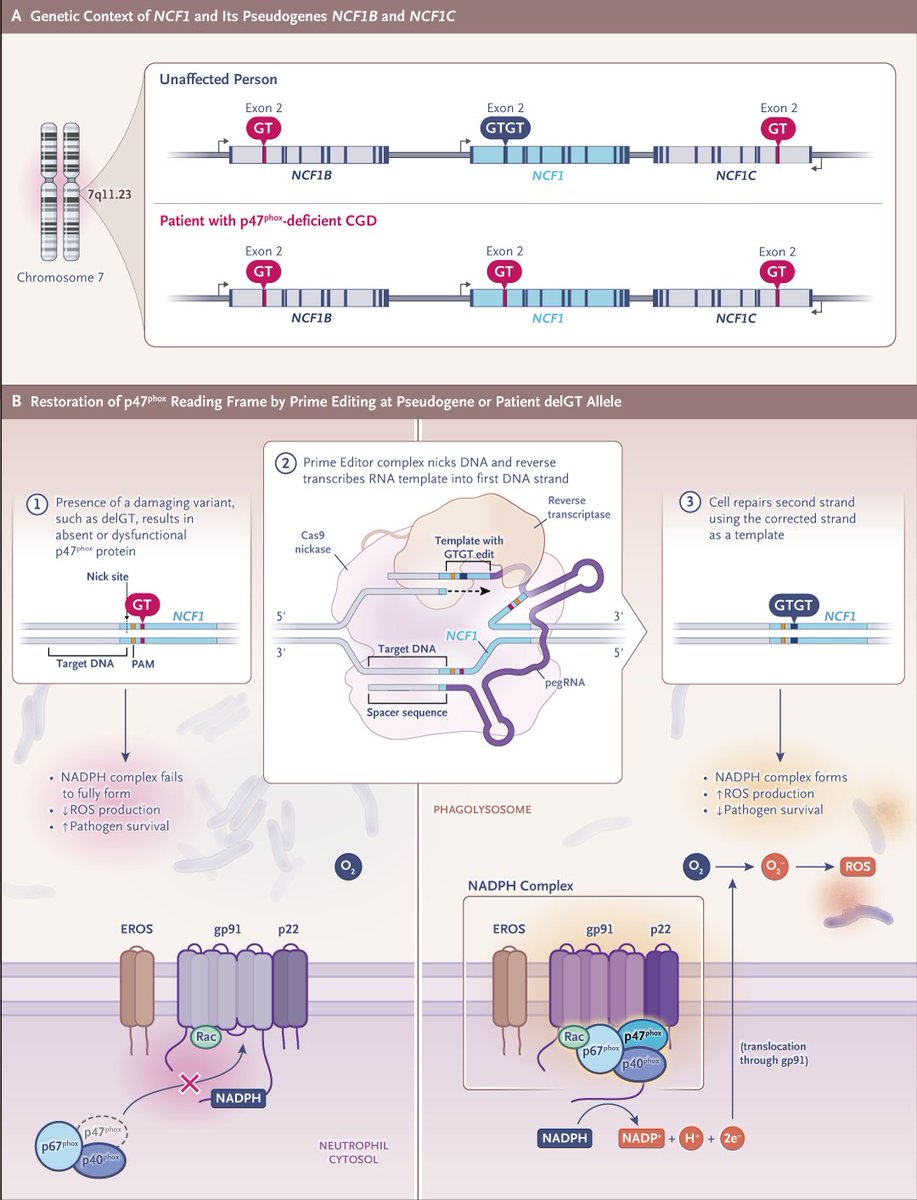
In a study by Gori and colleagues, gene editing with a prime editor was used to treat two persons with chronic granulomatous disease caused by a small deletion in the gene NCF1. Full study results: https://t.co/li2ervw22i
Editorial: Genetic Medicine — Primed and Ready https://t.co/uFETJbSiho
#Hematology
PFA ependymoma is among the deadliest childhood brain tumors. And for years, one of the most striking mysteries was this: boys get it more often, and do worse. Nobody knew why.
Now we do.
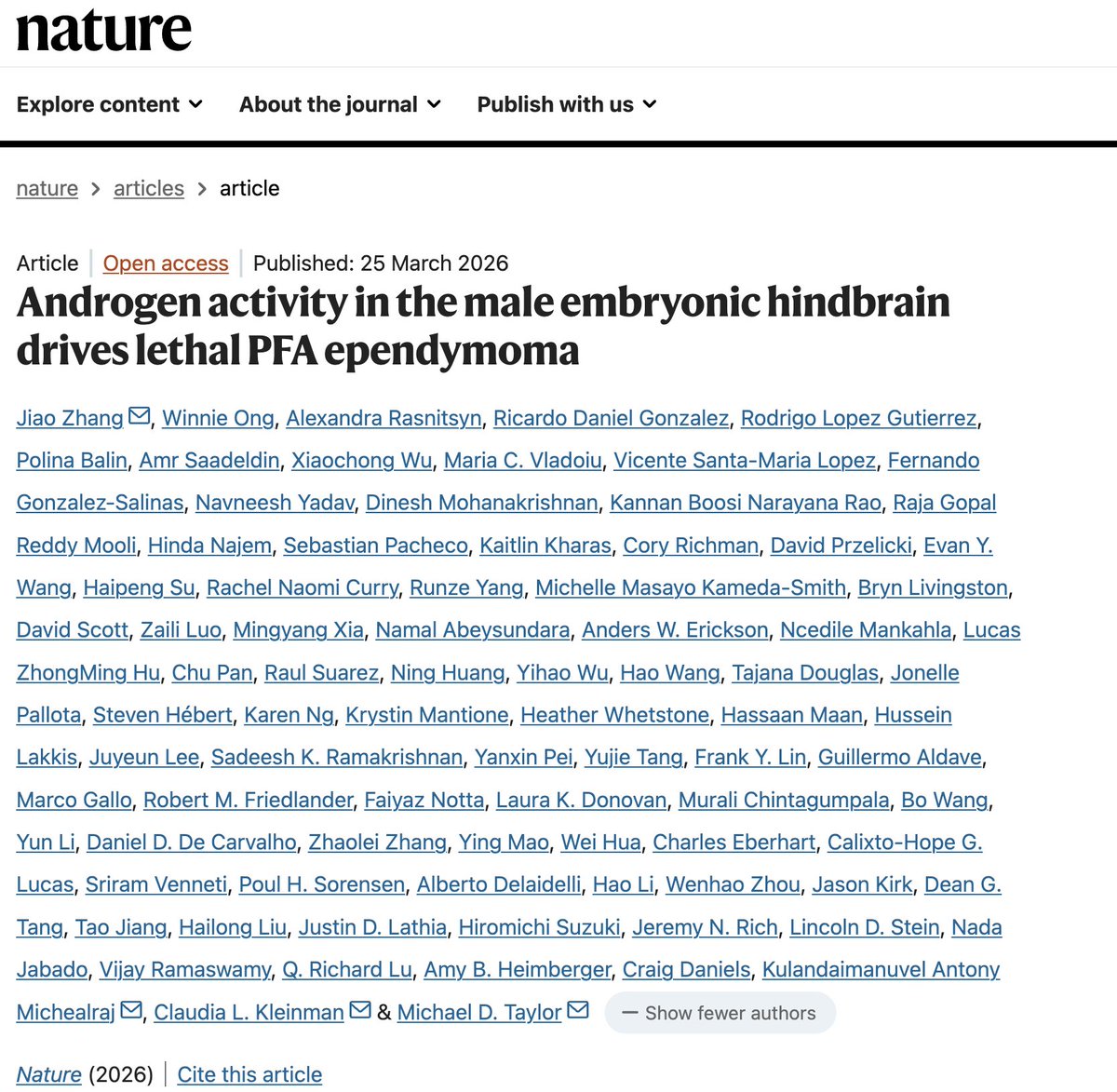
Thrilled to share our new paper in @Nature : Androgen activity in the male embryonic hindbrain drives lethal PFA ependymoma
Using scRNA-seq from 26 primary PFA tumors, we found that male tumors are shifted toward a more stem-like, less differentiated state — with a striking enrichment of gliogenic progenitor-like cells. In other words: male PFA tumors appear developmentally “younger,” stalled earlier along the glial differentiation trajectory.
Then came the key mechanistic result.
Using the four-core genotype mouse model — which cleanly separates sex chromosome effects from gonadal hormone effects. The answer was not chromosomes. It was androgen signaling.
Androgens in the embryonic hindbrain delay glial differentiation, keeping progenitor cells immature for longer. That widens the developmental window for malignant transformation, offering a mechanistic explanation for both the male incidence bias and the worse outcomes.
Even more exciting: this biology is actionable.
The androgen receptor antagonist enzalutamide, already used in the clinic , and the AR degrader MTX-23 both suppressed PFA clonogenicity and growth. Other brain tumor subtypes were far less affected, suggesting this vulnerability may be unusually specific to PFA.
A deadly pediatric brain tumor.
A long-standing clinical mystery.
And now, a developmental and hormonal mechanism that points toward therapy.
Huge congratulations to co-first authors Jiao Zhang, Winnie Ong, and Alexandra Rasnitsyn, and to the entire international team from @BCMHouston@TexasChildrens@McGillU@UPitt and many collaborators worldwide.
And a very special shoutout to Dr. Michael Taylor for leading this extraordinary project. Truly one of the best brain tumor researchers I know.
Paper: https://t.co/KLo9NpjsMj
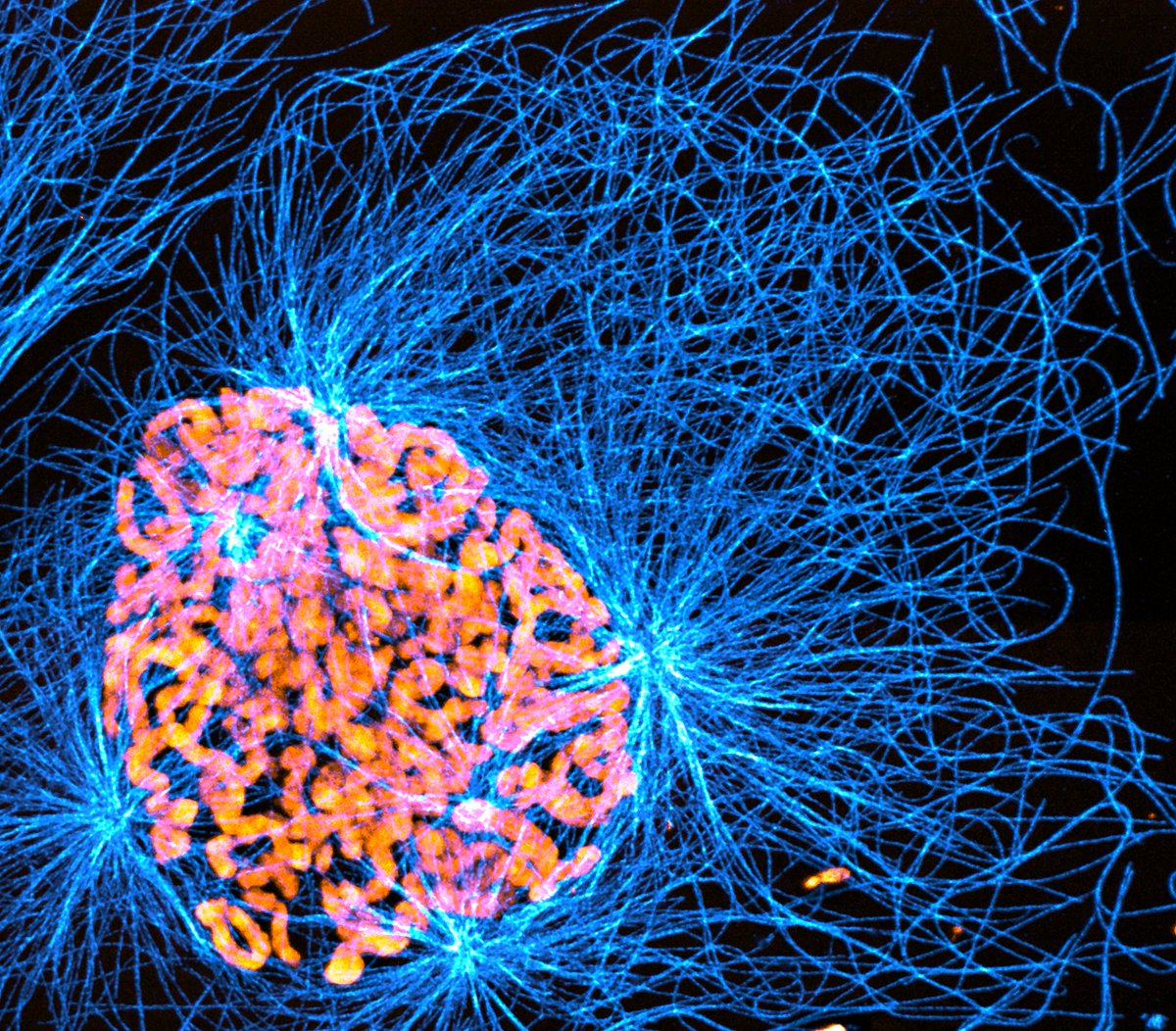
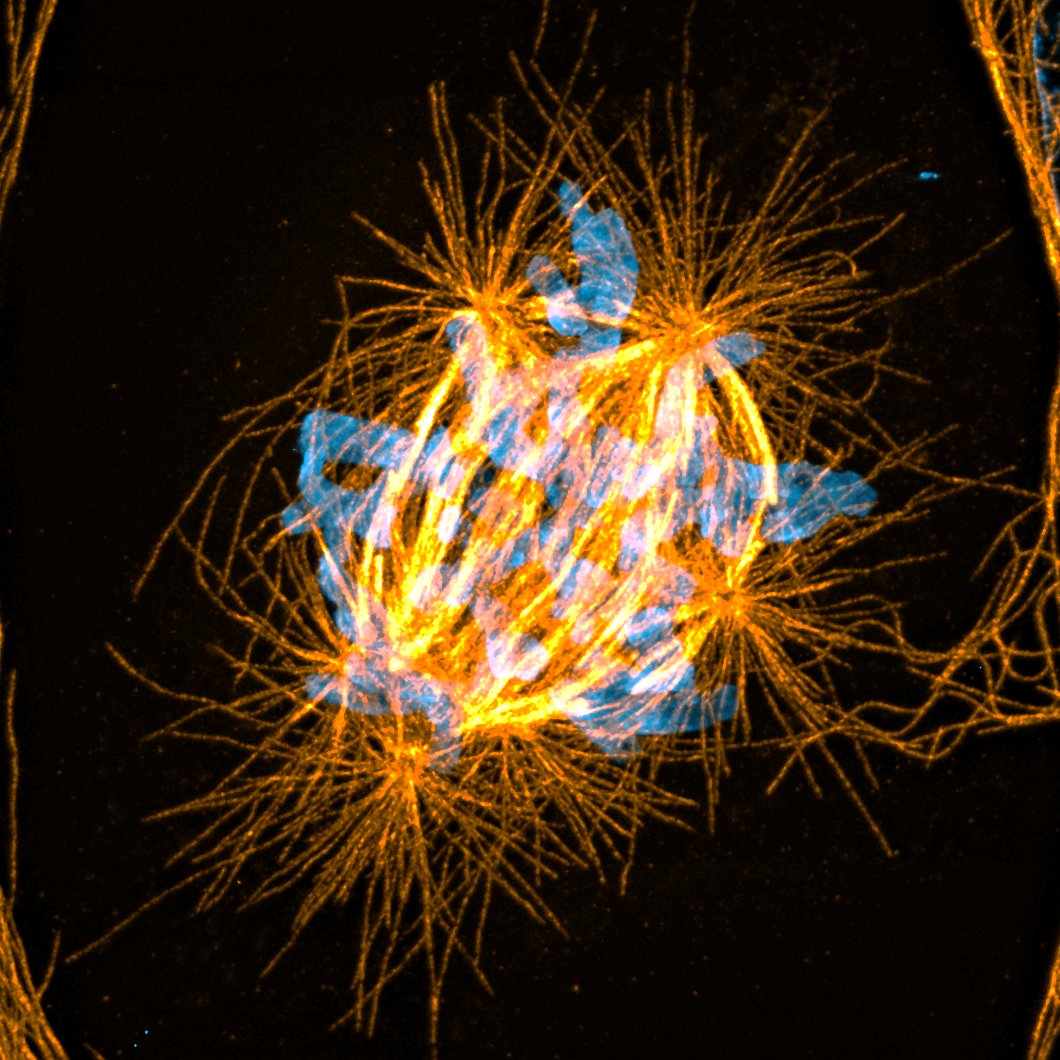
Chromosomes stuck behind the spindle are ticking time bombs for aneuploidy. We uncovered a mechanical rescue mechanism where microtubule pivoting repositions these high-risk chromosomes! Out last week in @NatureComms, here's a thread 🧵
https://t.co/BBLyswTXK9
(1/6): How can we better test therapeutics without using animals or risking lives? Lab-grown human mini-organs, called “organoids”, provide an answer! Despite their progress, organoids and related methods lack realistic flow through blood vessels, the “plumbing” of our bodies.
AI is cool and all... but a new paper in @ScienceMagazine kind of figured out the origin of life?
The paper reports the discovery of a simple 45-nucleotide RNA molecule that can perfectly copy itself.
Inspired by some gesture-based point cloud controllers I've seen on here, I vibe coded a similar web app to explore the relationship between spatial, UMAP, and PCA embeddings for spatial transcriptomics data. Next level interactivity via🖐️
Try it out: https://t.co/7MX7nT4nbV