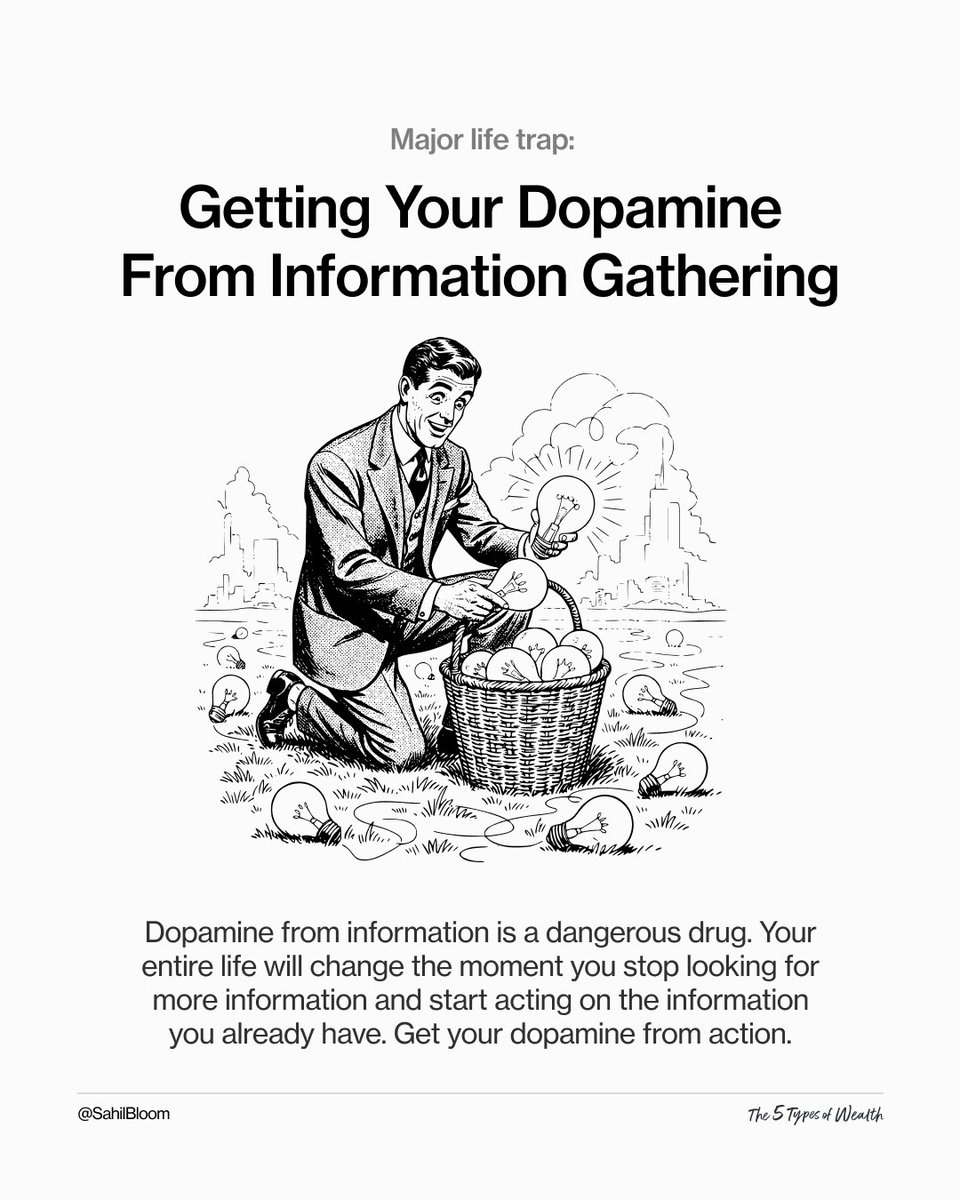
You work your ass off solving really hard problems day after day for decades, and this is what you get: anyone could have done it.
As an investor, I can tell you the limiting factor isn't investment. It's founder ability.
25 years ago today, we introduced the iPod. 1,000 songs in your pocket.
A small team. An unforgiving deadline. We had months to bring the hardware, software, and music experience together. Proud of what we built and that it means so much to people still today. A device that has been woven in many ways into our lives. People have filled their iPods with road trips, breakups, workouts, special occasions with family and friends.
How cool that the iPod has become part of culture and our stories. 25 years, it’s hard to believe! Celebrating the team that made it happen today 👏
@StevenLevy was there from the start @WIRED https://t.co/roUEC6K55t
Dialectic 61: Josh Miller!
@joshm has always been thoughtful about the spaces we spend time in.
The browser is "really a rectangle that we spend eight hours a day in." So "why would we not want to live in a good rectangle?"
Josh sat down with me to reflect on @browsercompany's journey about a year after it was acquired by @Atlassian.
We talked about everything from the original decision to "optimize for feelings" to hiring unlikely stars to where Dia and the browser stand in the AI era.
Above all else, Josh believes in people. I’ve felt that, as have so many others who’ve collaborated with him or simply been around him.
I hope you’re inspired to believe in people too, and to leave your fingerprints on the things you make.
Timestamps:
(0:00) - Opening Highlights
(1:19) - Intro: Josh Miller
(3:14) - Start: Not Commercial Enough & Optimizing for Feelings
(10:33) - Sociology, the Obama White House, Thrive, and the 5% Favicon
(16:57) - Bowling Alone, James Turrell, and Roden Crater
(23:31) - Betting on People, Leaving Thrive, and Where Computing Goes
(36:13) - "Assume You Don't Know" and What Was Sacred at The Browser Company
(43:17) - Intuition, Road Trips, and Leaving Fingerprints on Things
(55:16) - Building in Public, Pulling Back, and the Road to Atlassian
(1:04:42) - The Internet Computer in the AI Era: Codex, Cloud Browsers, and Why Everything Is Converging
(1:14:49) - How Dia Wins
(1:18:26) - Agents, Muse, and the Red Giraffe
(1:24:02) - Software Is Becoming Art
(1:33:32) - Believing in People, Leaving Facebook for the White House, and What's Next
(1:48:36) - Closing Questions
@dialecticpod 61: Josh Miller - A Good Rectangle - is out now, below and on all platforms.
Sending lots of love to the Apple community on my last day as CEO. My title changes tomorrow, but the love I have for the Apple community never will. Thank you for being a constant source of inspiration. My gratitude is endless, and I’m excited for the next chapter!
Quick Superlogical demo to end the week. This demo is just of the basic functionality, but I want to highlight just how FAST it is. There's a WHOLE lot more functionality already present and coming but I wanted to keep the demo short. But seriously, check out that speed.
I'm showing the macOS app here and I get asked a lot so let me just say up front: its not macOS only. We're still figuring out exactly what platforms will be stable enough for the initial public release, but we're working on others. In particular, the web interface is very functional but I'll demo that another time (or someone else will).
This is also all showing off the architecture I previously talked about for terminal multiplexing which is significantly different from other mainstream multiplexers: this is all a custom binary protocol where the server is maintaining N replica distributed terminal state machines. It works!
Tons of hard work going into this by the team @almonk@dizzyup@pearkes. Hope we can bring you something you can use soon. ❤️ Happy to answer questions in the replies.
We've been getting a lot of questions lately about how the Internet Archive digitizes books.
The short answer: page by page, by hand.
You may remember our viral 2021 video of Eliza Zhang scanning a book. That's still how we do it.
Meet Eliza, and learn how we scan books: https://t.co/gt9s5lbPE4
Today we are releasing Cloudflare OS, a chatbot with connectors, just like every other tech company is doing.
Except actually, it's different. This is a remake of Sandstorm[.]io, my startup from 10 years ago, except this time built on Cloudflare Workers (the platform I've spent the last 9 years building) and deeply leveraging AI. This is more or less the culmination of my secret 10-year master plan.
This is a full-on personal app vibe coding platform, in which the sandbox is so secure that you can pretty much go wild -- the AI cannot introduce a significant security bug. We believe a company's security team can feel comfortable giving non-technical users permission to vibe code and then sleep soundly at night.
How is that possible? It's the Sandstorm security model, revisited. A "Gadget" is the same thing as a Sandstorm "Grain": a fine-grained app instance. For example, if you have a document editor app, each document runs as a separate instance of the app, in a separate sandbox (one "Gadget").
This means two things, both of which I think are Big Deals:
1. The platform can manage all access control, by controlling who can access the Gadget at all. There is no way the Gadget can accidentally leak itself to an attacker -- even an attacker who has access to other Gadgets based on the same app.
2. Since everyone is running their own copy of the code, everyone can freely *modify* their copy of the code.
Think about #2 a bit more.
What if, when you wanted a new feature in the software you are using, you could just prompt your agent to add it?
This doesn't work in the cloud Software-as-a-Service model, because you are not running your own copy of the app.
Sandstorm tried to change that 10 years ago, but the world wasn't ready, because not enough people had the skills or patience to actually modify their software. AI has changed that. Now you just ask the agent -- the same agent that you are using to help you interact with the Gadget can also modify the code of the Gadget.
And it is so fun.
https://t.co/qzwdrAQhtK
Apple Maps is having one of the craziest glow-ups I've seen👀
Gaussian Splats already look incredible
Dynamic lighting would make this feel straight out of a next-gen game
Imported my Chrome profile into Codex, loaded Cloudflare and OneSignal in the side panels, and tasked it with a debugging session. It autonomously navigated the browser tabs, analyzed the environment, and implemented the code fix in one continuous workflow. GPT 5.6 is impressive.
Following the KelpDAO hack, we built an open analysis of DVN security configurations across every active OApp on LayerZero over the last 90 days.
Of ~2,665 unique OApp contracts: 47% run a 1-of-1 DVN security floor, 45% run 2-of-2, and ~5% run 3-of-3 or higher.
As we know, KelpDAO's rsETH sat in the first bucket.
Open query, public methodology, feedback welcome:
https://t.co/7sQCMN1uCS