Dear friends who write NSF GRFP rec letters, this year rec letters are due BEFORE the applications, so about 10 days earlier than normal on Oct. 11. Please don't let NSF's deadline change on rec letters screw over the applicants in your lives.
Imagine bacteria mining cryptocurrencies. We moved a step closer by encoding a 2-bit MD5 cryptographic hash algorithm – a precursor of SH256 used for Bitcoin - across 66 E. coli strains. It required over 1 megabase of DNA, the size of a small genome. https://t.co/CyjhE88JwZ
A great opportunity! If you are interested in marine microbes (coral-associated or otherwise) and natural products chemistry for your postdoc then @WS_DISCOveryNP and I would be interested in chatting!
https://t.co/cj1OfG4fCK
30 Essays to Make You Love Biology
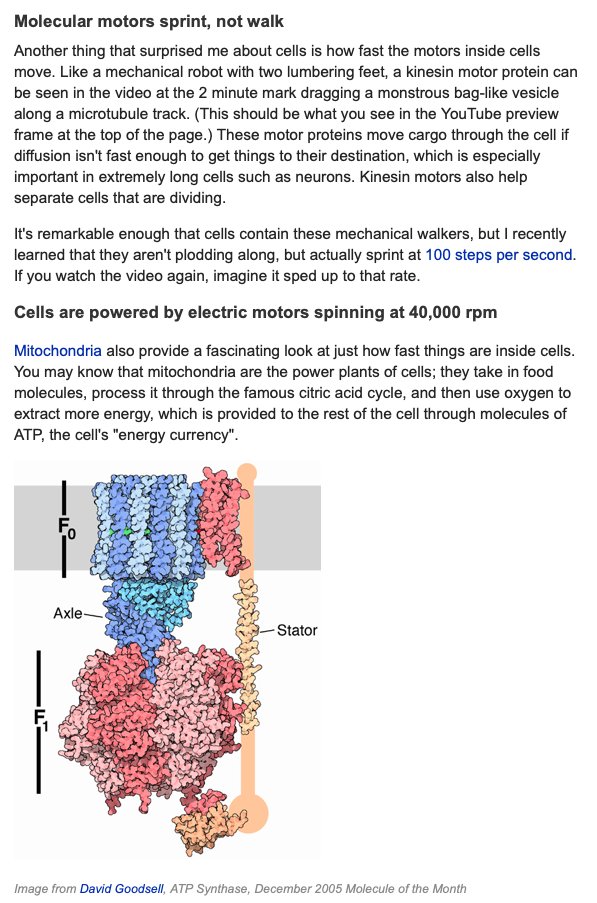
Day 2. "Cells are very fast and crowded places" by @kenshirriff.
"A small molecule such as glucose is cruising around a cell at about 250 miles per hour."
"A typical enzyme can collide with something to react with 500,000 times every second."
Today we report in @J_A_C_S a novel and highly modular platform for mechanically triggered chemiluminescence (bright light emission) from polymers. Congrats to @PengLiuChem, Yu-Ling (Debbie), and coworkers! Collab with @ShabatGroup. @CaltechCCE@Caltech
https://t.co/KaLR8x93gr
@TwistBioscience Trick question - always go with your least favorite so you don’t get lost watching it slowly change as it acclimates to ambient temp! (But blue/pink all the way)
Intel's Pentium processor (1993) was a big jump in processor performance, starting a brand that lasted until 2023. But what's inside the Pentium chip? How did Intel organize its 3.3 million transistors? Let's take a look inside and see the chip's "standard cells". 1/21
.@UF_IFAS' Dr. Rob Ferl will be the first @NASA-funded academic researcher to conduct an experiment as a crew member on @blueorigin's upcoming #NewShepard mission. His journey will pave the way for more science experiments — and Gators — in space. 🚀 🌱
https://t.co/McADhqkxqK
“DNA data storage isn’t far away. At Twist, we’ve completed proof of concept studies, including storing a series called Biohackers in DNA for Netflix. We’re planning to launch early access of our terabyte storage solution in 2025.” @EmilyLeproust@ooda
https://t.co/waPRSLRs6y