Is it me or I cannot seem to now have a button to respond to reviewer comments only see Author Editor comments ? #EMNLP2026@ReviewAcl despite the time to responding being July 14
Excited to share that our paper “HypER: Literature-grounded Hypothesis Generation and Distillation with Provenance” has been accepted at EMNLP 2025 (main conference)! 🎉
Huge thanks to my amazing co-authors Chandrayee Basu, @bhavana_dalvi, @csarasuagar, Peter Clark & Avi 🙏
@bhavana_dalvi@csarasuagar HypER is a small language model trained to generate evidence-based scientific hypotheses grounded in reasoning over the literature, through a novel multi-task training framework that integrates relevance classification, reasoning chain validation, and hypothesis generation.
We’ve upgraded ScholarQA, our agent that helps researchers conduct literature reviews efficiently by providing detailed answers. Now, when ScholarQA cites a source, it won’t just tell you which paper it came from–you’ll see the exact quote, highlighted in the original PDF. 🧵
AI PROMPTING → AI VERIFYING
AI prompting scales, because prompting is just typing.
But AI verifying doesn’t scale, because verifying AI output involves much more than just typing.
Sometimes you can verify by eye, which is why AI is great for frontend, images, and video. But for anything subtle, you need to read the code or text deeply — and that means knowing the topic well enough to correct the AI.
Researchers are well aware of this, which is why there’s so much work on evals and hallucination.
However, the concept of verification as the bottleneck for AI users is under-discussed. Yes, you can try formal verification, or critic models where one AI checks another, or other techniques. But to even be aware of the issue as a first class problem is half the battle.
For users: AI verifying is as important as AI prompting.
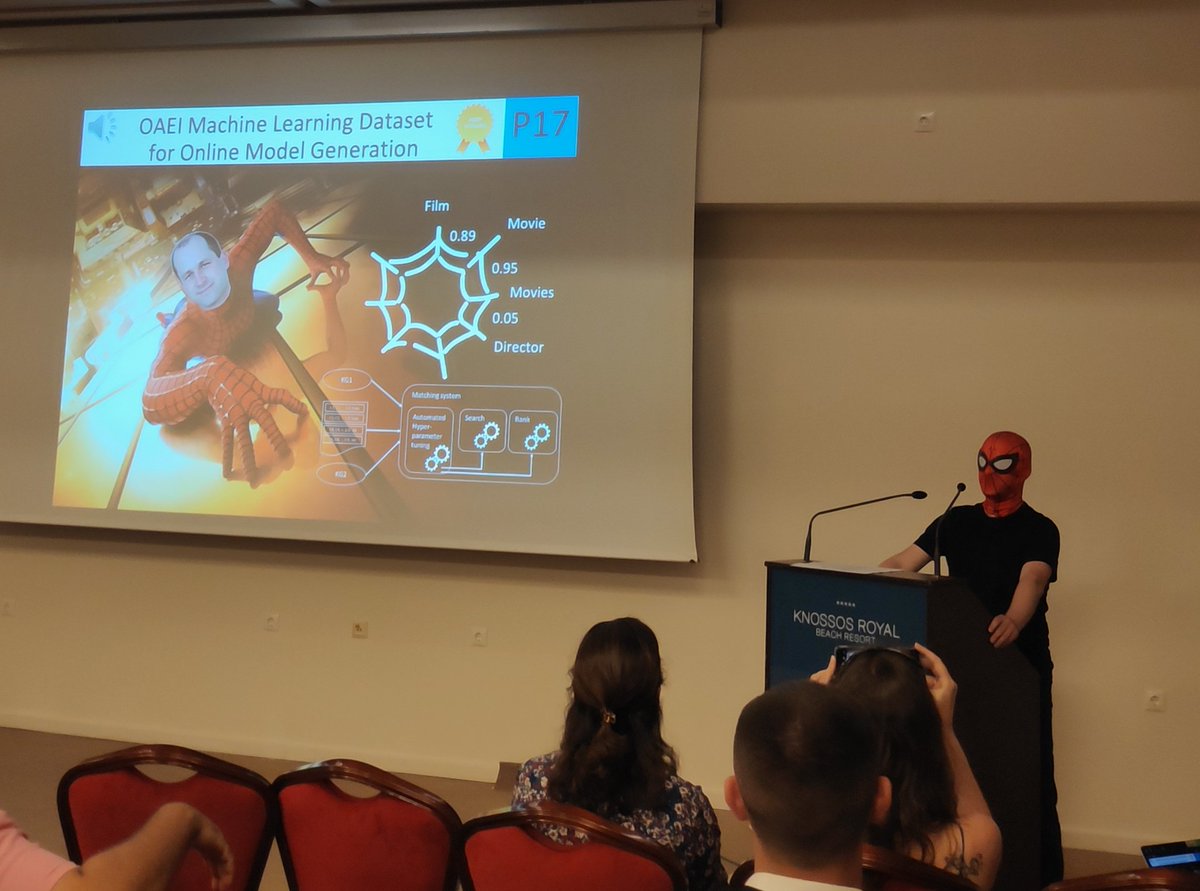
It has been a great day, full of interesting talks. A big thank to our audience for being there and for their challenging questions #scik2024#iswc2024@iswc_conf
You can find the preprint here : https://t.co/GLNp2LCAgc
Grateful to my amazing co-authors and mentors/supervisors - Cristina Sarasua (@csarasuagar) and Abraham Bernstein (@DDIS_UZH) for all their super support 🎉😇🥳🤩
Excited to have presented our work SciHyp: A Fine-grained Dataset Describing Hypotheses and Their Components from Scientific Articles at #ISWC2024! If you couldn't attend the session but are interested in discussing the research, feel free to reach out—I'd love to connect 🤗
New preprint:
Chain-of-thought demonstrated strong reasoning capabilities of LLMs🤖. But how to train them to reason🧐?
Introducing LaTent Reasoning Optimization (LaTRO): a principled framework that formulates the reasoning trajectory as a latent variable and optimize it via RL.
Paper📜: https://t.co/VdUHiWDXmi
Code👨🏻💻: https://t.co/I1mpYpSOLF
Joint work with @yihaocs@LiuZuxin@iscreamnearby and @aksh_555 at @SFResearch.
Excited to teach at the IFI Summer School (@UZH_en) on
Advances in #NProc , AI Alignment and Natural Language Reasoning
https://t.co/RfCLZo36dU
Thanks to @RicoSennrich for inviting!
Is it possible to build end-to-end autonomous discovery systems using Large Generative Models (LGMs)? 🧬
In this position paper, we argue:
https://t.co/tekyhXT0yH
🧵 (1/n)
@allen_ai@ai2_aristo@surana_h@UMassAmherst@UUtah
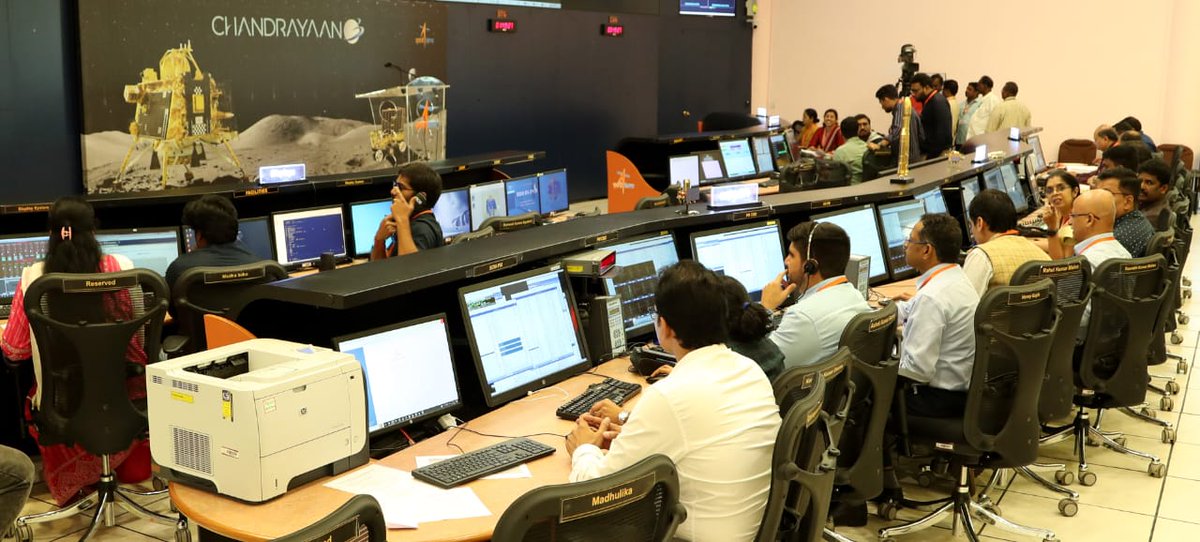
Chandrayaan-3 Mission:
All set to initiate the Automatic Landing Sequence (ALS).
Awaiting the arrival of Lander Module (LM) at the designated point, around 17:44 Hrs. IST.
Upon receiving the ALS command, the LM activates the throttleable engines for powered descent.
The mission operations team will keep confirming the sequential execution of commands.
The live telecast of operations at MOX begins at 17:20 Hrs. IST
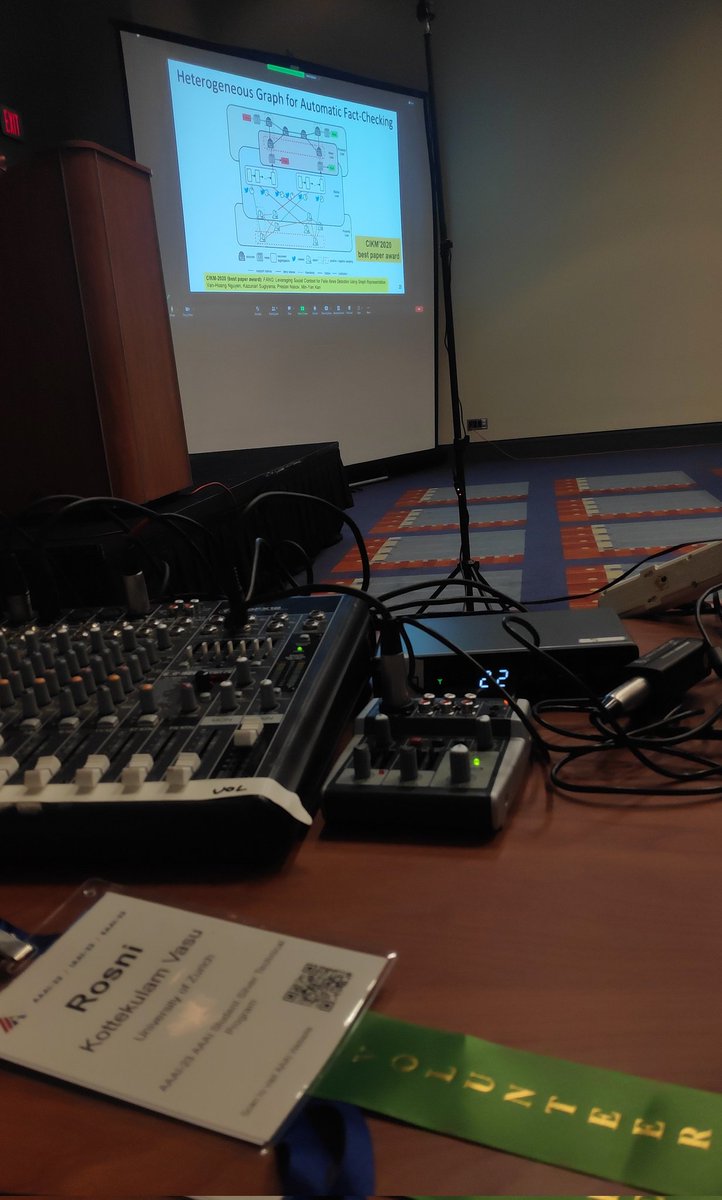
Thank you @RealAAAI for accepting me to the student scholarship and volunteering program. It is a new experience to interact with technical staff as a volunteer and at the same time a listener to some interesting talks... #AAAI23#aaai2023