@SystemLean@ThTkWB Le financement des infrastructures est régional, le reste est globalement fédéral. Comment le financement expliquerait juste les moins bons élèves et pas les bons ?
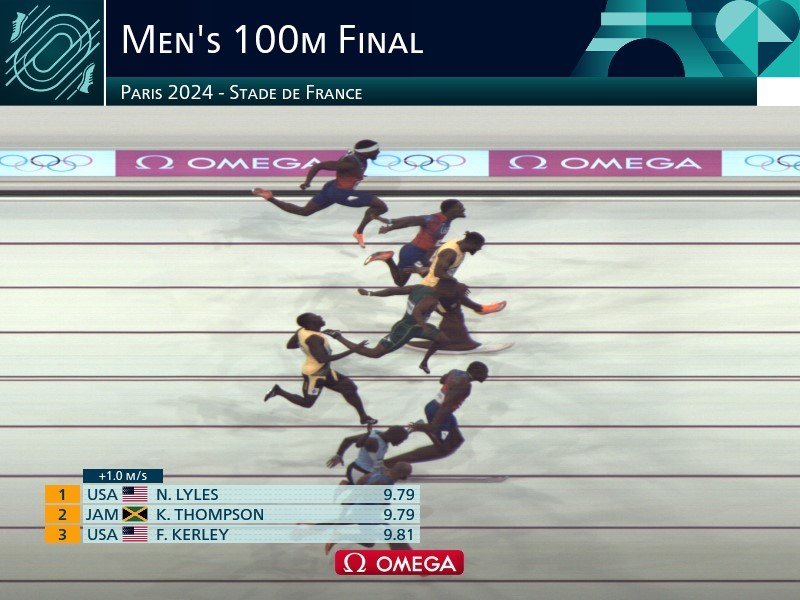
C'est parti pour un thread sur le thème des @Olympics#Paris2024 ! On va apprendre ensemble comment sont prises les fameuses photo-finish 📸 et comment elles permettent de mesurer le temps des athlètes 😉 Parlons technique 🔧 1/15
FR : L'association WAPA International, engagée dans la lutte contre l'utilisation des enfants soldats, bénéficie d'un précieux soutien de la part de Telemis. Dans cet article Madeleine s'exprime sur les victoires et difficultés de ces projets humanitaires https://t.co/47okMhmNd7
@Schreuer " ... telles que la hausse de l’âge des mères au moment de l’accouchement, l’accroissement des grossesses multiples, les situations de précarité ou encore une dégradation du circuit de soins."
Hmmm, let's think about Bots at massive scale ...
Let's say that Tesla (and other bot makers) can get the cost of making a bot down to just $10,000 and a bot lasts ten years. And let's say that Tesla has operating costs (maintenance costs, other operating costs, SG&A and R&D) of $2,856 per year per bot. This brings their annual costs to operate a bot to just $3,856. Note: you're spending more on maintenance costs over ten years than it costs to make the bot.
Now what happens if Tesla only charged $20 per day to use a bot?
That's $7,300 per year in revenue to Tesla.
Subtracting $3,856 in annual costs per bot, leaves $3,444 in gross profit.
Now take 25% more for taxes and Tesla has $2,583 per bot in profit - that works out to a 35% net profit margin.
Okay - now let's scale this up to 1 billion bots.
That's $2.58 trillion in profit.
Apply a price/earnings multiple of 20 (@WR4NYGov's number) to that and you get a $50 trillion market value on the bot business.
If there are 2 billion bots, then double the numbers. If there are 4 billion bots, then ... well, you get the idea.
Of course, at this point there would likely be some serious competition, but would any of the bot makers need to price their bots below $20 per day? I doubt it. Why? Because we will put all this cheap labor to good use - doing things we never thought was possible - further increasing the demand for bots. When something becomes so cheap we will find lots of ways to use more of it.
Conclusion: Bots could profitability replace even low cost ($20/day) human labor (not in 2030, but at some point in the future).
@herbertong@ChrisCamillo@GoingBallistic5
@roald Et un des probables grands gagnants : "
The potential revenue from Optimus the Tesla bot could be as high as $25 trillion, dwarfing the revenue from their other products."
Certains prédisent que ce sera de loin le business principal de Tesla.