Run Kimi K3 on a Mac Studio 🫰
K3 is 2.8T parameters and 1.6TB on disk, which makes it impossible to run on Apple Silicon.
Until now.
Our MLX port is now open source: https://t.co/Iszg55hRZT
To accomplish this, we solved two things:
1. We wrote a streaming converter that walks one layer at a time, so that mlx_lm doesn't need to materialize the whole model.
2. REAP pruning sits on top and scores all 896 experts against a calibration corpus to keep only ones your workload needs.
That's what brings K3 down to 350GB and inside a Mac Studio.
.@DavidSacks says Palantir CEO Alex Karp is brilliant and completely correct: companies must own their means of production if they don't want to transfer their alpha to OpenAI and Anthropic.
"Enterprises are at risk of transferring their knowledge, their know-how, their trade secrets and their customer data to model providers who might eventually decide to compete with them."
"Enterprises are waking up to this threat, and they're not happy about it. I think Karp is exactly right about that."
"What safety means for an enterprise is—they get to control their own data, their model weights and their compute, so a frontier lab can't hoover up their proprietary knowledge, their alpha, and turn it into their next product."
"Look at what happened to Figma. Anthropic 'blindsided' its then business partner with the launch of Claude Design."
" Anthropic's chief product officer even served on Figma's board and didn't resign until three days before the launch of Claude Design."
"This is not an isolated example."
"Anthropic has also launched Claude Science, Claude Security, Claude Legal, Claude Financial, and of course, Claude Code."
"Every single one of these vertical apps expanded into categories that was previously served by companies building on top of Anthropic's own models."
" They're watching where the value is being created on top of their models, then they're moving in directly."
"The pattern is clear. They are going to use their dominant position in the model to then grab more and more territory in any interesting and lucrative vertical."
" Back to Alex Karp's point: if you're an enterprise customer or a developer, why in the world would you ever want to share any proprietary data with them?"
"You are mortgaging your future. You're sealing your fate. You are going to lead to disaster for your company."
Via @theallinpod@jason@chamath@friedberg
I asked Dario 3 years ago why AIs haven't been able to use their vast knowledge across so many fields to connect two known ideas into a new discovery.
It seems like AI did exactly this in the way it disproved Erdos' conjecture aobut the unit distance problem by cleverly onnecting together ideas in discrete geometry and algebraic number theory.
Now that AI has been able to use its knowledge across multiple fields to come up with new ideas, what is the next benchmark?
@3blue1brown proposed one during our interview:
"Good mathematicians prove theorems, great mathematicians come up with conjectures, and the greatest mathematicians come up with definitions."
Jane Street showed the code that's made them billions, written in a language from 1996 that almost everyone else has abandoned.
Ron Minsky:
"type systems turn out to be a really good tool for catching a surprising number of mistakes"
the whole bet is on the type system. the compiler catches errors before the code even runs.
the Option type forces you to handle the case where a value is missing. a skipped null check that crashes Python in prod simply won't compile in OCaml.
"the compiler essentially forces you to do case analysis"
in trading a single bug costs millions, so the priority is reliability, not speed of development.
33 minutes, and you'll see the code that holds up the billions of one of the most secretive funds on Wall Street.
bookmark it. this is worth more than any $500 vibe-coding course. ↓
Shannon Entropy: Measuring Uncertainty in Information
H(X) = - ∑ P(xᵢ) log P(xᵢ)
This is the legendary formula by Claude Elwood Shannon (1916–2001); the father of Information Theory.
Entropy quantifies how much uncertainty (or average information) is contained in the outcome of a random variable X. The more unpredictable the outcomes, the higher the entropy.
From data compression and cryptography to AI and communications; this concept powers the digital world.
This 1 hour Stanford lecture on Markov Decision Processes will teach you more about the math behind systematic trading decisions than a 3 month internship at Jane Street or JPMorgan.
Bookmark & replace one movie today with this lecture, then read the complete article below.
Every way I've seen AI agents fail in production.
Bookmark this before you ship.
1. Silent context truncation mid-task
2. Tool call with no timeout
3. Hallucinated tool output treated as ground truth
4. No idempotency on retried actions
5. Cascading replanning loop
6. Missing human escalation path
7. Stale session state resumed as fresh
8. Irreversible action with no rollback
9. Blast radius from over-permissioned tools
10. Confidence collapse on ambiguous input
11. Prompt injection via tool response
12. Cost spiral from unbounded retries
13. Cross-agent state desync
14. Observability gap at LLM hop
15. Kill switch that requires redeployment
None of these are model failures.
All of these are architecture failures.
Follow for the fix to each → @asmah2107
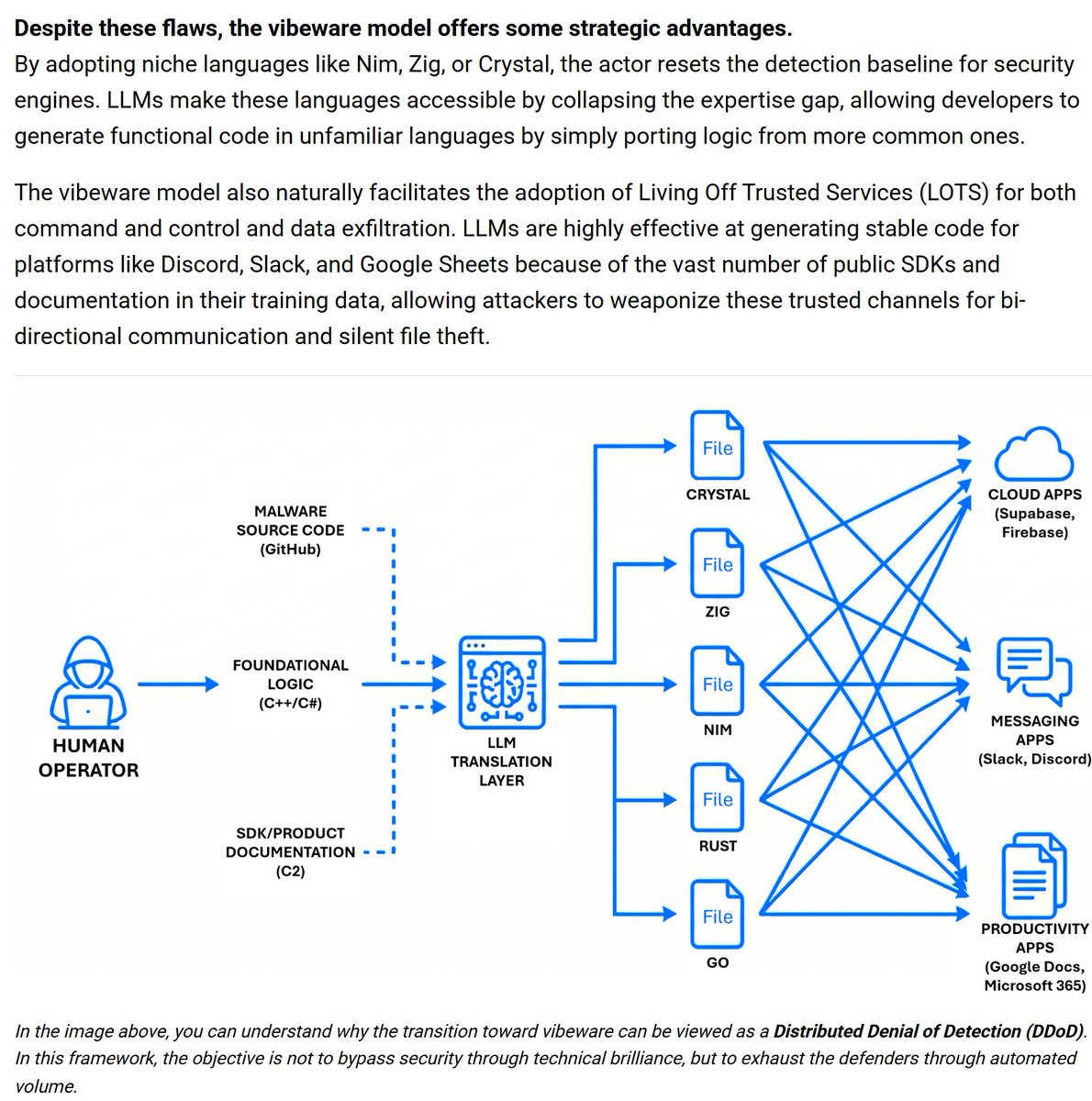
APT36 has pivoted from off-the-shelf malware to "vibeware", an AI-driven development model that produces a high-volume, mediocre mass of implants.
Using niche languages like Nim, Zig, and Crystal, the actor seeks to evade standard detection engines while leveraging trusted cloud services, including Slack, Discord, Supabase, and Google Sheets, for command and control. #AISecurity
https://t.co/dHRvB7fLEx
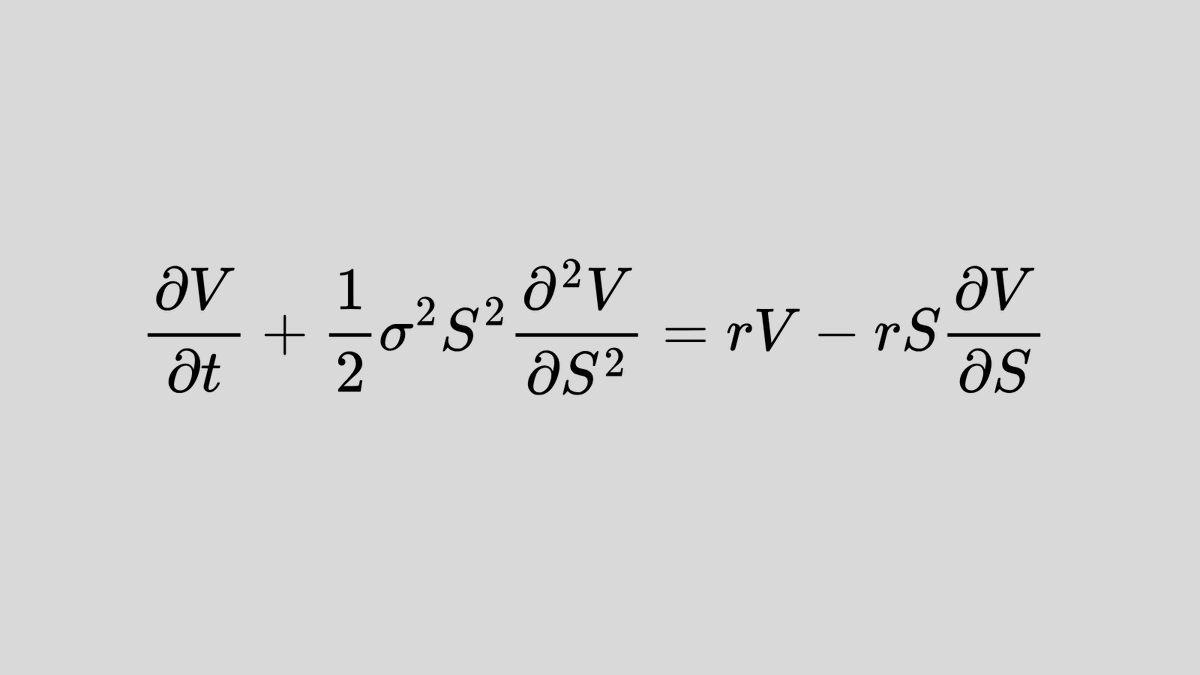
This single equation moves trillions of dollars every day.
It’s called the Black–Scholes equation — the most powerful formula in modern finance. It revolutionized how options are priced and how global markets manage risk.
The model calculates the fair value of an option using stock price, strike price, volatility, time to expiry, and interest rates.
Every major bank, exchange, and hedge fund relies on it. Firms like Jane Street and Citadel run these calculations thousands of times per second to price financial instruments in real time.
The assumptions aren’t perfect — volatility isn’t constant and trading isn’t free — so traders modify the model in practice.
Yet despite its flaws, Black–Scholes remains the foundation of modern options pricing.
The @DarioAmodei interview.
0:00:00 - What exactly are we scaling?
0:12:36 - Is diffusion cope?
0:29:42 - Is continual learning necessary?
0:46:20 - If AGI is imminent, why not buy more compute?
0:58:49 - How will AI labs actually make profit?
1:31:19 - Will regulations destroy the boons of AGI?
1:47:41 - Why can’t China and America both have a country of geniuses in a datacenter?
Look up Dwarkesh Podcast on Youtube, Spotify, Apple Podcasts, etc.
New art project.
Train and inference GPT in 243 lines of pure, dependency-free Python. This is the *full* algorithmic content of what is needed. Everything else is just for efficiency. I cannot simplify this any further.
https://t.co/HmiRrQugnP
@deancollins@SpachusAus@AvidCommentator That’s the trick and scaremongering we all know what’s happening in Melbourne, tax these greedy investors and reduce the demand and see how they will start panicking
A few random notes from claude coding quite a bit last few weeks.
Coding workflow. Given the latest lift in LLM coding capability, like many others I rapidly went from about 80% manual+autocomplete coding and 20% agents in November to 80% agent coding and 20% edits+touchups in December. i.e. I really am mostly programming in English now, a bit sheepishly telling the LLM what code to write... in words. It hurts the ego a bit but the power to operate over software in large "code actions" is just too net useful, especially once you adapt to it, configure it, learn to use it, and wrap your head around what it can and cannot do. This is easily the biggest change to my basic coding workflow in ~2 decades of programming and it happened over the course of a few weeks. I'd expect something similar to be happening to well into double digit percent of engineers out there, while the awareness of it in the general population feels well into low single digit percent.
IDEs/agent swarms/fallability. Both the "no need for IDE anymore" hype and the "agent swarm" hype is imo too much for right now. The models definitely still make mistakes and if you have any code you actually care about I would watch them like a hawk, in a nice large IDE on the side. The mistakes have changed a lot - they are not simple syntax errors anymore, they are subtle conceptual errors that a slightly sloppy, hasty junior dev might do. The most common category is that the models make wrong assumptions on your behalf and just run along with them without checking. They also don't manage their confusion, they don't seek clarifications, they don't surface inconsistencies, they don't present tradeoffs, they don't push back when they should, and they are still a little too sycophantic. Things get better in plan mode, but there is some need for a lightweight inline plan mode. They also really like to overcomplicate code and APIs, they bloat abstractions, they don't clean up dead code after themselves, etc. They will implement an inefficient, bloated, brittle construction over 1000 lines of code and it's up to you to be like "umm couldn't you just do this instead?" and they will be like "of course!" and immediately cut it down to 100 lines. They still sometimes change/remove comments and code they don't like or don't sufficiently understand as side effects, even if it is orthogonal to the task at hand. All of this happens despite a few simple attempts to fix it via instructions in CLAUDE . md. Despite all these issues, it is still a net huge improvement and it's very difficult to imagine going back to manual coding. TLDR everyone has their developing flow, my current is a small few CC sessions on the left in ghostty windows/tabs and an IDE on the right for viewing the code + manual edits.
Tenacity. It's so interesting to watch an agent relentlessly work at something. They never get tired, they never get demoralized, they just keep going and trying things where a person would have given up long ago to fight another day. It's a "feel the AGI" moment to watch it struggle with something for a long time just to come out victorious 30 minutes later. You realize that stamina is a core bottleneck to work and that with LLMs in hand it has been dramatically increased.
Speedups. It's not clear how to measure the "speedup" of LLM assistance. Certainly I feel net way faster at what I was going to do, but the main effect is that I do a lot more than I was going to do because 1) I can code up all kinds of things that just wouldn't have been worth coding before and 2) I can approach code that I couldn't work on before because of knowledge/skill issue. So certainly it's speedup, but it's possibly a lot more an expansion.
Leverage. LLMs are exceptionally good at looping until they meet specific goals and this is where most of the "feel the AGI" magic is to be found. Don't tell it what to do, give it success criteria and watch it go. Get it to write tests first and then pass them. Put it in the loop with a browser MCP. Write the naive algorithm that is very likely correct first, then ask it to optimize it while preserving correctness. Change your approach from imperative to declarative to get the agents looping longer and gain leverage.
Fun. I didn't anticipate that with agents programming feels *more* fun because a lot of the fill in the blanks drudgery is removed and what remains is the creative part. I also feel less blocked/stuck (which is not fun) and I experience a lot more courage because there's almost always a way to work hand in hand with it to make some positive progress. I have seen the opposite sentiment from other people too; LLM coding will split up engineers based on those who primarily liked coding and those who primarily liked building.
Atrophy. I've already noticed that I am slowly starting to atrophy my ability to write code manually. Generation (writing code) and discrimination (reading code) are different capabilities in the brain. Largely due to all the little mostly syntactic details involved in programming, you can review code just fine even if you struggle to write it.
Slopacolypse. I am bracing for 2026 as the year of the slopacolypse across all of github, substack, arxiv, X/instagram, and generally all digital media. We're also going to see a lot more AI hype productivity theater (is that even possible?), on the side of actual, real improvements.
Questions. A few of the questions on my mind:
- What happens to the "10X engineer" - the ratio of productivity between the mean and the max engineer? It's quite possible that this grows *a lot*.
- Armed with LLMs, do generalists increasingly outperform specialists? LLMs are a lot better at fill in the blanks (the micro) than grand strategy (the macro).
- What does LLM coding feel like in the future? Is it like playing StarCraft? Playing Factorio? Playing music?
- How much of society is bottlenecked by digital knowledge work?
TLDR Where does this leave us? LLM agent capabilities (Claude & Codex especially) have crossed some kind of threshold of coherence around December 2025 and caused a phase shift in software engineering and closely related. The intelligence part suddenly feels quite a bit ahead of all the rest of it - integrations (tools, knowledge), the necessity for new organizational workflows, processes, diffusion more generally. 2026 is going to be a high energy year as the industry metabolizes the new capability.