New research from @WRIClimate compares the U.S.'s 2030 & 2035 targets to key climate benchmarks. As the largest historical greenhouse gas emitter and a wealthy nation with high per capita emissions, the U.S. must go further—cutting emissions deeper and providing additional finance to slash emission beyond its borders.
Explore the full analysis: https://t.co/N2yU9ztwBJ
Countries must strengthen their GHG emissions reduction targets for 2030 and set new targets for 2035 to get the world on track to limit warming to 1.5°C📋
#SystemsChangeLab details the pace and scale of transformational change needed across sectors: https://t.co/gz7lDf1YNT
As demand for transportation rises, so do GHG emissions 🚗
Clea Schumer, @WorldResources, discusses the need to transform the #transport sector. #NDCs due in 2025 can include targets for a U-turn in energy use by this crucial sector.
Learn more: https://t.co/D1UwMe1ryh
Nesting sector-specific targets under economywide GHG emissions reduction targets can help #NDCs spur immediate climate action. For @CA_Latest@newclimateinst & @WRIClimate we show what's needed across sectors by 2030 & 2035 to limit warming to 1.5°C. https://t.co/mZpLRsWk98
📅 By 2025, countries must submit stronger #NDCs to meet climate goals. Hear from @SophieBoehm, Senior Research Associate at #SystemsChangeLab, on how sectoral targets can help nations unlock the path to 1.5°C. 🌡️
Watch the video & explore more: https://t.co/VY7opsNm3l
Can the #carbonremoval industry reach a positive tipping point that triggers rapid and nonlinear growth? If so, what kinds of supportive policy, financing and infrastructure interventions can be implemented to reach them?
Learn more from @WRIClimate: https://t.co/BvoIldcjQn
"Carbon removal will likely play a role in achieving many net zero targets." - @schumerclea, associate, @WRIClimate
New @WorldResources podcast dives into how technological #CarbonRemoval is key to combating climate change.
🎧 Listen now: https://t.co/AO9QIvwv3J
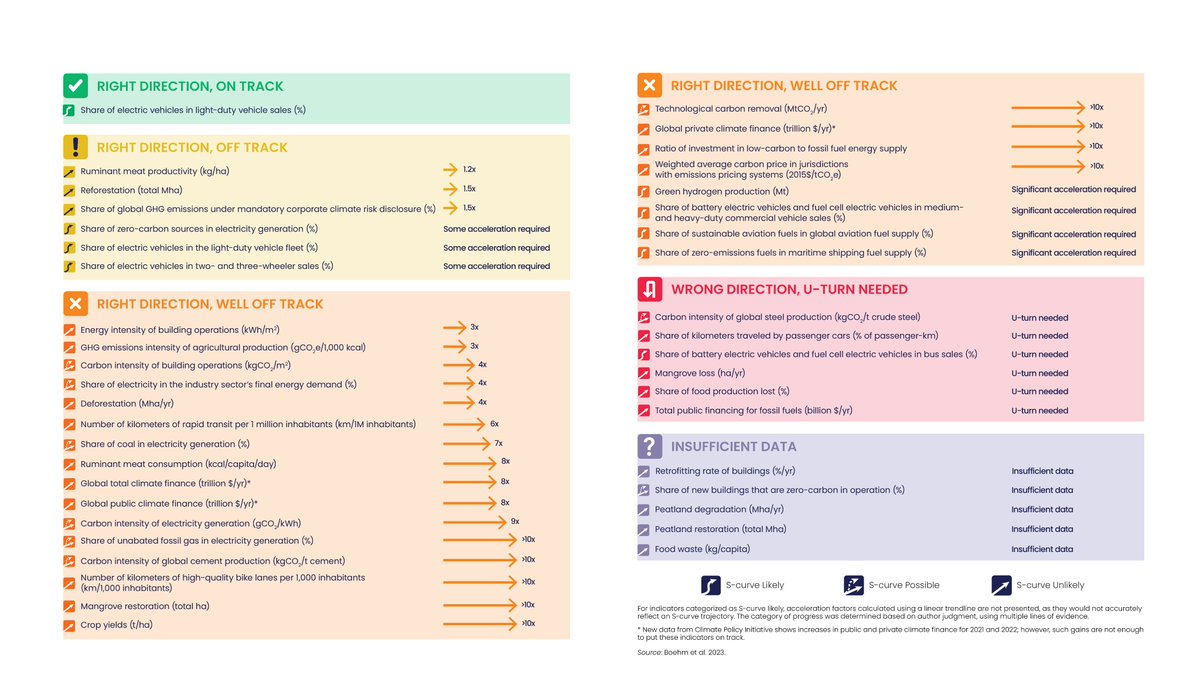
New analysis from our #StateofClimateAction 2023 report finds that we have largely failed to mobilize climate action at anywhere near the pace & scale required to limit warming to 1.5°C. The good news is we can get on track! See what's needed this decade: https://t.co/HlIRqVXGLX
Out now! 🚨 The latest #StateOfClimateAction 2023 report shows global efforts to limit warming to 1.5°C are failing across the board, with recent progress made on every indicator — except EVs — lagging significantly behind the pace and scale necessary.
https://t.co/pnOFYHwB67
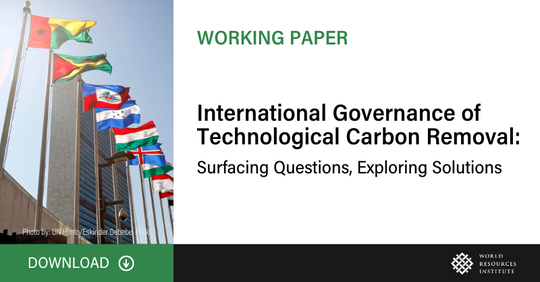
How can we govern technological #CarbonRemoval effectively? New research from @WRIClimate explores solutions to address 3 key challenges:
1️⃣Mitigation deterrence
2️⃣Ensuring equity
3️⃣Robust measurement, reporting & verification
Read the publication here: https://t.co/Iq7aLmyw60
You've heard of the emissions gap, but what about the implementation gap? Our new comment in @NatureClimate unpacks why countries don't deliver on their #climate pledges - a critical question for the Global Stocktake. https://t.co/Nudair8M7M 1/
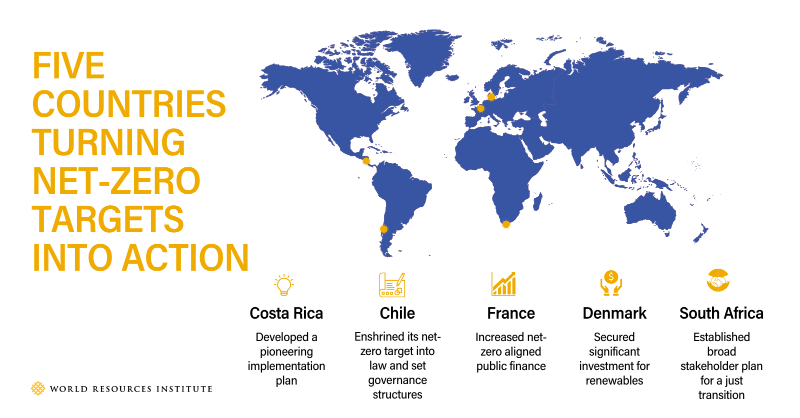
New @WRIclimate research aimed at helping countries reach #NetZero identified five countries that are among nations taking tangible steps to implement #NetZero solutions. Read how these countries are turning their targets into action:
Join @WRIClimate on June 29 at 9 AM EDT/ 3 PM CEST for a discussion with @tarynfransen, @cellio71, @schumerclea, @Taptowntraffic and @vignaleandro on how countries can turn their net zero target pledges into practice. Tap the link below to register! 👉🔗
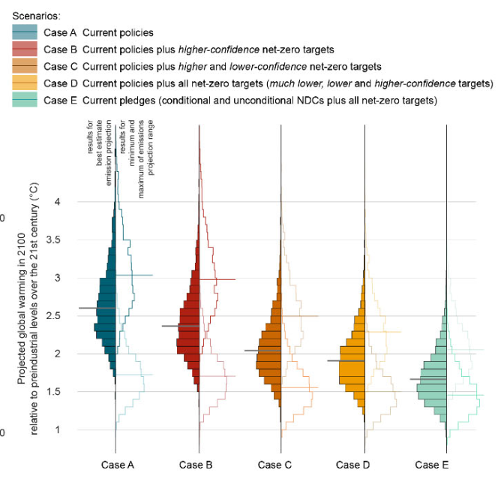
Current climate policies get us to ~2.7°C warming, higher-confidence net-zero targets to ~2.4°C, missing the 1.5°C global climate goal by a long way.
Time to go from pledges to action!
Important analysis by @JoeriRogelj
https://t.co/AzBUTcFKiJ
Reaching key climate targets will require legally binding and well-planned #NetZero policies. So how do current targets stack up? In a new @ScienceMagazine paper, authors including WRI’s @tarynfransen and @schumerclea explain:
There's been a proliferation of net-zero plans from countries. Most of them aren't credible, because they aren't detailed enough and not set in policy.
The least credible plans? Australia, Brazil, India, Indonesia, South Africa and UAE. https://t.co/IjHQmQxpGq
"Climate policy is moving from setting ambitious targets to implementing them...our analysis shows most countries do not provide high confidence that they will deliver" @JoeriRogelj on new net-zero study, published today in @ScienceMagazine
Read more 👇
https://t.co/a5P57gffNJ
New paper alert: 🚨🌍🌡️🔥
What do climate pledges mean for global warming?
Simple question, confusing answers.
In a new study in @ScienceMagazine we shine a new light on this question. (1/n)
https://t.co/rbODZv3YfG
Whether we’re nearly on track to meet the Paris Agreement’s climate goals (well below 2°C, or 1.5°C), versus nowhere near them, depends what you believe about net-zero targets. 1/ https://t.co/Eh3S3koLCz