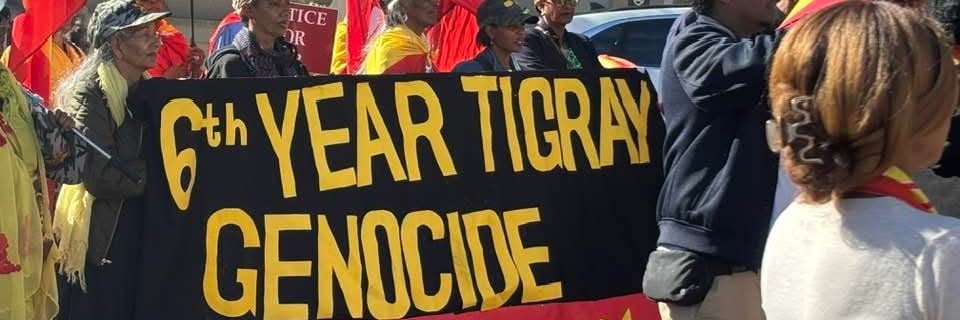
"Thank you, voice to the voiceless. From Brussels in Europe to Washington, D.C. in America, the Tigrayan diaspora living in most parts of the world, together with all friends of the people of Tigray, is holding vibrant peaceful rallies marking the 6th anniversary of the start of the Tigray genocide to:
Ensure justice and accountability for the Tigray genocide;
Stop the ongoing genocide against Tigray;
Ensure that Tigray's sovereign territory is respected and that our displaced and exiled people return to their homeland and are rehabilitated.
In particular, a large crowd gathered in front of the European Parliament and the U.S. State Department to make their voices heard. The rally in Washington, D.C. has continued from the State Department to the White House @selama777 #Tegaruunited
November 16. Washington, D.C. Diaspora United. Our voices matter. Our future matters. Join the movement. #RallyInDC#DiasporaUnited@AbiyAhmedAli must go. #Ethiopia#Tigray🌟
Dear @UNOSAPG@hrw@UN_HRC@EU_Commission@eu_echo@StateDept@AUC_PAPS When discussing genocide and mass atrocities in Sudan, the historical and political context spans two major catastrophic chapters: the Darfur Genocide of the early 2000s and the resurgence of ethnically targeted mass violence under the ongoing civil war.
1. The Darfur Genocide (2003–2005)
The term "Sudan genocide" most frequently originates from the state-sponsored violence that erupted in the western region of Darfur in 2003.
* The Conflict: Local rebel groups (such as the Justice and Equality Movement and the Sudan Liberation Movement) rose up against the authoritarian government of President Omar al-Bashir, protesting political marginalization and economic neglect of the region.
* The Perpetrators: To crush the rebellion, the Sudanese government relied heavily on the Janjaweed—a ruthless Arab-majority militia.
* The Targets: The Janjaweed and government forces systematically targeted non-Arab ethnic groups, primarily the Masalit, Fur, and Zaghawa communities.
* The Methods: The campaign included mass executions, the systematic use of sexual violence against women and girls, the burning of hundreds of villages, and the poisoning of water wells to ensure survivors could not return.
* The Toll: An estimated 300,000 people were killed, and over 2.5 million were driven into squalid internally displaced person (IDP) camps or across the border into Chad. In 2004, the United States formally declared the atrocities a genocide, and the International Criminal Court (ICC) later issued arrest warrants for top Sudanese leaders and Janjaweed commanders (such as Ali Kushayb) for war crimes and crimes against humanity.
2. The Resurgence of Genocide and Civil War (2023–Present)
Following the popular uprising that ousted Omar al-Bashir in 2019, a fragile transition toward civilian rule collapsed in April 2023, plunging the country into a devastating civil war between the Sudanese Armed Forces (SAF) and the Rapid Support Forces (RSF)—the latter of which evolved directly out of the old Janjaweed militias.
* Ethnic Cleansing in Darfur: As the civil war spread, the RSF and allied militias seized large swathes of western Sudan, turning the current conflict into a brutal replay of the 2000s. They have launched systematic, ethnically-motivated attacks specifically targeting the non-Arab Masalit and other communities in West Darfur and El Fasher.
* Atrocity Markers: Investigations by the United Nations, human rights organizations, and international bodies have documented mass executions, arbitrary detentions, widespread ethnically targeted killings, and weaponized sexual violence.
* Official Determinations: Formalizing the gravity of these crimes, the United States formally determined that members of the RSF and allied militias are committing genocide and ethnic cleansing in Darfur.
3. Current Humanitarian Catastrophe
The violence in Sudan has created the world's largest displacement and humanitarian crisis:
* Displacement: Over 12 million people have been forced from their homes, internally displaced, or turned into refugees.
* Famine and Disease: Millions face acute starvation and famine conditions, particularly across Darfur and Kordofan, as warring parties routinely block humanitarian aid or target critical infrastructure like food production and water systems.
* External Complications: The conflict has drawn in regional proxies, mercenaries, and arms networks that continue to fuel the cycle of violence, drawing persistent international warnings regarding accountability and the prevention of further atrocity crimes.
#SudanGenocide
Dear @USEmbassyAddis#Op_ed: Winning Wars, Losing Peace: #Ethiopia’s unfinished political struggle for lasting stability
The article highlights the dangerous convergence of internal conflicts, ethnic grievances, and regional tensions threatening Ethiopia’s national stability. It argues that relying on military force to suppress domestic political unrest only deepens divisions and places further strain on the country.
The piece also cautions that infrastructure projects in the capital cannot conceal the human, economic, and social costs of conflict across the country. Lasting peace requires genuine dialogue, political compromise, and trust in institutions, rather than the total military defeat of opposing forces.
The article concludes that “Ethiopia’s greatest challenge is not merely to end today’s wars but to build a political order in which future wars become less necessary, less attractive, and less likely.”
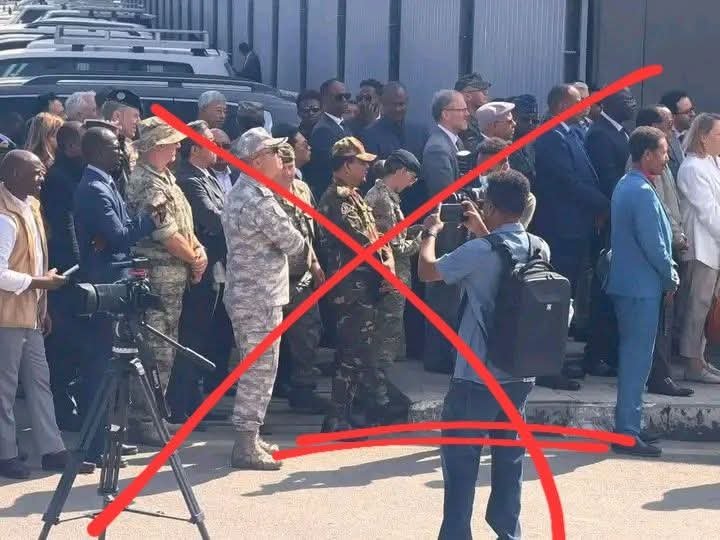
The United States is committed to lasting peace and security in Ethiopia and the region. Yesterday, Ambassador Massinga and the Minister of Defense Mohammed Edris held substantive discussions on a range of issues, from domestic peace and stability to complex regional concerns in the Horn of Africa. The Ambassador stressed that cooperation and sustained communication on mutual security interests is key to stability and economic progress for all Ethiopians.
Dear @AUC_PAPS@UNPeacebuilding@addisstandard@dedebitmedia@tigraionline@UN Let's spread lies from the sleep of the Tigray government.
✍️When an enemy spreads false slander, unverified information and counter-struggle against your army, leaders or institutions, you must have a defense information and counter-propaganda strategy. ።
✍️Tigray Army Military Command: Should not go like `da TPLF "when the tiger passes the stage".When such very hasty and contentious rumors are spread and repeated : Tigray Army Military Command is Rapid Response & Evidence-Based Communication)should respond to them. ▰When the enemy spreads lies or slander, get used to responding quickly and reliably before the information spreads widely in the community
✍️If lies are spread in an organized manner, the response must be provided in an organized manner. #TDF 👈
◆A culture of Counter-Narrative Development must be developed in the army.Enemy information is not only countered by betrayal; The narrative must be easily understood by the public, organized logically and accompanied by real evidence.➚ I think it is necessary to build a credible narrative based on fact, not just defending lies. proving slander against the army; Clearly distinguishing between truth, falsehood and unverified information:If there are weaknesses or errors within the army,I think it helps in carrying out the struggle by providing information that the public should know while taking necessary precautions to protect confidentiality,and making improvements in a responsible manner.👌
✍️First of all, not only responding after the attack :Proactive Monitoring & Information Analysis should be done in advance of possible stigma. Assess what information is causing fear, suspicion or confusion:➚Empower troops, the public and institutions with information resilience; Capacity building is needed to identify and verify lies.👌➚Building information resilience in the army and society; Prepare them to reliably withstand lies, distortion and psychological pressure, increase the public's ability to understand, analyze and verify information➚Strengthen internal unity, credibility and morale in the army and institutions with accurate information➚Continuously provide a reliable source of information to the public in times of crisis.👌
✍️Integrated Strategic Communication strategies need to be developed rather than in isolation. ◆A professional body that monitors and analyzes information ◆A body that verifies the truth and gathers evidence ◆Communications that works to provide quick and coordinated responses. @selama777
Dear @USEmbassyAddis Addressing the complex multi-front crises, renewed conflicts, and rising regional tensions across Ethiopia requires a comprehensive look at the intersecting domestic and geopolitical challenges.
The Anatomy of Ethiopia's Multi-Front Crisis
The current security landscape in Ethiopia is defined by deep structural friction, overlapping civil conflicts, and severe geopolitical strain across the Horn of Africa:
• Northern Fronts and Regional Clashes: Fighting has intensified significantly across the northern regions, particularly involving federal forces and the Tigray People's Liberation Front (TPLF)—alongside broader instability spanning parts of Amhara and Oromia. The formation of alliances among various armed opposition groups opposing the federal government has compounded the volatility.
• The Eritrea Dimension: Relations between Addis Ababa and Asmara have deteriorated sharply, marked by border build-ups, accusations of proxy support, and cross-border drone escalations that risk dragging the wider region into a broader interstate war.
• Humanitarian and Civilian Toll: Sustained hostilities, including heavy artillery use and drone strikes impacting civilian infrastructure and internally displaced persons (IDP) sites, have triggered acute humanitarian concerns and civilian displacement.
Strategic Imperatives for Peace and Stability
Diplomatic engagements—such as those between U.S. officials and defense leadership—highlight that security cooperation must pivot toward urgent de-escalation frameworks:
1. Ceasefire Compliance and Dialogue: Re-establishing adherence to prior peace frameworks (such as the Pretoria Agreement architecture) and halting offensive military operations remain prerequisites to preventing further fragmentation.
2. Mitigating Regional Spillovers: Containing proxy escalations between neighboring states is critical to safeguarding stability across the Red Sea corridor and the wider Horn of Africa.
3. Humanitarian Access: Ensuring unhindered aid delivery and protecting non-combatants caught in contested zones must run parallel to any high-level security dialogue.@selama777
The United States is committed to lasting peace and security in Ethiopia and the region. Yesterday, Ambassador Massinga and the Minister of Defense Mohammed Edris held substantive discussions on a range of issues, from domestic peace and stability to complex regional concerns in the Horn of Africa. The Ambassador stressed that cooperation and sustained communication on mutual security interests is key to stability and economic progress for all Ethiopians.
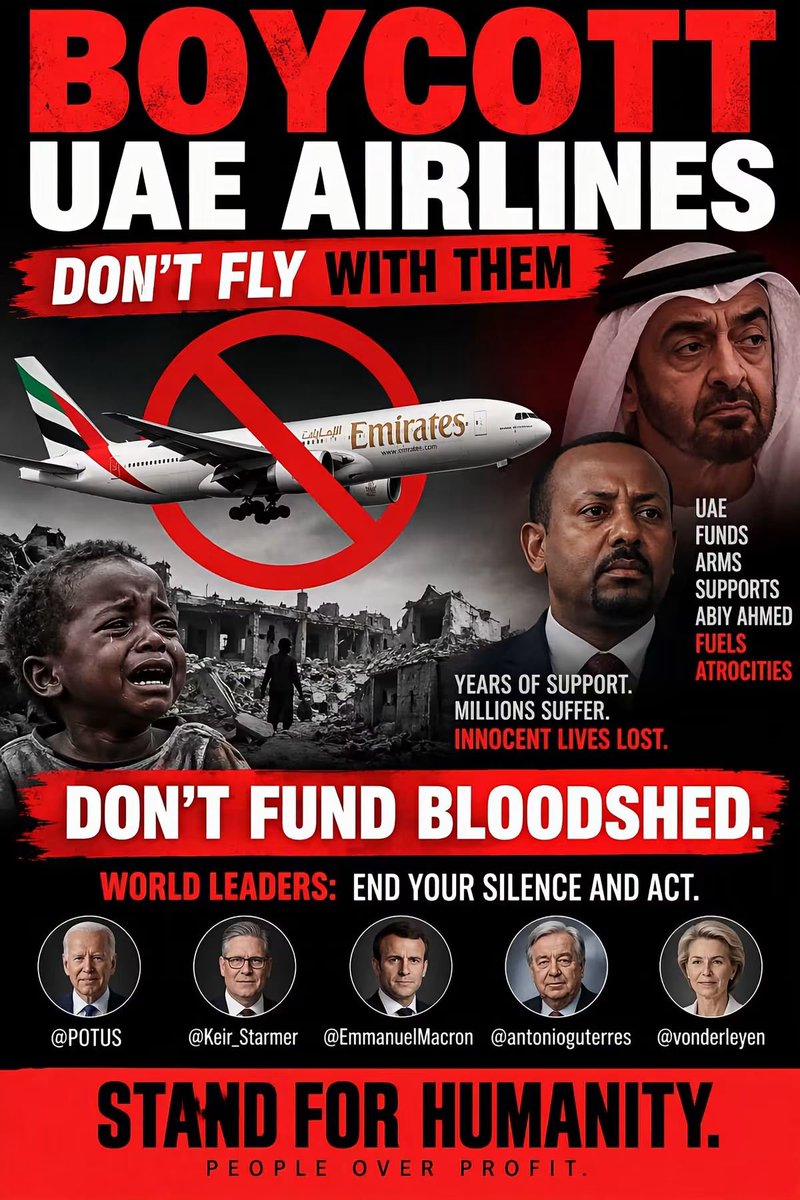
The people of Tigray are facing unimaginable suffering due to ongoing conflict & human rights violations. It is time for 🌍leaders to demand justice & ensure humanitarian aid reaches those in need. Lives are at stake. @hrw@UN#EritreanTroopsOutOfTigray https://t.co/TB1MvU6fgt