Keeping my prediction on the pod, that everything changes when you have unlimited/unmetered tokens…
… and that the $10k desktop running local models will be commonplace next year.
Many companies will budget for $10-20k desktops to have sovereign, unmetered tokens
Testing Sora 2 right now. Results are wild.
Future filmmakers need to realize something:
I didn’t write this dialogue. The AI did it by itself.
And the prompts were shorter than this post.
@levelsio Hi Pieter - reconnecting with you from MIT AI Club (Sundai) - I will be in Lisbon all of October - building/hacking. DM if you are able to connect. Cheers!
@levelsio Hey @levelsio - I am one of the founders of https://t.co/J2K06hUchF (boston) - thinking to hack from near Lisbon for next few months. Can we connect there?
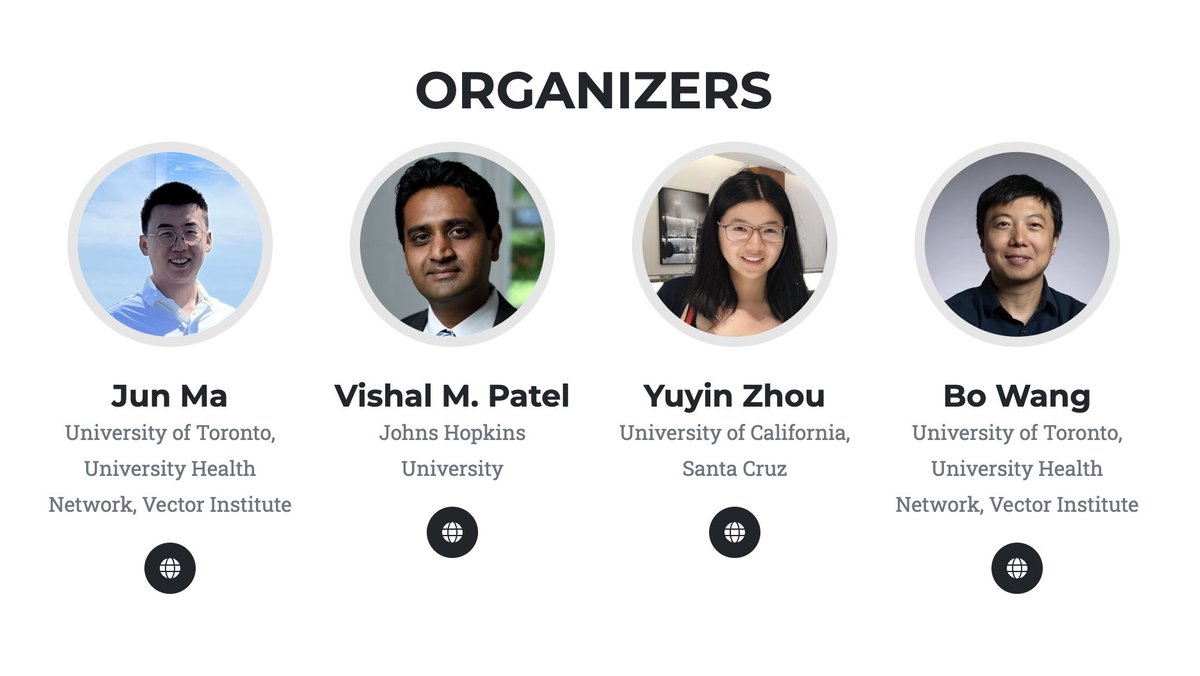
Excited to announce the 2nd Workshop on Foundation Models for Medical Vision (FMV) at #CVPR2025! @CVPR
🌐 https://t.co/7uYRjnHcJe
FMV brings together researchers pushing the boundaries of medical AGI.
We are also proud to host an esteemed lineup of speakers:
Dr. Jakob Nikolas Kather @jnkath
Dr. Faisal Mahmood @AI4Pathology
Dr. Hoifung Poon @hoifungpoon
Dr. Pranav Rajpurkar @pranavrajpurkar
Dr. Daniel Rueckert @DanielRueckert
Look forward to seeing you all at Seattle this summer! Also shoutout to all the organizers @JunMa_11@yuyinzhou_cs@vishalm_patel
My single biggest travel advice for W Europe is to get out of the big cities, and stay in the smaller towns. You get 90% of what your looking for, with 90% less hassle.
If you want to see the big city sights, then do a day trip into Paris or Milan or whatever.
The current tourism industry has the whole day-trip model backwards. You stay in a small town, and take the occasional excursion into the big city to see the museums!
I've written about this over and over and yet....
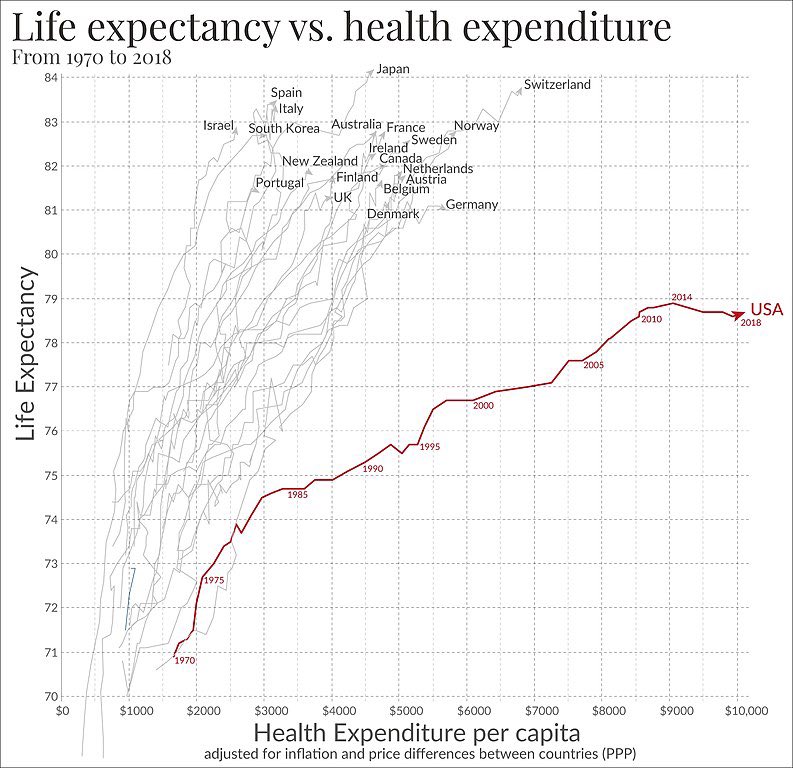
Something is fundamentally broken with the American healthcare system, perhaps a business model where sick people are the best customers isn't the way to go.
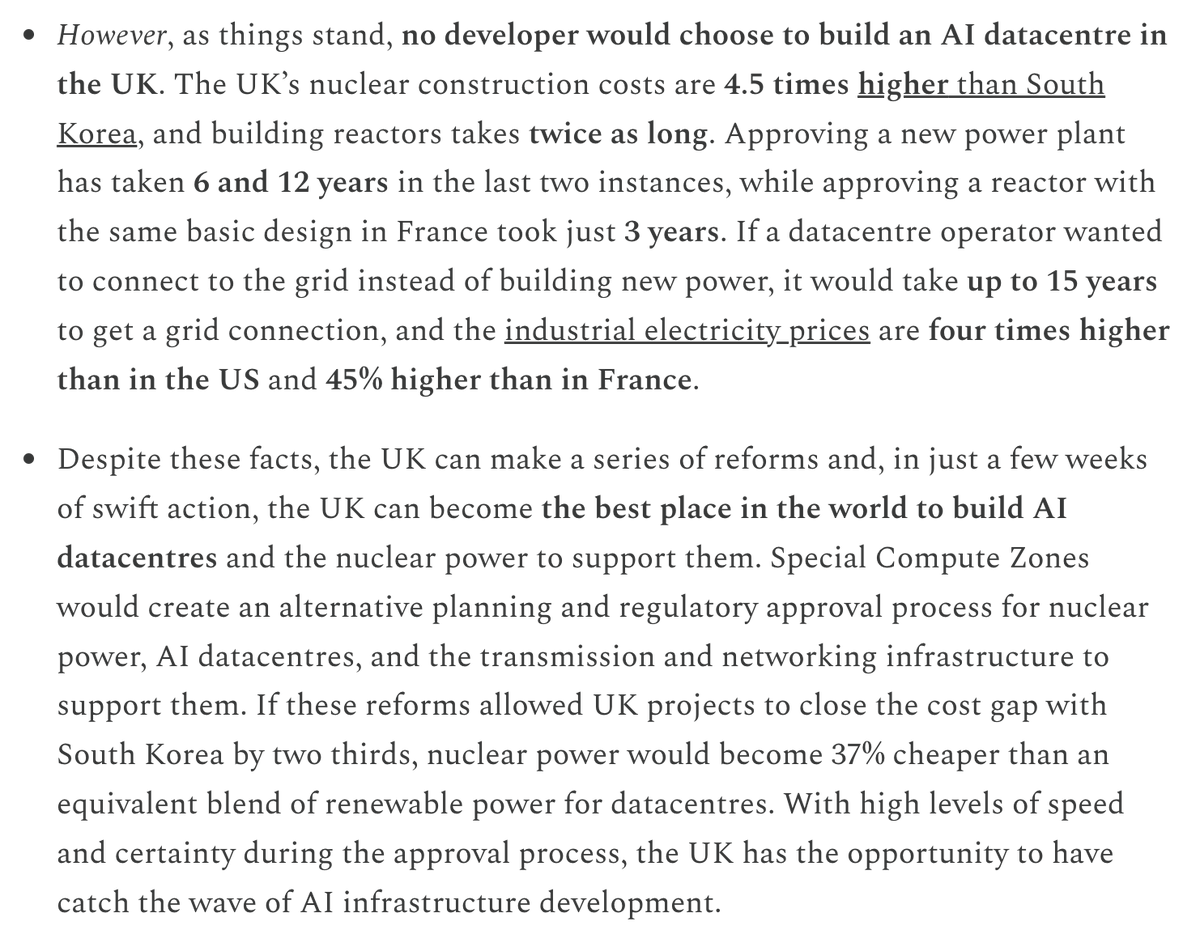
Really great and detailed piece on what it would take for the UK to win in AI infrastructure: tl;dr, get serious about nuclear. We have all the levers we need.
Large language models (LLMs) are typically optimized to answer peoples’ questions. But there is a trend toward models also being optimized to fit into agentic workflows. This will give a huge boost to agentic performance!
Following ChatGPT’s breakaway success at answering questions, a lot of LLM development focused on providing a good consumer experience. So LLMs were tuned to answer questions (“Why did Shakespeare write Macbeth?”) or follow human-provided instructions (“Explain why Shakespeare wrote Macbeth”). A large fraction of the datasets for instruction tuning guide models to provide more helpful responses to human-written questions and instructions of the sort one might ask a consumer-facing LLM like those offered by the web interfaces of ChatGPT, Claude, or Gemini.
But agentic workloads call on different behaviors. Rather than directly generating responses for consumers, AI software may use a model in part of an iterative workflow to reflect on its own output, use tools, write plans, and collaborate in a multi-agent setting. Major model makers are increasingly optimizing models to be used in AI agents as well.
Take tool use (or function calling). If an LLM is asked about the current weather, it won’t be able to derive the information needed from its training data. Instead, it might generate a request for an API call to get that information. Even before GPT-4 natively supported function calls, application developers were already using LLMs to generate function calls, but by writing more complex prompts (such as variations of ReAct prompts) that tell the LLM what functions are available and then have the LLM generate a string that a separate software routine parses (perhaps with regular expressions) to figure out if it wants to call a function.
Generating such calls became much more reliable after GPT-4 and then many other models natively supported function calling. Today, LLMs can decide to call functions to search for information for retrieval augmented generation (RAG), execute code, send emails, place orders online, and much more.
Recently, Anthropic released a version of its model that is capable of computer use, using mouse-clicks and keystrokes to operate a computer (usually a virtual machine). I’ve enjoyed playing with the demo. While other teams have been prompting LLMs to use computers to build a new generation of RPA (robotic process automation) applications, native support for computer use by a major LLM provider is a great step forward. This will help many developers!
As agentic workflows mature, here is what I am seeing:
- First, many developers are prompting LLMs to carry out the agentic behaviors they want. This allows for quick, rich exploration!
- In a much smaller number of cases, developers who are working on very valuable applications will fine-tune LLMs to carry out particular agentic functions more reliably. For example, even though many LLMs support function calling natively, they do so by taking as input a description of the functions available and then (hopefully) generating output tokens to request the right function call. For mission-critical applications where generating the right function call is important, fine-tuning a model for your application’s specific function calls significantly increases reliability. (But please avoid premature optimization! Today I still see too many teams fine-tuning when they should probably spend more time on prompting before they resort to this.)
- Finally, when a capability such as tool use or computer use appears valuable to many developers, major LLM providers are building these capabilities directly into their models. Even though OpenAI o1-preview’s advanced reasoning helps consumers, I expect that it will be even more useful for agentic reasoning and planning.
Most LLMs have been optimized for answering questions primarily to deliver a good consumer experience, and we’ve been able to “graft” them into complex agentic workflows to build valuable applications. The trend of LLMs built to support particular operations in agents natively will create a lot of lift for agentic performance. I’m confident that large agentic performance gains in this direction will be realized in the next few years.
[Original text: https://t.co/gginTyOgwe ]
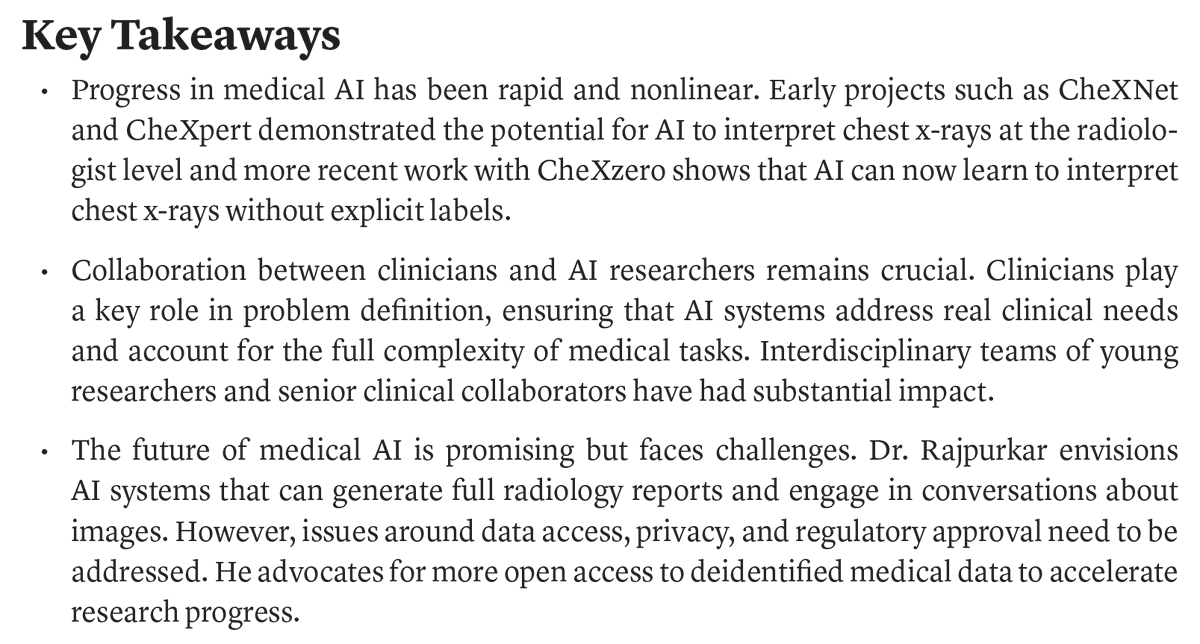
Perspective by @pranavrajpurkar, PhD, @AndrewLBeam, PhD, and @arjunmanrai, PhD: Pixels and Pitfalls: Building Robust Artificial Intelligence for Medical Imaging https://t.co/BokHwVSQrE
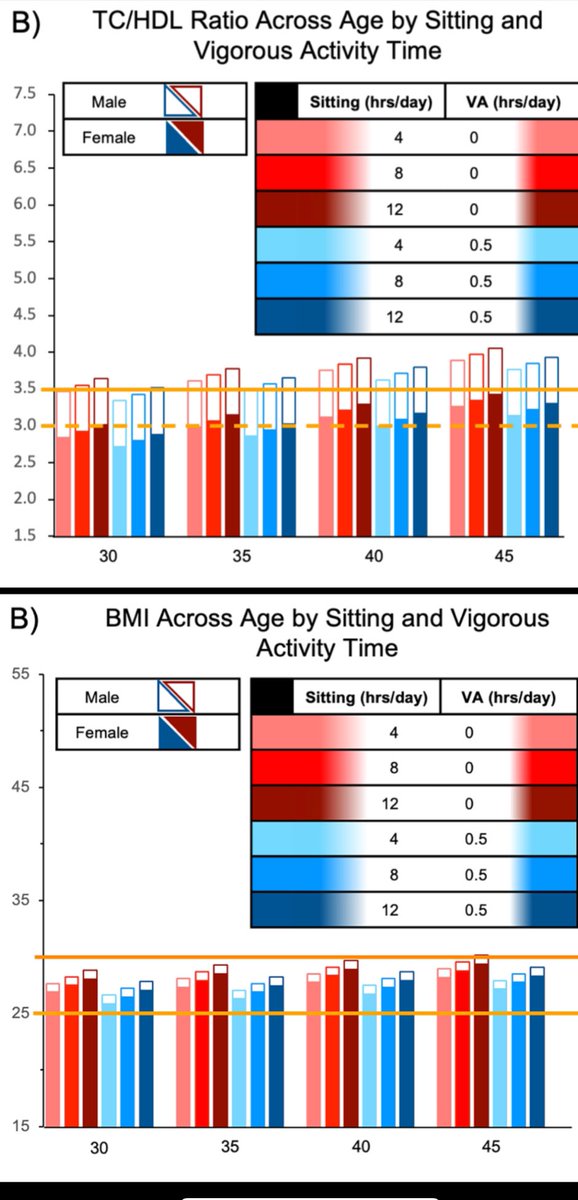
Millennials are aging faster as they spend >8 hours/day sitting.
30 min of daily intense exercise can counteract, making your body 5-10 years younger.
A study published today showed that US millennials (28-49 years) spent >8 hours a day sitting which leads to faster aging indicated in markers including higher body-weight and increased fat in the blood at a younger age.
Fortunately, Intense exercise mitigates this effect of longer sitting hours, as millennials working out vigorously for 30 minutes a day demonstrate a BMI (Body Weight relative to height) and blood fat levels (TG/HDL ratio) equivalent to that of 10 year and 5 year younger peers that do not exercise.