🚨 Just published in @NEJM and presented at #CCR26.
The #ARISEFLUIDStrial (n=1,000) found that early vasopressors with restricted fluids did not improve days alive and out of hospital at 90 days vs a more liberal fluid strategy!
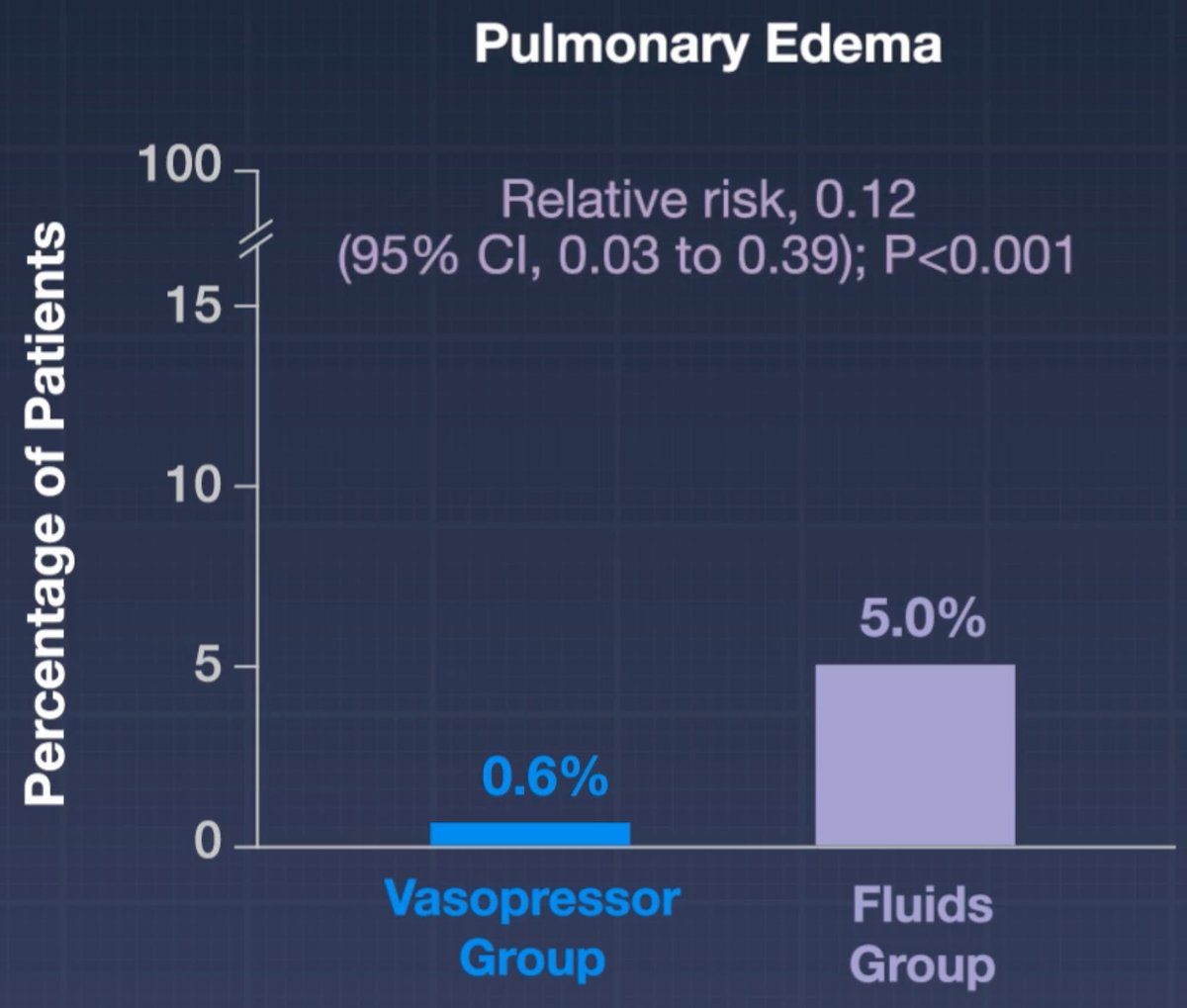
⚠️ Less pulmonary edema, though (0.6% vs 5.0%)!
ARISE-FLUIDS has arrived and it's awesome 🥳
For over a decade, the Surviving Sepsis Guidelines recommended that septic patients get at least 30 cc/kg fluid. In the United States, these guidelines were weaponized into performance metrics, pressuring clinicians to prescribe arbitrary volumes to every patient.
Evidence-based clinicians have LONG known that this guideline lacked evidentiary support. For example, I've attached a picture of a blog I wrote about this back in 2017. Despite the lack of evidentiary support and some evidence of harm, the Surviving Sepsis Guidelines INSISTED on perpetually recommending 30 cc/kg fluid resuscitation.
We finally have a prospective RCT demonstrating that mandating early administration of 30 cc/kg fluid (as compared to early vasopressors) doesn't help and may actually cause harm.
It's important to note that all of the hard endpoints in this trial were neutral (e.g., mortality, days free of organ support).
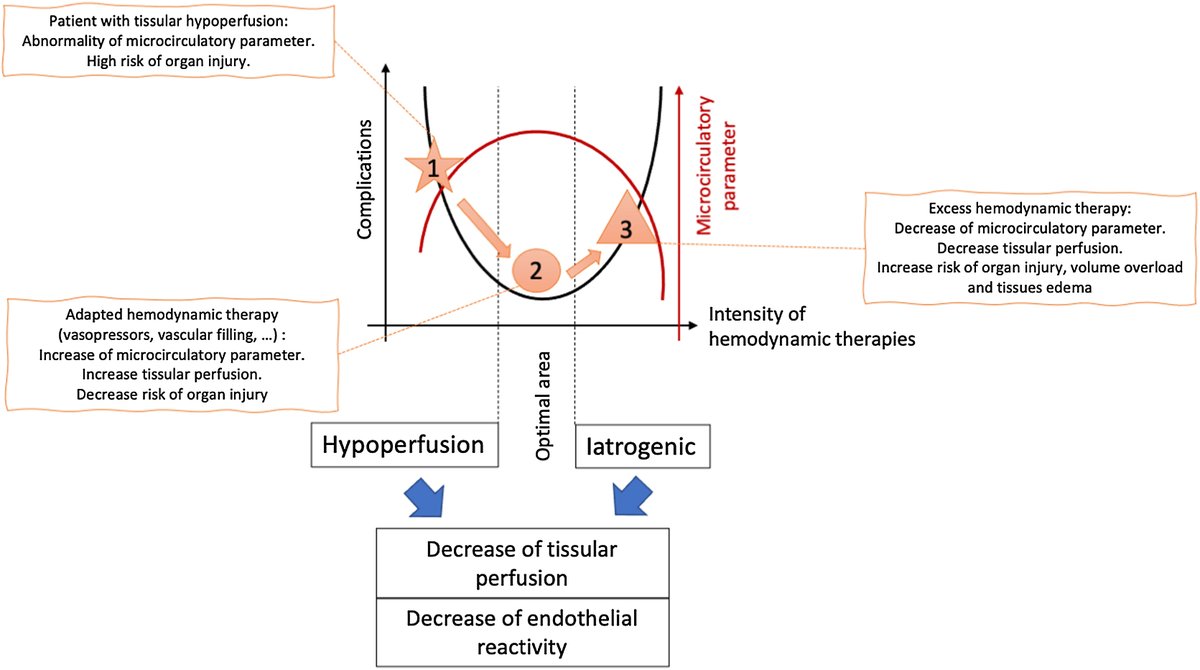
I still think that 30 cc/kg fluid is a pretty reasonable volume of fluid for *most* patients. But the study does suggest that giving too much fluid may promote edema - so we should be *thoughtful* about this intervention rather than mandating it for every septic patient.
Based on the subgroup analysis, the fluid-conservative strategy may have helped the subgroup of pneumonia patients the most. This is statistically nonsignificant but aligns with my expectation. ARDSy patients often don't respond well to fluid. (In contrast, I really doubt that a liter of fluids in either direction matters for most urosepsis patients.)
This is a great example of the over-reach of guidelines and protocoled medicine. People get all upset about practice variation, so sometimes they try to stomp it out using guidelines and protocols. But these guidelines are highly fallible, so what may occur is that you standardize care in a way that harms everyone equally. 🤦♂️
🚀 Introducing https://t.co/7wgBzJjd6C — free, interactive interventional pulmonology education that's actually hands-on, not just another question bank.
We built it to teach the skills that are hard to develop outside the procedure suite. The flagship modules: a Bronch Navigation Trainer and a CT-to-Fluoro simulator for spatial reasoning. Alongside them: EBUS training, IP board review, TNM-9 staging, 3D anatomy, and a Creative Commons image repository you're free to use.
Coming soon: Intro to Bronchoscopy, Pleural Disease, and Rigid Bronchoscopy Foundations.
Built for fellows, faculty, and anyone sharpening their procedural skills. Create a free account and start practicing today.
→ https://t.co/7wgBzJjd6C
#InterventionalPulmonology #Bronchoscopy #EBUS #MedEd #FOAMed #AABIP #PCCM #MedX
@AAB_IP@wabipconnect@accpchest@atscommunity@EuroRespSoc@eabiptweet@SABronchoscopy@criticalMD
ERJ Open Research: Centrilobular emphysema has significantly worse remodelling of pulmonary arteries than panlobular emphysema, suggesting distinct pathological phenotypes in COPD, a concept that might improve the understanding of the disease https://t.co/NeoQFvuReJ
A company with no prior experience of making ventilators was given a contract for 10,000 ventilators worth Rs 373 Cr under the PMCARES fund during COVID, found an investigation by Huffpost. Many hospitals complained that PMCARES ventilators were of poor quality, leading to hypoxia in patients.
Watch- https://t.co/XlIqVh674v
Today's Paper of the Day is:
Cardiogenic shock
https://t.co/JKgcYjlUQ5
Join us to read 1 paper per day and stay up-to-date as we cover the spectrum of critical care across 2026
Today's Paper of the Day is:
Gastrointestinal function and nutritional interventions in septic shock
https://t.co/JKgcYjlUQ5
Join us to read 1 paper per day and stay up-to-date as we cover the spectrum of critical care across 2026
Sodium bicarbonate application for the treatment of acute metabolic acidosis: what we know and what we still don’t know
CCR Journal Watch
https://t.co/Sp06oA6IDG
Today's Paper of the Day is:
Practical approach to thrombocytopenia in patients with sepsis: a narrative review
https://t.co/JKgcYjlUQ5
Join us to read 1 paper per day and stay up-to-date as we cover the spectrum of critical care across 2026
Early Vasoplegia and Endothelial Protection in Sepsis: A Physiology-Guided Framework for Timely Albumin and Norepinephrine Therapy
CCR Journal Watch
https://t.co/Sp06oA6IDG
Today's Paper of the Day is:
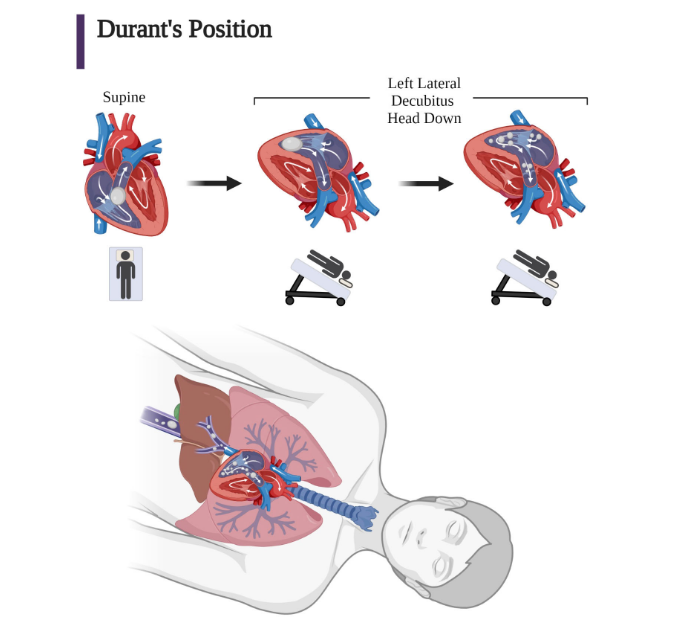
Iatrogenic air embolism: pathoanatomy, thromboinflammation, endotheliopathy, and therapies
https://t.co/JKgcYjlUQ5
We start fresh in 3 days for 2026 - Join us to read 1 paper per day and stay up-to-date in critical care