Comet's open-source search engine has been a boon for our proteomics methods developments (like real-time search). Over the last two-years we became curious whether Comet's search speeds could be improved to keep pace with modern instruments and large sample cohorts.
I am excited to share my first project in @jwadeharperlab for feedback. We used spatiotemporal proteomics (1) to describe how cells respond to NLRP3 agonists and (2) to profile the proximal proteome as NLRP3 trafficks to the site of inflammasome nucleation https://t.co/Ebnj9d0vVK
We have completed our thorough analysis of ER remodeling during neurogenesis by ER-phagy 🥳@jwadeharperlab @CristinaCpt@smithianr@PaoliJulia @annabieber_ab Schulman lab @WilflingFlorian. And thanks to the reviewers for their work and insight. https://t.co/uqA21RYNFO
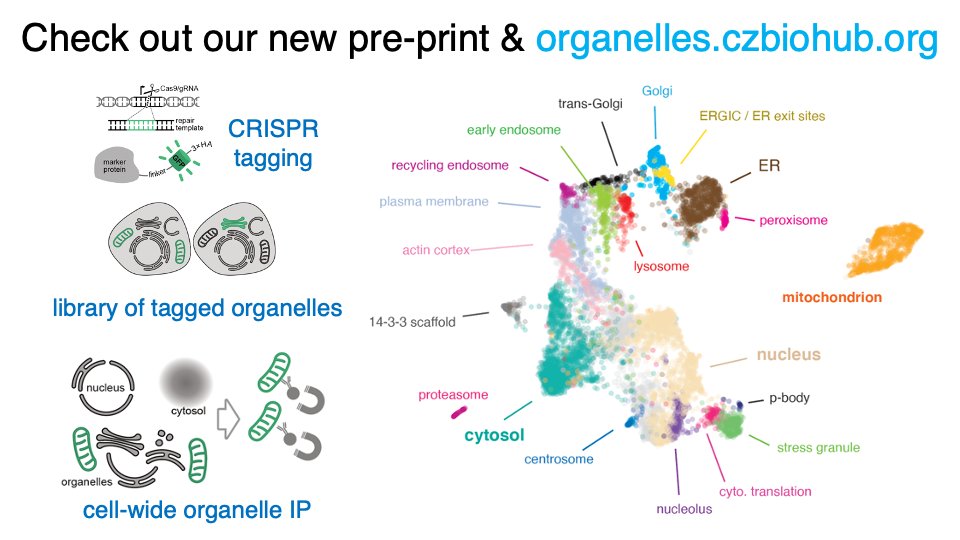
So stoked to be sharing this! New proteomics map of human subcellular architecture. CRISPR + organelle IP mass spec at scale. Check out pre-print https://t.co/OLlf1LYyud and https://t.co/Gb1TvlKcCH. 🙌 to fantastic team @czbiohub SF & collabs! 1/2
Congratulations @AmandaWigg_, thesis work now in press @NatureComms. Inspired by the structure of the hypothalamic hormone TRH (pyroglu-his-pro-amide), Amanda shows “capping” defines a chemical motif present in many previously unknown bioactive peptides
https://t.co/x0MYExgURu
Thrilled to announce the opening of the Srivatsan Lab (https://t.co/mUPc2wHm0X) at the @fredhutch. The lab will be building new sequencing technologies to understand how our cells and bodies form over the course of development.
Macroautophagy prioritizes turnover of ER and Golgi proteins during nutrient stress. Check out our latest work defining this and the discovery of a selective Golgi degradation pathway. @_Sharan_Swarup, @smithianr, @jwadeharperlab, @HarvardCellBio
https://t.co/yy6GHIFW19
Our preprint is now online! We define how the ER proteome is remodeled via autophagy during differentiation to neurons-- with combinatorial yet selective contributions of ER-phagy receptors. With @jwadeharperlab @smithianr@PaoliJulia Y. Jiang, J.Paulo. https://t.co/ofcnnGVEMJ
LOV-Turbo is published today in @naturemethods and plasmids for LOV-Turbo are available on Addgene, here:
https://t.co/fzZBUXfjQK
We hope many people will use LOV-Turbo in exciting new ways!
https://t.co/nl3wrGRku4
If you plan to use NanoLuc BRET to activate LOV-Turbo, please reach out, as we are engineering improved LOV-Turbo + NanoLuc variants with higher BRET efficiency.
Would you like to help us in our quest to map the human interactome via affinity-purification mass spectrometry? Become a key member of our team and help us identify interacting partners for every human protein! Please Retweet!
https://t.co/rniLOmTKOb
Excited to share our preprint describing sci-Plex-GxE. A highly multiplexed workflow for combined exposure and genetic molecular screens at single-cell resolution.
https://t.co/mGuLeAMgn6
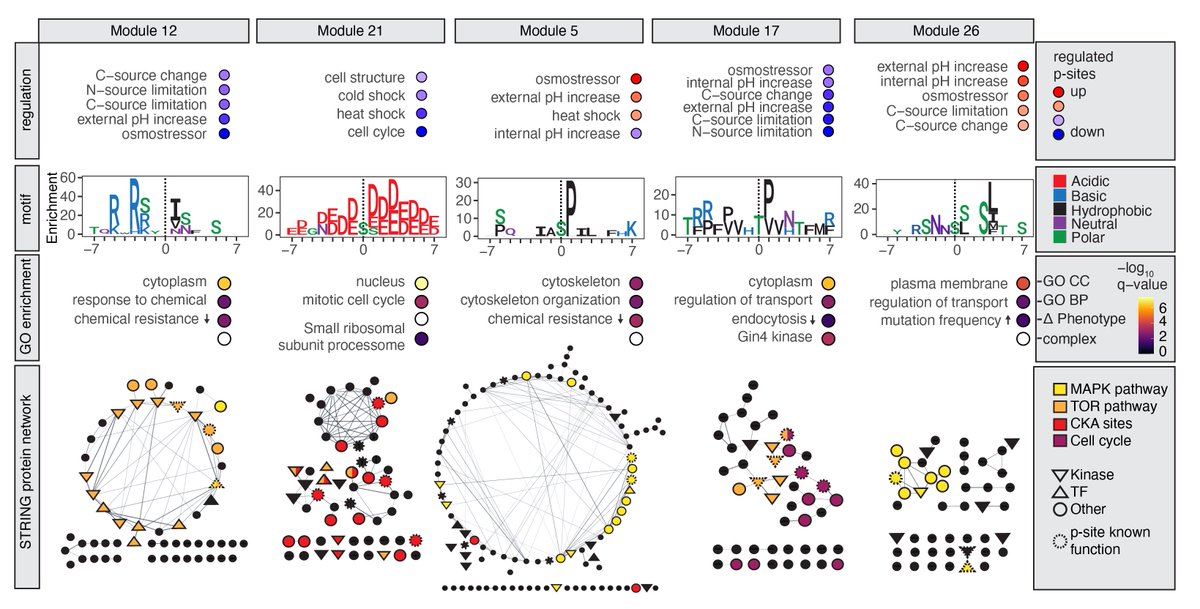
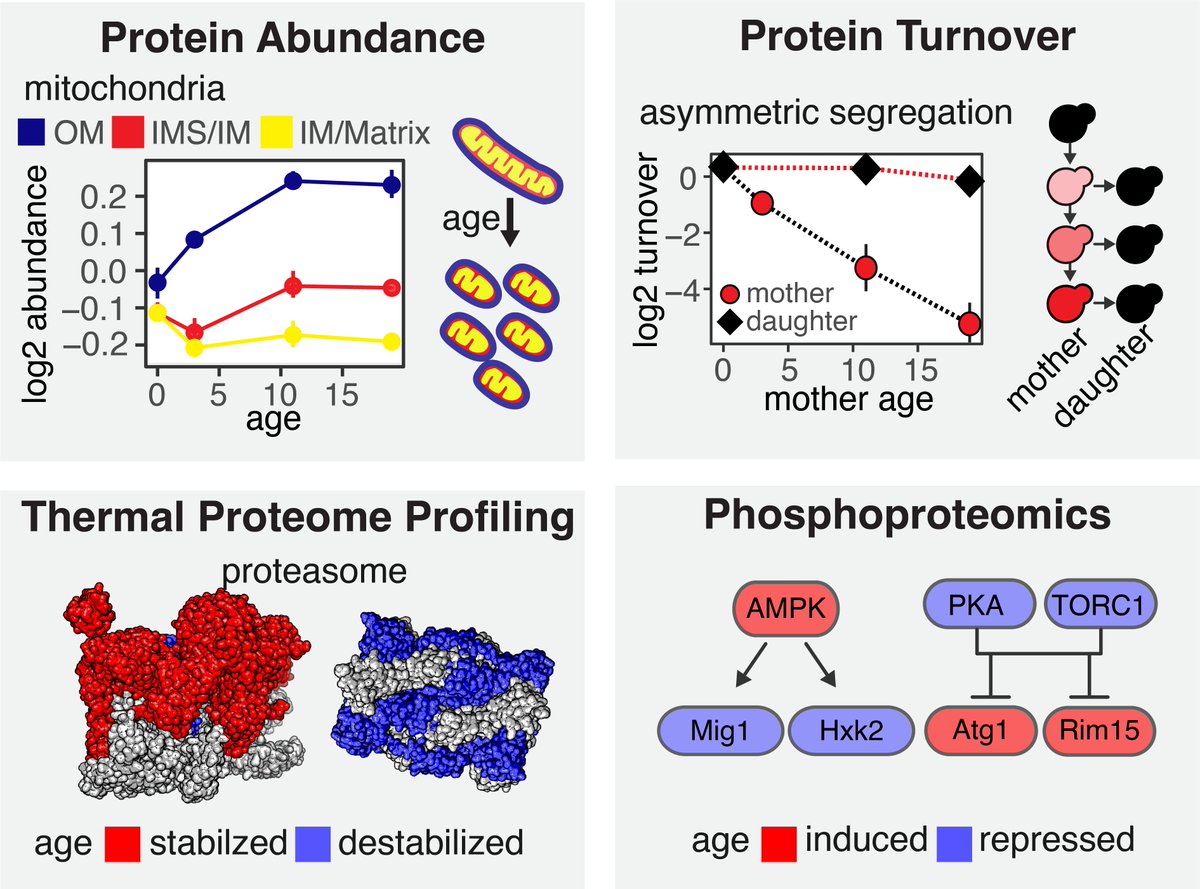
Excited to share our newest #preprint: Multidimensional proteomics identifies molecular trajectories of cellular aging and rejuvenation.
A great project with the @juditvr @DunhamLab @mkaeberlein teams!
📄Read: https://t.co/i78BXLFrdL
💾Explore: https://t.co/ZVlUGMAVnn
1/9
We are delighted to share our work, now available in
@Nature:
https://t.co/E5FBUsH2YW
Our scoring system can be accessed here: https://t.co/uPmrvbqD50
Coming soon --> the tyrosine kinome and an improved system with many new functionalities & features!
#TheKinaseLibrary#KL
Are you interested in studying phosphotyrosine modifications on proteins and want to save time and money?
Check out our (@juditvr) automated approach to enrich phosphotyrosine peptides using a pY superbinder or antibodies coupled to magnetic beads!
https://t.co/9YBE5UIqGC
We recently shared our biorxiv preprint defining autophagy cargo. With this story @smithianr created 'CARGO' a web interface to explore all of the data! See if your favorite proteins or organelles are degraded by autophagy during nutrient stress here: https://t.co/FXCjvCjmq1