PhD Student at Cambridge @Dept_of_POLIS Associate Editor CRIA @UNDPPA Political Affairs Intern 🇺🇸AU @au_sis MA in Intnl Affairs 🇰🇷 연정 BA in Intnl Affairs
A Genealogy of International Relations in Asia is now available for pre-order! The volume offers fresh perspectives on the evolution of IR knowledge in Asia. Thrilled to contribute a chapter to this project.
https://t.co/8BKd4IZzR2
In this new article, Alan Tidwell argues the conditions that once allowed Pacific Island states to hedge among major powers are narrowing. ⤵️ https://t.co/nyanFTf4lZ
"entails linking China’s centuries-deep historical and cultural context to produce a more systematic explanation, spanning longer timeframes and broader topics, much like Max Weber’s analysis in The Protestant Ethic and the Spirit of Capitalism"
A Oxford PhD student got flagged for submitting AI-generated work.
His advisor called it the most sophisticated research process he had seen in 20 years.
The student had not used AI to write a single word.
Here is the workflow that got him reported.
He starts every essay with a diagnostic he calls brutal. He dumps his rough argument into Claude and asks one question: what are the three weakest logical jumps in this reasoning, and where would a hostile examiner attack first? The AI does not write his essay. It destroys his draft, and then he rebuilds from whatever survives.
Most students using AI are doing the opposite. They hand Claude a topic and ask it to write. He hands Claude his thinking and asks it to find every place where that thinking falls apart. The difference between those two approaches is the difference between outsourcing your brain and sharpening it.
The second step is the one that made his advisor go quiet. He uploads the five most important papers in his field alongside his draft and asks Claude what claims in his argument contradict or oversimplify what these authors actually found. Most PhD students cite papers they have skimmed once. He cites papers he has been forced to genuinely reckon with, because Claude keeps catching the places where he got them wrong.
The final move is almost unfair. Before he submits anything, he pastes his conclusion and runs one more prompt. He asks what a philosopher of science would say is missing from this argument and what assumptions he is making that he has not defended. His essays come back from reviewers with phrases like unusually rigorous and demonstrates rare critical depth, and his committee has no idea that the depth came from a machine asking him harder questions than any human in his department was willing to ask.
The academic integrity hearing lasted three hours. The panel asked him to rebuild his methodology from scratch in the room. He opened his laptop and showed them exactly how the workflow ran, prompt by prompt. They did not just clear him. They gave him the highest grade in the department's history and asked him to present the process to faculty.
Here is what that story actually means. What took most PhD candidates six months of back-and-forth with advisors, he was compressing into a single session because he had figured out something almost nobody else has. AI does not make your thinking better by replacing it. It makes your thinking better by attacking it faster than any human critic ever would.
He was not using AI to write. He was using it to think harder than he could alone.
The tool is the same one everyone has. The workflow is the part nobody is teaching.
I’ve also lived in an authoritarian country (Eritrea), and I’m currently visiting a different one (China). State legitimacy, accountability, and representation are very different in the two countries.
The Economist’s Democracy Index fails to capture the complexity of political systems that don’t follow the Western liberal model.
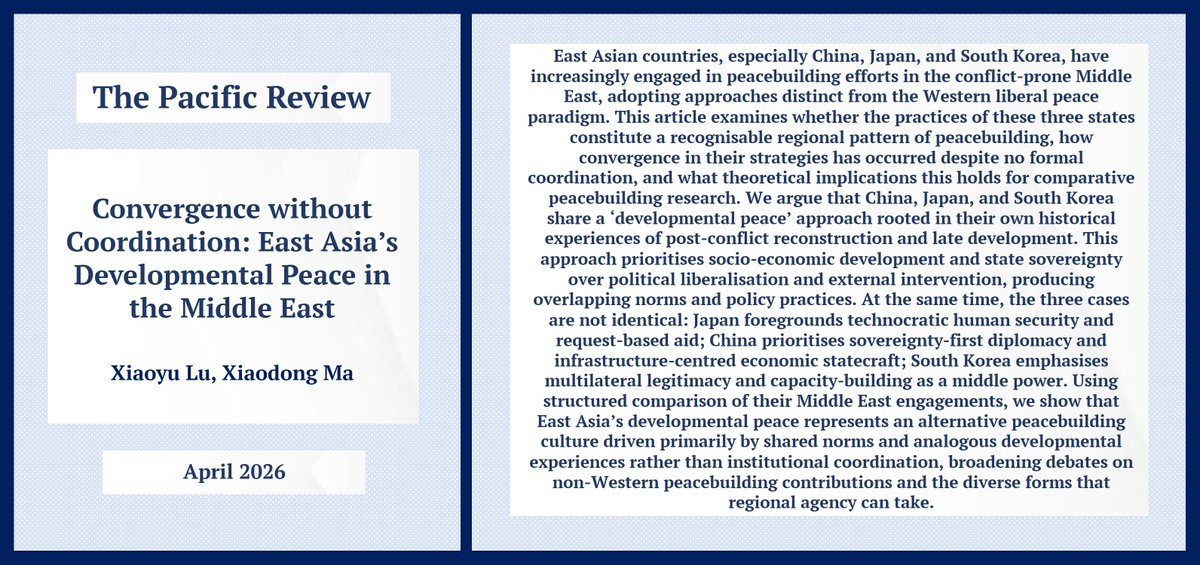
In this new paper, Xiaoyu Lu and Xiaodong Ma argue that China, Japan and South Korea share a ‘developmental peace’ approach in the Middle East rooted in their own historical experiences of post-conflict reconstruction and late development. https://t.co/hKoBhkzcv5
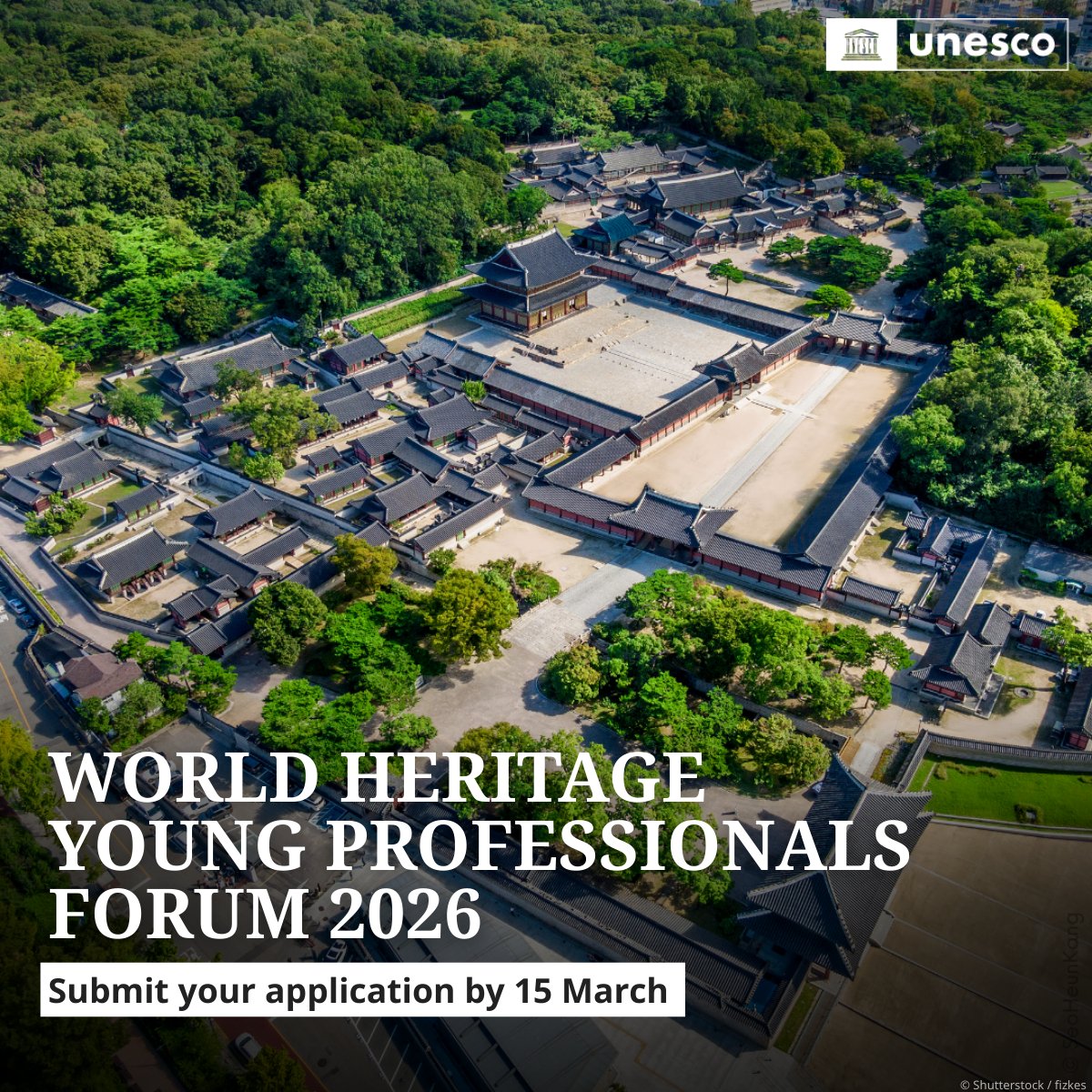
Applications are now open for the 2026 UNESCO #WorldHeritage Young Professionals Forum in the Republic of Korea!
Join us to exchange ideas with experts and explore how youth can help shape the future of heritage conservation.
➡️ Apply: https://t.co/xQB64RsMkx
@unescokr_eng unescokr
Many of my posts are supportive of China's economic transformation.
Here's why.
China has lifted more people out of poverty than the rest of the world put together in the past 50 years.
China is leading global efforts to develop clean energy technology.
China has higher life expectancy than the USA despite its income per capita being 1/6 of the USA.
China has the world's largest high-speed rail network.
China has provided the world with affordable consumer goods for decades now.
I could go on...
The point is, from an international development perspective, we should celebrate China's rise.
We also need to call out Western leaders, pundits and media for their anti-China rhetoric — which has less to do with China and more to do with the fact that Western hegemony is being threatened. In recent years, China has done a lot more for global prosperity than the West.
Am I saying that we should unequivocally celebrate China? Of course not. But in Western media, we are bombarded with critical takes on China every day. There is no need for me to repeat it.
I've also grown tired of the caveats people in wealthy countries target at poorer countries when the latter do something good.
The idea that the West is the ideal model to strive for is absolute rubbish. China is doing things differently, and they're being successful in many ways. We should celebrate that.
‘Multiplexity is a dynamic, contested and non-linear process that can vary across issue areas’
In his afterword to the special section, @AmitavAcharya presents 4 dimensions of multiplexity which offer a fresh understanding of continuity and change in the world order. https://t.co/WqYy3eb5pZ
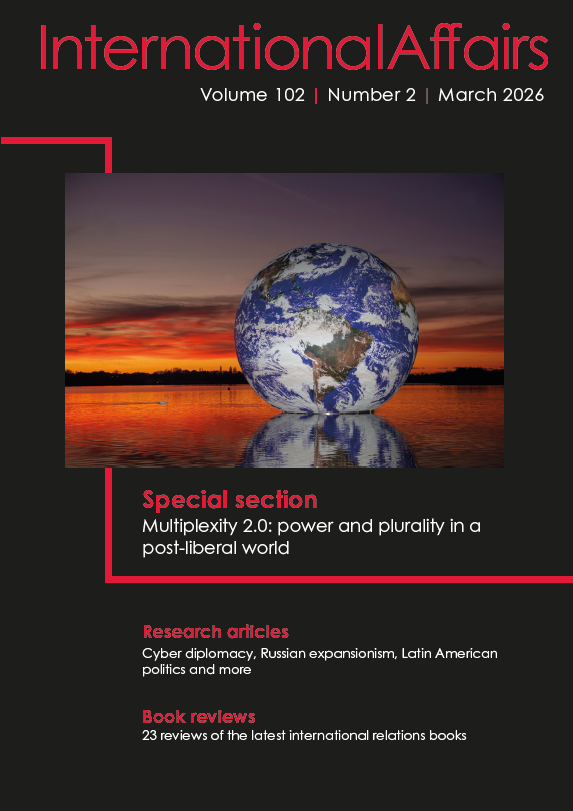
📢 Our March issue is OUT NOW!
🌏Special section: Multiplexity 2.0: power and plurality in a post-liberal world, guest-edited by @IndrajitRoyYork@FisherOnar
🔖Research articles on a just transition away from fossil fuels, why the OSCE endures, Russian expansionism and more
📚2⃣3⃣ book reviews
Link to the issue > https://t.co/Y69XL2ewfC
I write for @CarnegieEndow on how too many Western strategists expect China to behave like the United States—and then when China does not behave like the United States, they conclude that it is a strategic failure rather than a deliberate choice, and that a “chastened” China has been put back on its heels. It’s important not to mirror-image U.S. foreign policy, refracting Chinese policy through the lens of what American strategists would do if they were Chinese Communists. Beijing doesn’t think like Washington—and the Iran conflict shows why. https://t.co/ja3M33m2ii
This article not only offers a clear definition of multiplex world order, but also makes a powerful case for why multiplexity-not unipolarity, bipolarity or multipolarity- offers a timely & indispensable policy framework for middle powers like South Korea. https://t.co/p7XXwIGEmJ