Token-Mol is a chemical language model encodes 2D and 3D molecular data, and molecular property into tokens, transforming drug discovery tasks into probabilistic predictions.
With fine-tuning it can surpass expert methods in specific downstream task.
(2/3)
Love the confidence of some CS/math folks. We still treat AlphaFold with caution, yet these guys think scaling compute will perfectly predict biological function.
Why not discover a room-temperature superconductor first? Just 100 elements and their interactions. Surely simpler.
If you had an exponential amount of compute you could solve simulate biology exactly and wouldn't need to run any experiments.
Some of you will think "of course, but that's an unrealistic assumption" and others will think "no, you need experiments even with that much compute. That's just How It's Done".
You would of course need evaluations once you have a solution, but you don't in principle need experiments to find it: Experiments are a way to save compute, dating from a time when it was much more expensive.
And I think the presentation is exponential but real systems aren't irreducibly exponential. AlphaFold worked, after all.
There’s a really pronounced divide between people who are on the AI side of things and people who are on the biology side of things. Even among people working in AI, the divide persists based on where they’re focused.
The AI side, adherents of scaling laws and the bitter lesson, believe that AI getting better means AI being more capable of novel discoveries in medicine (that go beyond discovering new drugs in well understood targets or speeding up dry lab work etc).
The biology people think the idea of a bitter lesson in biology is kind of ridiculous and that regardless of AI’s capabilities it’s going to be at least 5-10 years until you could hope to reliably simulate human toxicology in silico (right now AI/ML can’t even reliably simulate in vivo studies like binding affinities or functional assays).
Even the most AI pilled of them, who will list all the areas that AI can reduce the time spent on various areas, don’t think the concept of AI discovering novel targets or generating new understanding of causal biology is realistic in the near term. Most, in fact, will readily characterize the assumption that even an “ASI” level model could find cures hidden in our current understanding (without expanding that understanding with significantly more biological data) as patently false.
This was a big part of why we wanted to experience it ourselves by using AI for a (very) small portion of what it can do in biology. It was both mind blowing and revealed some poignant insights into how different the problem of making AI better at something like coding is to the problems of biology.
Even if it unlocked the ability to generate new molecules at a stunning pace, its simulation (in silico) of binding only had 49% accuracy. And if we wanted to improve that, we’d need to feed it back the data from the lab - data that took about 30x as long to get as it took to generate the molecules. And these were tests in a test tube (turn of phrase), imagine how long it would take if we wanted to improve the model with data that required recruiting humans and monitoring their reactions.
Human biology is very complex, and adding a drug - especially a novel drug and doubly so for a novel drug acting on a novel mechanism - means mapping interactions that have nth-order-effects that we don’t have the data to predict. Virtual cells have made advancements enabled by AI, but the perturbations equate to a small fraction of the possible.
This is before you even get into curing disease, especially uniquely human diseases. Brain function involves cellular identities that are unique to humans, meaning animal studies are of little use.
How long does it take to understand what the side effects of chronic administration of a drug in humans are? AI can speed up analyzing the data, or designing the trial or even getting it approved…but it can’t make a 6 month trial complete in 3 months.
I think its important to point out that significant advancements can be made in AI that contribute to biology, while also being realistic about how much it speeds up something as complex as curing a specific cancer or diseases of the brain.
People think they’re at a disadvantage b/c don’t have “best model” or most compute, but actually most over-funded companies under performing (no drugs in trials); Isomorphic, Xaira, Altos. Those 10+ years old Recursion (first wave of “AI / Tech Bio”), Calico (not primaroly “AI techbio”
Anthropic: fine, it’s only 1 year, but no actual pharma milestones. I have pharma milestones I can tell uou my budget 10,000x+ smaller than theirs. If yiu say you’re gojng to cure all diseases in 5-10 years and it’s been 1 year and you don’t have 1 candidate in some kind of actual progrma.
Hassabis / Isomorphic way worse on this hype since it’s been 5+ years.
I call them “over-funded” 😆 unlimited money and compute and “talent”; most would call it well-funded
and also 10,000x estimate was just for Life Sciences dept. Could be 100,000x bigger budget than me easily.
Thrilled to share my first publication in ACIE: Modular Construction of Cyclic and Linear Quaternary Carbon Centers through Visible‑Light‑Induced Triplet Nitrene Transfer Reaction 🎉
Now online!
🔗 https://t.co/BKVwAPpZjJ…
#Photochemistry#OrganicChem#Nitrene
Protein immunogenicity is a major driver of drug failure in the clinic, a problem especially important in the age of generative AI when we can design de novo medicines with desired function.
Meet 🐐MESSI: a generative method for deimmunizing proteins with discrete diffusion. We reduce predicted MHC-II epitopes and experimentally validate retained or improved function in luciferases, PD-1 binders and uricases—an enzyme family used in FDA-approved therapies.💊
Watch the story below:
1/n 🧵
Dear Ai ppl,
1. All are welcome in biology.
2. Work done prior to your entry into this field continues to exist. Ignoring what came before you is a path to humiliation and loss of credibility.
3. Please enjoy your stay. We are glad you are here.
4. Cite your fucking sources.
Synthesis is a major bottleneck in drug discovery. AI synthesis planning can help propose better routes and make generative molecular design tractable.
With our retroChimera model we have been pushing the boundaries of these models further - out in @Nature today. 1/2
Chinese social media and internet company ByteDance has completed a $290 million fundraising for its AI drugmaking unit after spinning it off from the group, two people with knowledge of the matter said https://t.co/vnJRMeJR21
"optimizing GLP toxicity studies, which I will be doing in China for cost reasons"
Every new “one-person biotech” somehow makes the case for WuXi AppTec as drug discovery infrastructure even stronger.
Long live WuXi AppTec!
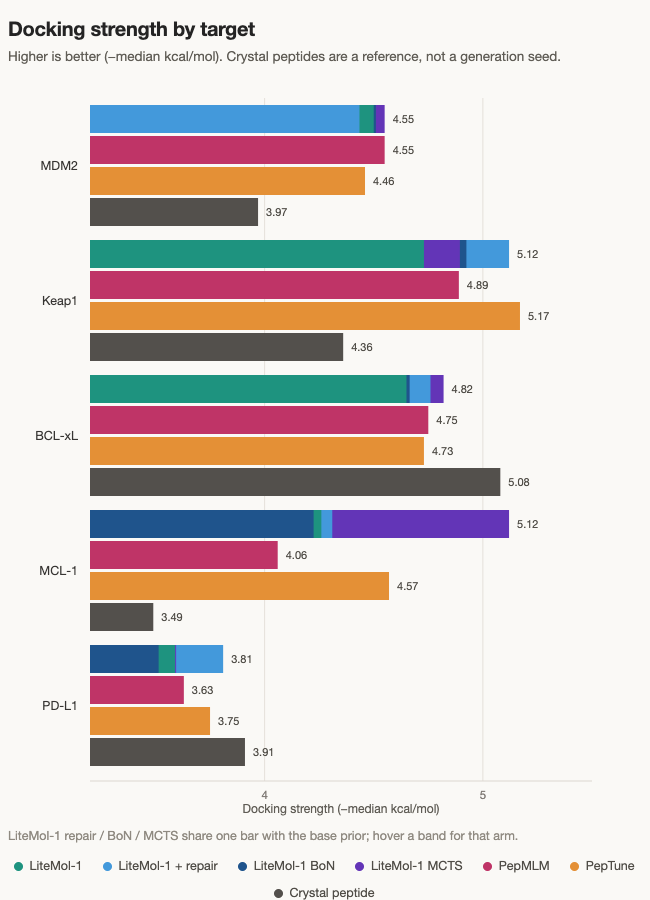
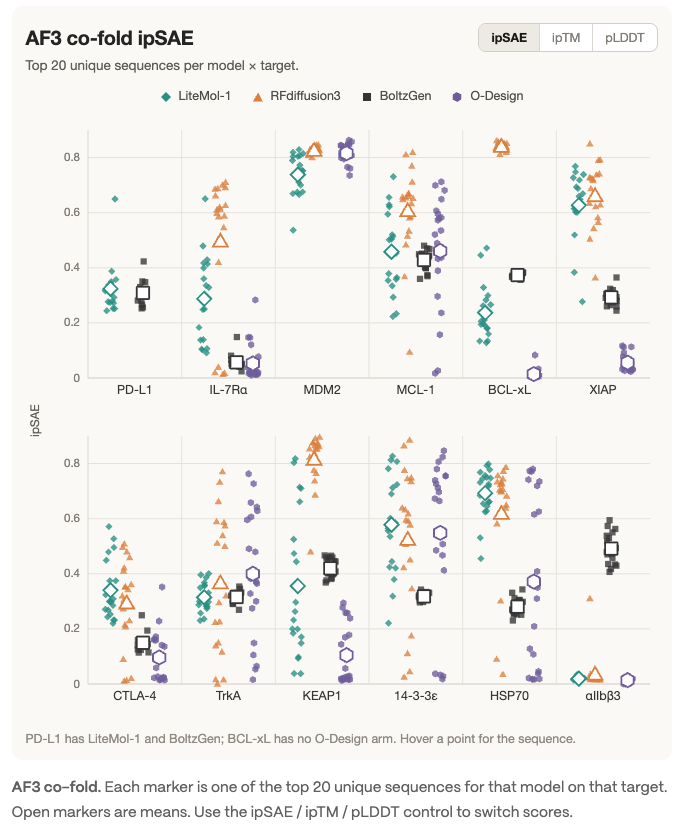
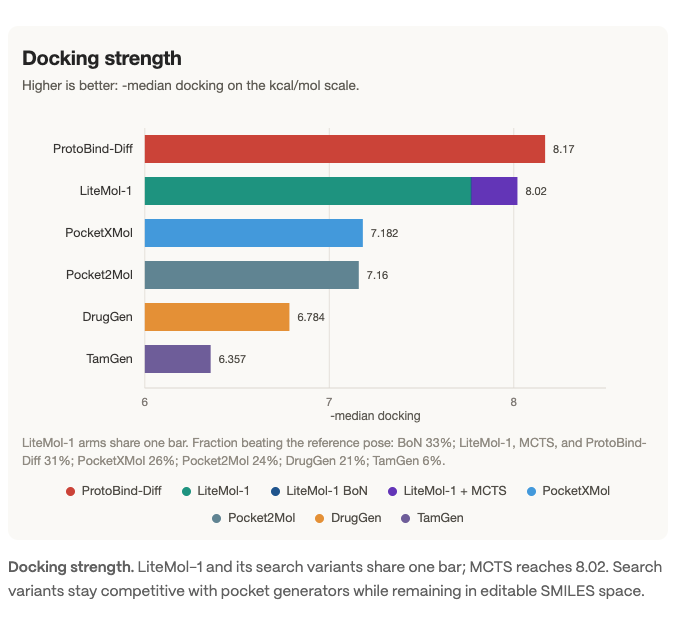
Today, we are incredibly excited to present LiteMol-1, our very first foundation model from LiteFold.
Structure-based models like BoltzGen, O-Design, and RFdiffusion have become the de facto standard for designing biomolecules. However, they are expensive to run at scale. In many campaigns, we have to generate tens of thousands of designs and rigorously filter them down to a handful of top candidates.
More importantly, most molecule design systems are primarily optimized around binding. But what about everything else that makes a molecule a useful therapeutic: ADME, toxicity, drug-likeness, membrane permeability, synthesizability, selectivity, and more?
That’s where we introduce LiteMol-1, our first Multi-Molecule Foundation Diffusion Language Model, pre-trained from scratch. With a single set of weights, LiteMol-1 can conditionally generate small molecules, peptides, cyclic peptides, depsipeptides, peptides with ncAAs, macrocycles, and PROTACs.
You can generate molecules unconditionally or condition generation on a protein target sequence. You can in-paint molecules, preserve parts of an existing scaffold, generate non-canonical peptides, cyclize designs, and continuously edit and regenerate them.
We also introduce a Monte Carlo Tree Search framework for multi-objective molecular design. Instead of trying to make one molecule perfect at everything, the search keeps a set of promising molecules, each with different trade-offs across properties. This matters because molecular design is fundamentally not a single-objective optimization problem.
Finally, and probably the part we are most excited about: this is a model for Agents. LLMs are not particularly efficient interfaces for repeatedly reasoning over thousands of large PDB/CIF files inside an AutoResearch loop. Sequence space is different. SMILES and molecular sequences are compact, editable, and much easier for an agent to inspect, compare, modify, and reason over.
So we treat LiteMol-1 as an infinite molecular canvas.
The model generates possibilities. The agent takes inspiration from them, evaluates them, edits them, optimizes them, and generates again. The AutoResearch loop continues until it finds candidates that satisfy the given design objectives; while bringing in expensive structure prediction, docking, or simulation only when they are actually needed.
Our evaluations across peptide and small-molecule generation show that LiteMol-1 is competitive with, and in several settings on-par with or better than, frontier structure-based and sequence-based models, while operating at a fraction of the generation cost and time.
And this is only the first step. Check out our technical research blog post in the comments to learn more about LiteMol-1.
AI-powered virtual screening is becoming faster and more accurate — but choosing the right model and building a complete workflow can still be challenging. 💻💊
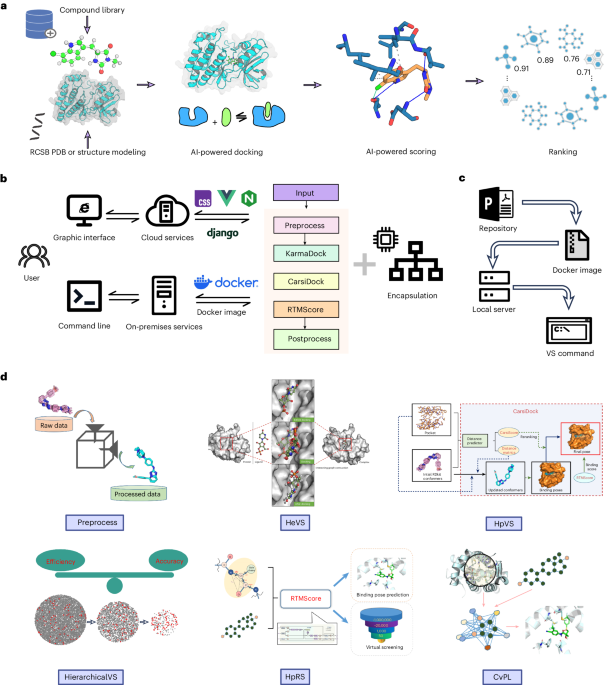
In our new protocol published in @NatureProtocols , “Facilitating structure-based drug discovery with an artificial intelligence-driven virtual screening platform,” co-first authors Shukai Gu, Xujun Zhang, and Mengwu Xiao present CVSP-AIE, a user-friendly platform for AI-driven structure-based virtual screening.
🚀 1. What is CVSP-AIE?
CVSP-AIE integrates three complementary AI models:
⚡ KarmaDock for ultra-fast molecular docking
🎯 CarsiDock for accurate and physically plausible binding-pose prediction
📊 RTMScore for protein–ligand affinity scoring and reranking
By applying these models hierarchically, the platform dynamically balances screening speed and accuracy.
🧩 2. What can users do?
The online platform supports the complete virtual screening workflow, including:
🧹 Protein and compound-library preprocessing
🔍 Efficient, precise, hierarchical, or rescoring-based virtual screening
🧬 Protein–ligand interaction analysis and visualization
🗺️ Interactive chemical-space and molecular-property analysis
Users can initiate a screening task by simply uploading a target protein, a reference ligand, and a compound library.
⏱️ 3. How efficient is it?
The hierarchical workflow can screen 100,000 compounds in approximately 30–45 min, combining fast initial screening with accurate docking and rescoring of top-ranked candidates.
For larger projects, CVSP-AIE also provides a locally deployable package, enabling command-line screening of compound libraries at arbitrary scale while preserving local data privacy. 🖥️
🌐 4. Ready to use
The web server is freely available at:
https://t.co/o2mVPK7JGB
The local hierarchical screening workflow is also available through Docker and PyPI, making the platform accessible to both computational researchers and users without extensive programming experience.
✨ Overall
CVSP-AIE brings preprocessing, AI-powered docking, scoring, molecular ranking, interaction analysis, and chemical-space visualization into one integrated workflow — helping make structure-based virtual screening more efficient, flexible, and accessible.
Read the full article here:
https://t.co/Lcl99I2i9u
#NatureProtocols #DrugDiscovery #VirtualScreening #AIforScience #AI4DrugDiscovery #MolecularDocking #ComputationalChemistry #ComputationalBiology #StructureBasedDrugDesign #MachineLearning #DeepLearning #Cheminformatics #MedicinalChemistry #CADD
🎉 Research reaches a new milestone!
📈 2025 Impact Factor: 12.9
🏆 JCR Q1 | 🌍 Ranked #13 in multidisciplinary natural sciences
📊 CiteScore 2025: 13.5
Congratulations to the editorial team, authors, reviewers, and the entire Research community!
https://t.co/DbNAN8Ddn9
For readers interested in the design of next-generation small-molecule kinase inhibitors, here's a comprehensive review https://t.co/1NZlTPiwBR
https://t.co/53pEaaub7u
Targeting the intrinsically disordered AR-NTD through a machine learning-based enhanced sampling workflow
In our new work published in @NatureComms , co-first authors Kai Zhu @KaiZhu560347 , Huating Wang, and Jintu Zhang report a computational-experimental strategy for targeting the intrinsically disordered N-terminal domain of the androgen receptor (AR-NTD).
🔬 1. Why AR-NTD?
Most approved androgen receptor antagonists target the ligand-binding domain. However, drug-resistant prostate cancer can bypass this route through AR mutations, amplification, and splice variants. Since these resistance mechanisms often retain the N-terminal domain, AR-NTD represents an attractive but challenging therapeutic target.
🧠 2. What is the key idea?
For intrinsically disordered proteins, the target is not one static structure, but a dynamic ensemble.
By combining enhanced sampling simulations with machine learning-based collective variables, we mapped the conformational landscape of the Tau-5 region of AR-NTD and identified transient druggable conformations.
⚙️ 3. What did we find?
The workflow integrates REST3, AutoEncoder-based collective variables, SWISH, OPES, and Deep-TICA. It identified nine metastable conformations and revealed key features of ligand recognition, including π–π stacking, aromatic residues, and structured water-mediated hydrogen-bond networks.
💡 4. What did this enable?
Guided by these druggable conformations, we performed structure-based virtual screening and discovered K53, a rationally designed AR-NTD antagonist.
K53 directly binds the AR-NTD-AF1 region, suppresses AR transcriptional activity, downregulates canonical AR target genes, and shows potent anti-proliferative activity in enzalutamide-resistant prostate cancer cells. 🎯
🚀 Overall
This work highlights how machine learning-enhanced molecular simulations can help transform dynamic IDP ensembles into actionable opportunities for rational drug discovery, providing a potential roadmap for targeting other challenging intrinsically disordered proteins.
Read the full article here: https://t.co/s07dYBnWND
#DrugDiscovery #AIforScience #MachineLearning #MolecularDynamics #EnhancedSampling #IDP #AndrogenReceptor #ComputationalBiology #ComputationalChemistry #MedicinalChemistry #MolecularSimulation #AI4DrugDiscovery