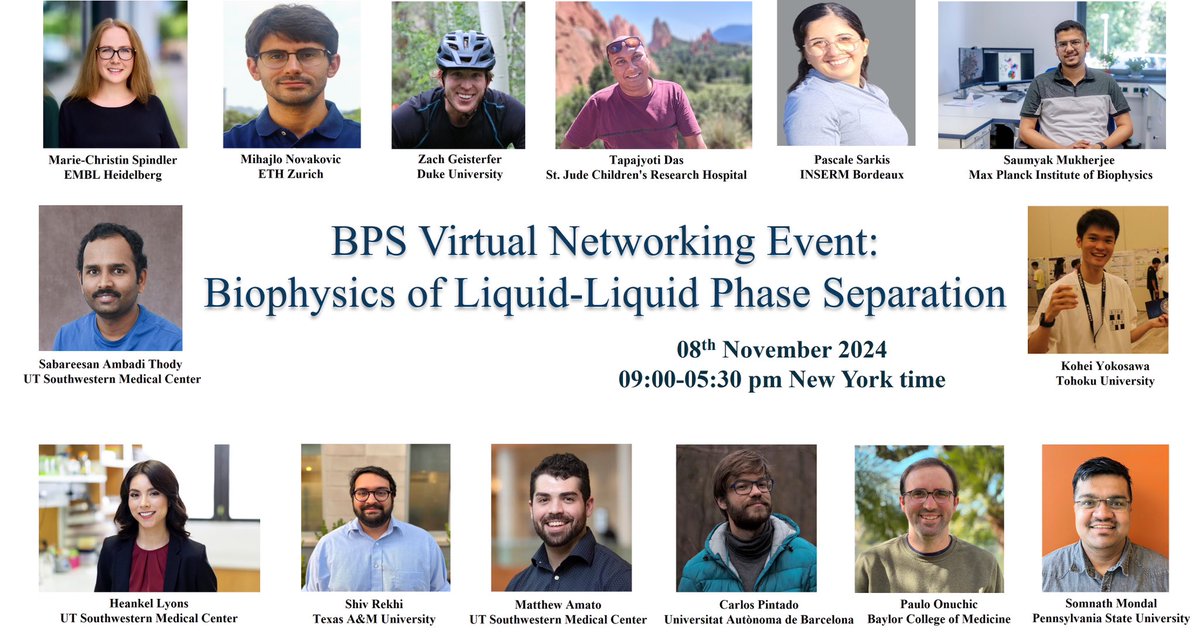
Announcing the joint IDPSeminars / BPS IDP Subgroup Trainee Symposium Speakers!
Join us on Mar 27, 12–2pm CST for 6 exciting talks focused on Intrinsically Disordered Proteins as part of #BiophysicsWeek2025 with the @BiophysicalSoc
Sign up now at https://t.co/6cqu6KsSFi
Curious how biocondensates localize ions? We found that condensates selectively bind and localize both chaotropic anions and kosmotropic cations. This
alters the condensate composition, interface potential and RNA duplex stability inside. By @IrisSmokers
https://t.co/AinHRInNqE
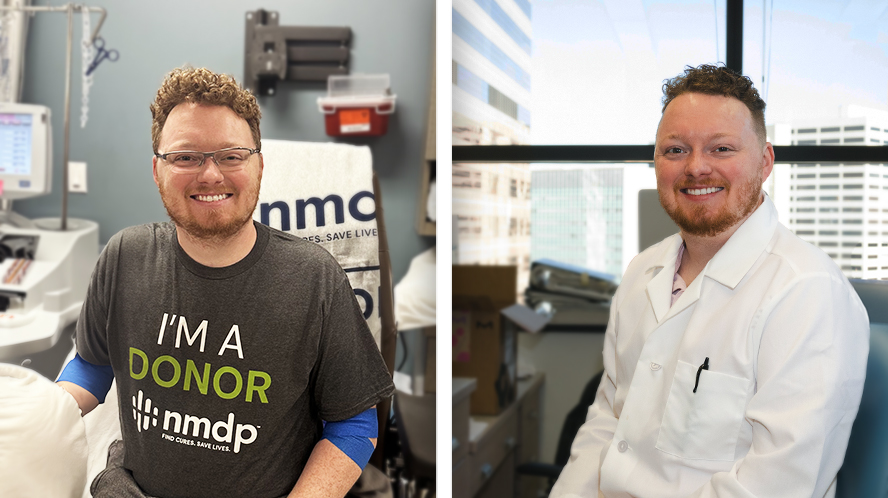
Congrats to Nick DeCleene on defending his thesis under the guidance of Alison Bertuch @TexasChildrens & @BCMHouston, and for donating stem cells @nmdp_org just a week after graduating! Whether in the lab or donating for a good cause, he is an inspiration❤️#StemCellDonor#PhDLife
New finding on APOE today in @CellCellPress: APOE2 and the Christchurch mutation are defective in LDLR binding. Decreased lipidated ApoE-receptor interactions may protect against the pathogenicity of ApoE and its lipid cargoes in lysosomes https://t.co/1e9GoEHMlY
We are getting ready for the online symposium with the Biophysical Society. Here is the registration (no fees) link:
https://t.co/jbvAjyMfLc @BiophysicalSoc
Cancer cells often harbor oncogenes outside chromosomes on extrachromosomal DNA (ecDNA), which is unevenly inherited by dividing cells. Today we report in @Nature that collectives of ecDNAs are inherited together by dividing cancer cells. 1/
https://t.co/scC2sc61Gh
Fahim and Marcus et al. @JLeeLab@bcmhouston developed live-cell #microscopy approaches to address whether co-localized enzyme factors are forming biochemically relevant interactions within RNA–protein condensates. https://t.co/qkiXagWR6q
#Biochemistry#RNAbiology
I’m so excited to welcome MrTAC to the world of targeted protein degradation! We created a chemical inducer of arginine methylation that can be used to degrade proteins in lysosomes 💊 So grateful for everyone involved in this project 🥳🥳 https://t.co/k3ltO0LKfB
New paper in @ScienceAdvances: We've uncovered the nuclear speckle transcriptome, revealing gene groups with distinct speckle localization properties and that speckles boost splicing for localized transcripts. Thanks to all co-authors! @regevlab https://t.co/bgYKtTQRsT
📢New paper alert!! With @boothbylab@alexholehouse@fried_lab we take a look at how an entire proteome survives desiccation. TLDR: Desiccation tolerance is encoded in specific residues on the protein surface, and occurs primarily in biosynthetic enzymes. https://t.co/v8OVBs1aFP
Gesteund door ALS Liga fonds A Cure for ALS doctoreerde @BoeynaemsSteven in 2017 @ Lab Neurobiologie KULeuven/VIB @LuVaDeBo. Nu is hij assistant Professor @bcmhouston@texaschildrens waar bij NIH Innovator Award 2,4 M Dollar ontving om eigen lab verder uit te bouwen. Proficiat!
Do you know what I love most about my PhD @JungmannLab? Actually seeing the things I learned from biology textbooks come to life🪄. Check out this DNA-PAINT image of the Golgi, showing both cis (GM130) and trans (TGN38) faces together with peroxisomes. Happy #FluorescenceFriday😊
BREAKING NEWS
The 2024 #NobelPrize in Literature is awarded to the South Korean author Han Kang “for her intense poetic prose that confronts historical traumas and exposes the fragility of human life.”
Ryan Flynn @raflynn5 of @HSCRB, an #NIHHighRisk Transformative Research Awardee, will explore how and why #RNA and RNA-binding proteins function on cell surfaces. This research could lead to transformative insights in cell #biology and disease mechanisms. https://t.co/XslsHXVzxr