The James Webb Space Telescope (@NASAWebb) has unveiled numerous stars formerly hidden by clouds of dust in a stellar nursery known as NGC 7129, which resides about 3,300 light-years from Earth.
Jensen Huang: agents will use software better than people do
"These agents are going to be better users of tools than us. And the reason for that is we know 10, 15% of the features of any application. The agent knows every single feature."
----
Full video on "Windows" YouTube channel, (link in comment)
.@NASA is streaming the undocking of @SpaceX Crew-12 aboard Dragon from the space station at 8:05 a.m. EDT today for a splashdown in the Pacific Ocean at 11:34 a.m. on Thursday. https://t.co/JiWCV6tzOW
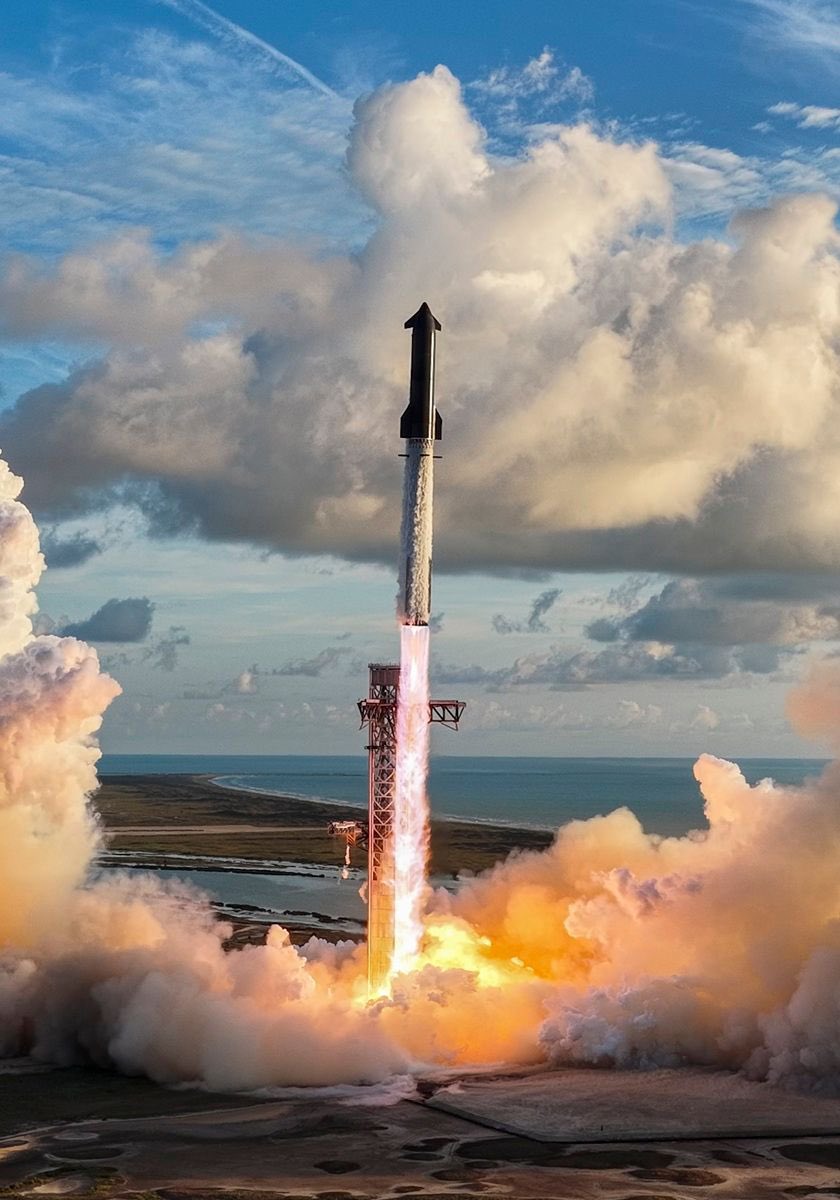
The comparison between NASA's Space Launch System (SLS) and SpaceX's Starship highlights two entirely different eras, design philosophies, and funding models for human space exploration. While SLS is an operational, government-driven, expendable rocket built for near-term reliability, Starship represents a privately developed, fully reusable architecture aiming to radically lower the cost of spaceflight.
The way both rockets approach deep space exploration defines their respective architectures:
SLS (Simulation-Rich)
NASA cannot afford highly visible, publicly funded failures. Therefore, SLS relies heavily on extensive virtual simulations, component stress-testing, and years of strict qualification before ever rolling to the pad. This led to a near-perfect maiden flight (Artemis I) and a successful crewed lunar flyby on Artemis II.
Starship (Hardware-Rich)
SpaceX embraces "explosive iteration". They build prototypes rapidly, flying them to failure to uncover "unknown unknowns" in real flight conditions. While early prototypes famously exploded, this method allowed SpaceX to advance swiftly—culminating in a milestone flight where Starship officially became operational, delivering 26 Starlink satellites into orbit.
The SLS Advantage
SLS can launch NASA's heavily protected Orion crew capsule and push it directly onto a Trans-Lunar Injection (TLI) trajectory toward the Moon without needing to refuel in orbit.
The Starship Advantage
Due to its massive 120-ton dry mass, Starship cannot reach the Moon on its own; it requires multiple orbital refuelings via tanker variants in Low Earth Orbit (LEO). However, once refueled, Starship can deliver a massive volume of cargo or humans, acting more like a "flying mansion" compared to Orion's small capsule.
Mars is ripping its own moon apart right now, and you can see the damage. Those long parallel grooves across Phobos used to be blamed on an ancient asteroid impact. NASA modeling now says they're stretch marks, stress fractures from Mars' gravity slowly tearing the moon open in real time.
The physics is a mirror image of our own Moon. Phobos circles Mars in 7 hours 39 minutes, but Mars takes 24 hours 37 minutes to spin once, so the moon outruns its own planet. That means the tidal bulge Phobos raises on Mars always trails behind it, tugging backward like a brake. Phobos loses altitude, about 6 feet per century.
Earth's Moon runs the same equation with the clocks reversed. It orbits slower than Earth spins, so our bulge sits ahead of it and slingshots it outward at 3.8 cm a year. Identical physics, and one moon gets exiled while the other gets eaten.
Phobos probably never hits Mars intact, though. Spacecraft data suggests it's a rubble pile, loose debris wrapped in roughly 330 feet of powdery regolith, barely holding itself together. Long before it reaches the surface it crosses the Roche limit, the altitude where Mars' tides overpower the moon's own gravity, and it shreds into a ring.
Models say that ring could last up to 100 million years before raining down on the Martian equator. Mars would become the only rocky planet in the solar system with rings, and anyone around at the time gets to watch them form.
Phobos is already the closest moon to its planet anywhere in the solar system, just 3,700 miles up. Every groove on that surface is the countdown, running at 6 feet per hundred years.
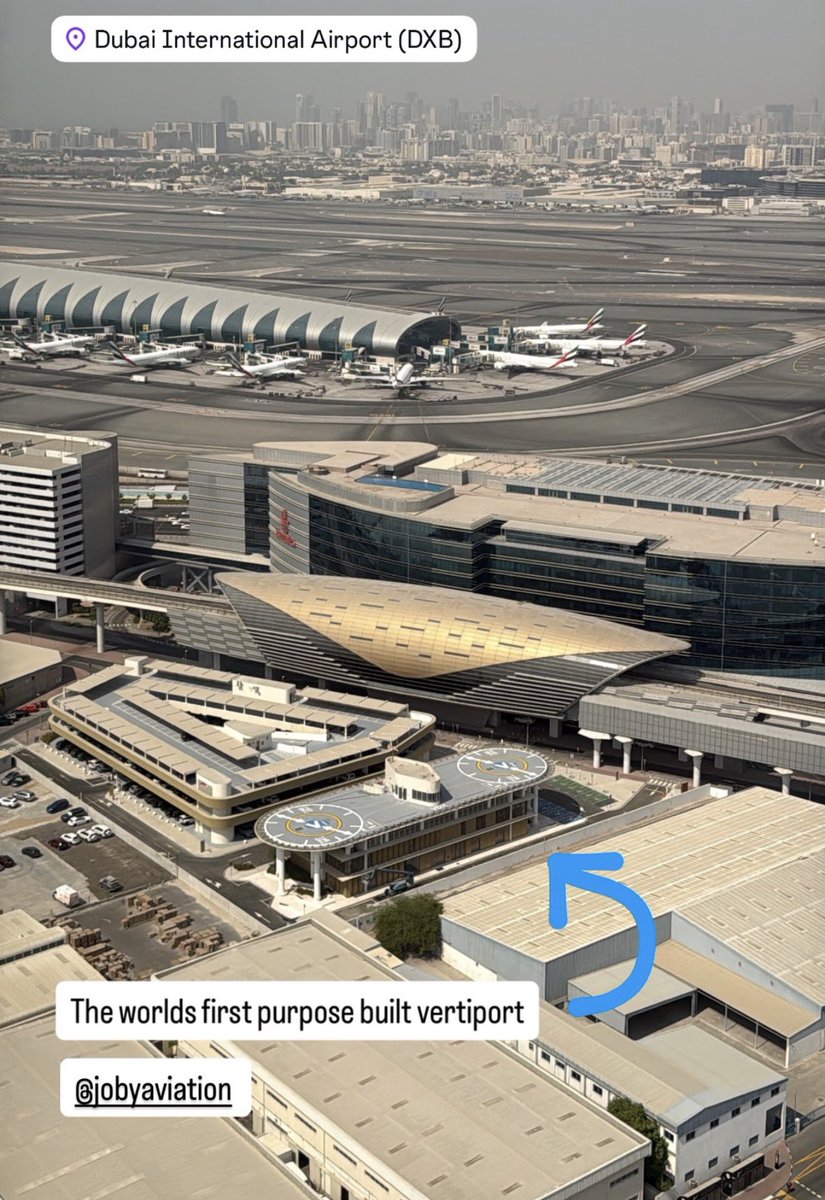
$JOBY Manufacturing...yet another MOAT! 💪
Joby's Strategic Manufacturing Alliance with @Toyota is wildly underestimated, the breadth of their expertise in building eVTOL is unrivaled.
Here's my take on recent clues that Joby may be scaling eVTOLs soon!
https://t.co/0X2ICG66Cn