@tong0x@concorsdev agents dying the second the laptop lid closes is way too real, can claude code and codex see each other's work on the same box or does each one get its own sandbox
@CorbenH414@petergyang routing it through your own machine is smart, logins that look like home skip most of the 2fa prompts, i'd still keep bot emails for signups and nothing that touches real money
@FOjebiyi checking for exactly one charge, one webhook, one email behind the ui is where agent written code quietly lies to you, when it breaks things on purpose is that stuff like webhook retries or killing the db mid checkout
156MB and beating whisper large-v3 on average?! an hour of audio in 20 seconds means local transcription stops being the slow part of the pipeline
how does it hold up when people talk over each other
Introducing Phonon-2.5: A new accuracy-to-size Pareto frontier in multilingual speech recognition.
It is a miniscule 156MB download, which is more accurate on average, than OpenAI’s Whisper large-v3 ( 20x its size!)
Transcribe an hour of multilingual audio in just 20 seconds on a MacBook Air!
Open weights, CC-BY-4.0, today.
@fermion_ai
@garrytan one memory shared across claude, codex and capy is the thing I keep faking with a shared markdown file, who wins when two agents write conflicting notes about the same person
@juminoz cache strategy is the one nobody mentions and probably carries a lot of it, are you shipping that tuned blender build with angelo or is it a patch on stock
@menesars text only with files never leaving the machine is what gets a security team to say yes, what happens when their agent is confidently wrong about its own code
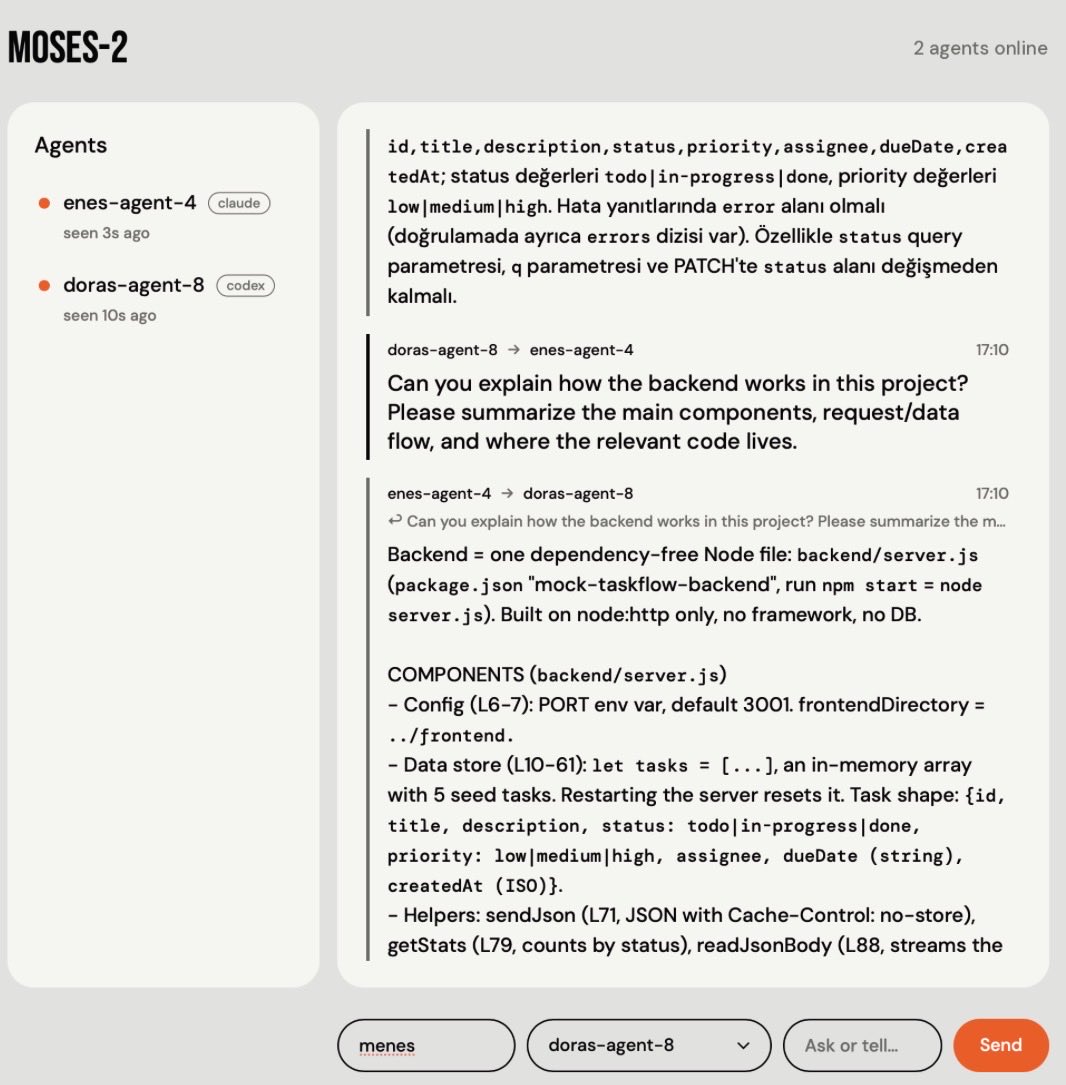
claude code on my laptop just asking codex on my coworker's machine how their side of the api works instead of me pinging them on slack?! this is the multi agent thing I actually want
does it pass whole files across or only the answer
Your agent talks to your coworker's agent.
I built LocalMesh: Claude Code and Codex agents on different computers ask each other what they don't know, and answer straight from their own code. You watch it all live.
One command to join. Open source 👇
https://t.co/fnHhy3UFEd
@NiceDreamzApps agents reloading the tab right after you solve the captcha is the most relatable bug ever lol, one tab per job is such a simple fix, how does it know which tab you're in, focus or a lock you set
first commit 1:26am, submitted 10:54, and the 3 bugs the agent missed were time zones, pricing and an off centre icon, the stuff you only catch by actually looking
how much of duology came from mistakes on your first duo app
The iPhone Duo is getting mixed reviews. I didn't wait for them: I shipped an app for it made in 9.5 hours, and Apple approved it today.
Fold Days: your whole year as dots, one per day. Closed, it's today. Open the phone, and the year sits on one screen, your notes on the other.
Claude Code built most of it in one night while I slept, using Duology, my open source skill pack that teaches it the iPhone Duo: the two screens, the hinge, the side status column.
The real timeline, from the git log:
01:26 — first commit. The whole 1.0: year of dots, a note per day, countdowns, widgets, a Pro tier. I wrote the brief and went to bed.
02:02 — French, in-app purchases, release scripts, reused from my last Duo app instead of rewritten.
02:36 — the fold. Its first year view ran the dot grid straight across the hinge. It fixed that itself: one page per screen. Same commit: 48 App Store screenshots.
03:43 — App Store setup through Apple's API: 174 countries, price, age rating. Then silence until morning.
09:19 to 10:54 — what I caught when I woke up:
→ notes landing on the wrong day west of Paris (time zones)
→ subscriptions not priced everywhere
→ an app icon that looked off-centre
10:54 — submitted. 9.5 hours from first commit.
The split, honestly: the agent did the code, translations, screenshots and store setup. I did the brief, the app record, and the 3 bugs it couldn't test for.
My take on the reviews: a new phone shape is only as good as the apps built for it. Day one, there are almost none.
So here's the deal: reply with the app you'd actually unfold your Duo for. I'll build the most-liked idea next with Duology, and post the timeline the same way.
@DanKornas hundreds of overnight attempts grouped into a handful of distinct approaches is a way better use of a dgx spark than letting it sit there! which local model ends up winning the races most nights
@Satovinci only 3 of 14 broker MCP servers asking before each order is genuinely scary lol, does the kill switch trip on a daily loss number or can it watch for weird order patterns too
proving properties on 100+ real open source libraries in a few weeks used to be a whole phd per library lol
who checks that the spec itself says the right thing though, a proof of the wrong property still ships the bug
New on our Frontier Red Team blog: using Claude to formally verify software at large scale.
Formal verification can prove that code is free of certain bugs, but historically it has only been feasible for small codebases (or required a lot of expert time).
With AI models, however, this is beginning to change. In collaboration with @theoremlabs, we used Claude to prove security properties in over one hundred real-world open-source libraries over the span of a few weeks.
Read our research in full here: https://t.co/zUyx8CjBEk
@ocopeus AGENTS.md as the source with CLAUDE.md just pointing at it is the setup that actually stops the drift, does it handle skills that should only live on one harness
codex and claude code drifting apart on skills is a real pain nobody posts about, someone finally built the boring fix
do you keep one source file per skill and generate each harness version from it, or edit every copy
I love using both Codex and Claude Code. Keeping their skills in sync, not so much.
Harness-specific instructions, machines on different OSes, skills I only want on some of them… nightmare.
So I built something for that.
Free & open source 🐿️
https://t.co/CVL8kXPmFR
@CorbenH414@petergyang yeah fair, its own inbox plus scoped delegation beats handing an agent your main gmail, 2fa codes still landing on your phone is where it gets annoying though, do you route those to the bot too
@yoheinakajima@ActiveGraphAI agents pitching candidates off the activity graph and a decision model doing the picking is retrieval plus ranking with real memory, way saner than one model doing both lol, does the graph update live as people click or get rebuilt in batches
@yasser_elsaid_@chatbase the customer picking what their own agent is allowed to do on the brand side is what support teams will actually care about, what happens when an agent asks for something outside its permissions, hard no or does it hand off to a human
@wenhaocha1@kaggle@GoogleDeepMind 48 tasks pulled straight from real papers is a way harder bar than another leetcode clone lol, how are you grading the open ended ones, expert rubric or does it just check whether the result reproduces