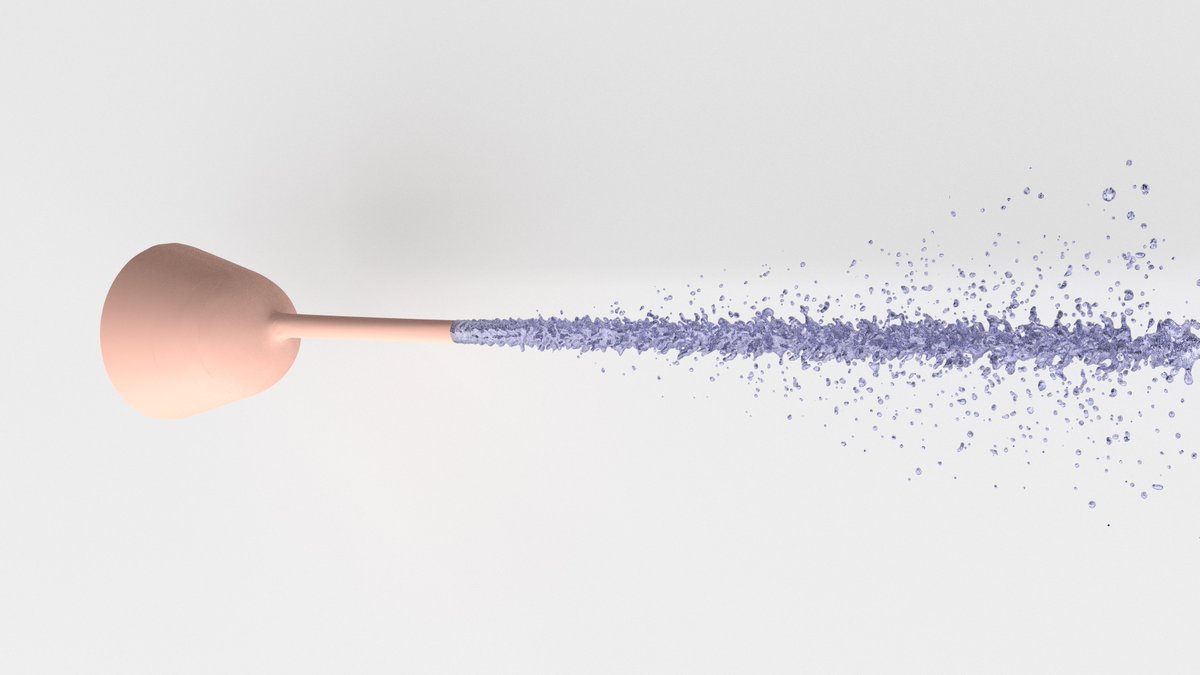
Introducing a novel scalar-transport model for simulating interface-confined scalar quantities, such as surfactants and salts, in two-phase flows! 🌊✨
#FluidDynamics#ComputationalModeling
Now online in the Journal of Computational Physics here: https://t.co/McbZX6mEPA
Congrats to Assistant Professor Suhas Jain on receiving a Faculty Early Career Development (CAREER) Award from the @NSF's Division of Chemical, Bioengineering, Environmental, and Transport Systems for research on complex fluid flows.
Read more: https://t.co/bxvSiEUY9f
The RBI has announced its 2026 fellowship cohort, selecting 12 interdisciplinary research projects — including several led by Woodruff School faculty — advancing innovation in sustainable materials, packaging, fiber networks, & biomass-based technologies: https://t.co/Ne0AUNL4On
Asst. Prof. Suhas Jain has received a $110K ACS PRF DNI grant to support his research, Study of Droplet and Bubble Coalescence in Turbulent Flows using High-Fidelity Numerical Simulations. The ACS PRF supports early-career faculty advancing fundamental petroleum-related research.
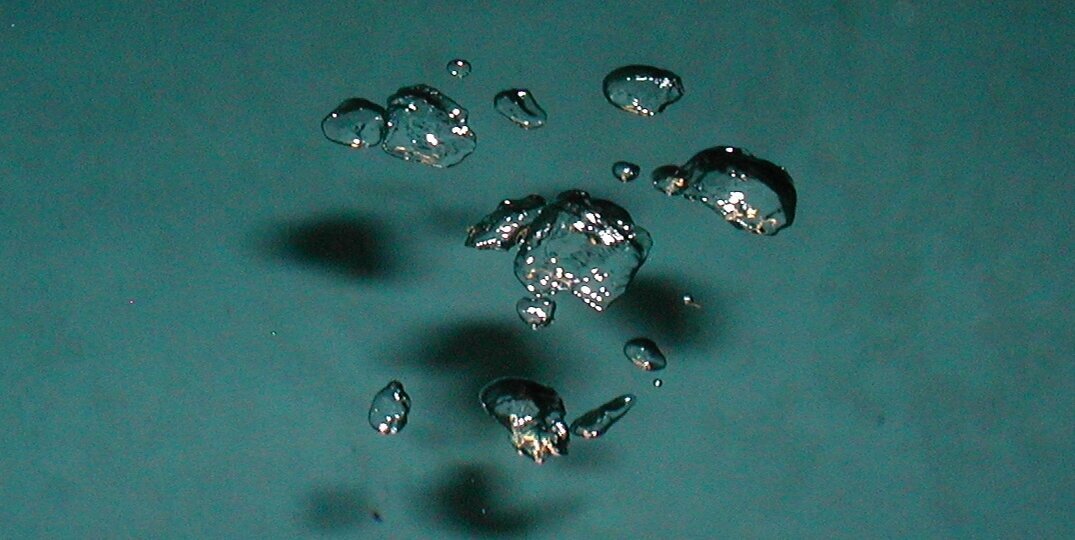
Molecular dynamics simulations and theory show how pressure energy, together with surface tension, drives coalescence-induced nanobubble release, offering fresh insights for enhancing gas evolution in key physicochemical processes #CoolVideo
https://t.co/JZxtmo5kAa
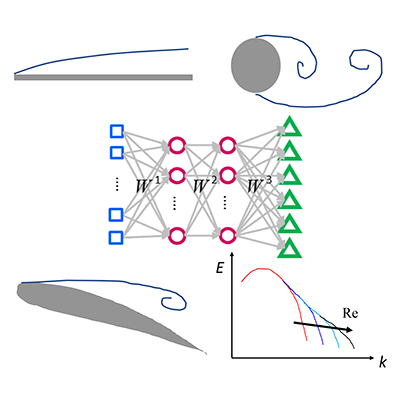
Machine learning offers tools to improve subgrid-scale modeling in large-eddy simulations, but challenges remain. A new Perspective article examines limits in extrapolation and generalization, especially for high-Reynolds-number and complex flows.
https://t.co/7j5jXK7WNq
For the second consecutive year, Georgia Tech has earned the top spot on @ThePrincetonRev’s Best Value Colleges list, ranked as the No. 1 Public Best Value College. Tech also landed the No. 1 spot in career placement, reinforcing the strong return on investment.
These rankings are based on 40 metrics that evaluate academics, affordability, and career outcomes, combined with survey data from administrators at more than 650 schools. 🐝 | https://t.co/pPvfbT8sYq #WeCanDoThat
The breakup of a stretched fluid bridge creates satellite droplets with highly reproducible sizes. Frishman & Lecoanet show the size follows a simple formula depending only on the bridge’s volume and Weber number, tied to a universal dynamical solution.
🔗 https://t.co/WvMzLFgRUJ
When I was in business school, the idea of India overtaking Japan in GDP felt like a distant, almost audacious dream. Today, that milestone is no longer theoretical — we’ve become the world’s fourth largest economy.
It’s no small achievement. Japan has long been an economic colossus, with legendary productivity and resilience. That we’ve caught up is a testament to the ambition and ingenuity of millions of Indians — across sectors, generations, and geographies.
But as we celebrate, we must stay dissatisfied.
Because India’s next leap must be in per capita GDP, not just overtaking Germany…
For us to keep Rising, India needs sustained economic reforms — in governance, infrastructure, manufacturing, education, and capital access.
Metro Atlanta offers top engineering talent from Georgia Tech, Emory University, and other top-tier schools; the #1 nationally ranked workforce development program, Georgia Quick Start, and business incubators like the Advanced Technology Development Center.
High-speed videos taken by MIT scientists show a droplet splashing into a pool. Findings may help predict how rain and irrigation systems launch particles and pathogens from watery surfaces, with implications for industry, agriculture, and public health.
https://t.co/Qw1GmsC6Kk
An Australian man in his forties has become the first person in the world to leave hospital with an artificial heart made of titanium
The device could be a temporary measure for those waiting for a donor organ
https://t.co/NwfcRpm3yF
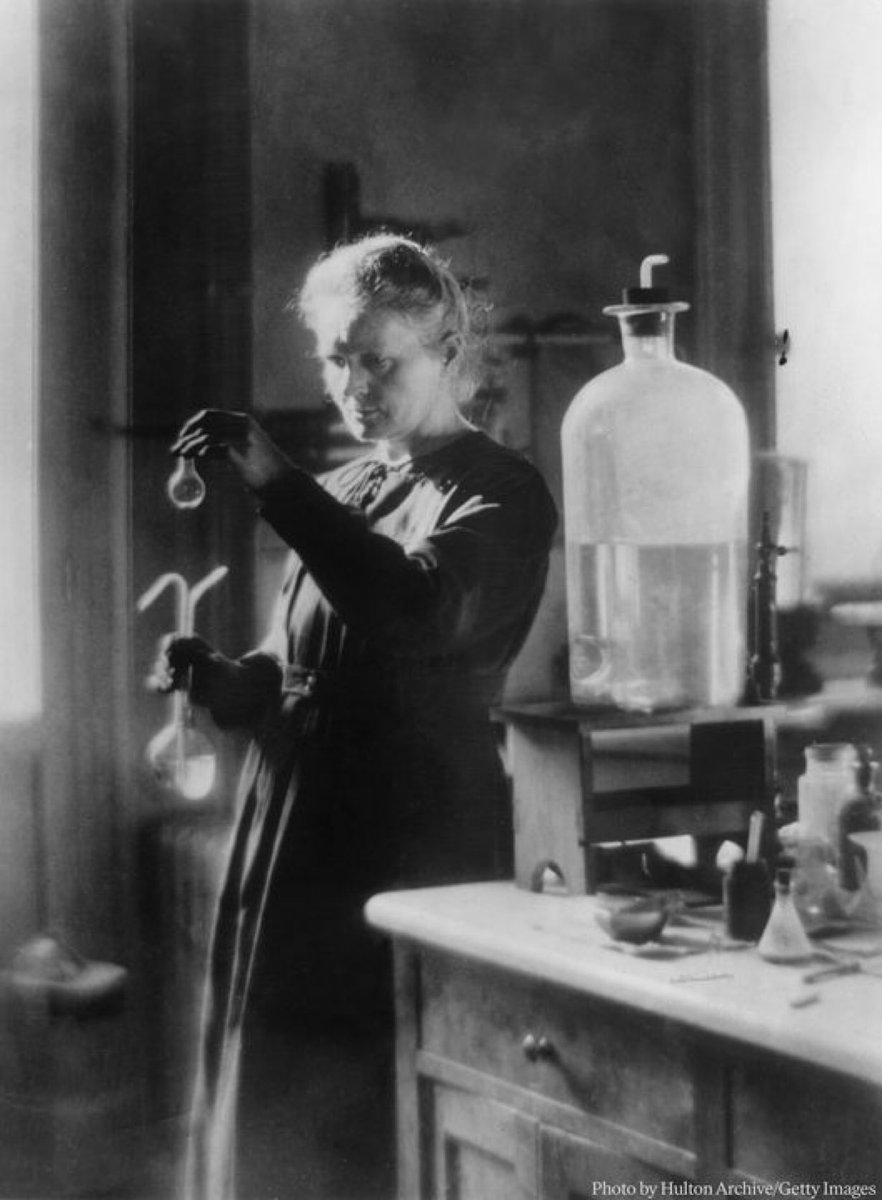
The first woman to be awarded a Nobel Prize, the first individual to be awarded two Nobel Prizes and still today the only individual with two Nobel Prizes in two different scientific categories: Marie Skłodowska Curie.
Happy international women’s day
Drops inside drops: During the impact of compound drops, radial μm jets can form and travel at ≈85 km/hr (≈8x the impact velocity)! Their design can improve combustion and the coating, cooling, & cleaning of surfaces. https://t.co/nJtvfbzv3x #splash#jets#drops#visualization
Two physicists, Arnab Priya Saha and Aninda Sinha from the Indian Institute of Science, inadvertently discovered a new formula for calculating π while working on string theory. Their findings were published in Physical Review Letters in January 2024.
This formula generates an infinitely long sum. What's remarkable is that it depends on a factor λ, which is a freely adjustable parameter.
Since there are infinitely many possible values for λ, Saha and Sinha have effectively discovered an infinite number of formulas for π. Interestingly, when λ approaches infinity, the equation corresponds to Madhava's formula discovered more than 600 years ago.
Two students from the Woodruff School, Matthew Louis, a nuclear and radiological engineering major, and Kenneth Thompson III, a mechanical engineering and mathematics major, are among 91 students receiving ANS Scholarships in 2024.
Full Story: https://t.co/f7BN7fER61
Excited to share our latest paper on neural network models for simulating particles in turbulence! A collaborative work with Dr. Keigo Matsuda (JAMSTEC, Japan), Prof. Kai Schneider (Aix Marseille, France), and Prof. Kazuki Maeda (Purdue, USA)
Full paper here: https://t.co/WU2fOxDHNh
#FluidDynamics #MachineLearning #ComputationalScience
@SahajJainSaysHi It’s an extended version of our previous CTR report on this topic. We have also proved energy stability for two phase flows on collocated grids with a new projection method here. This is critical if you’re looking at high density ratio flows.
I'm excited to see that our work on a robust and accurate formulation for two-phase flow simulations on complex unstructured grids is now online!
https://t.co/61XH7POaI1