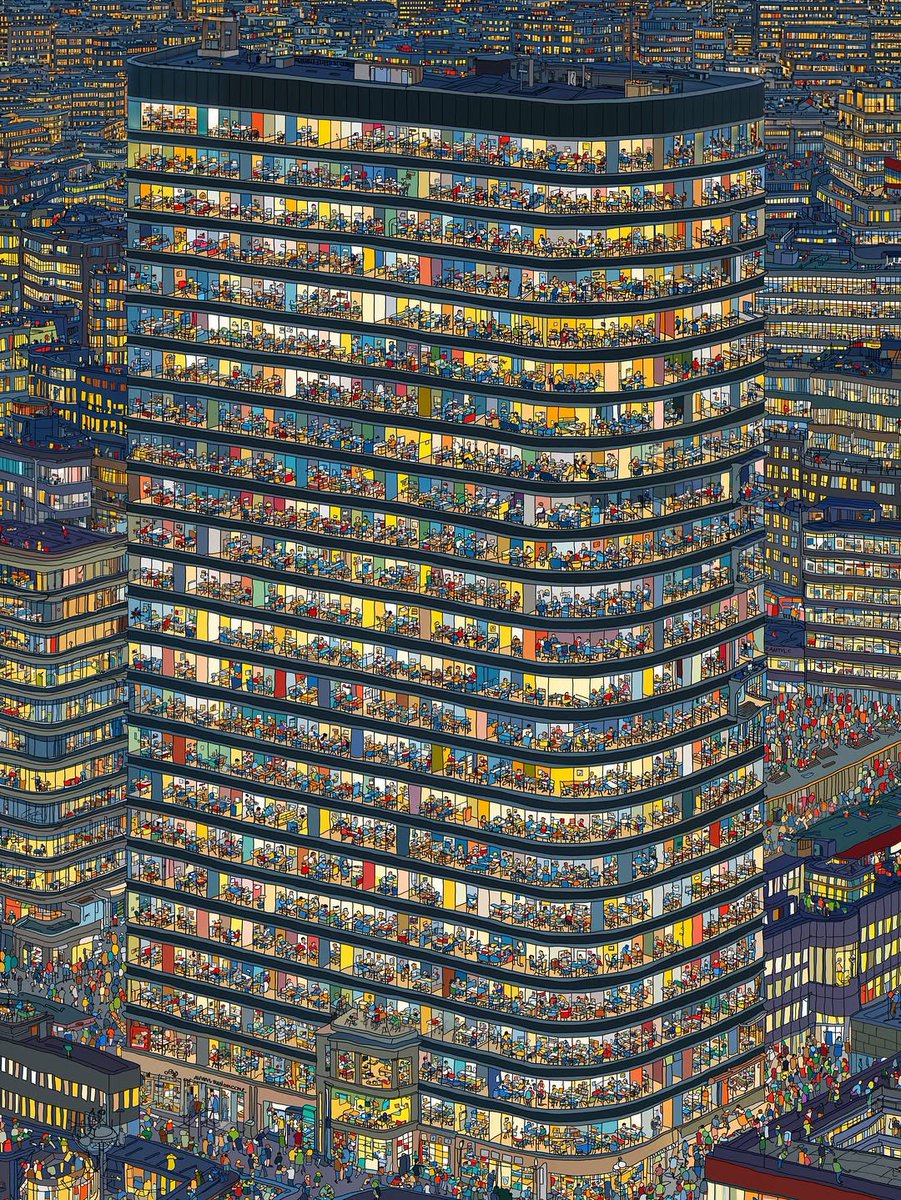
The human brain processes visual information 60,000x faster than text. Humans are visual processors, not text processors. Images hit the brain instantly. Words take work. That's why a single SpaceX launch video communicates more than a thousand-word essay—and why your slide decks hit harder than paragraphs. We're wired for pictures, not prose.
This is potentially the biggest Iran story nobody is talking about: the global insurance market may be heading toward a systemic crisis. Here’s why…
Most people don’t realize London isn’t just a financial center it’s THE center of global insurance.
Lloyd’s underwrites ~40% of the world’s marine cargo. Ship sinks, port gets bombed, canal gets blocked the bill lands in London.
This is why the UK punches above its weight. Not the Royal Navy. Not diplomacy. Insurance.
Control insurance, control trade.
And London doesn’t just control the 90% of global trade that moves by sea. Lloyd’s and the London market are major insurers of almost everything skyscrapers, factories, ports, satellites, entire supply chains.
You can’t participate in public markets or raise large amounts of capital without insurance.
Now, the normal playbook for war risk is repricing, not cancellation.
Canceling coverage entirely is a massive escalation in underwriting posture. It signals something beyond risk, it signals uncertainty so deep the underwriter can’t even price it.
The question everyone should be asking: why?
Why not just jack up premiums and make a fortune off the crisis like they did in the Black Sea off Ukraine?
To answer that, you have to understand WHY London has maintained a stranglehold on global insurance while losing nearly submarket related to ships.
The answer: better intelligence.
It is no coincidence that MI6 headquarters sits directly across the Thames from the @IMOHQ, the world’s maritime regulator & a short distance from Lloyd’s itself.
I have no proof of a direct pipeline, but it has long been speculated in the industry that intelligence flows from MI6 to Lloyd’s.
Having the best intel in the world would be the single greatest competitive advantage any insurer could possess: the ability to price risk that competitors can only guess at.
Here’s the problem: the majority of MI6’s intel doesn’t come from its own agents. It comes from Five Eyes the alliance comprising the US, UK, Australia, Canada, and New Zealand.
And within 5Eyes, the dominant partner is obvious. The CIA, NSA, NRO, etc generate the lion’s share of intel.
So if Lloyd’s pricing advantage flows from MI6, and MI6’s best intelligence flows from the US… what happens when that data pipeline gets throttled?
All indications are that @Keir_Starmer was blindsided by the size and scope of the US/Israel strikes on Iran this weekend. That alone tells you something about the current state of transatlantic intelligence sharing.
And we know there has been serious anger in Washington over the UK’s decision to sell Diego Garcia, home to America’s most strategically important base in the Indian Ocean, to Mauritius.
It is not a huge leap to conclude that the submarine cables linking Langley to London have gone dark, or at minimum have been significantly throttled.
What this means for UK national security is a question for the Brits. But what it means for EVERY company globally that’s insured through the London market has massive implications for the entire financial system.
Because most large insurers worldwide don’t do independent intelligence work. They index off Lloyd’s rates.
If you’re insuring a skyscraper in Tokyo, a semiconductor fab in Taiwan, or a port in Argentina you get a Lloyd’s quote, then shop that price around.
Other insurers see Lloyd’s number and assume the diligence was done. They price accordingly.
This means if London is suddenly flying blind it’s not just Lloyd’s policyholders at risk. It’s the entire global reinsurance chain.
The cancellation of war risk coverage on ships isn’t the crisis. It’s the canary.
If this hypothesis is correct, we could be looking at a systemic repricing event across global insurance markets…. the kind of cascading uncertainty that defined 2008 and COVID.
Watch Lloyd’s. Watch reinsurance spreads. What Five Eyes. That’s where this story, and possibly Wall Street, breaks.
CC @BillAckman
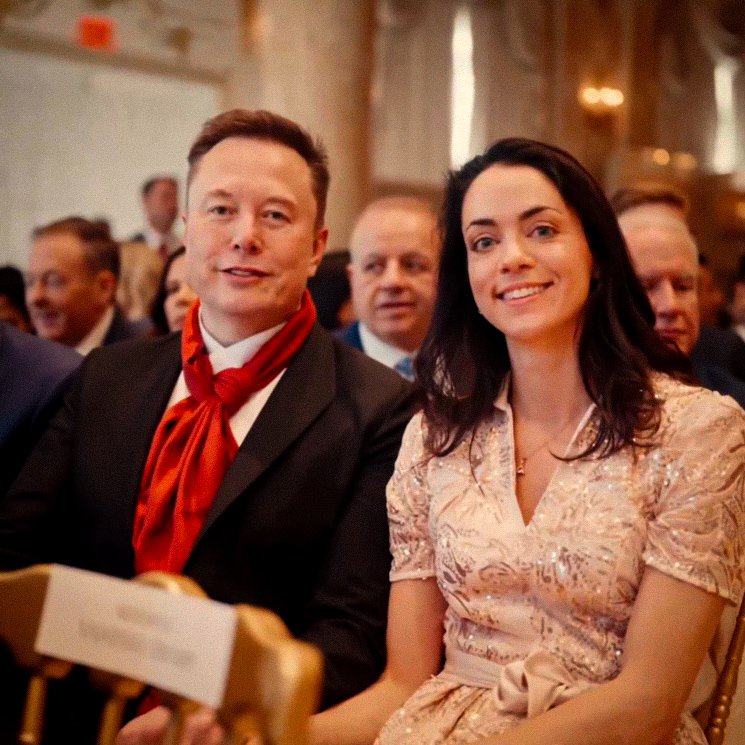
Shivon Zilis, the bright-eyed AI investor Elon recruited in 2015 to work at OpenAI and who ended up as the top operations manager of Neuralink.
She had become his very close friend, intellectual companion, and occasional gaming partner.
"It's been one of the most meaningful friendships of my life, like, by far," she says. "Soon after I met him I said, 'I hope we're friends for life.'"
Zilis had been living in Silicon Valley and working at the Neuralink office in Fremont, but she moved to Austin shortly after Musk did, and she was part of his tight-knit social circle.
"In six years, Elon and I have never, never gotten in a fight, never argued." That's a claim that few can make. They talk to each other in a low-key, intellectual way.
Zilis, by her own choice, decided not to get married. But she had "the motherhood bug super hard," she says.
Her maternal impulses were further stoked by Musk's evangelizing about how important it was for people to have many children. He feared that declining birthrates were a threat to the long-term survival of human consciousness.
"He really wants smart people to have kids, so he encouraged me to," Zilis says.
When she decided that she was ready, he suggested that he be the sperm donor so that the kids would be genetically his.
The idea appealed to her.
"If the choice is between an anonymous sperm donor or doing it with the person you admire most in the world, for me that was a pretty fucking easy decision," she says. "I can't possibly think of genes I would prefer for my children."
There was another upside: "It seemed like something that would make him very happy."
Zilis had a complication at the end of her pregnancy and went into the hospital. The twins were born seven weeks prematurely, but healthy.
Musk was listed as the father on the birth certificate, but the children, a boy named Strider Sekhar Sirius and a girl named Azure Astra Alice, were given Zilis's last name.
She assumed that he would not be very involved in parenting them. "I thought he would play a role like a godfather," she says, "because the dude's got a lot going on."
Instead, Musk ended up spending a lot of time with the twins and bonding with them, albeit in his own emotionally distracted way. At least once a week, he would stay at Zilis's house, feed the kids and sit on the floor with them while he did his late-evening virtual meetings on Raptor, Starship, and Tesla Autopilot.
He was, given his nature, not quite as cuddly as your average dad.
"There's some stuff he just can't do because he's emotionally hardwired a bit differently," Zilis says. "But when he comes in, they light up and have eyes only for him, which lights him up as well."
This morning was an absolute punch in the gut.
My 5-year-old son is my best friend.
I do everything I can to be home by 6pm every day so that I can spend an hour with him before he goes to bed.
We play any and all sports together every weekend. We horseplay and crack each other up on a daily basis. We travel to sporting events in different cities across the country multiple times a year.
We’re basically the same person, and I take pride in how close we are and how much time we spend together.
I took him to school this morning like I do on many days, while I’m vaguely aware that the school invites parents to join the class for a half hour periodically - but I’m always in a rush to get the work day going after I drop him off, and I know my wife attends here and there.
This morning on the ride to school, he looked at me and said softly, “I know your work is really important so you don’t need to stay for the parents coffee today.”
Yikes.
The parent mornings are a much bigger deal than I realized, and I learned in that moment he was bothered I’d never attended.
What an unbelievable oversight on my part.
You try to balance everything and keep up with so many demands from all directions. You think you’re a really good parent and take pride in it - and sometimes you miss the small things that make such a huge difference.
At one point a teacher asked the kids what they were thankful for.
He raised his hand:
“I’m thankful that my dad is here.”
No seven words have ever stung this much, and I’m going to make changes.
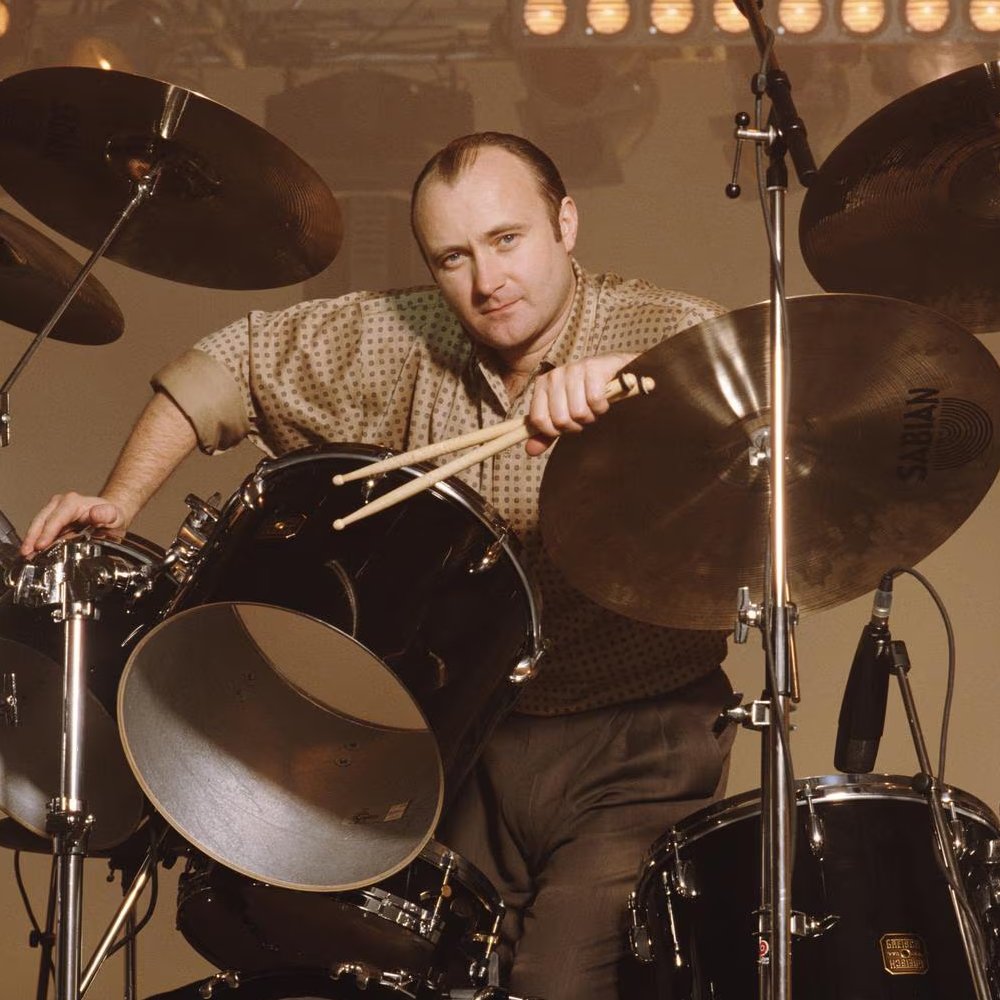
PSA: If you hit play on “In The Air Tonight” by Phil Collins at 11:56:20PM this New Year’s Eve, the drum fill will welcome you into 2026. Start the year the right way.
���� Terry O’Neill
Guys…I have a girlfriend.
Now I know what you’re thinking…how is it possible that anyone would want to be with me? I understand where you���re coming from. I think the answer is: her puzzle piece fits mine.
In my early twenties, I read the biography of the American founding father John Adams. He and his wife Abigail had one of the great partnerships in American history; intellectually matched, emotionally intertwined, and co-architects of something bigger than themselves. I wanted what they had.
But it wasn’t within reach. Years before, I’d married in a sort of arranged Mormon marriage. Unsure how else to explain it. We were functional, but we weren’t John and Abigail. We split after thirteen years.
At age 34, after selling Braintree Venmo, and emerging from a mismatched marriage and the repression of Mormonism, I set out to rebuild myself and find partnership. I met a woman in LA who became my first-ever girlfriend. Coming from a sheltered background, I was blind to the obvious warnings. I was dangerously naive. That relationship unraveled and was followed by litigation. The experience was unnerving and left me wondering if I could ever trust again.
By the time I was 44, I started reconciling with the possibility of a life without partnership.
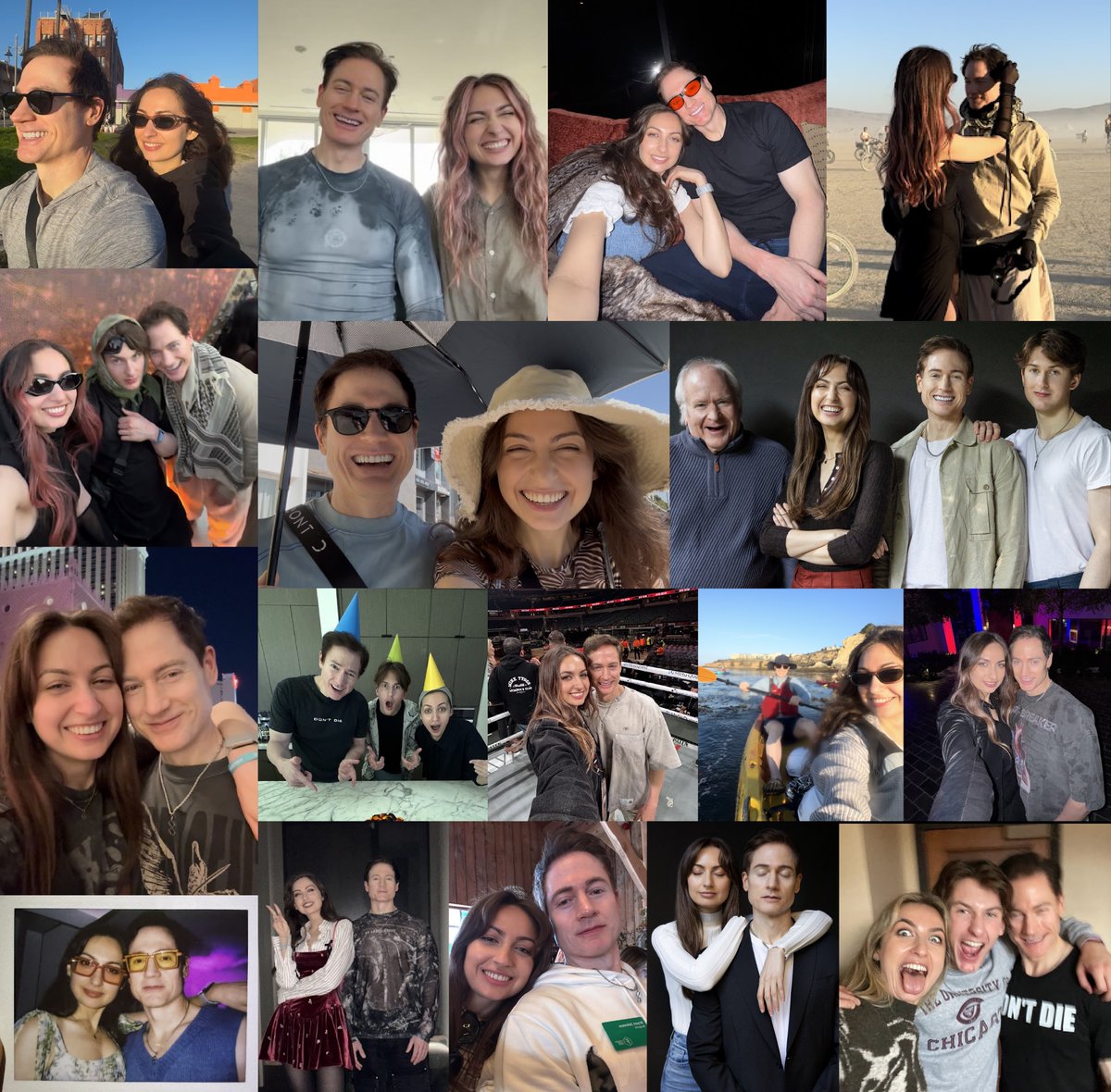
@_katetolo and I met at my brain interface company Kernel. She’d discovered my work using neurotechnology to improve human well-being and merge human and AI. Even though she’d been dreaming of a career in fashion, she was drawn to what she foresaw as the defining question of our time: how will humans successfully co-evolve with AI. We shared the same obsession.
The puzzle piece fit was immediate, as immediate as either of us had ever experienced.
Yet we maintained our professional boundaries. When we worked on our first project together, the back and forth was effortless. She could conceptualize and feel what I couldn’t and vice versa. It helped that both Kate and I had a natural disposition towards hard work. Our joy came from creation.
Kate was luminescent. When I saw her about the office, butterflies fluttered in my stomach. Each day she’d show up wearing some unexpected combination of colors, textures, styles and accessories. Always tasteful, playful and interesting. She didn’t chase fancy brands. Most of her clothing was from the thrift store. It wasn’t how she looked but how her mind worked: original, eccentric, entirely her own. She was art.
We both worked very hard and valued every second of the day. One evening around 6:30 pm she dropped by my office and we talked for hours. It had been all business before. This was the first time we stepped into each other’s personal lives. My heart strings pulled but my brain pushed back. ‘We know we can’t trust again’, my mind firmly stated.
Our after-hours meet-ups in my office became a daily ritual. The favorite part of my day. We’d reminisce about work and tiptoe a bit deeper each time into each other’s personal lives.
I’d recently started my new anti-aging project and one night Kate suggested to me that I should put the entire thing online to allow others to follow on. We worked together to put up a website and got a v1 out. We pondered what to call it, and decided on ‘Project Blueprint’.
We were oddly from entirely different worlds but somehow the same person. Yet neither of us dared take the next step. We didn’t want to imperil our work relationship and we remained deeply skeptical of each other. The combination of Kate being raised to distrust all things and me still feeling the sting of the previous relationship left us stirring in a pot of anticipatory disaster.
Before long, whether we liked it or not, we’d become each other's favorite person. We’d spend every moment we could together. Social events and the weekends were still off-limits as our relationship was professional. We were both secretly wondering, ‘does the other person feel what I’m feeling?’
Unable to withstand any longer, after a year and a half of unspoken affection, one night I softly floated the balloon of inquiry. She confirmed it was reciprocal.
Still, with things being so new, neither of us wanted to make our relationship public. We needed time to stabilize, mature and assess whether this was short or long term. I’m a 48 year old American, raised Mormon, with three children. She’s a 30 year old Bosnian-Australian-American. It took time to bridge our worlds. In our years of knowing each other, three of them have been navigating a relationship. All while building a business and movement. There have been many times where we didn’t know if we’d make it.
In the last year, we’ve found our flow. I trust Kate as much as my mother. She knows how to scaffold trust. She anticipates your anticipation and knows your reaction before you react. She’s meticulous in the integrity of our relationship. She’s even been pivotal in helping my father and me reconcile and navigate the contours of our relationship.
In the past few years, Blueprint and Don’t Die have become global phenomena. Kate is the unsung hero. She and I have been stride on stride since inception. She’s proven an exceptional executor and despite her unconventional background, intuitively knows things. Her creativity keeps me forever guessing what she’ll say or come up with next. Our minds have become so intertwined that life feels naked without her.
Her story warrants being told as others will be better off emulating her practices and abilities.
What I find most impressive about Kate is her prescience and thoughtfulness. She sees forwards, backwards, and side to side. Relative to her, I feel myopic in my awareness of the world. She can see through others, as an x-ray would. She then structures all that information and can package it in simple, understandable terms. In ways that allow for everyone to win.
Kate is soft spoken, self-deprecating and understated. These attributes cloak her ferocious ambition, piercing intellect, and delightful creativity. Give her five minutes and she will reframe your world. But most people don’t know to look. They assume she’s my assistant. It’s such a loss because people are looking for what she has to offer.
My son Talmage, Kate, and I are family. Nothing makes us happier than being together. Our conversations are fast, dark, and rowdy. Family feeds the soul, and we are nourished. As my son considers possible partners, he wisely models them off of Kate.
Deep companionship is a universal human want. And while there are eight billion of us on this planet, most struggle to achieve it, including those in relationships. It’s the most fulfilling of human experiences and also the most elusive. The joy of being seen, appreciated and loved, and offering the same to another.
I wrote dozens of different sentences trying to capture what the want and struggle for deep companionship feels like. I deleted them all as none could holistically capture the emotional architecture of it.
Then one day while exercising, I realized what it feels like: what the explorer Ernest Shackleton and his crew must have felt returning to land after being shipwrecked and surviving 497 days adrift in brutal Antarctic.
It’s a bit of a dramatic comparison, however, I suspect many of you can relate. Kate feels like land to me after being adrift and searching for 25 years.
Life sinks or sails based upon the quality of our most intimate relationships. No amount of professional success can plug the sinking hole of an acrimonious personal relationship.
At this point, Kate and I have nearly become one person. We have entire conversations with a single look, sound, gesture or image. We independently come up with the same ideas and insights, suggesting to me that maybe it’s our tandem effort generating them. Our relationship is stable, positive, and calm.
I’ve wanted this my entire life and impatiently waited 25 years for it to arrive. It’s better than anything I imagined.
Lucky me, I found my Abigail Adams.
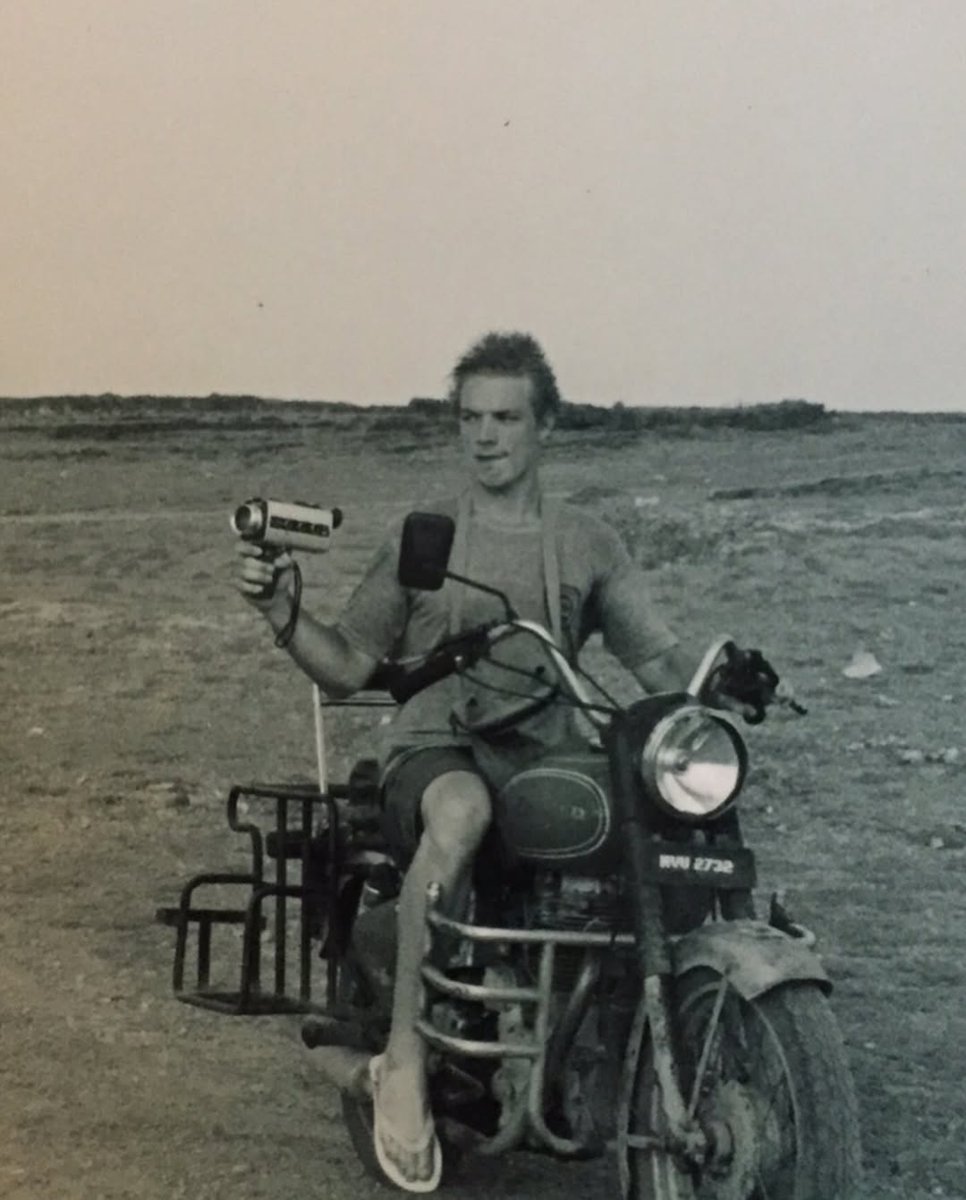
I was 20 when I first came to India with nothing but a restless mind and an old Enfield I bought from a friend in Delhi who taught me to ride in one dusty afternoon. He took my money, flew back to Florida, and left me with one rule: don’t hit a cow, and only ride between 2–6 a.m. if you want to survive the heat and smog. Somehow, that became a philosophy for everything that followed.
I crossed the country like a kid inside a dream — Calcutta to Delhi to Rishikesh — sleeping on the bike when I had to, chasing chai stalls to stay awake, tossing the bike on trains when I could afford it. I swam in the Ganges, did yoga with elders who moved like water, bought vinyl in back-alley shops, fell in love the way only your twenties let you, and wrote long confusing emails to my mom from glowing village internet cafés.
In Gujarat I stopped long enough to help with earthquake relief, eat thalis in strangers’ homes, and learn “Kem Cho” and “Majama.” India didn’t just teach me independence — it cracked me open creatively. It showed me how improvisation is its own kind of discipline, how getting lost is a form of education.
I never imagined I’d be invited back years later to collaborate with artists I once watched on café computers — working with actors like SRK, making videos like “Lean On” that crossed billions of views, nearly dying during spiritual side quests in Leh and Varanasi, falling for Bollywood sweethearts, and still believing every strange turn meant something.
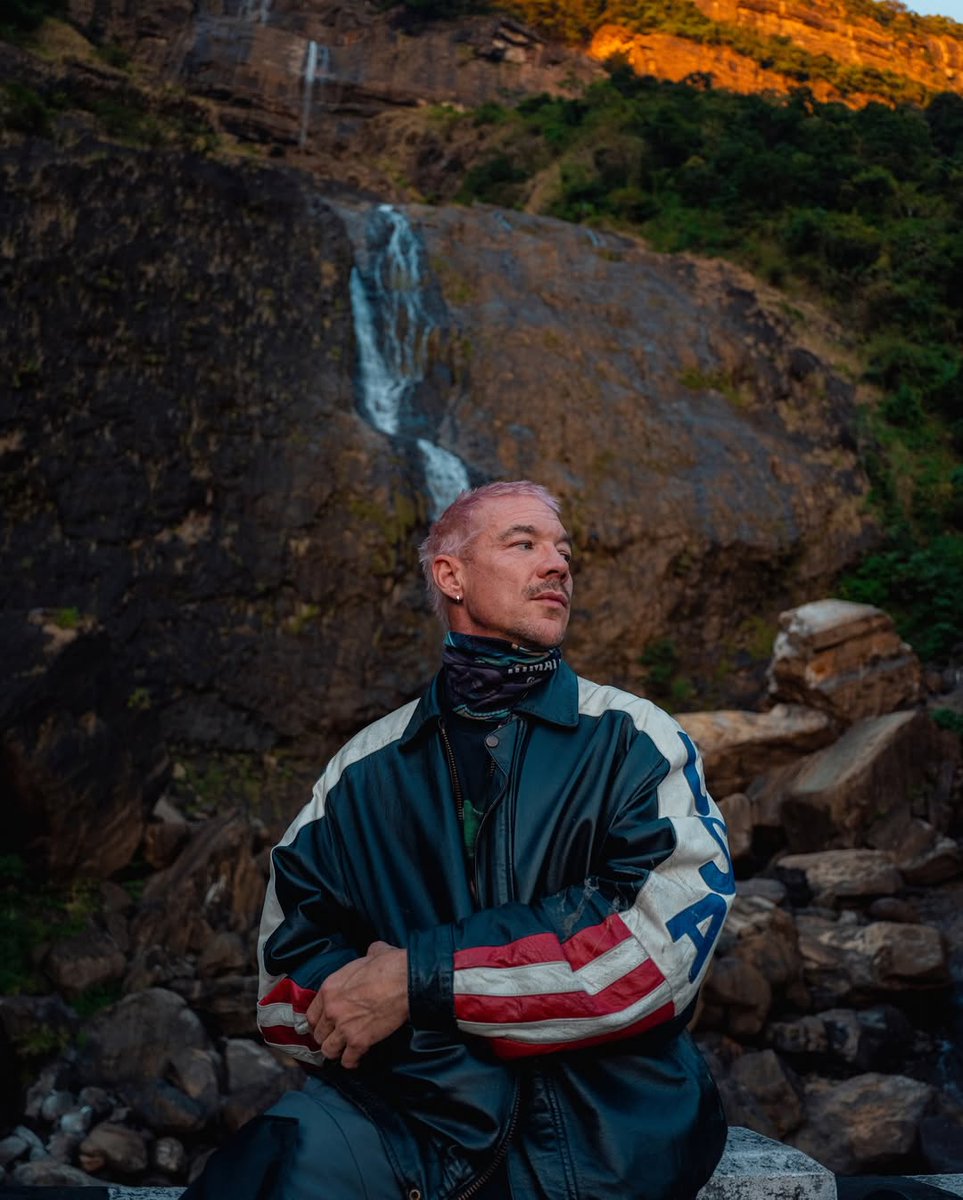
Twenty-five years later I returned to these roads, riding nine hours a day across the Himalayas on a much newer Enfield. And then — perfectly — I ended up performing at a massive Enfield festival in Goa and celebrating afterward in a motorcycle garage, as if time folded back on itself.
Two decades have changed India and me both. But every time I come back, I feel the same truth: growth happens when you surrender to the unknown, when the road teaches you more than any classroom could.
India was my beginning. And somehow, it still is.
What I’ll be doing with my $2000 stimmy:
1) 480 Costco hot dogs ($720)
2) 160 packs of Pokemon cards ($720)
3) New pair of shoes ($40)
4) 0.003 Bitcoin ($315)
5) 3 pineapples ($8)
6) New watch ($20)
7) Steak dinner ($25)
8) Flowers for my mom ($15)
9) 4 bags of candy ($16)
10) $100 donated to charity ($100)
11) 21 scratch off tickets ($21)
The internet is fragile when it depends on servers.
Outages? Downtime? Not our problem.
Keet runs peer-to-peer.
No servers. No single point of failure.
Just pure, unstoppable communication.
🌿 Never on a Server - Keet .io
Board meeting tips for CEO's of private companies:
1. Be transparent -- it builds trust. Board members can tell if you are spinning them. Save the sales pitch for the sales prospect.
2. Prep time -- Either send slides or a memo at least 2 days before the meeting if you want your board to be useful.
3. Opening remarks -- Before you dive into the slides, have opening CEO remarks. I used to give my "mood" score on the business overall.
4. Roberts Rules of Order -- Don't worry about all the "I have a motion bs" in a private board.
5. Discussion -- The content should be designed to fill only half the meeting. A board meeting is a discussion more than a presentation.
6. Asks -- I used to bring "asks" for each board member (i.e. customer intro's).
7. 360's -- Once a year, do a 360 review of each board member. This will be good for them, but also give you a little power in the relationship.
8. Independent -- Get 1 truly independent, sharp board member to help and to balance the power dynamic.
9. Team -- Your senior team should play a part in the board meeting so the board can get to know them. Not all of them every time, though.
10. Culture -- Every board has its own culture. Don't be afraid to explicitly design and talk about it (i.e. lets not take ourselves too seriously).
I remember being nervous as sh-t before my first HubSpot board meeting. I hope this helps if you are feeling that way.
working at a big company is basically an accelerated course in how power actually works. once you see the sheer level of inefficiency, rent-seeking, & arbitrary decision-making, it kind of breaks all illusions about big companies.
the best part is realizing that half the people in charge have no clue what they’re doing but just sound confident. once you internalize that, you stop overestimating the competition & start realizing that most barriers to entry are just psychological.