📽️A new series of videos developed by @CoCO2_project, coordinated by @ECMWF, illustrates the evolution of methane (CH4), carbon monoxide (CO), and carbon dioxide (CO2) in our atmosphere over one year with a high level of detail.
Read more here 👉 https://t.co/bAae6fFbjg
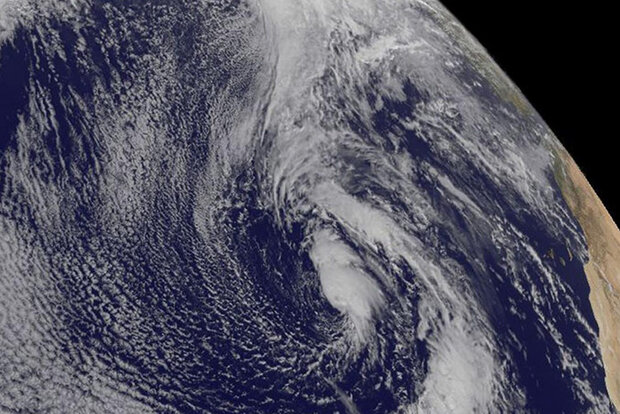
A new study concludes that the range of possible sea surface temperature conditions in the North Atlantic could more than double by the mid-21st century, leading to vastly different climate outcomes. https://t.co/OOBZUnEP0z
Einstein was right about the way matter plunges into black holes. We’ve seen the plunging waterfalls for the first time and they teach us about the fundamentals of space-time. https://t.co/FJ0gyKKmM9
Nuclear fusion reactors could provide cheap, clean energy if we ever get them to work - but they could also turbocharge nuclear weapons development. https://t.co/EgzrWeQnPw
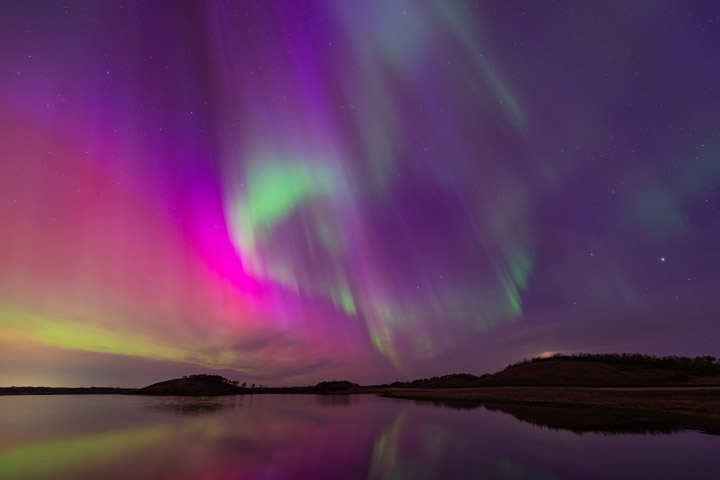
Did you see the aurora? 🤩
Citizen scientists with @NASA’s Aurorasaurus project, which tracks aurora sightings, took these photos on May 10-11, 2024 during a geomagnetic storm that @noaa reports is the most extreme since 2003. https://t.co/q3Aid3vxTo
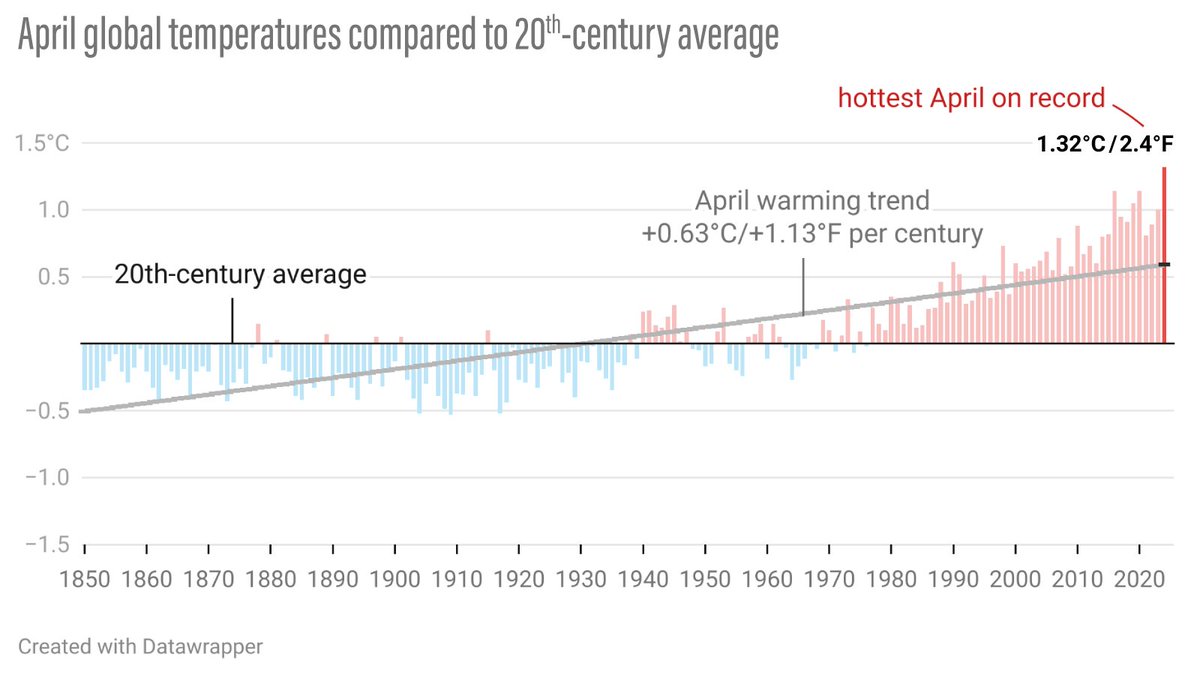
Globally, temps in April were above avg for much of the globe marking the warmest April on record.
For those who have been keeping track, that makes it the 11th consecutive month of record-high global temperatures.
More: https://t.co/v7qDVBzB0J
@NOAANCEI
Get a taste of whats happening in the sky above us with Taste of Science "Space Exploration: Postcards of our Solar System"!
Tuesday, November 07 at ITAP Delmar, hear from Wash U EEPS' own Dr. Paul Byrne @ThePlanetaryGuy and colleagues. Doors open at 6:45.
More than 90 percent of the warming that has happened on Earth over the past 50 years has occurred in the ocean. Not all of that heating is detectable yet at the surface: https://t.co/kXjgiTmKlx
“Maxwell’s demon”, described in a 155-year-old thought experiment, was believed to break the laws of thermodynamics by creating energy from nothing. But biological molecules that behave in the same way evolved billions of years ago. https://t.co/TRlgyjhY2q
Record sea ice loss caused a mass die-off of emperor penguin chicks in part of Antarctica last year, bolstering predictions that the world's largest penguin faces near-extinction.
https://t.co/WVNJtzQTwz
The population of our ancestors may have plummeted to as low as 1300 around 900,000 years ago, possibly as a result of our lineage splitting away from other early humans https://t.co/f1nz3B86rM
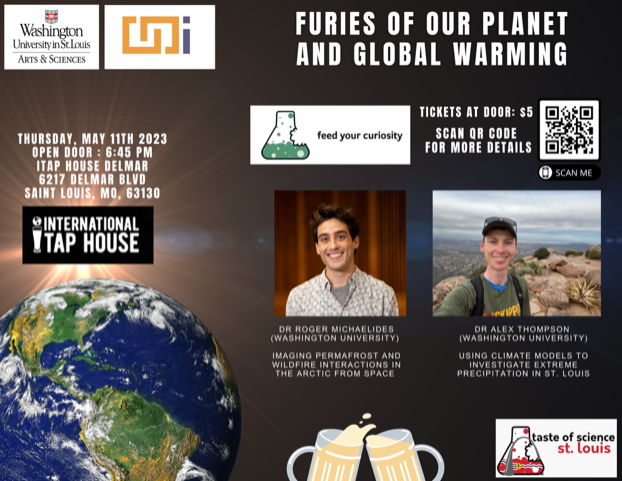
Join 2 of our EPS Department Professors at ITAP Delmar this Thursday, May 25 to discuss extreme preciptation. Event hosted by Taste of Science St. Louis
New research in Peng Bai's lab shows that a solid-state electrolyte has a high level of similarity to liquid electrolytes, which is good news for designing safer and more efficient solid-state batteries based on reliable mechanistic knowledge.
https://t.co/kA7XEQUts8