My husband has started his keycap collection thanks to @sanjeed_i and @yeopleekorea.
Anyone else who can contribute? He’s super nerdy about these things 😭
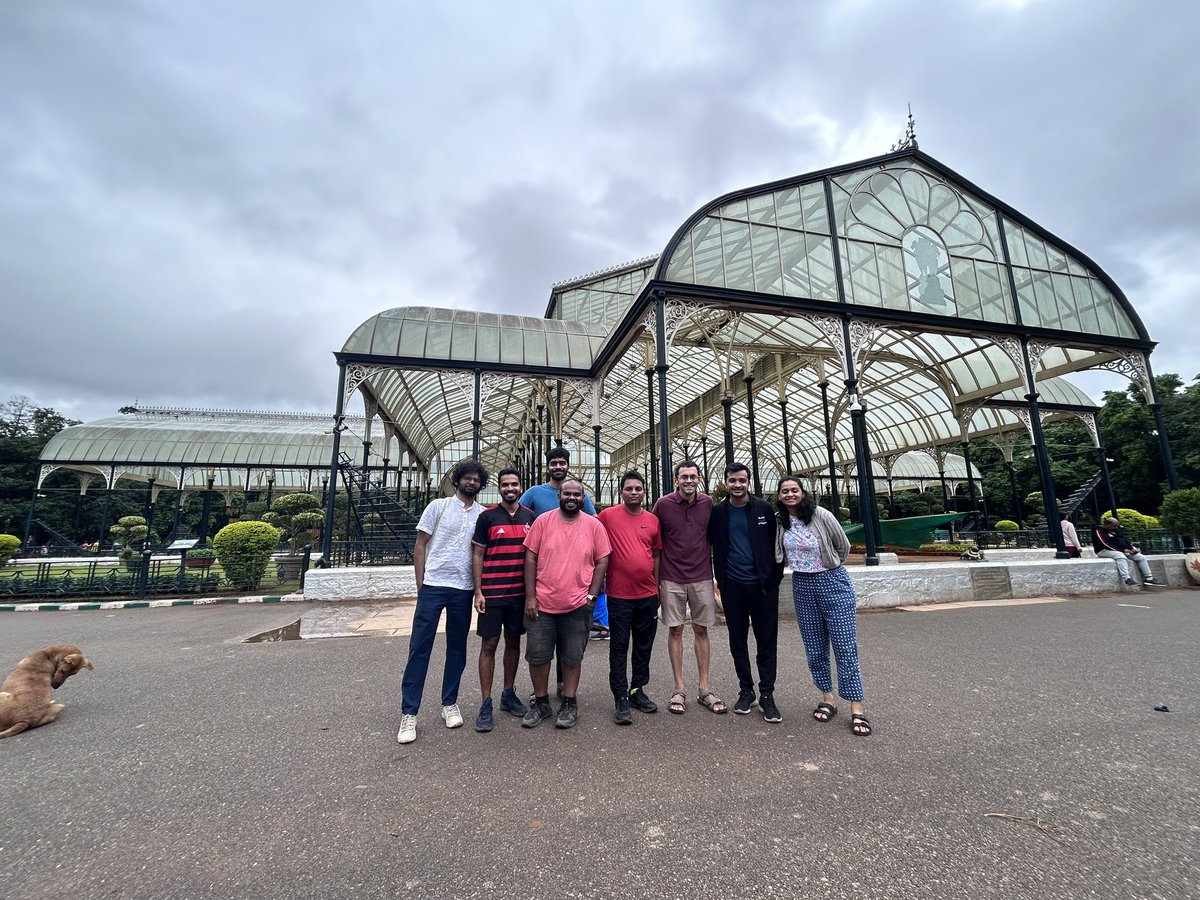
Spent a lovely Saturday morning with some ex-Setuzens. 🪴
Got our steps in at Lalbagh and belted some solid breakfast at a local Darshini. 🥹
Here’s to making weekends productive 💪
With @dharmeshba @phalgun_g @PositiveGamma@thetallbetta@KarthikTabjul@iakshayvj ✨
Moved to Basavanagudi two months ago and fully loving it 🍃🍂
Walking paths, Darshinis, Lalbagh and historical buildings - sign me up for the ✨vibez✨
If you live in the area, hit me up 🙌🏼
#ಪ್ರವಾಸಿಗರೇ_ಎಚ್ಚರ_ನಿಮ್ಮ_ಕಸಕ್ಕೆ_ನೀವೇ_ಜವಾಬ್ದಾರಿ.
ಕೊಡಗಿನಲ್ಲಿ ಎಲ್ಲೇ ಕಸ ಬಿಸಾಕಿದರೂ ನಾವು ಬಿಡಲ್ಲ.
ಎಷ್ಟೇ ದೂರ ಹೋದರೂ, ಎಷ್ಟೇ ವೇಗದಲ್ಲಿ ಹೋದರೂ ನಿಮ್ಮನ್ನು ಅಟ್ಟಾಡಿಸಿ ಹಿಡಿದು ತರುತ್ತಾರೆ. ನೀವು ಬಿಸಾಕಿರುವ ಕಸವನ್ನು ನಿಮ್ಮಿಂದಲೇ ಎತ್ತಿಸ���ತ್ತಾರೆ.
ನಿಮ್ಮ ಕಸಕ್ಕೆ ನೀವೇ ಜವಾಬ್ದಾರಿ.
@PineLabs-owned @Setu_API announces launch of India’s 1st Large Language Model for BFSI sector, #Sesame, developed in collaboration with @SarvamAI.
Co-founder @nikhilkumarks talks to @_ritusingh about why he thinks this marks a "ChatGPT moment" for financial services & more!
It is easy to make fun of PMs & engineers in big companies who are just launching features, moving pixels around, and are focused on “outputs over outcomes”, but you must understand that some environments are so messed up that a launch (really _any_ launch) is by itself a huge achievement requiring superhuman effort.
Contrary to what people might like to believe on Twitter, these PMs & engineers know that this is not ideal. They know they should be doing things differently.
But the mess around them is just overwhelming. It would be impossible for anyone at the level of an Individual Contributor (IC) or a first-level manager to fix the mess.
While mindlessly scrolling through your Twitter feed, you might think you can fix it.
You ran & exited a highly successful startup
You declined the Thiel Fellowship at 16
You scored 1600 on your SAT
You were a silver medalist at the IMO
You graduated at the top of your class at MIT
You were 30 under 30, thrice
So you are quite certain you can fix Google, you can fix Meta. Heck, you think you can fix both Salesforce & Adobe before it’s time for lunch.
But you can’t. You could be Steve Jobs, you might be Elon Musk. But as an IC or a first-level manager, you won’t be able to fix any of them. Guaranteed.
Plus, in some cases, it is actually just fine to focus on outputs. This is when your product has already succeeded, you are benefitting immensely from Legacy Momentum. With the success came this mess. So this now means that the locally optimal solution as an ambitious and energetic IC is to just launch a thing. Something. Anything.
Ultimately, the onus of fixing the mess is on the leaders (usually Directors & above). They *can* actually fix it.
But some think this total mess is a necessary part of their scale (wrong).
Some are fine with the mess because it benefits their personal career agenda (bad).
Others just don’t know how to fix (very common).
Most leaders try introducing new, better Process to solve this problem. Not all Process is bad, and sometimes you can fix certain issues quickly with Process. But, while Process can be a good temporary band-aid for execution, it is not a permanent fix for deep organizational wounds.
You see, most execution problems are not actually execution problems at all. They are:
1) Strategy problems, or
2) Culture problems, or
3) Interpersonal problems
So the right approach for solving the mess is to have the judgment to debug the real problem, have the courage to formulate a solution that might involve ruffling some feathers, and then get the mandate to go solve it properly.
But unfortunately, this is hard work that requires
A) tremendous skill and
B) trust from fellow leaders & execs
A is rare and B is often in low supply because of the short-term pressure of OKRs & targets and political agendas.
At the right levels, with the right people, it can be solved, but it is by no means easy. And so the problem persists in every large company — at least until the founder returns or a unicorn non-founder CEO like Satya Nadella manages to turn things around.
And until then, the only thing you can do while you are still an IC at this company is put your head down and ship something. Anything.
ICYMI: Our latest fireside with @nandannilekani is up now!
Nandan defines the #DPI design principle, its challenges, and its difference from other digital transformation approaches.
Click here to watch
https://t.co/WJGIovHkHK
A really important concept to understand in work & life: the Antithesis Principle.
It is best explained through some examples, so that’s where I will start this thread.
(1/18)