How meaningful is “practice-changing” data if patients still cannot access the drug?
Sunvozertinib has shown promising activity in EGFR exon20ins NSCLC, yet access remains the real endpoint that matters. A drug approval means little if, patients still cannot receive it.
Innovation is not just generating data, it is delivering therapies to the people who need them #ASCO26
KRAS G12-mutant NSCLC: a practical guide for clinicians
We review current evidence on treatment strategies to provide an up-to-date about this topic to clinicians and discussing challenges. @HendriksLizza@stephanieplsaw@BRicciutiMD La Cava M Borgeaud
https://t.co/RVNMFzoYw0
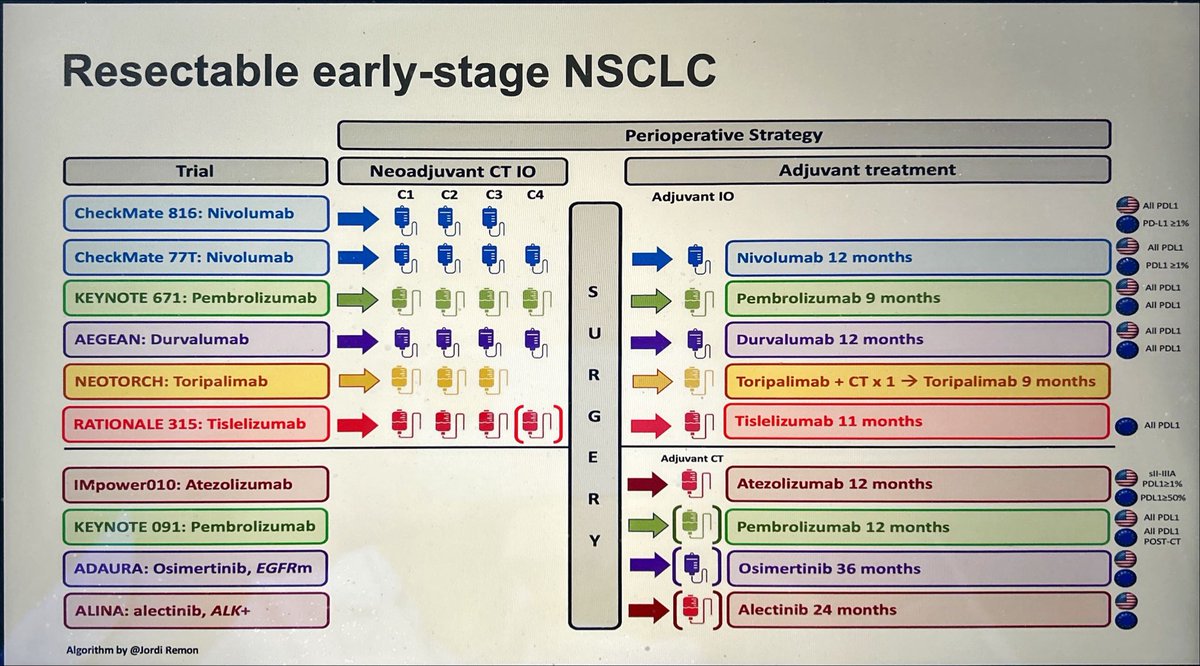
The evolution of resectable NSCLC in one figure. 🫁
From postoperative immunotherapy…
to perioperative strategies with consistently stronger efficacy signals across phase 3 trials.
The field is rapidly redefining the standard of care
@t_mitsudomi 👏👏
@OncoAlert@OncoReporte@MedwatchKate@StephenVLiu@GlopesMd @MedicalwatchHQ
Impact of 1L amivantamab + lazertinib vs osimertinib on acquired resistance in EGFR mutant NSCLC @JTOonline. Ami/laz reduces MET amp (3.4% vs 13.1%) and acquired EGFR resistance mts (1.4% vs 7.6%). 2L PFS longer in ami/laz arm vs osi (8.4m vs 5.3m).
https://t.co/UYIfOrJEmZ
Especial médicos🩺⚕️🏥👨🏻⚕️👩🏻⚕️.
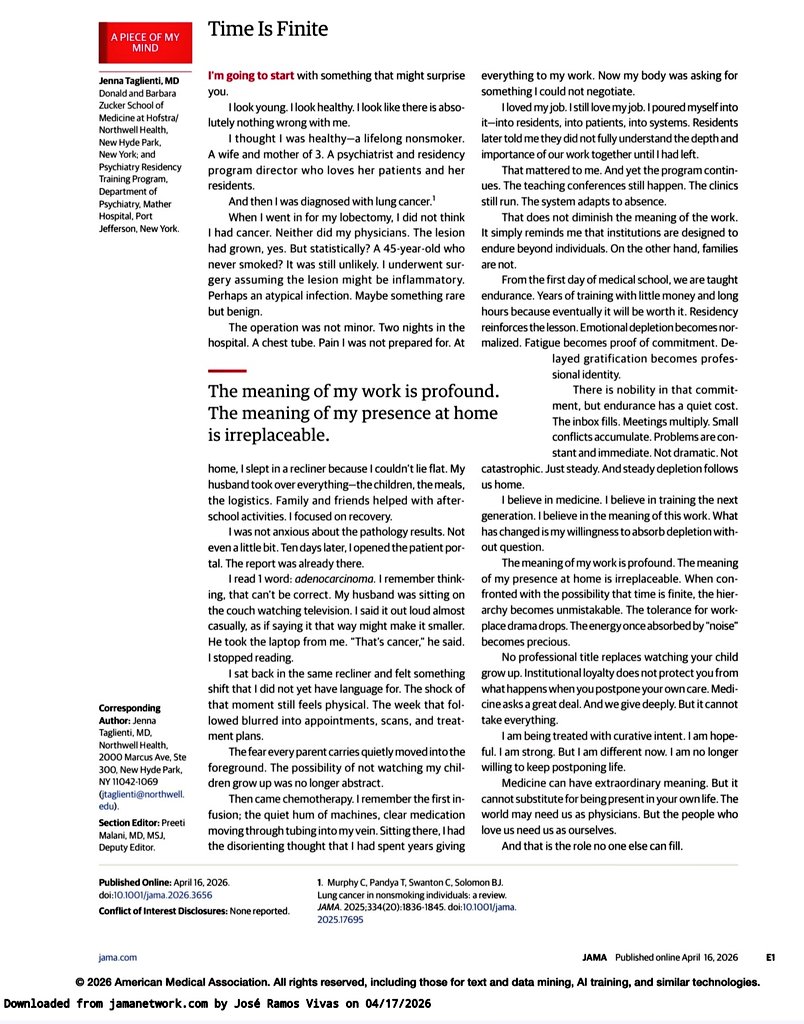
Os dejo esta carta en JAMA. Se la pondré a mis alumnos en la próxima clase:
He elegido estas frases :
👇🏻⏰
«La medicina puede tener un significado extraordinario. Pero no puede sustituir el estar presente en tu propia vida. El mundo puede necesitarnos como médicos. Pero las personas que nos aman nos necesitan como nosotros mismos. Y ese es el rol que nadie más puede llenar.»
«La residencia refuerza la lección de que las instituciones están diseñadas para perdurar más allá de los individuos. En cambio, las familias no.»
«Creo en formar a la próxima generación. Creo en el significado de este trabajo. Lo que ha cambiado es mi disposición a absorber el desgaste sin cuestionarlo.»
«Ya no estoy dispuesta a seguir posponiendo la vida. La medicina exige mucho. Y nosotros damos profundamente. Pero no puede tomarlo todo.»
«El significado de mi trabajo es profundo. El significado de mi presencia en casa es irremplazable.»
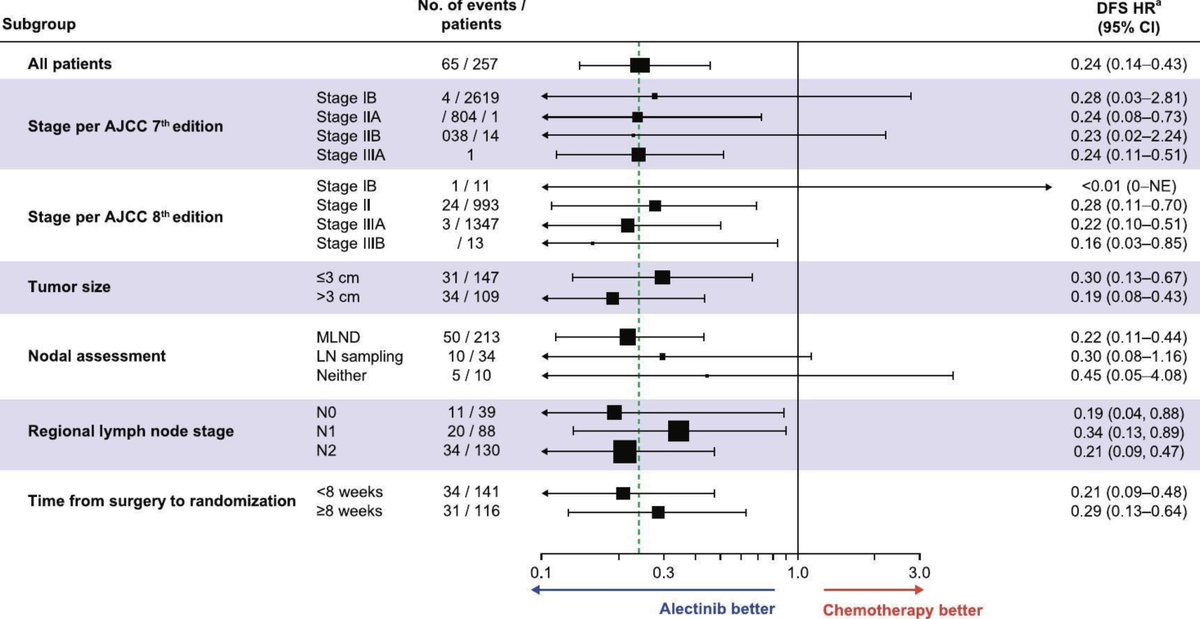
Subset data from ALINA - adjuvant alectinib for resected ALK+ NSCLC - shows benefit to alectinib over chemo across subsets - stage, size, N0/N1/N2, and time from surgery. Current standard of care.
https://t.co/NgfCjZKC3x
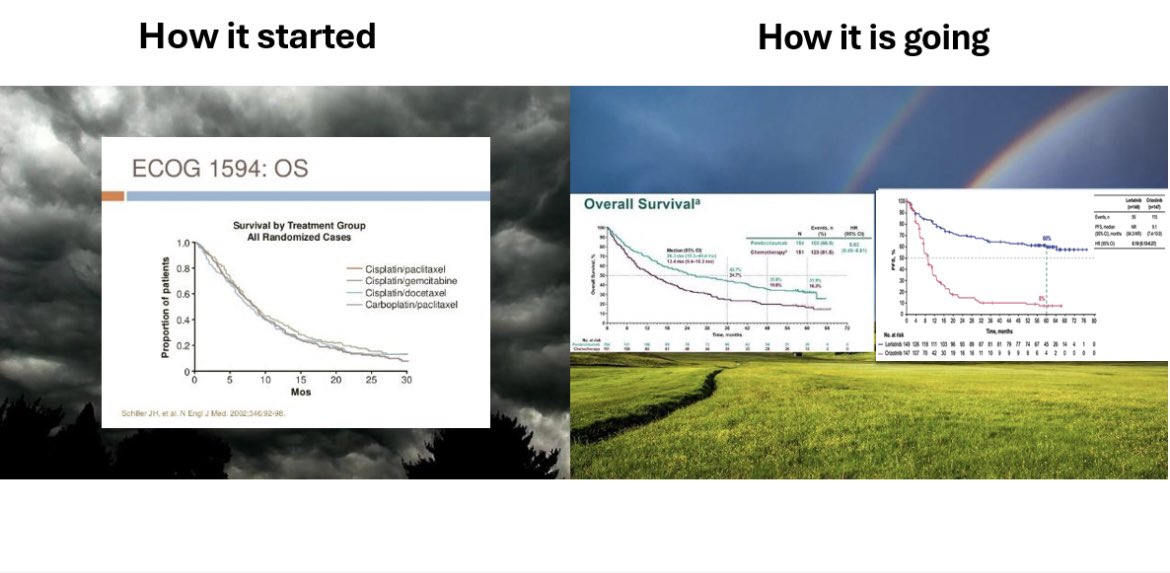
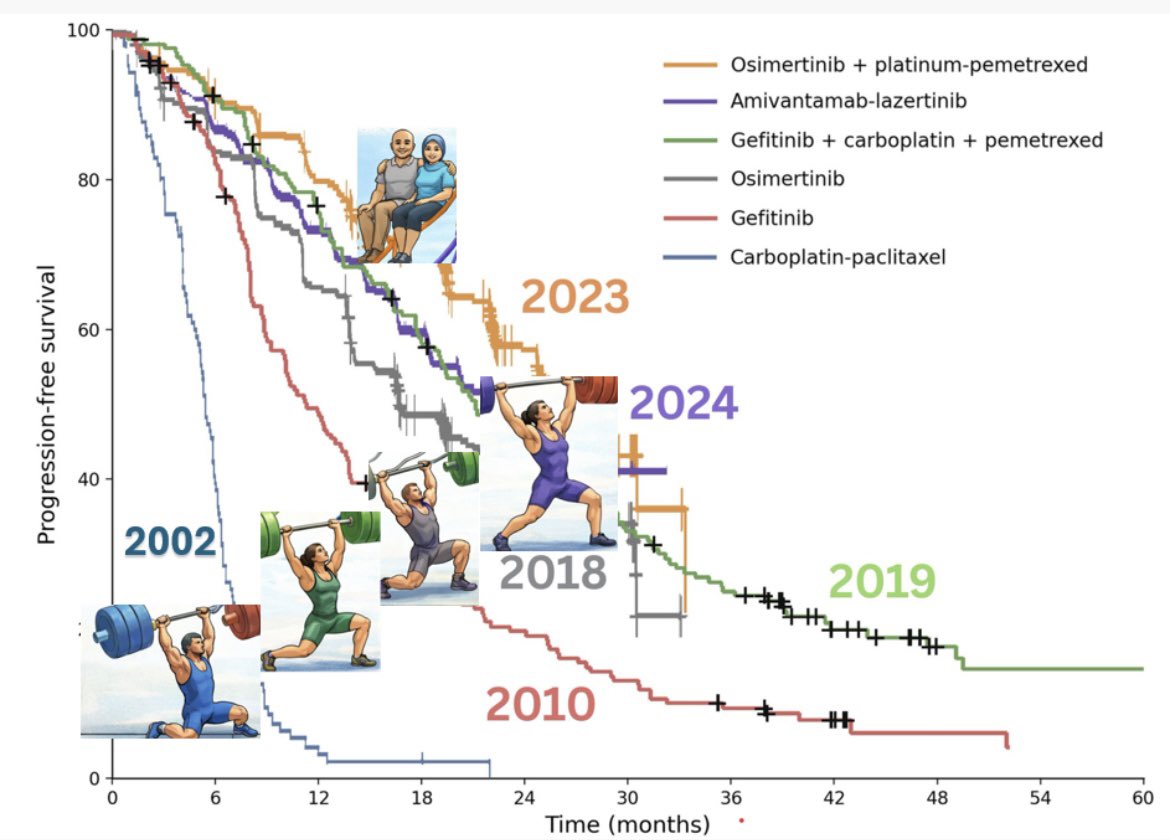
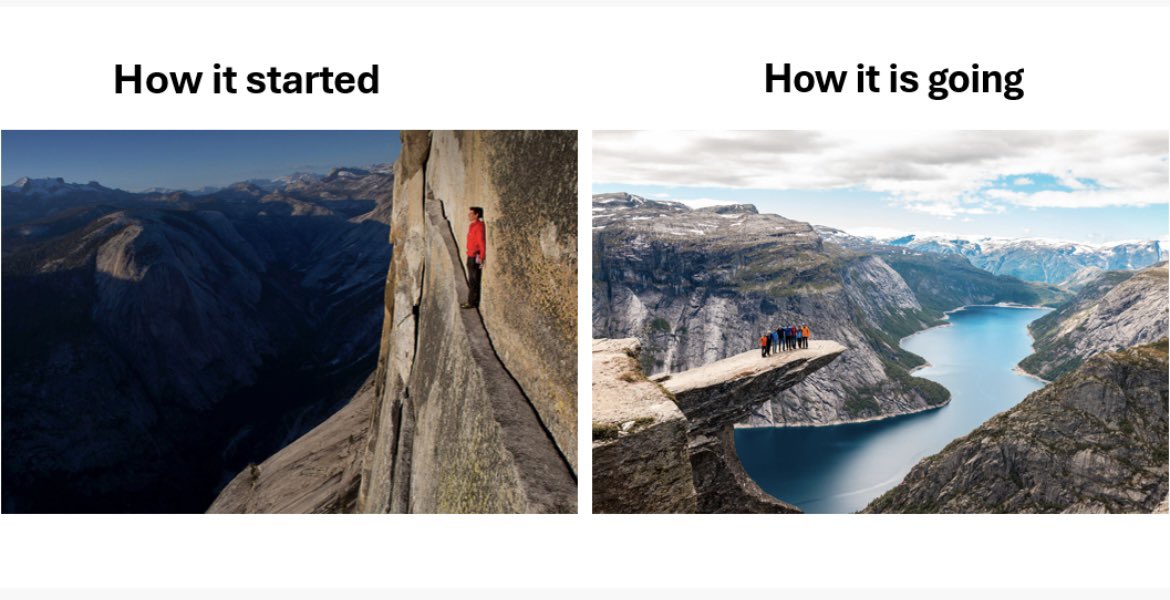
Amazing to see the dramatic improvements pushing the PFS curves up and thereby offering extended life and more hope for our patients- a diagnosis of advanced NSCLC was like looking down a precipice in 2002
Revised the image to show that all this is thanks to a lot of passionate weightlifters:
Basic/translational scientists
Industry friends
Clinical trialists/trial teams
Reg agencies
Patient advocates etc lifting that PFS curve upwards day-by-day
But we need to push still more to be able to have our patients rest on and enjoy a comfortable survival plateau!
#lcsm
Lung cancer staging always felt confusing to me… until I learnt the simple 3-4-5 rule 👇
• ≤3 cm → IA
• 3–4 cm → IB
• 4–5 cm → IIA
IA → No chemo
IB → Gray zone
≥II → Adjuvant chemo
Nodes ↑ stage
Metastasis → Stage IV
#MVOnco#LungCancer
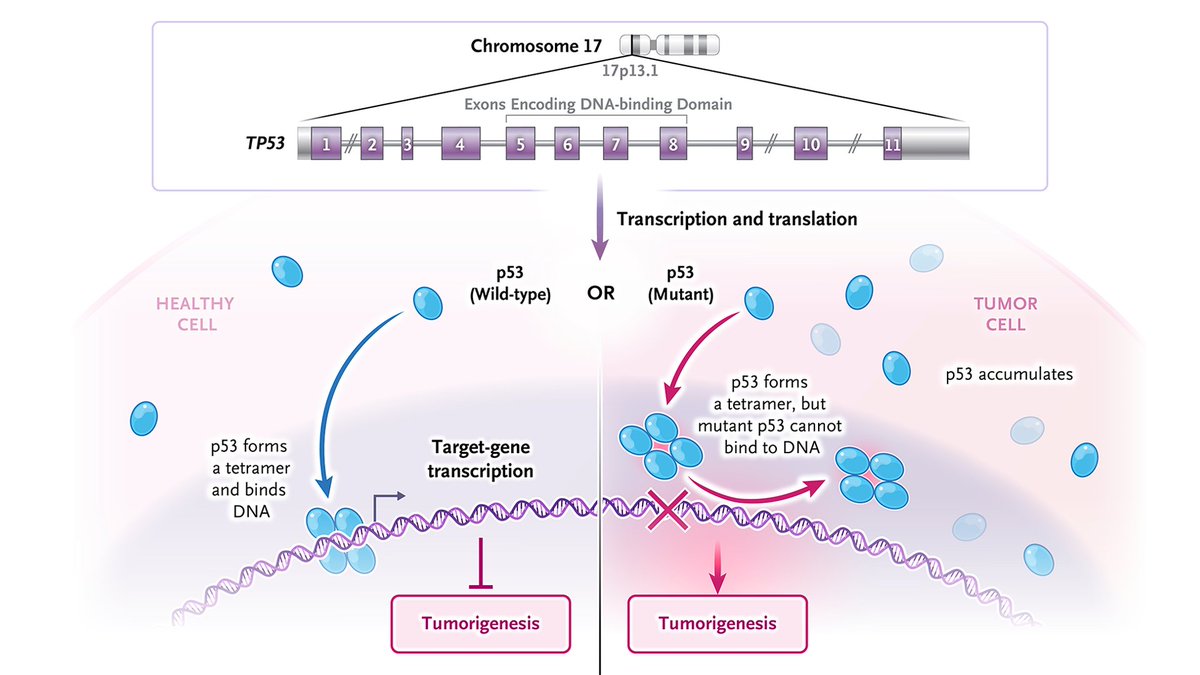
𝐓𝐏𝟓𝟑 is the gene that encodes the tumor-suppressor protein p53. It is commonly mutated in human cancers, and as with other tumor-suppressor genes, loss of function in both alleles (i.e., two "hits") is required for tumorigenesis. Wild-type p53 protein is short-lived and expressed at low levels. Mutant p53 often has an extended life span and accumulates in cancer cells. The p53 protein is a transcription factor that controls the expression of hundreds of target genes by binding and activating specific target genes that, once transcribed and translated, suppress tumorigenesis. Mutant p53 has limited or no tumor-suppressive function because it cannot bind and activate target genes.
To learn more about this NEJM Illustrated Glossary term, read the editorial “Restoring Function to a Variant of p53 in Solid Tumors” by Xin Lu, PhD, from @Ludwig_Cancer: https://t.co/5Ox6Kuax6Q
Explore more terms: https://t.co/kobNxmaQrY
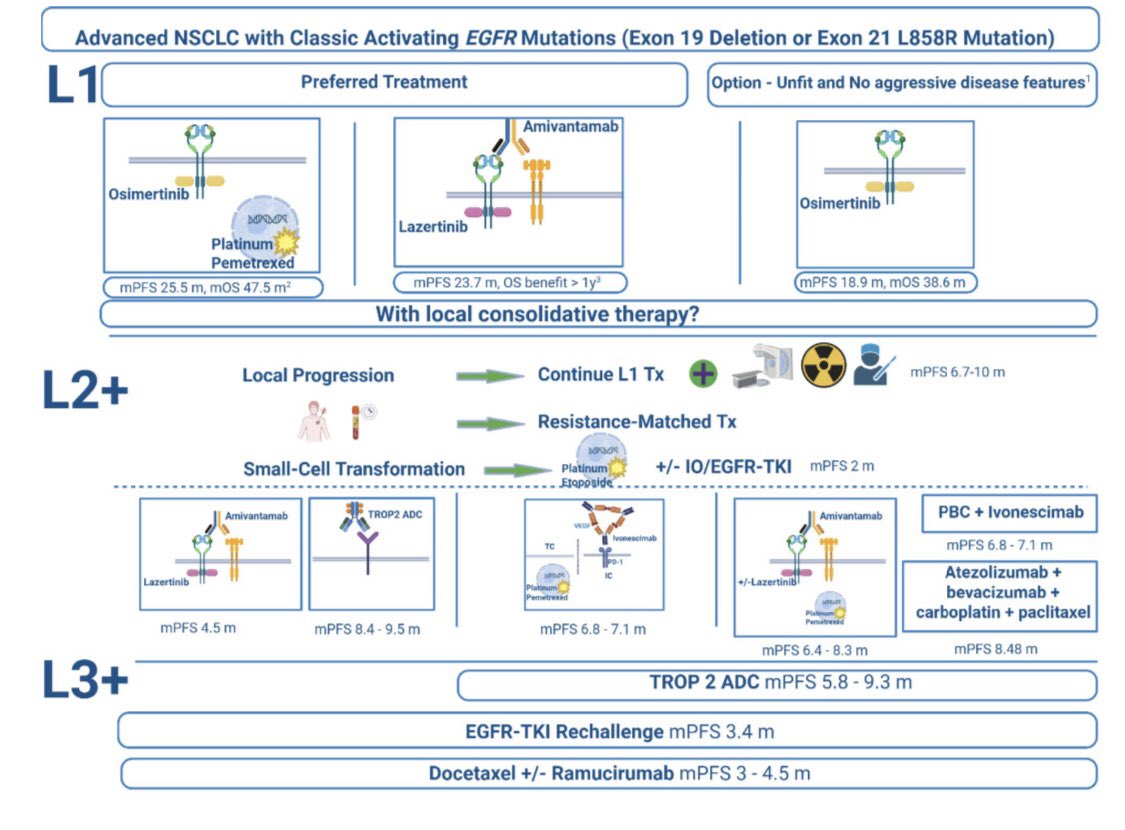
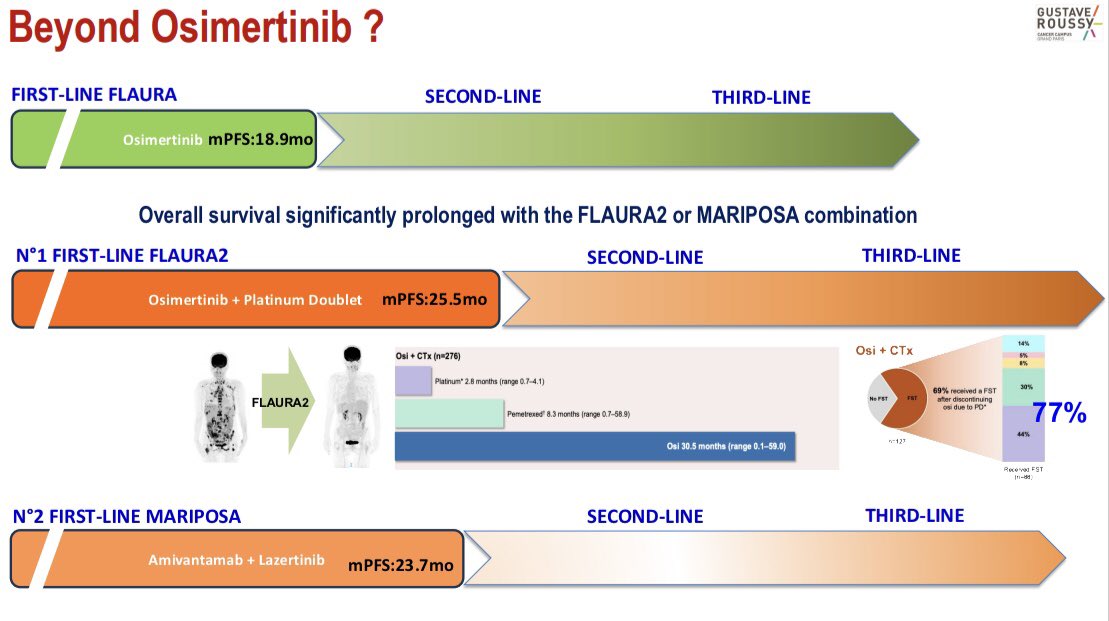
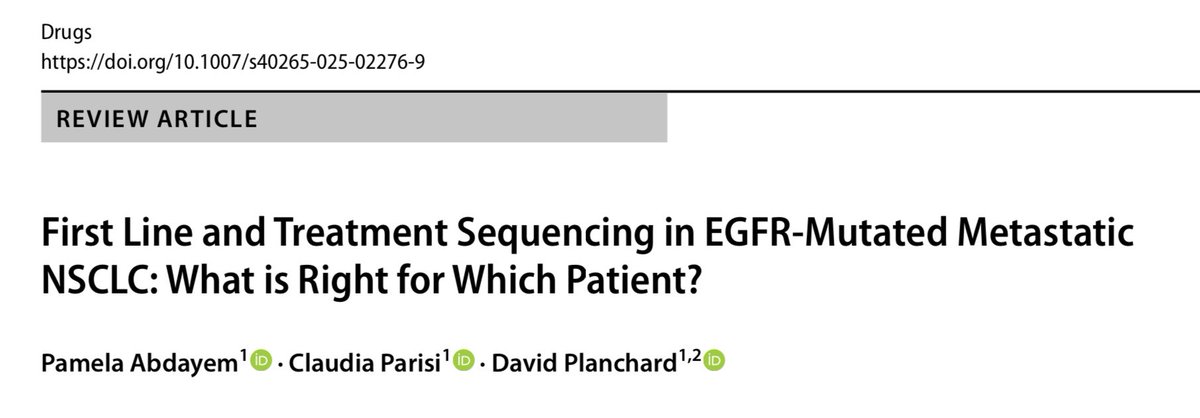
Treatment lines for EGFRm NSCLC pts are changing fast with FLAURA2 and new bispecific antibodies and ADCs. While the best strategic sequence isn't yet obvious, the significant boost in patient survival remains the ultimate goal @SpringerNature#EGFR#lungcancer
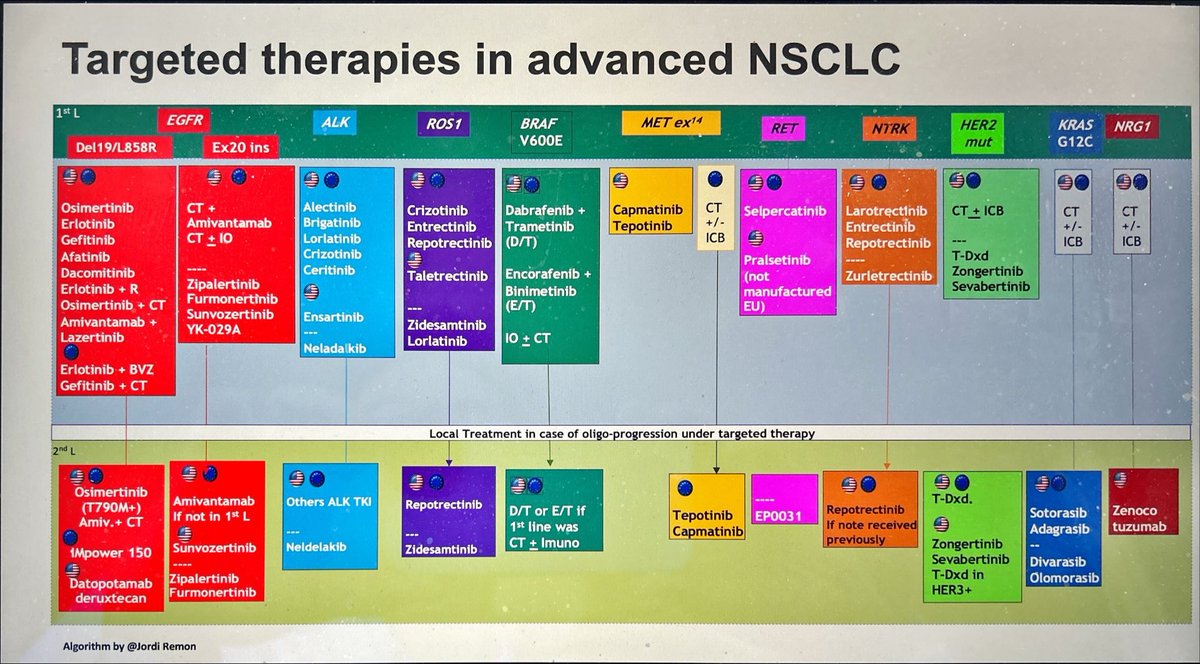
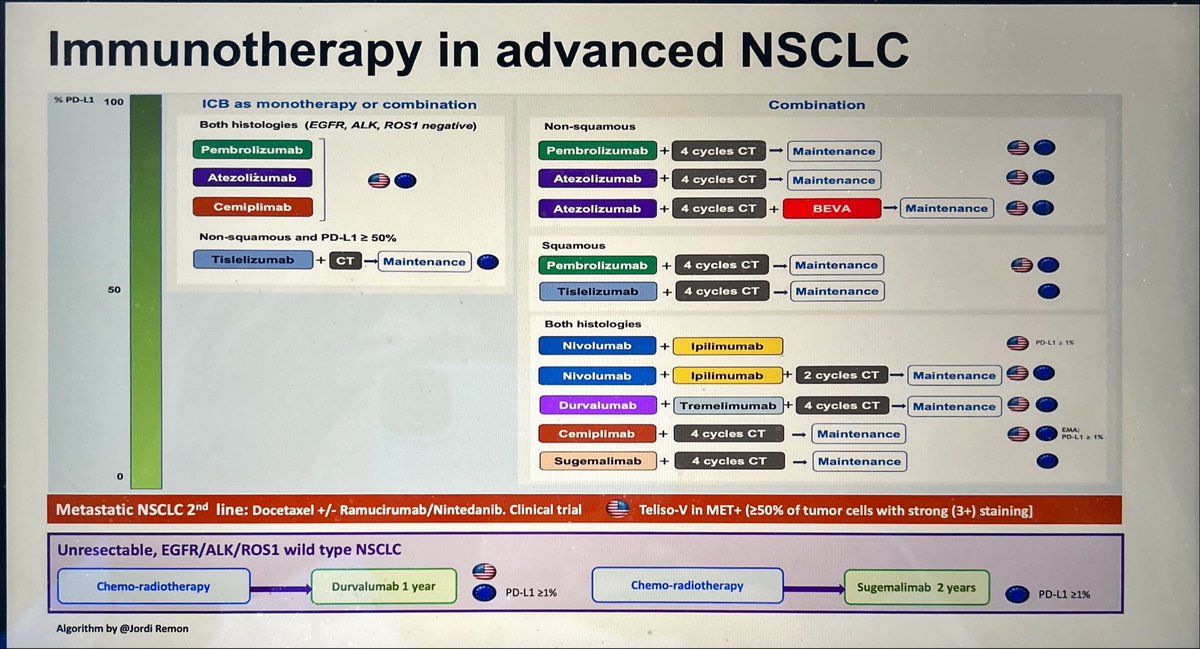
2025: Summary of Ttx for NSCLC in 3 slides
➕: IO is SoC in early stage
➖: multiple « me too » agents but cost of drugs is ⬆️ and access is ⬇️ worldwide
✏️: optimal Ttx duration with IO or TT
✏️: access to TT for rare 🧬altertions
✏️: role of ADCs?
We need more Academic trials!
Can you still offer chemotherapy in EGFR+ NSCLC after using it in 1L?
At ILCS 2025, @tnewsomdavis highlighted data showing that in FLAURA2, 69% of patients received second-line therapy, most with chemotherapy, comparable to MARIPOSA, where 74% received further treatment. His takeaway: using chemo upfront doesn’t preclude effective 2L options for most patients.
Watch his talk ⬇️
https://t.co/qBfsppMWQK
#LungCancerAwarenessMonth continues: From groundbreaking EGFR-targeted therapies to #PrecisionMedicine, non-small cell lung cancer care is evolving, bringing hope and better outcomes for patients today and tomorrow.
🔗 https://t.co/4JTIZVmMvP
@OncoAlert
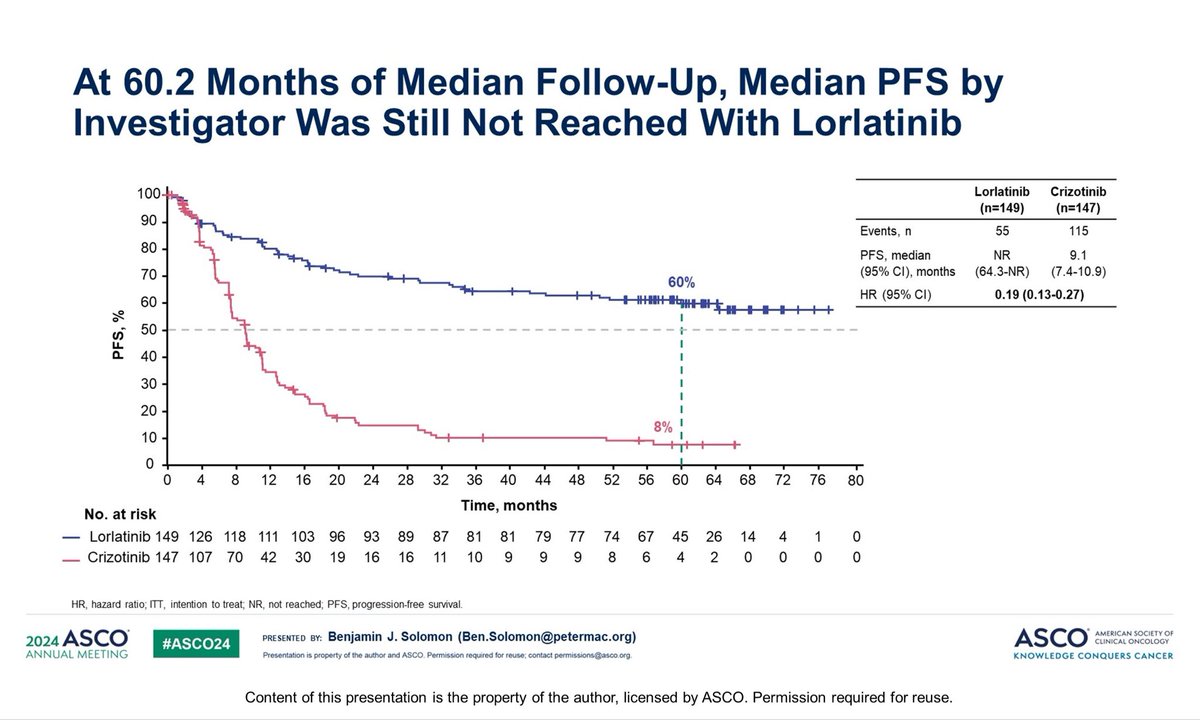
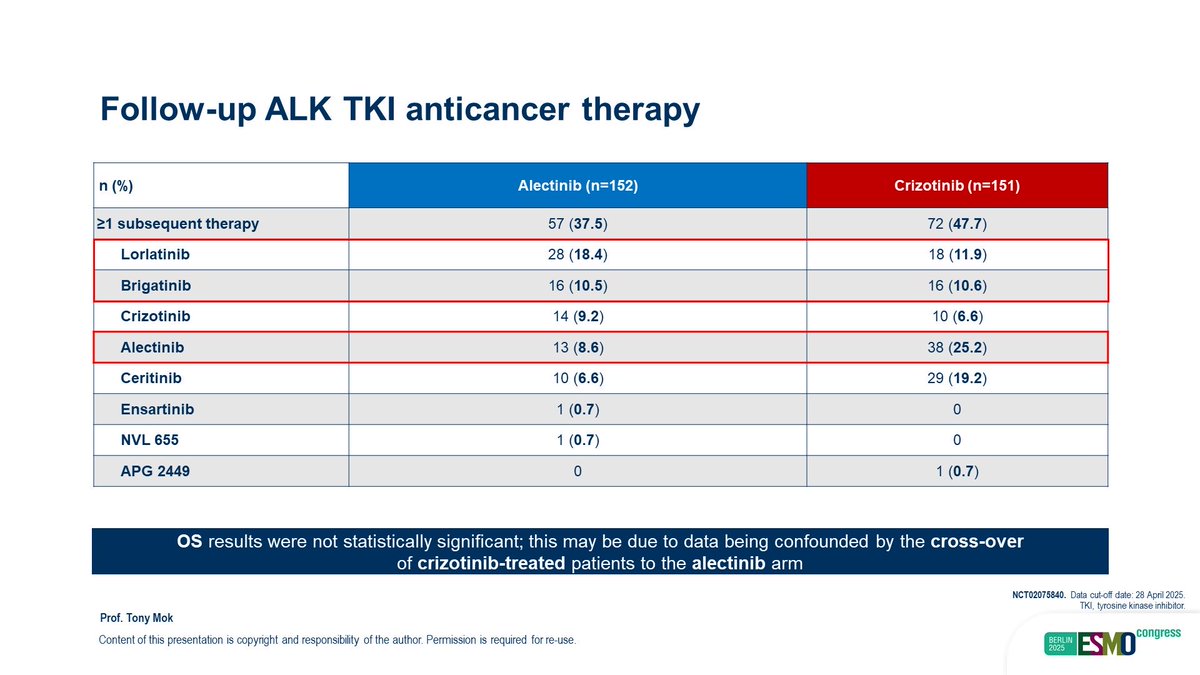
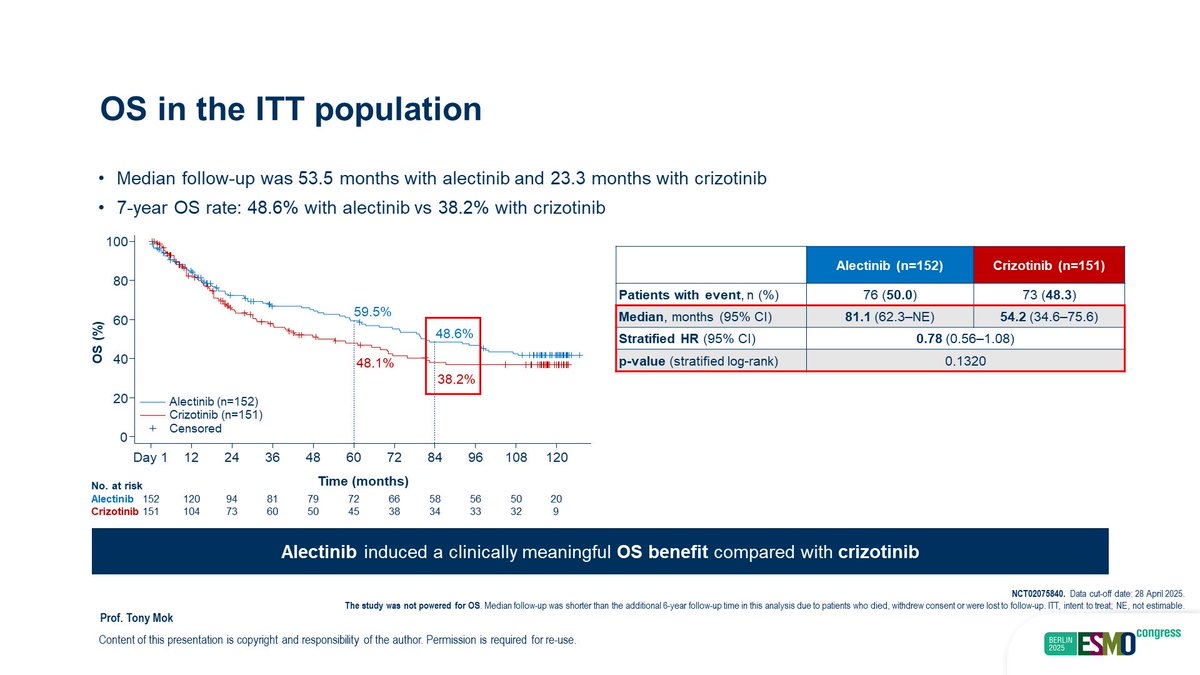
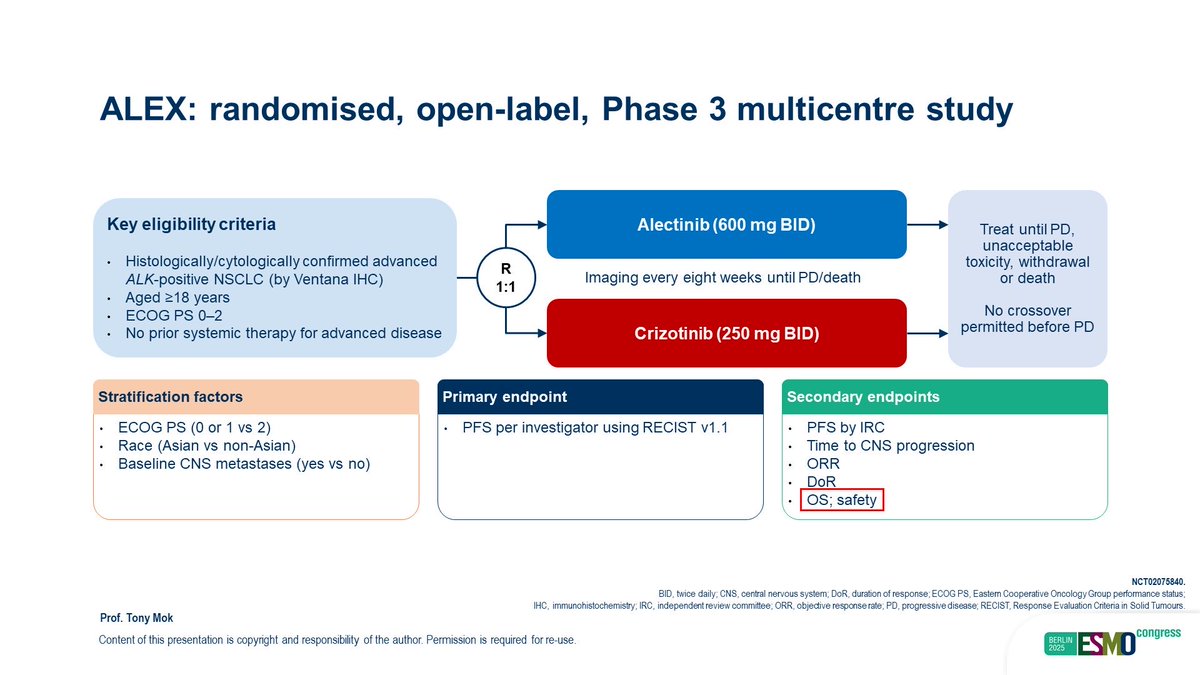
ALEX final OS:
- crizo arm dragged down by <50% getting next-gen ALK. Lack of crossover really hurts.
- 5-yr OS with alectinib ≈ 5-yr PFS with lorlatinib (CROWN), but only 18% got lorla post alect — we still don’t know the optimal sequence. #ESMO25