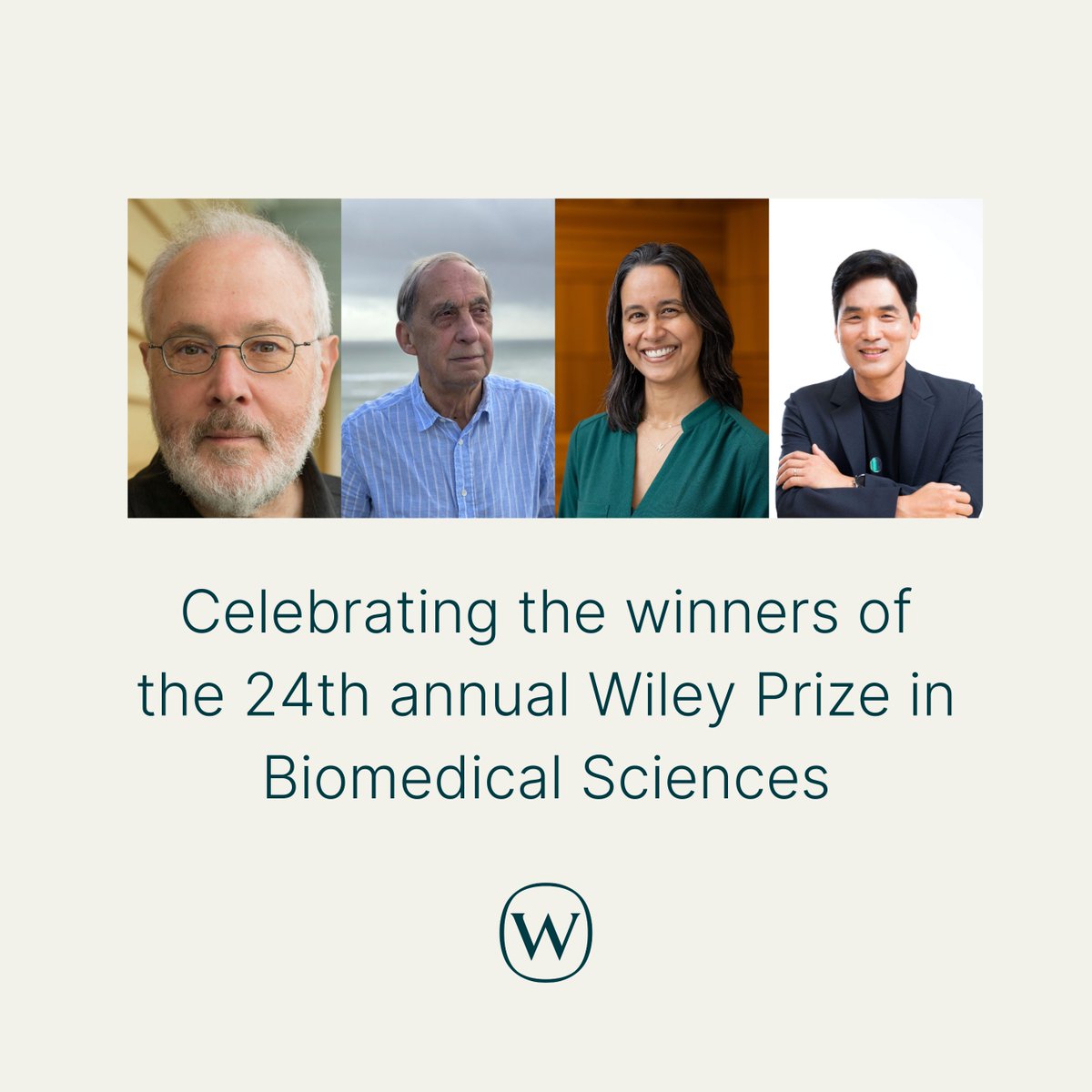
The Wiley Foundation is pleased to announce the winners of the 24th annual Wiley Prize in Biomedical Sciences, which recognizes contributions that open new fields of research or advance concepts in a particular biomedical discipline.
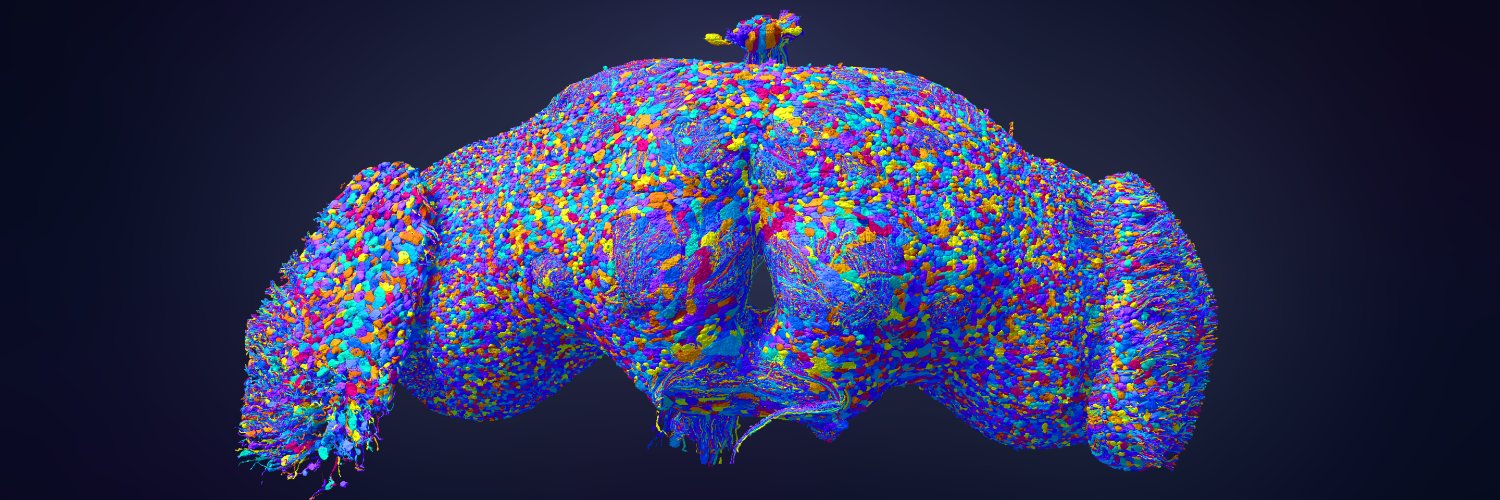
John White, Gerald Rubin, Sebastian Seung, and Mala Murthy will be awarded for reconstructing and interpreting connectomes, the anatomical wiring diagrams of neurons and synapses that underlie how the brain processes information and controls actions.
Learn more about the winners in our latest press release: https://t.co/kExbp2U44M
https://t.co/895ZLs8LcB
Optical connectomics (LICONN + FRO @E11BIO’s recent PRISM method) featured by Nature as one of 7 technologies to watch in 2026. Nature you are not wrong imnsho!
For over twenty years, many dedicated researchers around the world have worked to realize the dream of connectomics. I'm especially indebted to the talented members of my laboratory, past and present. And I've been lucky to benefit from so many powerful collaborations.
One of my favorite chats of the year here with @SebastianSeung on his new company, brain research, the nature of intelligence and where neuroscience and AI are heading together.
You can find the @corememory pod on all major platforms and on YouTube down below.
Thx, as always, to @brexHQ and @e1ventures for supporting our show!
https://t.co/akbkw5kM65
Our Method of the Year 2025 is...drumroll please...EM-based connectomics!!
Our Editorial introduces our choice and highlights six Comments and other related content in this special issue. Please join us in celebrating EM-based connectomics! 🎉🧠🔬
https://t.co/OHbn6WFVHX
#paper!
X-rays can resolve #ultrastructure in #tissues non-destructively.
https://t.co/8rnl3psPM7
Shoutout to key collaborators at @TheCrick and @psi_eng Ana Diaz, @AdrianAWanner and @AndreasTSchaefer, and to the whole team that made this possible.
Published today in Nature Biotechnology!
In 2022, we set out to prove that you don’t need electron microscopy to see brain circuits in molecular detail. With iterative 20x expansion and pan-protein staining, molecular connectomics is possible!
https://t.co/eUXAKgNBJR
Excited to share the preprint of our new State of Brain Emulation Report 2025! We reassess progress since the 2008 brain emulation roadmap by @anderssandberg & Bostrom across organisms from C. elegans to humans, identify current bottlenecks and propose a path forward.
1/N
Exciting news for #drosophila#connectomics and #neuroscience enthusiasts: the Drosophila male central nervous system connectome is now live and free to use and explore. Find out more at the landing page hosted by our Janelia FlyEM collaborators https://t.co/jKgJgBMxCW.
Introducing The BANC (Brain and Nerve Cord) connectome preprint! Thanks to all who helped make this synapse-resolution map of an adult fruit fly central nervous system possible!
Preprint: https://t.co/aQUyKkIHWD
The BANC is publicly available in Codex: https://t.co/dUBuTa4Ilz
Excited to share a connectomics dataset of hippocampus CA3.
Explore the dataset: https://t.co/FpgI5YyUzG
Paper introducing the dataset and some of our discoveries: https://t.co/ORqWNuc2d3
Wouldn't it be great if we could not only image large connectomic volumes, but also completely reconstruct them? And if a whole mouse brain project didn't cost billions?
With the PATHFINDER preprint (https://t.co/Ae3UCLOljP), we preview a future where it doesn't have to.
Still floors me that our MICrONS team opportunistically mapped the first fly brain as a side project, enabled by tools they had just developed for solving a much harder problem.
We are proud to present our new preprint “Correlative light and electron microscopy reveals the fine circuit structure underlying evidence accumulation in larval zebrafish”, just posted on bioRxiv (https://t.co/pYHYh26vSo). (1/10)