UX latency is the most frustrating (lack of) advancement in computing over the last ~50 years.
IBM, way back in the 80s, found that user productivity shot up *exponentially* as system response time dropped. The "Doherty Threshold" was defined as ~400 milliseconds; the maximum amount of tolerable UX latency before interrupting user flow state.
It's unbelievable how many modern operating systems (*cough* win11) violate this threshold constantly.
Literally all you need to do as a Dev is pay attention. Add a "Doherty Threshold" to your test suite. There's so many different profiling tools, and especially with how good models are, really no excuse. Sure, some stalls are unavoidable, but that's when you pull out other UX tricks to at least give the illusion of responsiveness.
Crazy how much vintage computing hardware feels immeasurably more responsive despite having thousands of times less overall performance.
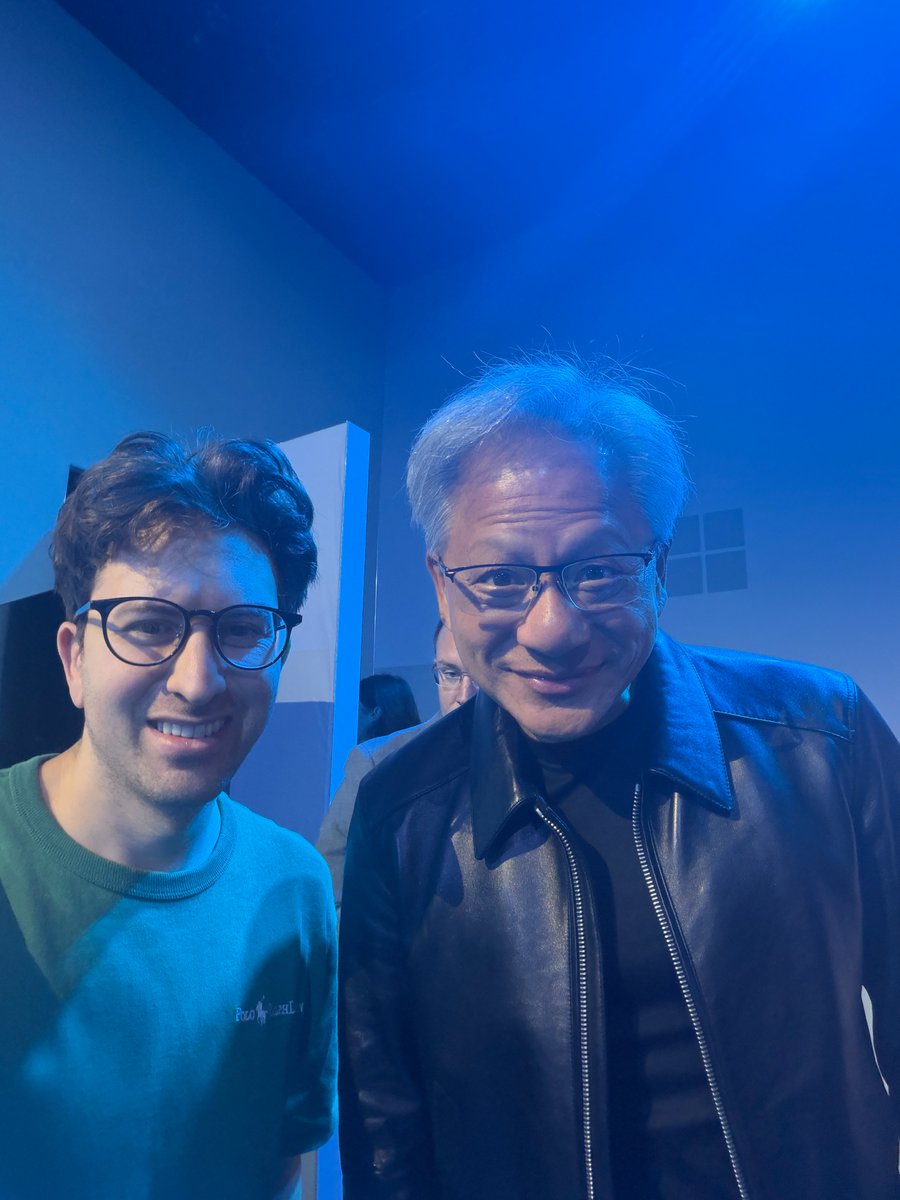
I spent 48 hours in SF hanging out with billionaires, data labs and AI founders and execs running $1B to $100B companies.
My observations:
1. Sooo MANY stories of data brokers making like $2M a WEEK selling company data to labs. I can't tell if it's the beginning or a bubble, and I kept wondering which niches are left. Digging into it actively.
2. At dinner, someone asked the table, "If a new model drops next month, does your company get better or worse?" HALF the table went quiet! I think that's the best question to ask about any AI startup right now.
3. The bar people talk about now is hitting $1B in revenue in 12 months (I guess that's the new unicorn?). What I didn't hear much about is retention. AI revenue can come in fast and leave fast, and I think we're going to see a lot of stories of AI companies with huge revenue and terrible retention.
4. It's pretty clear we're living through the reinvention of the computer. The model is the CPU, the harness is the operating system, and skills and plugins are the apps. Thinking about it that way makes it easier to see where the whitespace is.
5. We're maybe 12 months from an agent that can watch you work for a week and then do your job without any instructions. The screen recording plus agent memory plus local model combination makes this possible right now.
6. Agent harnesses feel like the new GPT wrappers, in a good way, especially vertical ones. The best teams I talked to treat the model as swappable. One founder walked me through routing different models to different jobs: one for taste and visuals, a cheaper one for the everyday stuff, another for text.
They use prompts they can move across models over fine-tuning, and A/B test the output on what users actually do with it: do they edit it, export it, share it? A vertical harness is basically four things: the connectors for that industry's data, evals written by people who know the work, rules for what the agent can and can't touch, and a clean screen for a human to review. The model is maybe 20% of it.
7. There's a lot of reverse engineering going on/cloning going on more than I've ever seen. People are decompiling software and rebuilding it with agents, and someone showed a suite of like 10 apps that are worth $5B+ each all that he cloned open source. Me and everyone are still thinking through what it means when software gets this easy to copy.
8. My guess is the value moves to data. If the software can be rebuilt quickly, what's worth paying for in a legacy SaaS company is the years of customer data and workflows inside it. Some SaaS companies are secretly data companies.
Gets me thinking about how do you truly value data for this saas companies? Like if we were buying these dying saas companies at 2x ARR before (as example), maybe there is a better metric. Idk, just thinking out loud here.
9. It feels like a good chunk of legacy software won't make it to the agentic era, especially anything built around people clicking through a lot of screens.
10. Every company I talked to wants to pipe its internal data into one place and expose it to agents through MCP. Then they look at the data and realize it's a mess: five versions of the same customer, old Slack channels, PDFs nobody can search. Cleaning that up feels like a big consulting opportunity!
11. A lot of founders are building the basic building blocks for agents: APIs, data layers and tools. Some of the companies I saw barely have a UI because the main user is an agent. I really believe the startups that build primitives to this agentic era will do extremely well. Building blocks is the best way to think about it.
12. Labs can get plenty of training data, but it's harder to get real examples of agents failing inside companies. Whoever has those logs has something valuable.
13. Someone running a big consumer company told me the next fight is over memory. The model that remembers the most about you wins, and the smartest model matters less than people think.
14. Physical AI came up a lot. Astra I think was the first model that got people into AI can actually do CAD, and I think a lot of people are thinking what does vibe manufacturing really look like. The line I keep thinking about came from a robotics founder: the hardest problems in AI are deployment problems now, not research problems. Their robots work on their own, call a human when they get stuck, and every one of those calls becomes training data.
15. Cybersecurity companies are having a moment and are actually cool companies to build now, especially the ones that clean up after a breach. Every agent with access to your systems is a new door into your company, and a lot of those doors were left open.
16. Some startups are worth more dead than alive now. A shutdown company with 5 years of Slack, email and code can get paid for licensing all of it. I wouldn't be surprised if founders start factoring that into when they shut down.
17. People are starting to talk about monetizing the agent web. It feels really early, but when the most popular user of the internet is an agent, what startups should you be building?
18. I think agent insurance is coming. Once an agent makes an expensive mistake, insurers will want audits before they cover anyone.
19. Several people said the hire they want most is someone with taste who can write evals. The models are getting good at generating ideas, so the hard part is judging which ones are good.
20. New trend I observed: startup raises VC, uses venture dollars to become a creator, startup fails, founder falls back on being a full-time creator and incubates other products bootstrapped.
21. Getting SIGNIFICANT distribution is HARD right now. Founders are sponsoring buses, buying billboards like crazy and throwing parties with famous DJs to get noticed. Kinda feels dotcom era in that sense.
Attention is what's scarce! The growth guy going viral sharing his UGC strategy from Wispr Flow is a good example. It's the sauce everyone wants, and I truly believe there are probably only 50 people on the planet who know how to scale these types of businesses efficiently in this era.
Always good to get that dose of SF. I felt sooo lucky to have such an incredible trip during such an incredible time in building businesses. Surreal in so many ways.
Happy to be home and locked in.
Until next time!
I caught TDD virus at the start of my career, and this talk by Erik Meijer saved me!
As often the case with snake oil salesmen, they take a good core idea (write usage code first), and turn it into a parody to sell books and courses to people who don't know better.
This talk is 10 years old, but still relevant today. LLMs like writing A LOT of tests, but you must delete most of them and only leave integrational and e2e ones that test real system behavior.
Here’s the email to employees:
Team,
Hope everyone’s doing well and enjoying the productivity enhancements from our AI tooling initiative.
Unfortunately, Finance has asked me to clarify a small issue.
It appears someone, and by “someone” I mean apparently all of you simultaneously, managed to spend $500,000,000 on @claudeai usage in a single month.
For context:
•NASA landed on the moon for less.
•We are now the proud owner of approximately 14% of Anthropic.
•Claude personally sent us a thank-you fruit basket.
•Our CFO has entered a fugue state and only communicates through Slack emojis.
•The electricity usage from your prompts briefly dimmed parts of Northern Virginia.
While we appreciate innovation, there are concerns that:
•“Can you make this email sound slightly warmer?” did not require 11,400 generations.
•Asking Claude to “rewrite this in the style of Succession, Hemingway, and Tony Soprano combined” may have been excessive.
•One employee appears to have used Claude to generate “a quick list of lunch options” that somehow consumed the GDP of a small island nation.
Going forward, please observe the following guidelines:
1Do not upload the entire internet into Claude “for context.”
2If your prompt begins with “simulate every possible outcome,” reconsider.
3Claude should not be used to:
◦settle fantasy football disputes,
◦write your wedding vows 97 times,
◦generate revenge edits of your ex’s LinkedIn bio,
◦or ask “what if Rome had WiFi?”
Most importantly:
If you see the message:
“This request may require additional datacenter construction”
…please stop immediately and contact IT.
Thank you all for your cooperation during this challenging yet technologically groundbreaking time.
Warm regards, Management
P.S. Whoever prompted:
“Generate every possible PR angle for every company founded since 1983”
…we just want to talk.
At the top of the dot-com bubble, a Berkshire shareholder asked Buffett and Munger to “just speculate” 10% in tech.
Their answer aged perfectly.
April 29, 2000.
Here's my conversation all about @FFmpeg, the legendary open-source software powering most video on the Internet. In the episode, I talk with Jean-Baptiste Kempf and Kieran Kunhya. JB is lead developer of VLC and Kieran is FFmpeg contributor, codec engineer, and the person behind the now-infamous @FFmpeg account on X.
VLC (@videolan), by the way, is also a legendary piece of open-source software: it's a video player that can open basically anything & has been downloaded over 6 billion times.
I think both FFmpeg and VLC are two of the most important and impactful software systems ever created, both open source, and both created & maintained by volunteers: brilliant engineers from all walks of life.
Thank you to everyone who contributed to FFmpeg and VLC, and in general to all engineers giving their heart & soul to building systems used by millions (or billions) of people, and often doing so not for money, status, or fame, but purely for the love of building great software and doing good for the world.
Thank you to the builders! 🙏❤️
Shoutouts in this chat to @ID_AA_Carmack@karpathy@elonmusk@TimSweeneyEpic and everyone who is a contributor & fan of open source!
It's here on X in full and is up everywhere else (see comment).
Timestamps:
0:00 - Episode highlight
2:17 - Introduction
5:35 - Weirdest things VLC opens
9:59 - How video playback works
19:20 - Video codecs and containers
30:07 - FFmpeg explained
51:07 - Linus Torvalds
55:46 - Turning down millions to keep VLC ad-free
1:10:04 - FFmpeg & Google drama
1:29:18 - FFmpeg developers
1:35:55 - VLC and FFmpeg
1:40:29 - History of FFmpeg
1:43:46 - Reverse engineering codecs
1:57:01 - FFmpeg testing
2:01:08 - Assembly code (handwritten)
2:25:26 - Rust programming language
2:34:42 - FFmpeg and Libav fork
2:43:04 - Open source burnout
2:50:51 - x264 and internet video
3:04:07 - Video compression basics
3:11:04 - CIA and fake VLC
3:21:39 - Ultra low latency streaming
3:39:07 - AV2 codec and video patents
3:48:59 - VLC backdoors
3:59:14 - Video archiving
4:05:51 - Future of FFmpeg and VLC
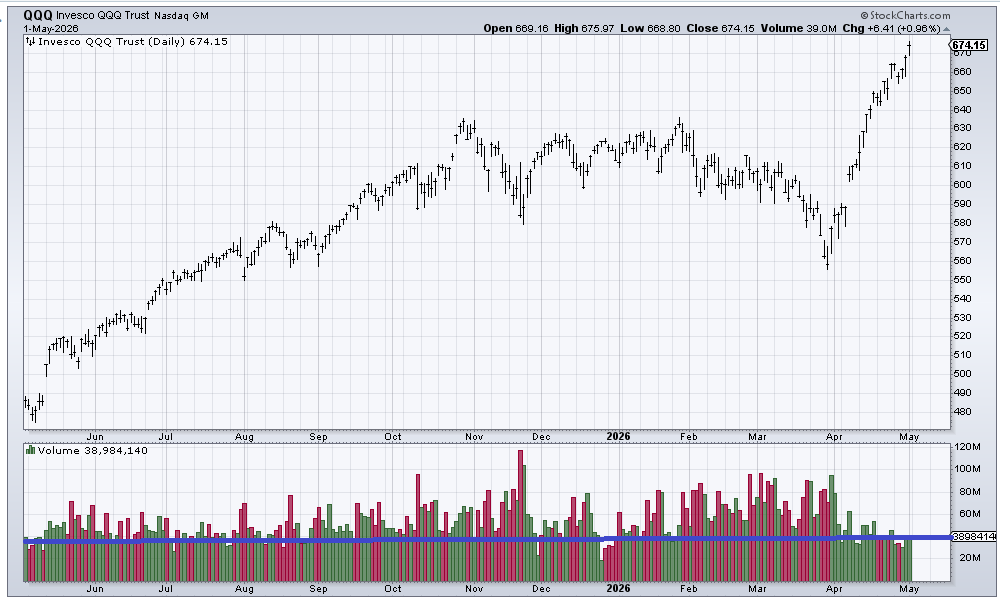
I typically could care less about volume. Stocks can and do rally on low volume. But I am struck by the consistent low volume rally in the QQQs. Just fell off a cliff as we came off the low.
@lord_fed Now NOW looks impossible to go any lower. Anyone else adding here? IMHO NOW has the best strategy and quality out of the ITSM offerings. Also the parallel on-prem strategy to cloud will pay off.
@SethCL Another thing is one dimensional arguments. For a hypothesis on price direction to have probability we ought to look at the right combination of dimensions. Say a confluence of studies each confirming the other.