Just one day after ending "The Late Show" on CBS, Stephen Colbert returned to TV — to host a public access show with rocker Jack White in Monroe, Michigan.
Appearances by Jeff Daniels, Eminem and Steve Buscemi.
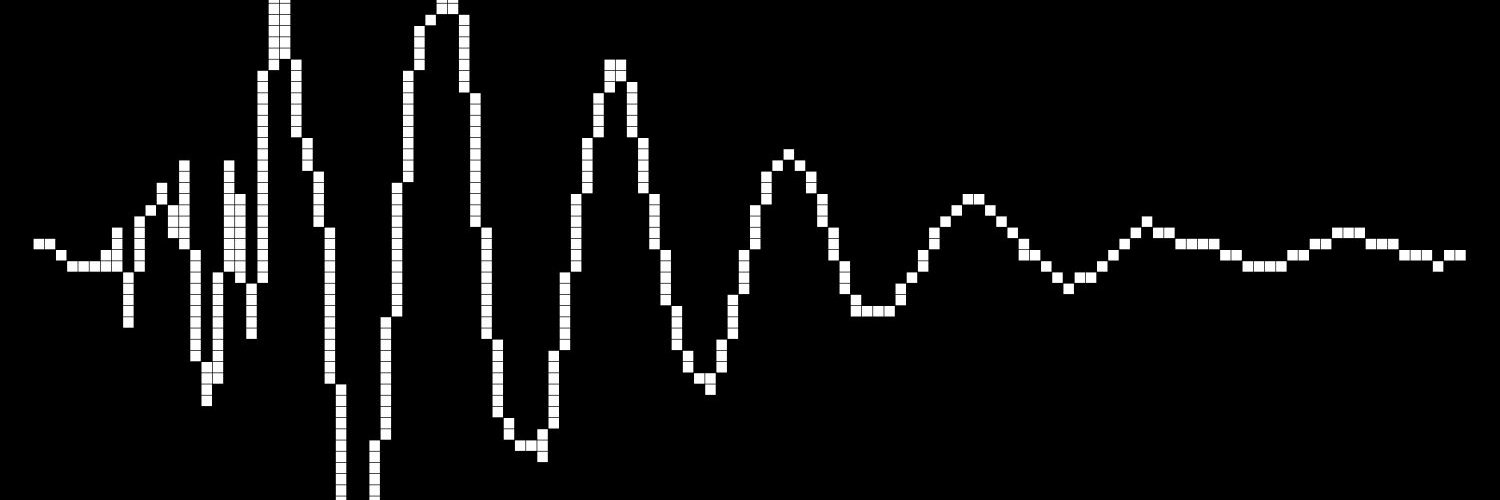
I've never felt this much behind as a programmer. The profession is being dramatically refactored as the bits contributed by the programmer are increasingly sparse and between. I have a sense that I could be 10X more powerful if I just properly string together what has become available over the last ~year and a failure to claim the boost feels decidedly like skill issue. There's a new programmable layer of abstraction to master (in addition to the usual layers below) involving agents, subagents, their prompts, contexts, memory, modes, permissions, tools, plugins, skills, hooks, MCP, LSP, slash commands, workflows, IDE integrations, and a need to build an all-encompassing mental model for strengths and pitfalls of fundamentally stochastic, fallible, unintelligible and changing entities suddenly intermingled with what used to be good old fashioned engineering. Clearly some powerful alien tool was handed around except it comes with no manual and everyone has to figure out how to hold it and operate it, while the resulting magnitude 9 earthquake is rocking the profession. Roll up your sleeves to not fall behind.
There is a question around how much of an engineer's day should be reading/understanding vs. writing new code. I think we've biased too far away from reading/understanding existing code to the point where many's only way of understanding a system is to write a completely new one.
This is Mark Rober
He spent years building one of the strongest reputations in social media. Loved by tens of millions of followers
Yesterday he obliterated it all with one 18 minute video
It's a story of greed, deception, and cowardice
Here's the story of what happened:
One thing noobie scoobies don't seem to understand is that malware is literally just software. Understandably, that seems kind of obvious, it's in the name — 'malicious software'. But it seems less obvious to some that, in order to write malware, you apply the exact same principles, techniques, and structures that legitimate software uses.
Malware is regular ol' programming with some sprinkles of weird stuff. These weird things are documented and shared. Some try to find new weird things.
When people ask what language is best for malware... it's kind of like asking 'what's the best ice cream flavor?'. It's entirely subjective. Everyone will tell you something different. You'll notice a lot of people will prefer Chocolate or Vanilla, you may encounter some who like Raspberry Banana Sprinkle Jam-Blam Blast, or Minty Schminty SpongeBob Sticks Bombs, but at the end of the day it's all still ice cream.
In it's most simple form, all malware techniques are things legitimate software may do.
Ransomware?
- Step 1. Enumerate files in a directory
- Step 2. Lock and encrypt files
Information Stealers?
- Step 1. Enumerate files in a directory
- Step 2. Upload files somewhere
RATs?
- Step 1. Make program run at start
- Step 2. Execute commands (cmd, powershell, other programs)
- Step 3. Upload files somewhere
Loaders?
- Step 1. Download file from somewhere
- Step 2. Run file
Everything the malware does is just an expansion of what is explained above.
Want to find new malware techniques? Find new ways to execute a process, find new ways to enumerate files in a directory, file new ways to upload files somewhere, find new ways to download files from somewhere, find new ways to write to files or delete files, etc.
How do you do this? Read. Read everything. Blogs, Windows documentation, StackOverflow, Wikipedia, our website. Look at every DLL you find on your computer in Ida or Ghidra, just open stuff and look around. Look at other peoples work and see if you can expand on it and find something new.
tl;dr learn to code, then learn weird stuff
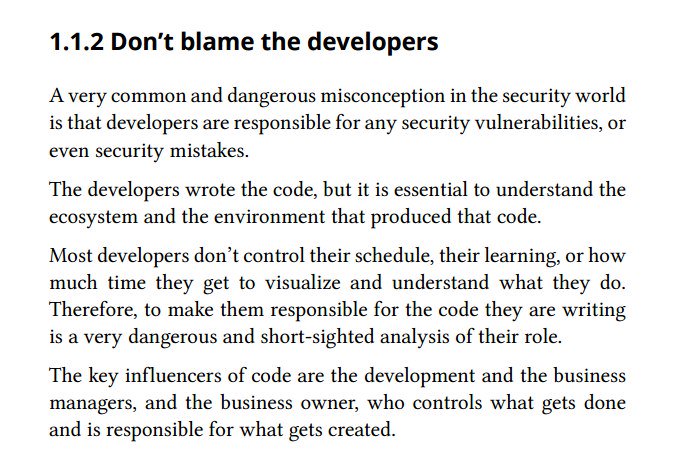
The highest level of security engineering is proactively building systems that make insecure states unrepresentable, attack classes rendered extinct, vulnerabilities not exploitable, and attack paths not viable for attacker gain.
"The lack of teamwork is not something that the individuals bring to the workplace[;] that failure to work together is the result of how the organization has been setup."
Maybe it's the algorithm, maybe it's my mind playing tricks on me, but I feel I'm being fed more and more right wing content via suggestions on this platform than ever before... #tinfoil
This guy won’t be buying his own beer for a while! Meanwhile the dickheads he’s schooling can’t order a drink without worrying it comes with extra spit. And quite rightfully from what I hear.
The cybersecurity industry shouldn’t exist. We built the internet wrong, and we can solve most of our cybersecurity problems at their root by rearchitecting technology platforms to be safe-by-default instead of buying security products.
Where @dotMudge makes an important point at @SummerC0n: real data on ATOs shows that SMS 2FA is fine for the vast majority of users. It prevented 100% of 3.3B automated password stuffing attacks, 96% of 12M bulk phishing, and even 76% of <10k targeted attacks seen over last year.