@breakliquid and I are delighted to say our OpenEVO preprint is finally live! An open source hand-made turbidostat that's modular, affordable, and made to be customized. Designed with love for the research community. Enjoy!!!💚
https://t.co/EdayWTXrXj
Researchers have engineered magnetically controlled fluorescent proteins that can be remotely dimmed and brightened in cells and living animals
https://t.co/EqLjqCiRw0
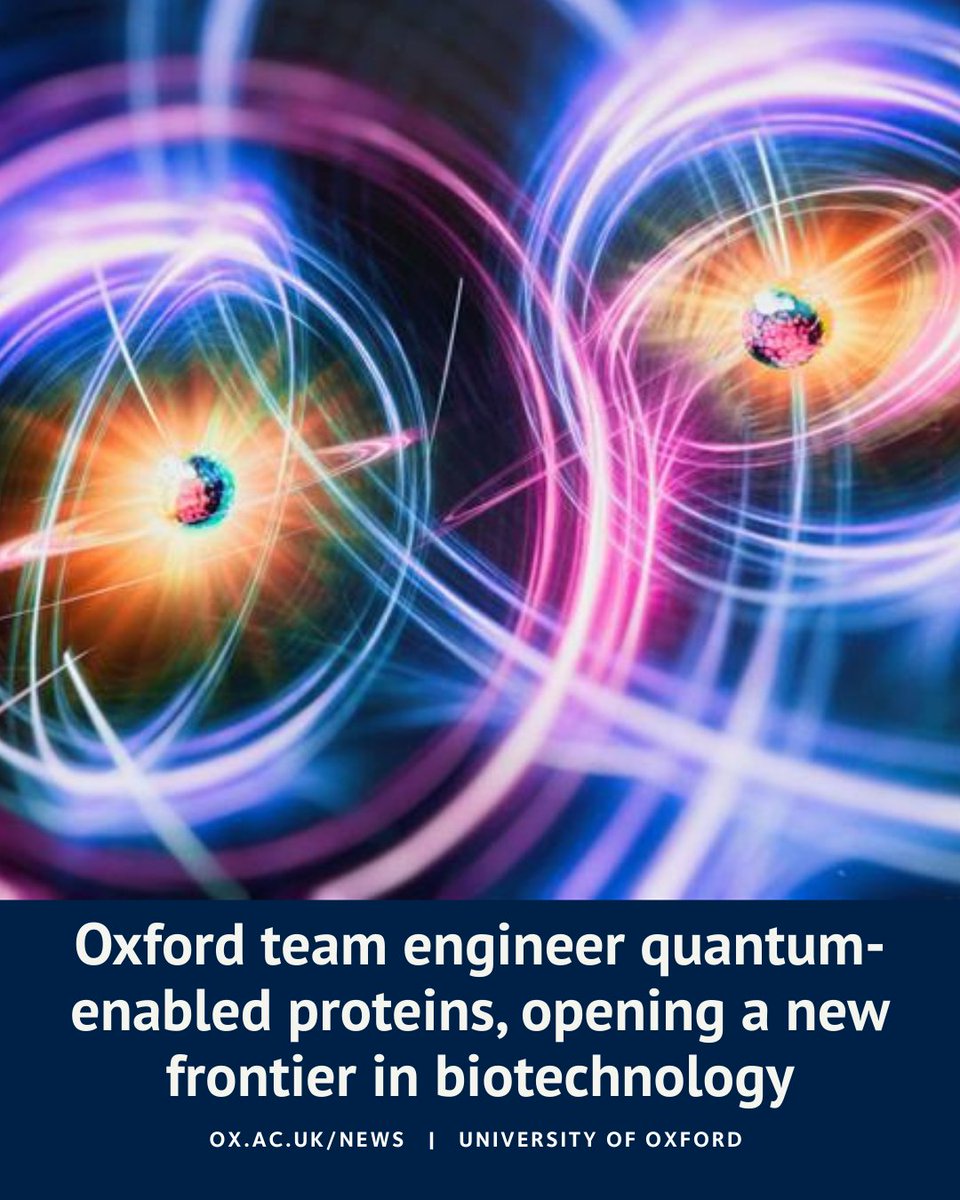
NEW: In a world first, researchers from Oxford’s Department of Engineering Science have engineered quantum behaviour inside proteins.
The breakthrough could lead to new medical technologies, including tracking genes and molecules inside living cells.
Find out more ⬇️
In a new Science study, researchers describe MetaEdit, a strategy that enables targeted insertion of large DNA sequences into the genome of bacteria within the mouse gut environment.
📄: https://t.co/6NWVq3E6dI
#SciencePerspective: https://t.co/bCpiMHz4fO
Not only does Bennu contain all 5 of the nucleobases that form DNA and RNA on Earth and 14 of the 20 amino acids found in known proteins, the asteroid’s amino acids hold a surprise
https://t.co/M6VKLXFDQL
Some exciting results to share! The MagLOV and related proteins from @AndrewGYork and @Maria_Ingaramo are quantum. We measured 4% optically detected magnetic resonance contrast in living bacterial cells at room temperature. https://t.co/ys0GdvEX9H
MagLOV results reproduced✅
We cranked the LED power and found the response can be much faster!
Absolute change roughly the same at each LED power, i.e. contrast change likely due to the background, not MagLOV response.
Many thanks to the Calico folks for sharing their discovery!
Using experimental evolution of fluorescent protein in E. coli, Zheng et al. show that a cooling environment can accelerate, and a warming environment decelerate, the evolution of a new protein phenotype.
@lab4mee@Westlake_Uni
https://t.co/lofrTsICWU