Super excited to share that ENGRAM is out today! ENGRAM cells are programmed to write their histories into the genome, recording the intensity, duration, and order of biological events simultaneously.
https://t.co/whJgHAm3nO
Could the folding of synthetic gene circuits in 3D shape how genes are expressed? Today @ScienceMagazine we report on the role of gene syntax in shaping feedback between transcriptional activity and genome folding for advanced circuit design🧵 (1/n)
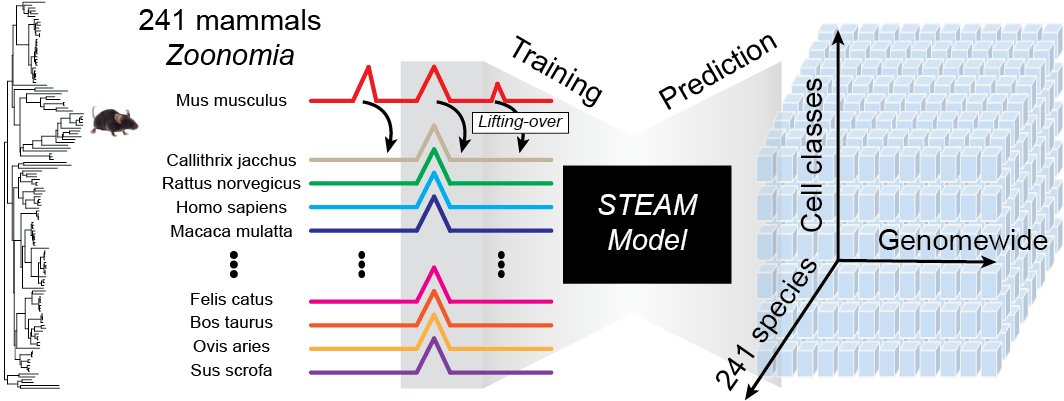
New preprint! @JShendure@CXchengxiangQIU Can we learn regulatory grammars of human cell types we'll never be able to profile - by training on mouse development and transferring across 241 mammalian genomes?https://t.co/sWCWoAqJ2B
Our Human Multiomic Development Atlas paper is out in Nature today! A heart-felt "thank you" to all co-authors for their tireless work on this complex yet exciting project! Congrats all! https://t.co/iUiZz00KOt
Thrilled to share I’ve started my lab at Dartmouth’s Geisel School of Medicine! We focus on mapping cellular trajectories & TF networks in development and Mendelian disorders, exploring new therapies. Join us—postdocs, grads, and scientists welcome! https://t.co/8lHVDt3dHP
The Wilkinson Lab is open for science! @MSKCancerCenter
🧬We'll be finding funky new RNA biology, mainly by looking at reverse transcriptases (i.e. the Best Enzymes In The World)🧬
Super excited re: first Shendure/Baker Lab collaboration & preprint on a multiplex sequencing-based strategy for screening de novo proteome editors in mammalian cells. Kudos to brilliant Chase Suiter & @Green_Ahn@UWproteindesign on the work! Preprint:
https://t.co/7gh8ZtcKUO
We are pleased to share our new preprint: “De novo design of RNA and nucleoprotein complexes”.
This work extends the principles of de novo protein design to RNA and DNA, enabling the generative design of complex multi-polymer structures! (1/6)
https://t.co/QPqpNZr0er
pH gradients are central to physiology, from vesicle acidification to the acidic tumor microenvironment. But how do we program proteins to respond to pH? In our new preprint https://t.co/ovuJf8D6m4, we developed computational methods to rationally design pH-sensitive binders. 🧵
We sought to make proteins both potent and FAST. We used #proteindesign to design precise control over protein interaction lifetimes, enabling us to construct rapid-response circuits, biosensors, and switchable cytokines. Now published @Nature! Links to paper and tutorial below.
Phosphorylation on tyrosines control key pathways in immunity, cancer, and metabolism. For the first time, we can now design proteins that specifically recognize individual phosphotyrosines, even in disordered regions. (1/8)
Preprint: https://t.co/iIucGbMSDp
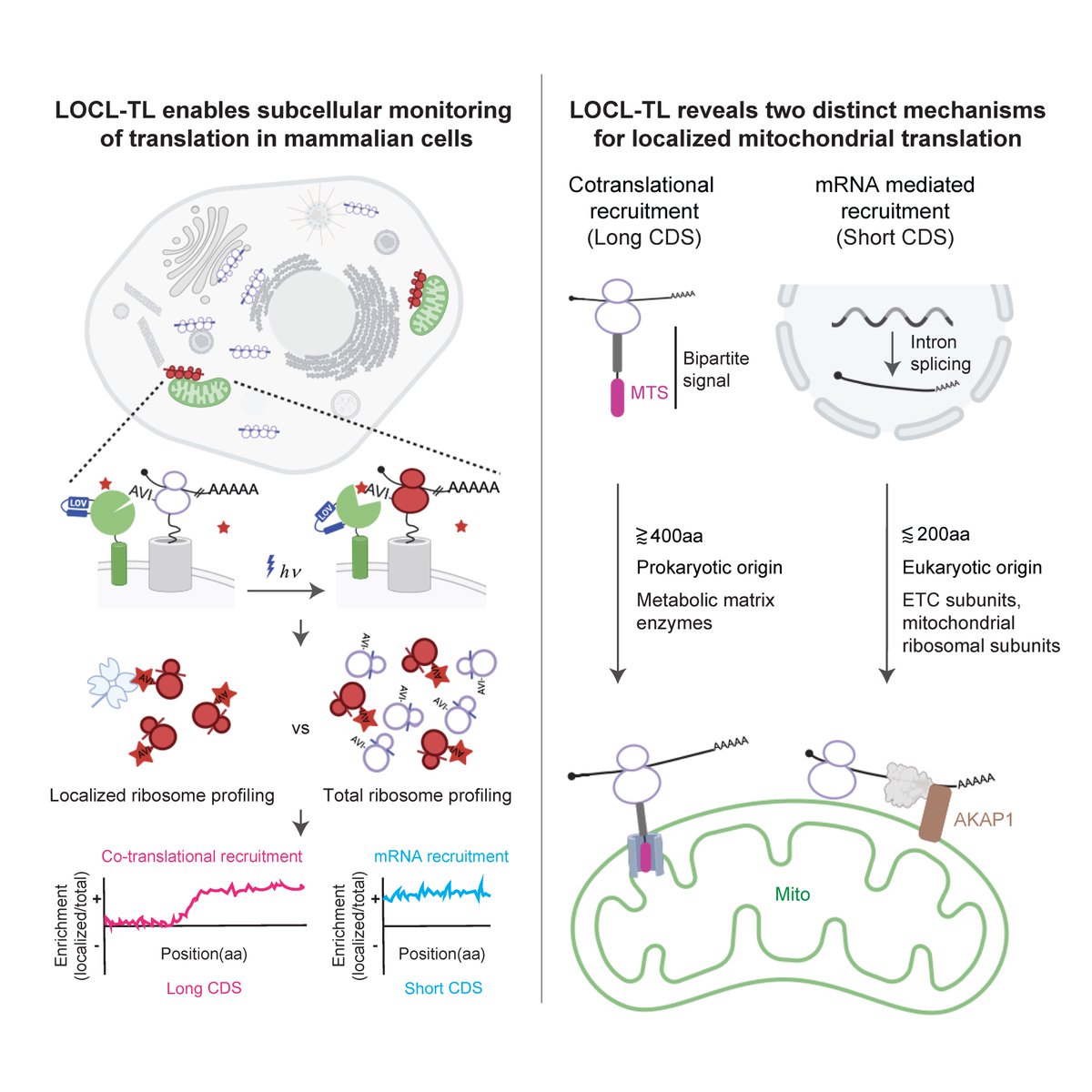
I'm thrilled to share our work from @JswLab (https://t.co/CMzQznSXPN). We developed LOCL-TL, an optogenetic approach for monitoring localized translation in mammalian cells. LOCL-TL revealed two mechanistically distinct strategies for mitochondrially localized translation.
Molecular recording is an emerging field with exciting applications. In this review, @_Choi_Junhong and I outline major challenges that the community should address to fully realize the potential of this technology, and highlight promising directions that we are heading.
Excited to share our new paper out in @Nature revealing cell-type specific nuclear organization and its link to gene regulation using new spatial multi-omics technologies! https://t.co/0LC2GlEpQs
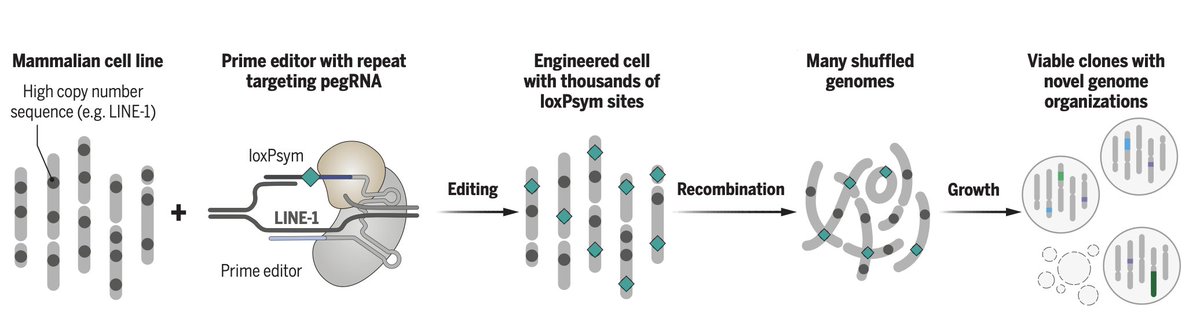
Now out in @ScienceMagazine we present 'Genome-shuffle-seq': a method to shuffle mammalian genomes and characterize the impact of structural variants (SVs) with single-cell resolution in one experiment.
https://t.co/dKnuHkQ0W9
Finally out in @ScienceMagazine! Utilizing the cost-effective EasySci to profile 21 million single-cell transcriptomes across five life stages and diverse sexes/genotypes, we reveal aging as distinct, development-like transitions, with dramatic cell population changes in specific time windows. We also demonstrate how highly scalable single-cell genomics enables "Functional Cell-omics" to unravel Cell Regulatory Networks at the whole-organism scale. Congratulations to the incredible Zehao Zhang (@Tommyz626) from our lab @RockefellerUniv for leading this work! https://t.co/mXIZDrV9Mq
Such an enjoyable journey to write this review with all the amazing scientists. glad to see it's finally out. A big shout out to Lucia and @tranmartink on their amazing illustrations!