Netflix, Wikipedia, Airbnb, Dropbox ~ all run on the same web server.
One quiet Russian engineer wrote it alone. For free. 🤯
> Meet Igor Sysoev 🇷🇺
> Russian software engineer. Born 1970 in Soviet Kazakhstan.
> Failed his first university entrance exam.
> Joined Rambler in 2000 as a system administrator.
> 2002 ~ started writing a new web server in his free time. Alone.
> Goal: handle 10,000 simultaneous users on one machine ~ a problem Apache (the dominant web server at the time) couldn't solve.
> 2004 ~ released nginx publicly. Free. Open source.
> Zero marketing. Zero PR. Just the code.
> 2008 ~ nginx was serving 500 million requests per day at Rambler.
> 2011 ~ founded Nginx Inc. with co-founder Maxim Konovalov.
> 2013 ~ Netflix scaled its streaming CDN to 40 Gbps per server using nginx.
> 2019 ~ F5 acquired the company for $670 million.
> December 2019 ~ Russian police raided his Moscow office over a fake copyright claim.
> The Russian tech community publicly defended him. Charges were dropped.🚀
> 2021 ~ nginx overtook Apache as the #1 web server on Earth.
> 2022 ~ left F5 quietly. No farewell tour. No book deal.
> Today nginx powers Netflix, Wikipedia, Airbnb, Dropbox, Cloudflare, WordPress.
> 33% of every website on Earth runs on his code. Apache trails at 26%. Microsoft's IIS isn't even close.
> Still 100% open-source. Still free.
One man wrote it alone, in his free time, for free.
He never sought publicity. He never asked for credit.
A third of every website on Earth still runs on his work.
Webserver GOAT 🐐
be a full stack thinker.
not just full stack in software.
full stack in reality.
• understand physics → what the world allows
• understand code → what machines can execute
• understand economics → what can survive
• understand psychology → what people actually do
• understand systems → how everything compounds or breaks
specialists optimize one layer.
full stack thinkers see the whole machine.
No course will get you a cybersecurity job. Labs will. Here are the 10 you need to practice right now.
1. TryHackMe SOC Level 1 Path: the single best starting point for anyone who wants to work in a SOC. Covers log analysis, SIEM tools, threat detection, and incident response in a fully guided, beginner-friendly format. https://t.co/jqYUL166VU
2. HackTheBox Starting Point: step-by-step guided machines that take you from zero to your first real exploitation. Once you finish Starting Point, move to the easy machines and build from there. https://t.co/xpC1bDl0TO
3. PortSwigger Web Security Academy: the best free resource for learning web application security. Every OWASP Top 10 vulnerability covered with real labs you actually hack, not just read about. Free. https://t.co/25VIlgwBL0
4. Blue Team Labs Online: defensive security labs focused on forensics, threat hunting, SIEM analysis, and incident response. Built specifically for people who want to work on the blue team side. https://t.co/FAhx2Tz78f
5. OWASP WebGoat: a deliberately insecure web application you run locally and attack. One of the best ways to understand how web vulnerabilities actually work from the inside. https://t.co/QaYoLz19dJ
6. VulnHub: free downloadable vulnerable virtual machines you spin up in VirtualBox and practice on locally. No internet required, no subscription, just download and hack. https://t.co/P4YkpsowR2
7. PicoCTF: a free beginner CTF platform built by Carnegie Mellon University. Covers web exploitation, forensics, cryptography, reverse engineering, and binary exploitation through hundreds of challenges. https://t.co/s1wJUOeiWJ
8. OverTheWire Bandit: a wargame that teaches Linux fundamentals, SSH, file permissions, and basic exploitation through progressive challenges. If your Linux skills are weak, start here before anything else. https://t.co/YhlcsO0wNm
9. Immersive Labs: used by enterprise security teams globally for hands-on skills development. Has a free tier with labs covering SOC, malware analysis, cloud security, and threat intelligence. https://t.co/4LAjDmwebr
10.Cyberdefenders: blue team focused labs built around real-world attack scenarios with PCAP files, malware samples, and memory forensics. The closest thing to working a real incident without being on the clock. https://t.co/9PMRoFRF8D
The gap between people who get hired and people who keep applying is not certificates. It is lab hours. Put in the reps.
Save this and share it with someone trying to break into cybersecurity.
Repost for others to see.
How Ghana Is Building a Digital Iron Curtain
A new analysis by IMANI CPE’s Technology Policy Analyst, John Sitsofe Mensah, warns that Ghana’s emerging technology legislation could undermine the country’s leadership role in Africa’s digital economy and conflict with the broader ambitions of the African Continental Free Trade Area (AfCFTA).
The article argues that proposed frameworks including the NITA Bill, Data Harmonisation Bill, and Emerging Technologies framework risk creating a restrictive digital environment that discourages innovation, cross-border trade, and investment.
According to the analysis, while Ghana publicly champions African market integration through the AfCFTA Secretariat in Accra, its domestic technology policies could create significant barriers for Pan-African startups and digital businesses seeking to operate in the country.
In the article, the IMANI analyst highlights:
🔸 The conflict between Ghana’s proposed tech laws and AfCFTA digital trade objectives.
🔸 Concerns over restrictive ownership requirements in the proposed NITA Bill.
🔸 The risks posed by overlapping regulatory agencies and compliance burdens.
🔸 The potential impact of data localisation and state-controlled digital infrastructure.
“We cannot hold the physical keys to the AfCFTA Secretariat in Accra while quietly changing the locks on the digital doors to the rest of the continent.”
The piece further argues that excessive digital protectionism could weaken Africa’s emerging innovation ecosystem, discourage foreign investment, and undermine efforts to build a continent-wide digital single market.
It concludes with a call for Parliament to reconsider the proposed legislation through the lens of international trade, innovation policy, and Ghana’s long-term digital competitiveness.
Read the full article:
🔗 https://t.co/aX5FYex7jD
#IMANIvoices #DigitalEconomy #AfCFTA #TechnologyPolicy #Innovation #DigitalTrade
Creator of C++, Bjarne Stroustrup:
AI-generated code isn't ready — it generates more bugs, more bloat, more security holes, and is nearly impossible to validate
"senior developers are already retiring rather than deal with it"
The problem is that even a small prompt change can shift the entire codebase in unpredictable ways
David J Malan (Harvard Professor, CS50) on why you should learn C in 2026: "It is a wonderful foundation on which to build your understanding of how a computer works and how software is built.
It's about as close as you can get to the hardware before things devolve at least aesthetically into assembly code which is much scarier looking code.
C kind of strikes pedagogically this really nice balance of having English like syntax and abstractions on top of lower level primitives that allow you to explore procedural programming.
It's got everything but it's also a pretty small language so most anything you want you need to build yourself. And so we leverage this significantly in CS50.
So much so that by mid semester in week five of the class students are building their own hash tables.
And what I think is especially meaningful about C is that you can't just instantiate one of those data structures if you want one like you can in Java if you want it, you're going to have to build it yourself." @davidjmalan
I have 12 years of experience and working as a Principal Engineer @Atlassian and I have seen concurrency scaring the hell out of a lot of junior engineers.
It’s one of the most feared topics in system design & backend interviews — race conditions, deadlocks, thread pools… you name it.
But once you internalize these 20 must-know concepts, everything clicks.
Save this thread. Read till the end.
Your future interviews and production systems will thank you.
Steve Jobs walked into a room full of MBA students and asked how many were going into consulting.
Hands went up.
He said their careers would be “like a picture of a banana.”
“You might get a very accurate picture. But you never really taste it.”
He spent 60 minutes explaining what actually builds careers:
"Without owning something over an extended period of time, where one has a chance to take responsibility for one's recommendations, where one has to see one's recommendations through all action stages and accumulate scar tissue for the mistakes and pick oneself up off the ground and dust oneself off, one learns a fraction of what one can."
He continues:
"Coming in and making recommendations and not owning the results, not owning the implementation, I think is a fraction of the value and a fraction of the opportunity to learn and get better."
"You do get a broad cut at companies, but it's very thin."
Then the line that made the room go silent:
"It's like a picture of a banana. You might get a very accurate picture, but it's only two dimensional. Without the experience of actually doing it, you never get three dimensional."
"So you might have a lot of pictures on your walls. You can show it off to your friends. You can say, look, I've worked in bananas, I've worked in peaches, I've worked in grapes."
"But you never really taste it."
The room applauded.
This was 1992. Jobs had been fired from Apple seven years earlier. He was running NeXT. He had scar tissue.
An MIT student asked him: where would Apple be if you hadn't left?
Jobs paused.
"I've obviously thought about this a lot. I think everybody lost. I think I lost. I think Apple lost. I think customers lost."
"And having said all that, so what? You go on. It's not as bad as a lot of things. Not as bad as losing your arm."
That's Steve Jobs. Getting fired from the company he built, comparing it to losing a limb, and shrugging.
He spent the rest of the talk explaining what he learned about building companies.
On competitive advantage:
"Hardware churns every 18 months. It's pretty impossible to get a sustainable competitive advantage from hardware. If you're lucky, you can make something one and a half or two times as good as your competitor. And it only lasts for six months."
"But software seems to take a lot longer for people to catch up with."
"I watched Microsoft take eight or nine years to catch up with the Mac, and it's arguable whether they've even caught up."
On technology windows:
"You can use the concept of technology windows opening and then eventually closing."
"Enough technology from fairly diverse places comes together and makes something that's a quantum leap forward possible. And a window opens up."
"It usually takes around five years to create a commercial product that takes advantage of that technical window opening up."
"And then it seems to take about another five years to really exploit it in the marketplace."
He gave examples from his own life:
Apple II lasted 15 years. DOS lasted 15 years. Mac was eight years old at the time and would easily last another five.
"These things are hard. They don't last because it's convenient, or even because it's economic. They last because this is hard stuff to do."
On management:
"I've never believed in the theory that if we're on the same management team and a decision has to be made, and I decide in a way that you don't like, and I say, come on, buy into the decision."
"Because what happens is, sooner or later, you're paying somebody to do what they think is right, but then you're trying to get them to do what they think isn't right. And sooner or later, it outs."
His approach:
"The best way is to get everybody in a room and talk it through until you agree."
Then this:
"We don't pay people to do things. That's easy, to find people to do things."
"What's harder is to find people to tell you what should be done. That's what we look for."
"So we pay people a lot of money, and we expect them to tell us what to do. And when that's your attitude, you shouldn't run off and do things if people don't all feel good about them."
A student asked: what's the most important thing you learned at Apple that you're doing at NeXT?
Jobs thought for a moment.
"I now take a longer-term view on people."
"When I see something not being done right, my first reaction isn't to go fix it. It's to say, we're building a team here. And we're going to do great stuff for the next decade, not just the next year."
"So what do I need to do to help so that the person that's screwing up learns, versus how do I fix the problem?"
"And that's painful sometimes. And I still have that first instinct to go fix the problem."
"But taking a longer-term view on people is probably the biggest thing that's changed."
On not knowing your own competitive advantage:
"A lot of times you don't know what your competitive advantage is when you launch a new product."
"When we did the Macintosh, we never anticipated desktop publishing. Sounds funny, because that turned out to be the Mac's compelling advantage."
"We anticipated bitmap displays and laser printers. But we never thought about PageMaker, that whole industry really coming down to the desktop."
"But we were smart enough to see it start to happen nine to twelve months later. And we changed our entire marketing and business strategy to focus on desktop publishing."
"And it became the Trojan horse that eventually got the Mac into corporate America."
The same thing happened at NeXT.
They built software to help developers create apps faster. Their target customers were Lotus, Adobe, WordPerfect.
Then big companies started showing up and saying: "You don't understand what you've got. The same software that allows Lotus to create their apps faster is letting us build our in-house apps five to ten times faster."
"And you dummies don't even know it."
Jobs admitted: "It took them about three months before we finally heard it."
On hiring:
"It seems like all the good people I really want to hire, it takes me a year to hire them. It's always been that way, even at Apple."
"I usually meet somebody that is really good. And you can't get them. And then you go try to find other people. And nobody measures up."
"When you meet somebody that good, you always compare them to this one person. And you know you're going to be settling for second best if you compromise."
"And I've always found it best not to compromise, and just keep chipping away."
His VP of Marketing took a year and a half to hire.
"And they're all worth it."
This talk is Steve Jobs at his most unfiltered. A founder with scar tissue explaining what he learned the hard way.
This 60 minute MIT lecture will teach you more about building companies than every startup book you've read combined.
Bookmark & give it an hour, no matter what.
Both died in the same month of the same year.
Steve was largely considered a hero
while Dennis was largely ignored by the world.
Steve Jobs gave us the iPhone, iPad, iPod, and Macintosh.
Dennis Ritchie gave us C.
And without C:
- no Unix
- no Windows
- no Linux
- no C++
- no Objective-C
Which means no macOS, no iOS, no Chrome, no Firefox, no Photoshop, no PlayStation, no Xbox.
Most of the modern digital world is built on top of his work.
The man behind it all🐐
Dennis Ritchie created C in the early 1970s without Google, Stack Overflow, GitHub, or any AI ( Claude, Cursor, Codex) assistant.
- No VC funding.
- No viral launch.
- No TED talk.
- Just two engineers at Bell Labs. A terminal. And a problem to solve.
He built a language that fit in kilobytes.
50 years later, it runs everything.
Linux kernel. Windows. macOS.
Every iPhone. Every Android.
NASA’s deep space probes.
The International Space Station.
> Python borrowed from it.
> Java borrowed from it.
> JavaScript borrowed from it.
If you have ever written a single line of code in any language, you did it in Dennis Ritchie’s shadow.
He died in 2011.
The same week as Steve Jobs.
Jobs got the front pages.
Ritchie got silence.
This Legend deserves to be celebrated.
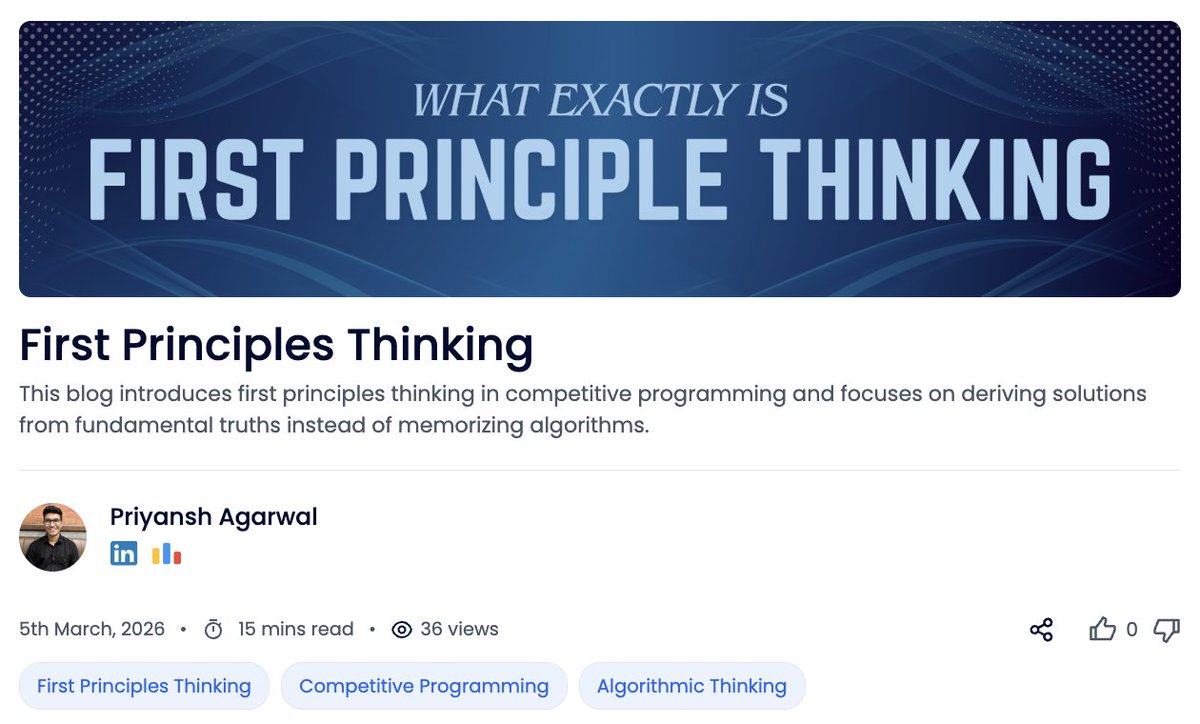
If you're a competitive programmer you should stop doing everything for the next 15 minutes and read this blog.
Learning an algorithm or a technique isn't enough if you can't apply that in new problems and to do that, you need to develop first principles thinking.
It took me a long time to start thinking like this, but I hope after reading this blog, you would start approaching algorithmic problems with a different mindset right away.
Link: https://t.co/4xJAgAqFvr
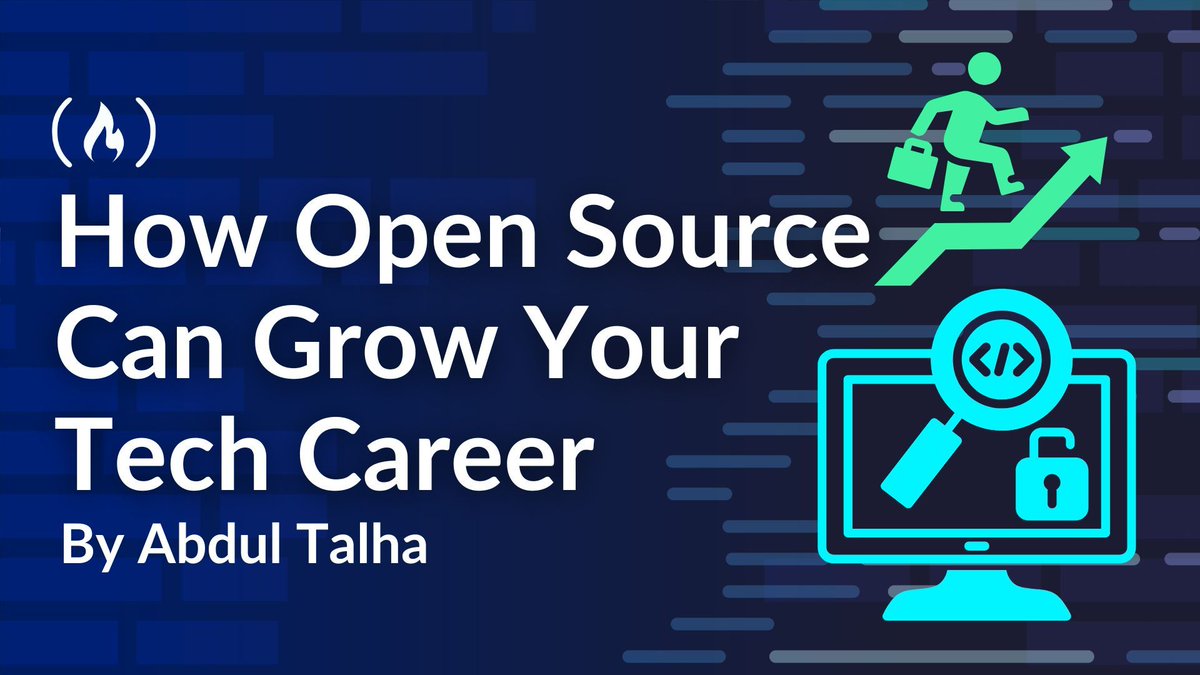
Open source isn't just code.
It's a community of contributors and maintainers coming together to build software.
In this handbook, @AbdulTa62185243 goes over practical steps to find projects, make meaningful contributions, and grow your career.
https://t.co/qNpD7aODG3
One of the problems C language solves is - Portability.
Before C, programs were written in assembler or machine code directly. The problem was, if you wrote the code for a certain architecture (say x86), it won't run on another architecture (say ARM) without being manually rewritten in the assembler/machine code for the said new architecture. With C, the compiler takes care of generating the assembler/machine code.
The right way to learn C is to understand what happens at the machine level as a result of the C statements you write. This way not only will you appreciate the language more but gain a deep insight into CPU-Memory interactions. This eventually, will help you reason better, write performant code and understand the limitation of C and other languages better.
To help you with this, I have created a learning track base on the RISC-V architecture. The lecture walk through how text is generated into machine code, how the CPU boot, the instruction encoding, Assembly view of the C instructions and more...
This course is included as part of the Library Access, which is a collection of courses to master lower level programming. You can check the details for the C course here: https://t.co/I52xLJBnTy
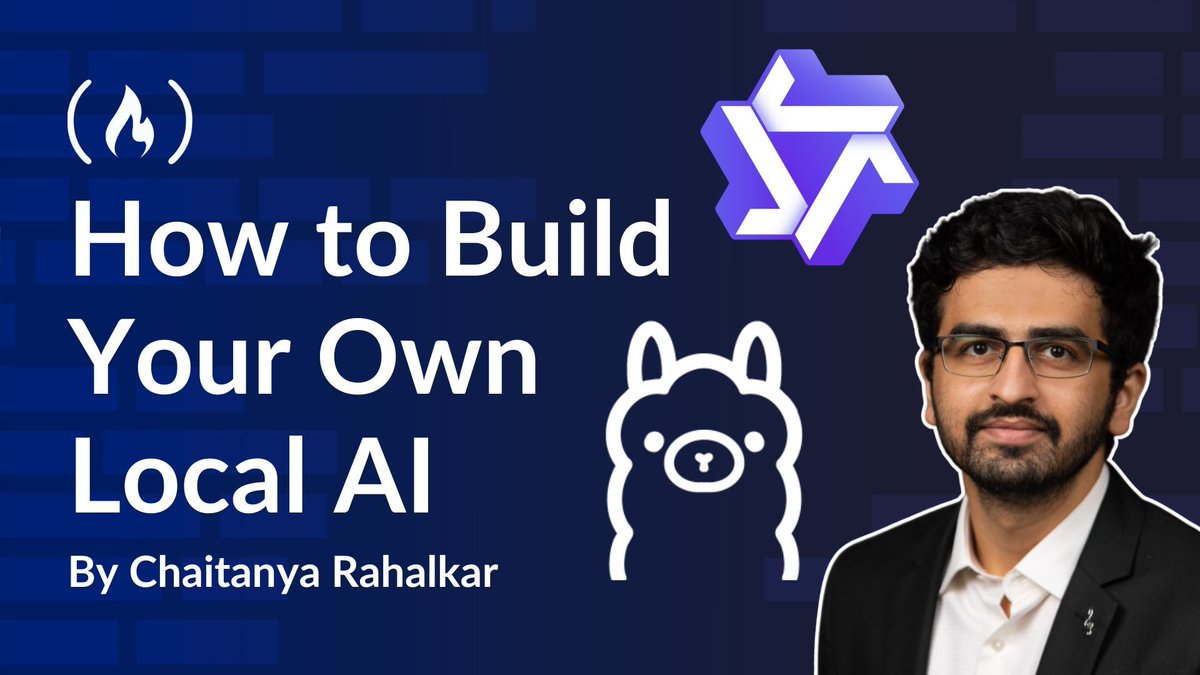
If you want to run an LLM, you don't have to rely on cloud-based APIs anymore - you can do it right on your local machine.
And in this tutorial, @chairahalkar helps you build your own local AI agent.
You'll use the Qwen 3 family of LLMs along with Ollama which simplifies running LLMs locally.
https://t.co/JgLjzAbTo0