Reinforcement Learning offers new perspectives on optimisation problems, allowing to enlarge the design space by relaxing constraints on the functional forms of the cost function. An application to larval fish escape can be found in our newest paper: https://t.co/VjUgLbKy5o
New podcast episode by @FrenchTechSwiss, special "@SlushHQ 2025 Edition".
I had the chance to sit down with @webepasc Pascal Weber, Co-founder at Manukai, and dive into their breakthrough in AI-driven manufacturing.
🧵
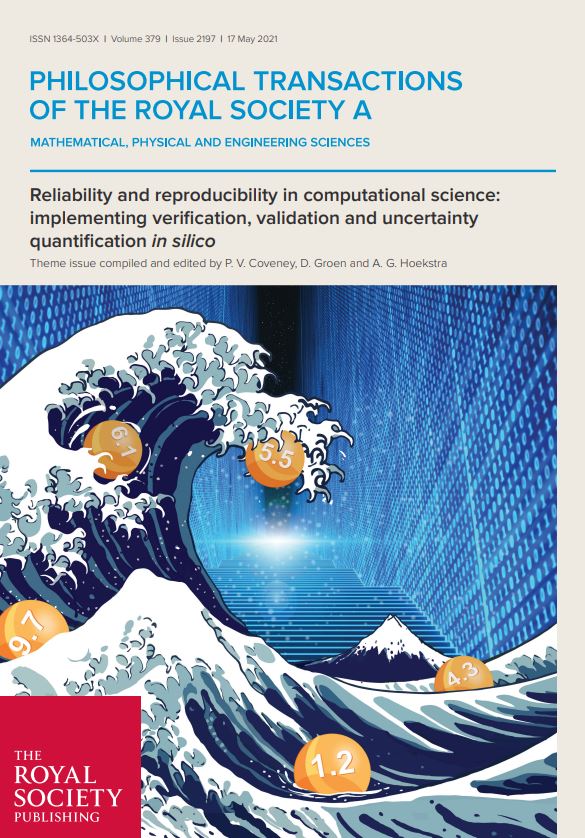
This special issue from Philosophical Transactions A explores the question, 'should we trust computers?'. Read the issue here: https://t.co/jSzwPFvzP5 | #PhilTransA#ComputationalScience
A great example that science and art are not exclusive. The impulsive start of a cylinder at Reynolds number 100‘000 shows an intriguing series of vortex eruptions - I can’t stop looking at it.
https://t.co/1aYlIdWtaN
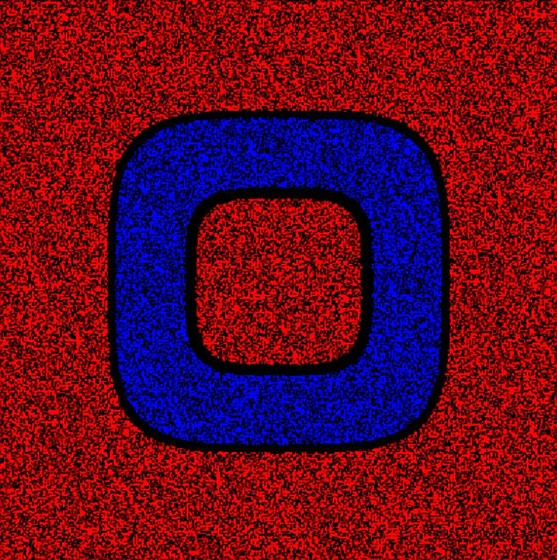
Just had a coworker demonstrate that I have chromostereopsis - I experience different colors as having different depths in a scene due to their optical paths through my eyes.
OpenAI has released the API to their language to image translation system DALL•E. Now everyone can create illustrations, art, and photorealistic images with text prompts and a click with the mouse. Will we be able to trust our eyes in the future?
https://t.co/H41wbF9jXo
Congratulations Pantelis R. Vlachas for this amazing work!
If you ever wondered how to effectively combine convolutional- and recurrent neural networks with high fidelity solvers, here is the answer. And even if not, definitely worth the read! https://t.co/uew8Fs1VnW
Multi-Agent Reinforcement Learning can help guiding science in areas requiring heuristic modeling - here on the example of wall-models for turbulent flows: https://t.co/I0B382o97x
#learning#Science
Until now, simulating #foams realistically with a supercomputer has been almost impossible, but a method further developed by the research group of ETH and Harvard professor Petros Koumoutsakos has overcome the hurdles. @314159K https://t.co/1PI61Vmy26
@LangstrumpfPipo Mathematisch fundierte Hilfsmittel gäbe es: https://t.co/0FImoy4u2d
Darin zeigen wir, wie sich der Ort und Zeitpunkt von COVID-Tests optimieren lässt. Dabei kann der Entscheidungsträger sein Modell, sowie die Grösse, welche von Interesse ist, selbst festlegen. Alles open source.
“Humans turn out to be deeply uncomfortable with theory-free science”
Interesting article on #AI in the @ObserverUK.
Are we witnessing the dawn of post-theory science? https://t.co/aIZrvAR0x7
Here's @ylecun in 1993(!) demoing LeNet-1.
This was the world's first convolutional neural network for handwriting recognition. Today—29 years later—this same approach powers the majority of computer vision.
Such a historical moment, and breakthrough for machine learning.
The Standard Model is the most successful scientific theory of all time. In our video explainer, David Tong, a theoretical physicist at the University of Cambridge, explains how the model comes together and what it’s still missing. https://t.co/L5JpiX7aD9
The newest work from our group showing the immense potential of Reinforcement Learning to the Physical Sciences
https://t.co/lizi4RgJQO
Enjoy the read!