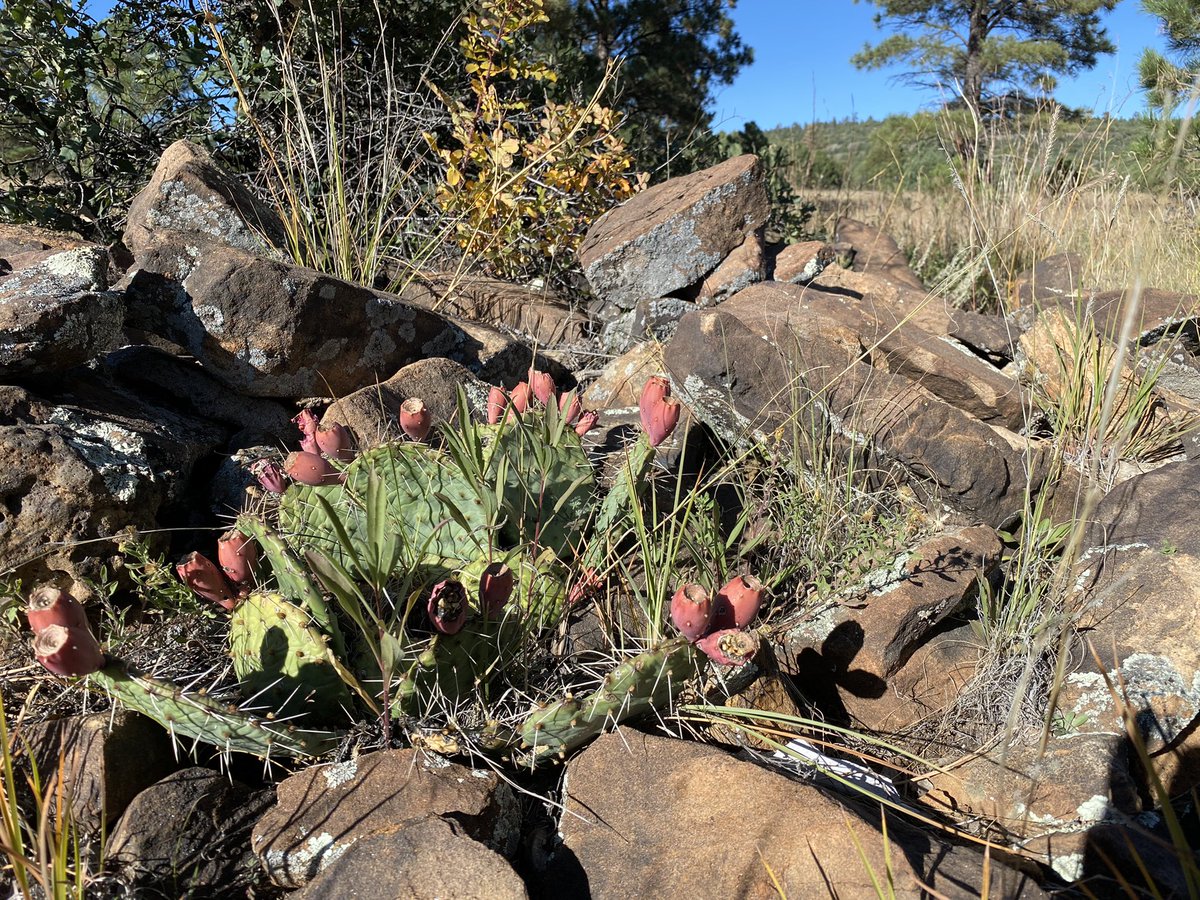
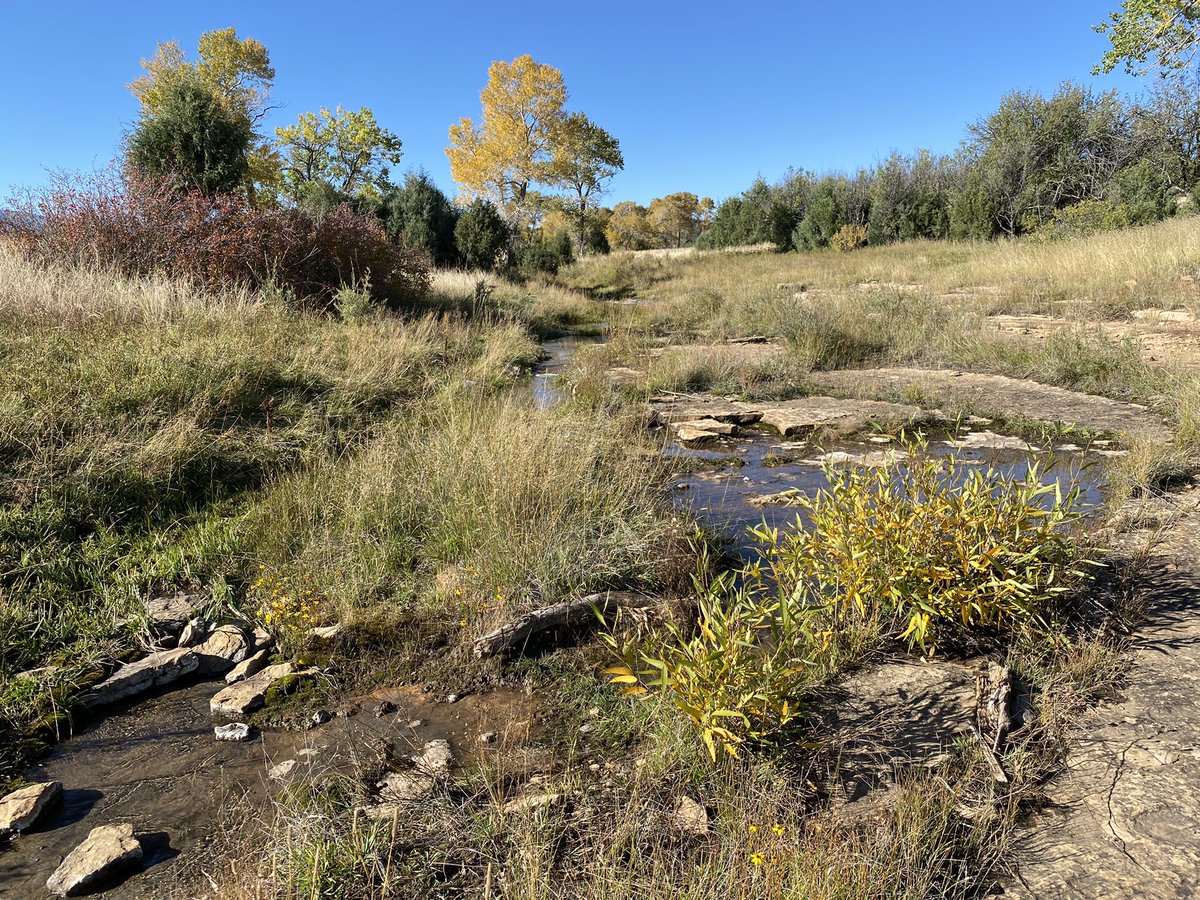
He was hoping Blynx and I wouldn’t follow him. Good thing Blynx doesn’t mind getting her feet wet. This was back in 2016 the last year we had decent rain, hasn’t been this much water in the creek since. Maybe next year.
Thank you. You understood what @GeorgeMonbiot & many people missed when he put out a smoke screen to avoid debate. Desertification in seasonal rainfall environments (brown areas below in picture) is due to loss of biodiversity caused by slow chemical oxidation that replaces rapid biological decay of billions of tons of annually dying grass. It was clearly explained here ten years ago https://t.co/MdlC3iPQ6a Started when humans killed off most large animals that maintained decay by trampling and with their moist gut containing micro-organisms digesting and excreting. Native Americans & Aborigines saw the damage when they killed off 80% of the genera of large animals & tried to prevent slow oxidation from killing life - by using fire (rapid oxidation) that began desertification on different continents about 60,000 years ago. As I showed, in what is now an American National Park, an irrigation-based Native American civilization was destroyed by desertification before Spaniards arrived with sheep & centuries before fossil fuels.
Areas of the land 100 times larger than the UK, including national parks in US, Africa, Australia, etc are every year sending carbon & water from soil to atmosphere. The desertifying National Parks I showed tell us with scientific certainty that the cause of desertification is the way in which all governments and large environmental organizations @WWF@IUCN @TNC @AP and universities develop management policies. As long as most of the world’s land including vast National Parks larger than the UK is releasing water & carbon because of desertification, droughts, floods & climate change will continue no matter what we do.
With an Oxford Think Tank having published a report saying climate change will globally wipe out all cities economies & businesses & billions of people will die in violence is why I said “To shorten this debate let us assume:
The World’s soils can sequester no carbon. Cattle give off 20 times the methane they do. Every human becomes vegan”. I conceded Monbiot’s entire line of reasoning at the outset so that we could focus the debate on the way policies are developed that is causing climate change (there is no other cause known). And I then stated what I contend (the very basis of the debate) which was:
--That we have to address the way in which policy is developed dictating management at scale.
--And when we do that it will require millions more cattle, sheep, goats, camels, even if they are only eaten by vultures.
I then asked Monbiot to now tell us how he (or any scientist) would reverse global desertification using technology? The entire future of humanity hangs on that question and I am willing to debate it with any scientist in the world to save billions of lives and offer young people hope.
The rest is history as everyone saw – Monbiot spent the entire time discussing carbon, methane & irrelevant papers by authors who never mentioned oxidation or any aspect of my life's work calling them "peer reviewed" when none were by any of my peers. Here is oxidation (several years of slow chemical breakdown) killing grass and soil life in the Aldo Leopold Memorial Forest on the Rio Grande river in the US - and just the desertifying areas of Africa over a hundred times the size of the UK (which is same size as the desertifying little island off the African coast. We need to start taking climate change seriously.
From a soil science perspective, Monbiot's opening comments are easy to deconstruct. Either he's unaware of or doesn't understand any of the recent soil & range science that he claims to have read and asserts is so definitively on his side.
He also doesn't see to be aware of the full extent of land degradation or how ruminants cycle both nutrients AND microbes. or for that matter how soil organic matter [SOM] is formed. With soil erosion and w/o new SOM formation, there's not going to be much plant succession because soil succession has to happen first. Though Monbiot really has no clue how semi-arid and arid ecosystems work.
Most importantly, he doesn't seem to understand, that the enteric CH4 ruminants produce is the same CO2 captured via photosynthesis, converted to a chain of glucose (cellulose) than further converted to SCFA's and CH4 before being broken back down to CO2 and H2O by hydroxyl radicals. This is what I call the PMOH cycle and described in this blog: https://t.co/pcUyVaJ1xm
Per this study, less than 8 to 14% of cellulose cattle consume is converted to CH4 in the rumen: https://t.co/BmG9t0Vupi So basically every time ruminants cycle CO2 fixed as cellulose to SFCA's/CH4 back to CO2 & H2O via tropospheric OH, most of the fixed CO2 is converted to other carbon compounds and a lot less ends back in the atmosphere with or without any short of long term soil carbon storage ....though most exuded carbon from plants ends up as necromass (dead soil microbes) which bound to minerals is recalcitrant.
Any mycorrhizal fungi networks also are huge carbon pools. 90% of these networks are arbuscular in grassland ecosystems. So here's another paper Monbiot is obviously unaware of: https://t.co/lsXXUq6iR1 The arbuscular mycorrhizal fungi [AMF] networks also access the minerals needed to form MAOM (mineral associated organic matter) which again is more recalcitrant (ie stays in the soil and isn't transient (labile carbon).
In healthy soils, also other sources of nitrogen are available thanks to rhizophagy...something Dr. Lal isn't up to speed on. Super oxides produced by plants strip the nitrogen out of the walls of bacteria being consumed (bacteria is about 20% N), plus endophytes (bacteria in plants) produce nitric oxide that when combined with super oxides forms nitrates readily used by plants (see the attached video). So no additional nitrogen has to be added to the ecosystem as an external input. I also discuss that in this blog: https://t.co/EThb1OkCF8
AMF are also able to source nitrogen from organic nitrogen (free amino acids). Where do these come from? Again from necromass. This paper deals with that: https://t.co/mydNRH9DBo
AMF also reduces N2) emissions: https://t.co/hozInVNBaR
Well managed grazing allows AMF networks to flourish by keeping root systems intact.
Grazing the tops off of plants actually redirects carbon in phoelm of a plants vascular network to go into the soil rather than to seed. Ruminant saliva also increases plant growth. Though suppose Monbiot didn't read either of these papers as well:
https://t.co/wZ1eVKavkh
https://t.co/OO9ixawNq5
As for rewilding, grasslands had lots of ruminants even in the UK (wisent, auroch, Irish Elk, etc). Both wild and domesticated ruminants emit methane. So as @PabloPastos' recent paper https://t.co/6vXscskK0W demonstrated, grassland ecosystems with domesticated or wild ruminants produce similar amounts of methane. Re-establishing or "rewilding" beavers also increases methane. Why? Up to 53% of all CH4 emissions come from aquatic environments. I cite this source (Rosentreter, J.A. et al 2021) and give more details in this blog: https://t.co/AT9G8DEcB1
Anyway, if I feel so inspired, I'll take a moment to deconstruct his arguments even further. But as usual, Monbiot has once again demonstrated he's still at the peak of Mount Stupid on the Dunning-Kruger Effect curve. So much of the soil science is relatively new and constantly evolving. Anyone who is so absolute really has no clue what he or she is talking about. Thus anyone who makes absolute and certain claims like Monbiot made is just a zealot with an agenda, not someone who thinks like a scientist.
@KarlThidemann@sethitzkan@Jamie_Blackett@JLewisStempel@fleroy1974@GHGGuru@GrassBased @ffinlocostain @JoannaBlythman@SusFoodTrust@NealSpackman@SavoryInstitute@AllanRSavory@judithdschwartz@JayneReesBuxton@NatureRecovery@robbwolf@JamesMelville@herdyshepherd1@BearGrylls@CarbonCowboys@johnkempf @glomalin @ireland_farming@IntegratedSoils@PeteGDunne@StuartMMeikle@ZwartblesIE@1GarethWynJones
@G_stordalen @Nature@oceansolutions@sthlmresilience@EATforum Fortunately, we can produce protein on land while restoring soil, increasing biodiversity, and reducing erosion which is the cause of much aquatic stress in the first place. When is EAT going to emphasize that? Waiting. Here’s the science. https://t.co/7q5oXqINWR
I remember saying this a long time ago and receiving strong backlash from the proponents of these ultra-processed products. These folks have become strangely quite these days. I guess that animal source food is still “on” for a while.
"Soil structure and microbiome functions in agroecosystems" 🦠🪱🌱
Check out the new paper of @Johansix6 & @HMicrobiome on @NatRevEarthEnv
📰 Read more : https://t.co/GmRqm8sN5K
I’m here at COP. It’s because the real beef burgers were the first ones to sell out. Nobody wants to eat the vegan burgers. Beef is far more nutrient dense than fake meat. Also, livestock provides ecosystem services that plant protein factories can’t.
@AnnChildersMD@Evsthetractor@Rob_Percival_ Why is @SoilAssociation opposed to regen grazing, the fastest way to grow soil?
“With a growing body of research complemented by anecdotal evidence, this approach is increasingly understood to be a ‘win-win-win’ for farmers, society, and the environment.”
https://t.co/aP4vXaZYPq
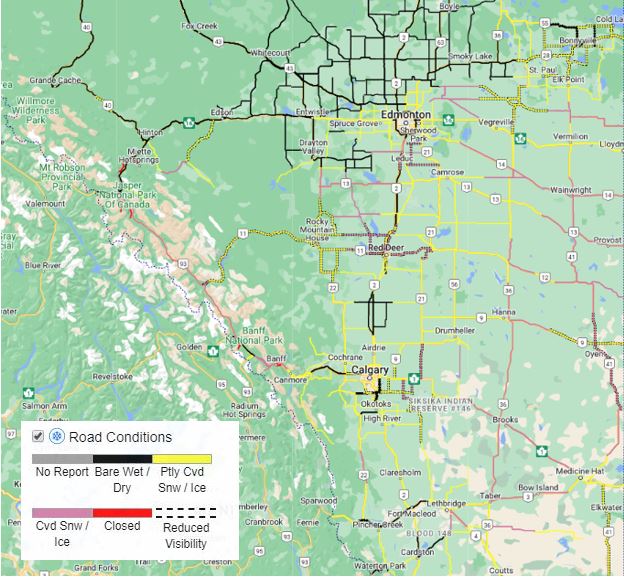
Central and southern Alberta highways remain affected by recent snowfall. Snowplows are actively working to improve conditions; drive with caution and allow them room to work. (8:00am) #ABRoads#ABStorm
Courageous farm children in Pennsylvania standing up to teachers who are requiring children to write WHOLE MILK IS BAD FOR YOU as exam answer. Our beautiful milk is illegal in schools across the country. #LegalizeWHoleMilk