Development of fluorescence lifetime biosensors for ATP, cAMP, citrate, and glucose using the mTurquoise2-based platform. Research from @riken_en Yasushi Okada, @KanazawaUniv Satoshi Arai & Chongxia Zhong in @CellRepMethods#bps2025 https://t.co/UsOTXj5PhX
Very high resolution study of osteocytes in ancient fishes! Such intricate osteocytes network and low mineralized regions we can see. https://t.co/Xk5sbDRse0
Our new #Mechanobiology collection examines the mechanical properties and interactions that shape the fundamental operations & structures of cells. Delve into diverse mechanical properties of membranes, organelles & other structures within & among cells 👉 https://t.co/d0fc9aVTuw
New paper alert! ‼️‼️
Super happy to share that my postdoc paper is finally out! We looked at scaling of chromosome separation during anaphase in zebrafish embryos.
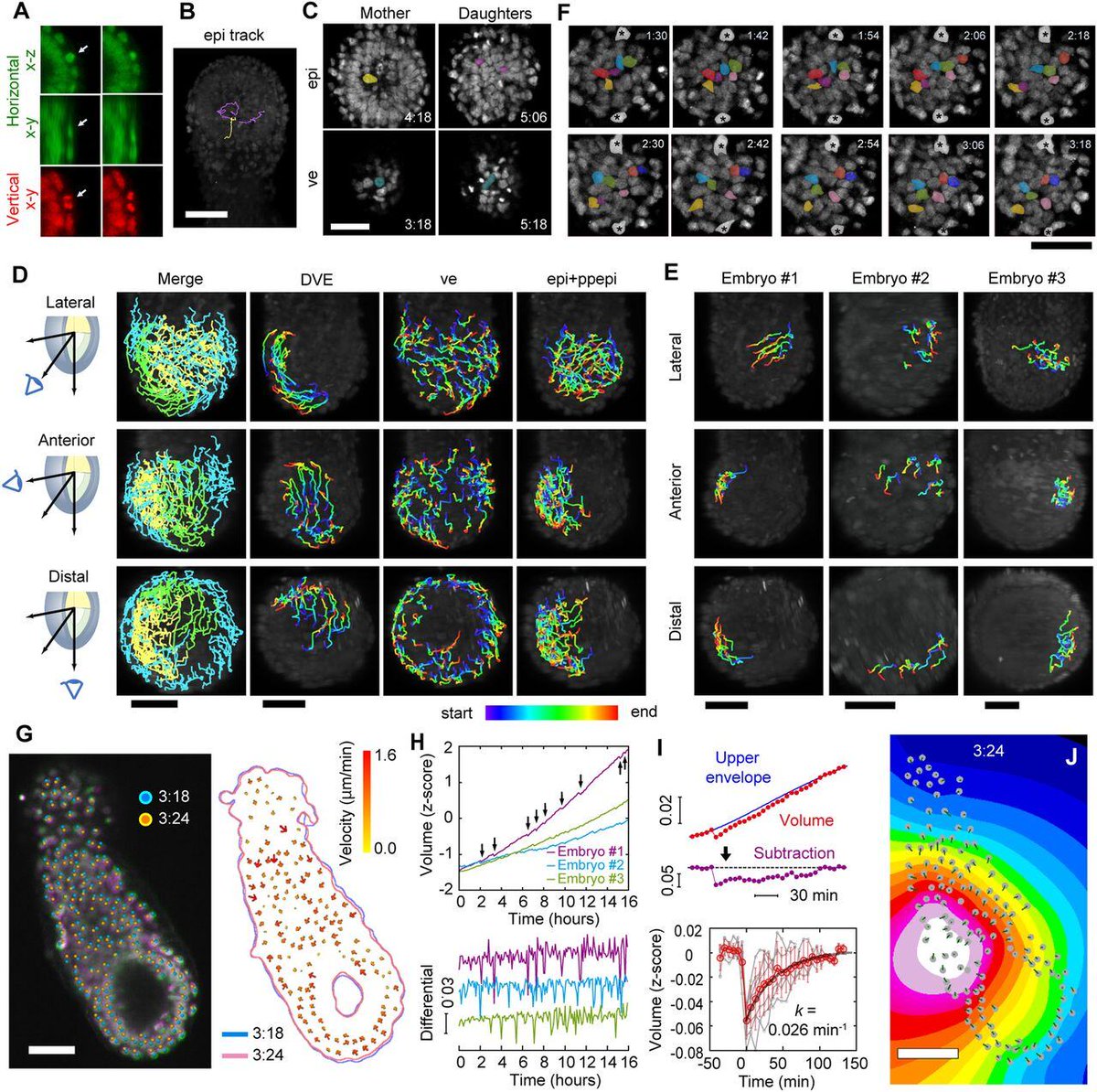
The Authors achieve in-toto single-cell observation in a whole hemisphere of an E5.5 embryo for 12 h, optimizing their microscope system, including an incubator, and refining the observation protocol @sonamix@BDR_RIKEN@RIKEN_en
https://t.co/AP6JmGAaL7
Join us this Thursday for two great talks:
👉 Geometric memory & regeneration 🐟 with Stefano Di Talia
👉 Metabolism & fate specification 🐭 with @dd_chaitanya
⏰ Thursday, January 23rd at 09:30 PST / 12:30 EST / 17:30 UTC / 18:30 CET 🌜🗓️
Tomorrow Jan 15th will be our first morning session ☀️☕
Grab your coffee and start the day with two of our speakers:
👉Xianfa Yang 🐁
👉Romain Levayer 🪰
🕣09:00 UTC(London)/ 10:00 CET(Berlin)/14:30 IST (Mumbai)/18:00 JST (Tokyo)
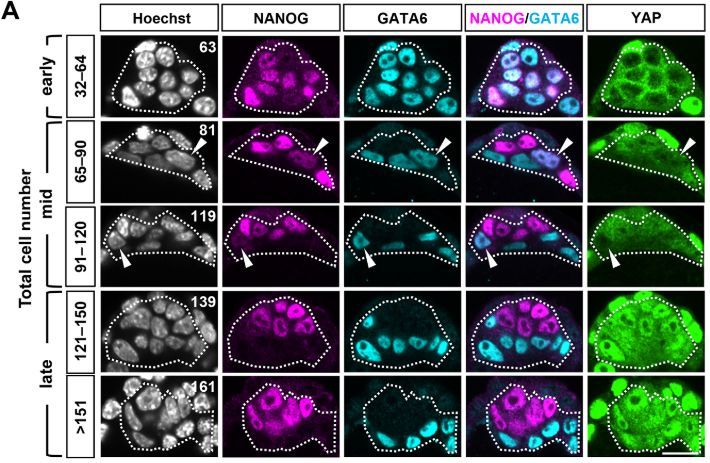
Fate specification triggers a positive feedback loop of TEAD–YAP and NANOG to promote epiblast formation in preimplantation embryos
Read this Research Article by Naoki Hirono, Masakazu Hashimoto, Hiromi Shimojo & Hiroshi Sasaki:
https://t.co/LKiU7sgGS9
New Paper Alert 🥳Our work showing that histone modifications are critical for regulating the specification of epiblast and primitive endoderm lineages in rabbit blastocysts has just been published !
https://t.co/rYXNUxB9fk
💥Finally out!
Answering a two-centuries old question about a membraneless organelle that forms in #oocytes from insects to humans: the Balbiani body (Bb).
Now in @CurrentBiology:
https://t.co/gw8JfmOucl
>
We are excited to share the latest contribution from the lab! We found that cells in gastruloids communicate to each other in order to control the timing of gastruloid symmetry breaking.
A tail of two tissues: post-gastrulation tissue scaling in zebrafish ensures proper body proportions
Read this Research Highlight showcasing work from Dillan Saunders, Carlos Camacho-Macorra & Benjamin Steventon:
https://t.co/4NlGP32E41
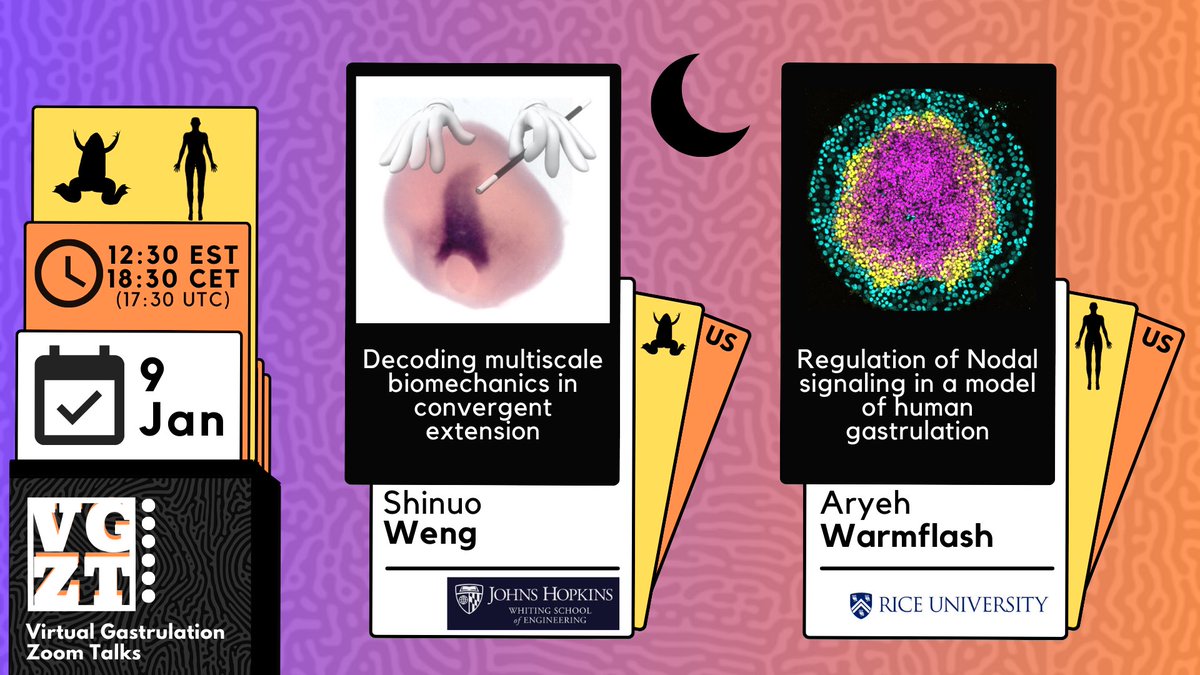
Happy new year everyone! 🎉🎇 Join us for the first seminar (Western 🌙 session) of the year with
- @ShinuoWeng (🐸 convergent extension) and
- @WarmflashLab (human gastrulation model)
⏰ Thursday, January 9th at 09:30 PDT / 12:30 EDT / 17:30 UTC / 18:30 CET 🗓️
Mechanobiology Institute (MBI), National University of Singapore, is seeking outstanding students to join our PhD training programme in mechanobiology.
The application deadline for the PhD programme is fast approaching: 13 Jan 2025
EXCITED to share our paper in @NatureComms "Foxo3-mediated physiological cell competition ensures robust tissue patterning throughout vertebrate development”, identifying Foxo3 as a cell competition potential marker/mediator. #zebrafish#cellcompetition
https://t.co/jWVOfH2kuK
Have you ever wondered how your back formed? The human embryo makes a neural tube (future spinal cord) and somites (trunk muscle/bone) from ~d20. They’re formed at the same time and place, so we used human Trunk-like Structures (hTLS) to investigate their ‘co-development’… (1/7)