Check out our latest research on corporate taxation and its impact on firms, and also João’s thread breaking down the key findings in a clear and engaging way 👇
It’s hard to cleanly identify the effects of corporate taxes.
Most work focuses on profits, investment, or jobs (Zwick & Mahon QJE ’17; Ljungqvist & Smolyansky JF ’18; Fuest et al. AER ’18).
In our new paper — “The Real and Financial Effects of Local Corporate Tax Increases” (Banco de Portugal WP 11/2025) — we use a setting that lets us go further.
We capture the entire transmission chain: from liquidity & credit to real activity, productivity, and even spatial allocation of firms.
📄 https://t.co/CsXZxSkJBk
The silver workforce is having a golden impact: older workers have been a key driver of euro area employment growth in recent years, largely because they’re retiring later.
Looking ahead, retirement ages are set to rise further, our #EconomicBulletin finds https://t.co/6aLT0ymwUk
It was a great pleasure to present our work, The Short Lags of Monetary Policy, at the Monetary Economics meeting of the NBER Summer Institute.
Link to video: https://t.co/d5V7tPBXtP
Link to slides: https://t.co/KJZxwROJOA
📢 New Research Alert
How quickly does monetary policy affect the real economy? We have updated extensively our Short and Variable Lags paper challenging the idea of long and variable lags.
A thread 🧵
#EconTwitter#MonetaryPolicy#Macroeconomics#CentralBanking
📢 New Research Alert
How quickly does monetary policy affect the real economy? We have updated extensively our Short and Variable Lags paper challenging the idea of long and variable lags.
A thread 🧵
#EconTwitter#MonetaryPolicy#Macroeconomics#CentralBanking
Did you know that variables typically regarded as "slow moving", such as consumption and output, respond significantly within days & weeks to monetary policy shocks?
➡️NEW JI WP by Vasco M. Carvalho @CamEcon et al: 'The Short Lags of Monetary Policy'.
https://t.co/Bk2YRDK7SE
New Working Paper by L. Emter, R. Setzer, N. Zorell & A. S. Moura: "Monetary policy and growth-at-risk: the role of institutional quality" https://t.co/GZZlVWwy6O 1/5
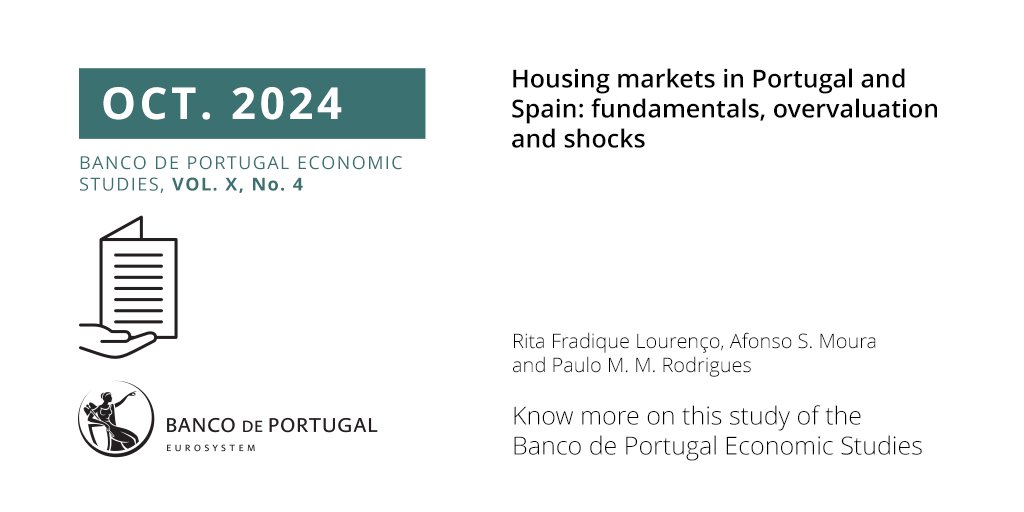
Housing prices have been rising more in Portugal than in Spain. This article highlights signs of overvaluation in the national market, where supply is unable to offset demand pressures, unlike in Spain.
🔗 https://t.co/glZYjESGWD
#publications#economy
5/5
Research by V.M. Carvalho @CamEcon et al. (https://t.co/ycd5ywPnbH) which 'suggests monetary policy shocks have sizeable immediate effects, in contrast to received wisdom that policy operates only through long and variable lags' is quoted in today's @FT
https://t.co/JmbulbBMUd
🚨New working paper!!! 🚨
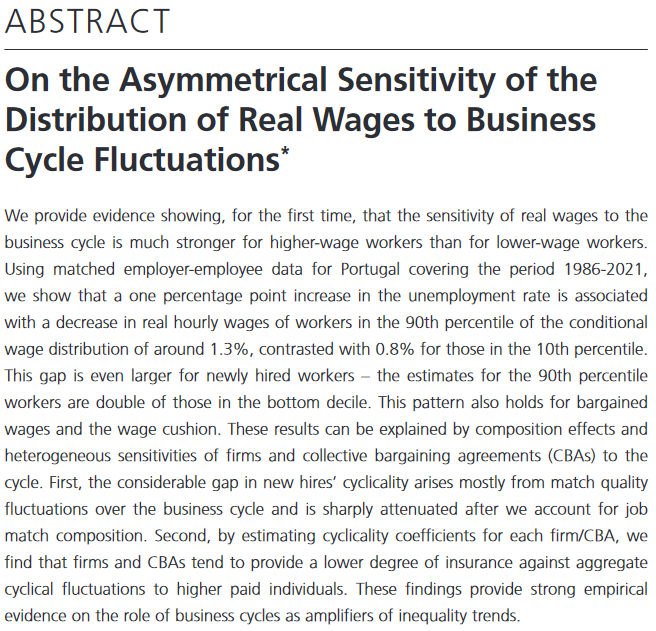
We provide evidence showing that real wage cyclicality is much stronger for higher-wage works than for lower-wage workers.
Joint with Pedro Portugal (Banco de Portugal, Nova SBE) and Eduardo Costa (CEGIST)
🧵 #EconTwitter
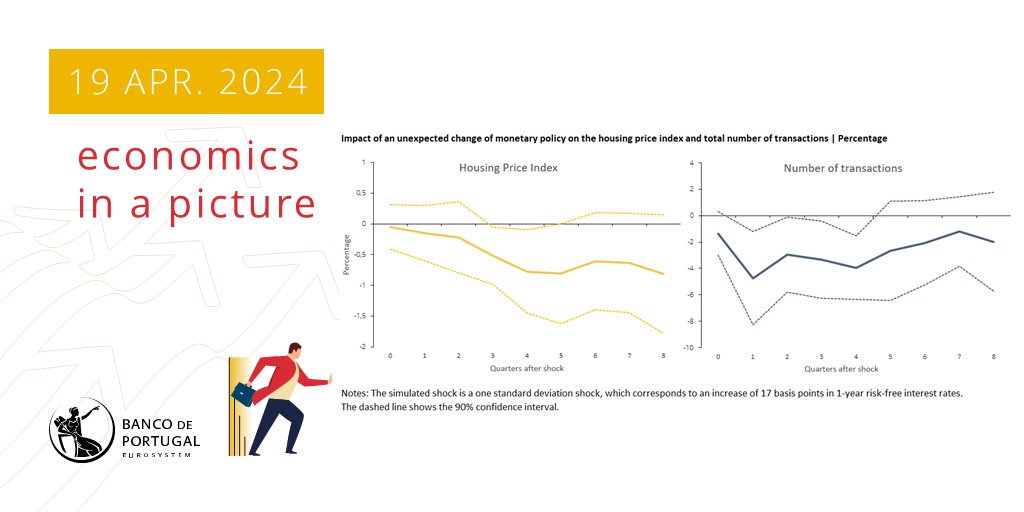
Economics in a picture from @bancodeportugal: Monetary policy impacts strongly and faster the number of housing transactions than their prices
🔗https://t.co/YH1fpaVpTr
#economicsinapicture