Here is our new JoVE article presenting a method for high-throughput, disease-contextual mapping of PPI network dysfunctions in cells and primary tissue.
https://t.co/XzeknFO2qv
#Jove@MSKCancerCenter@JoVEJournal
🔍Specialized #ChemicalProbes are central to dfPPI, capturing dysfunctional interactions—trapping thousands of protein interactors, enabling precise identification of disease-driven interactome changes. #MassSpec#Proteomics (4)
Proteins rarely work alone. Their functions emerge from networks of interactions—dynamic connections that continuously reorganize to maintain cellular balance. What happens when this balance is lost?
This blog dives into our @TrendsBiochem review article: https://t.co/8tJVMG8oEP
🚨Publication alert! The final version of our article is OUT NOW in @TrendsBiochem.
@ChiosisLabmskcc is honored to have been selected as the cover feature for this issue - cover art by a VI4 Artist in Residence.
Check out the review article here:
https://t.co/Yf9GzchU8P
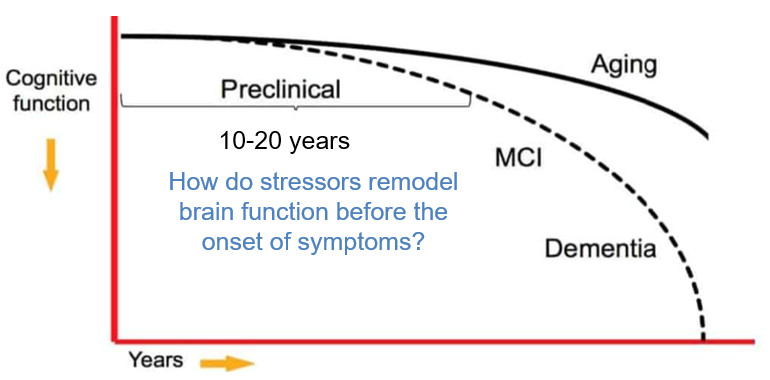
🧠✨ "How do stressors remodel brain function before symptoms emerge?"
Check out https://t.co/yQR5e4SRpM exploring how progressive protein network miswiring drives #Alzheimer disease—and how these changes can be reversed. #Neuroscience#Network#SystemsBiology
https://t.co/buDTCq0bxX… #Epichaperome#CancerResearch Please see our latest work on the driver of epichaperome formation and it's structural and regulatory characteristics
Researchers from @chiosislabmskcc; @MSKCancerCenter and their collaborators show how HSP90 phosphorylation drives epichaperome formation, linking this process to cancer and pluripotency.
https://t.co/6DRNEp8r0W
🎉 Exciting news! Our paper on #epichaperomics is Editor’s Choice, featured in Scientific American, Nature Communications and in MSKCC Research Highlights. Thank you to all involved @chiosislabmskcc and collaborators! 📄🔬 #research#science#omics https://t.co/ymeHMF6myj