A big NASA nerd who incessantly retweets almost anything space-related...from Artemis and JWST to Sagittarius A* and exoplanets. Ad astra!
(I don't read DMs.)
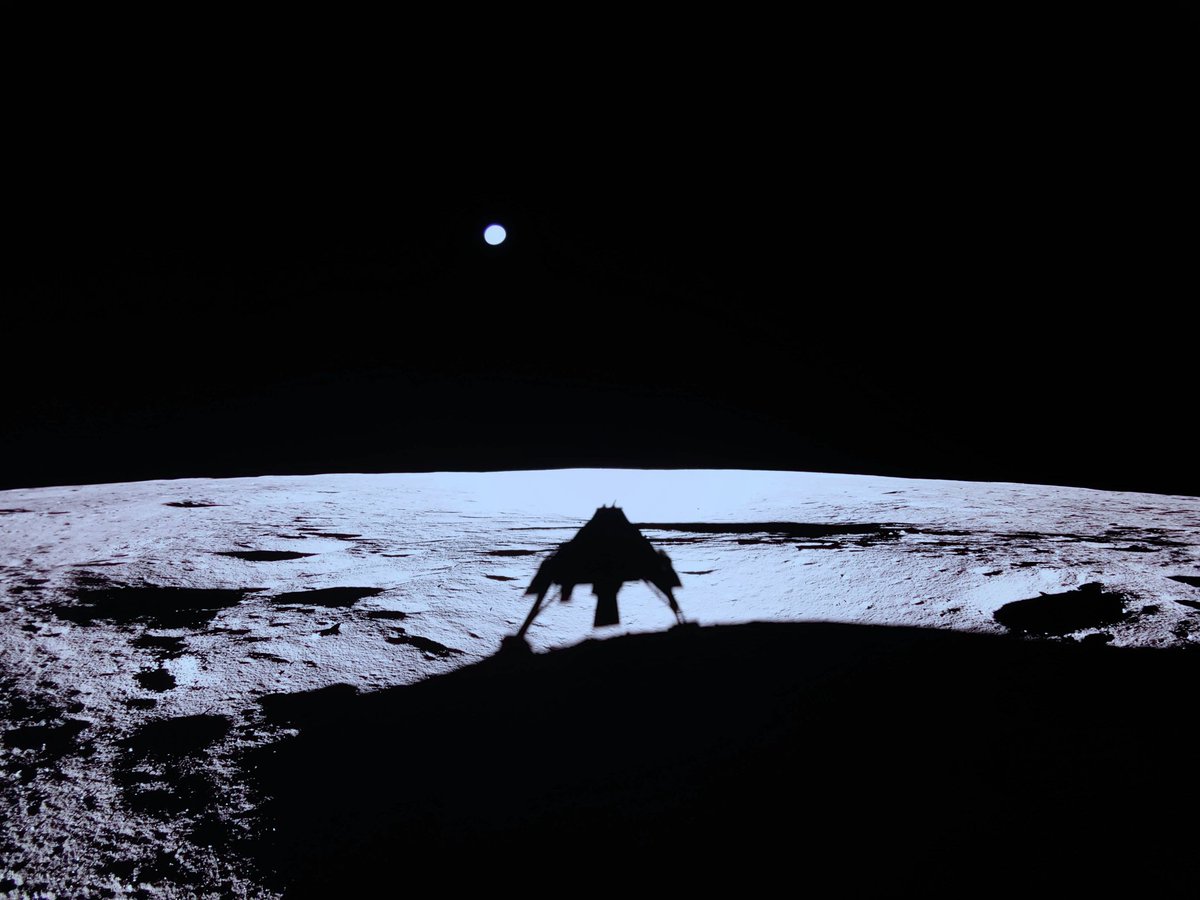
Blue Ghost and the #PyramidOnTheMoon have arrived at the lunar surface!
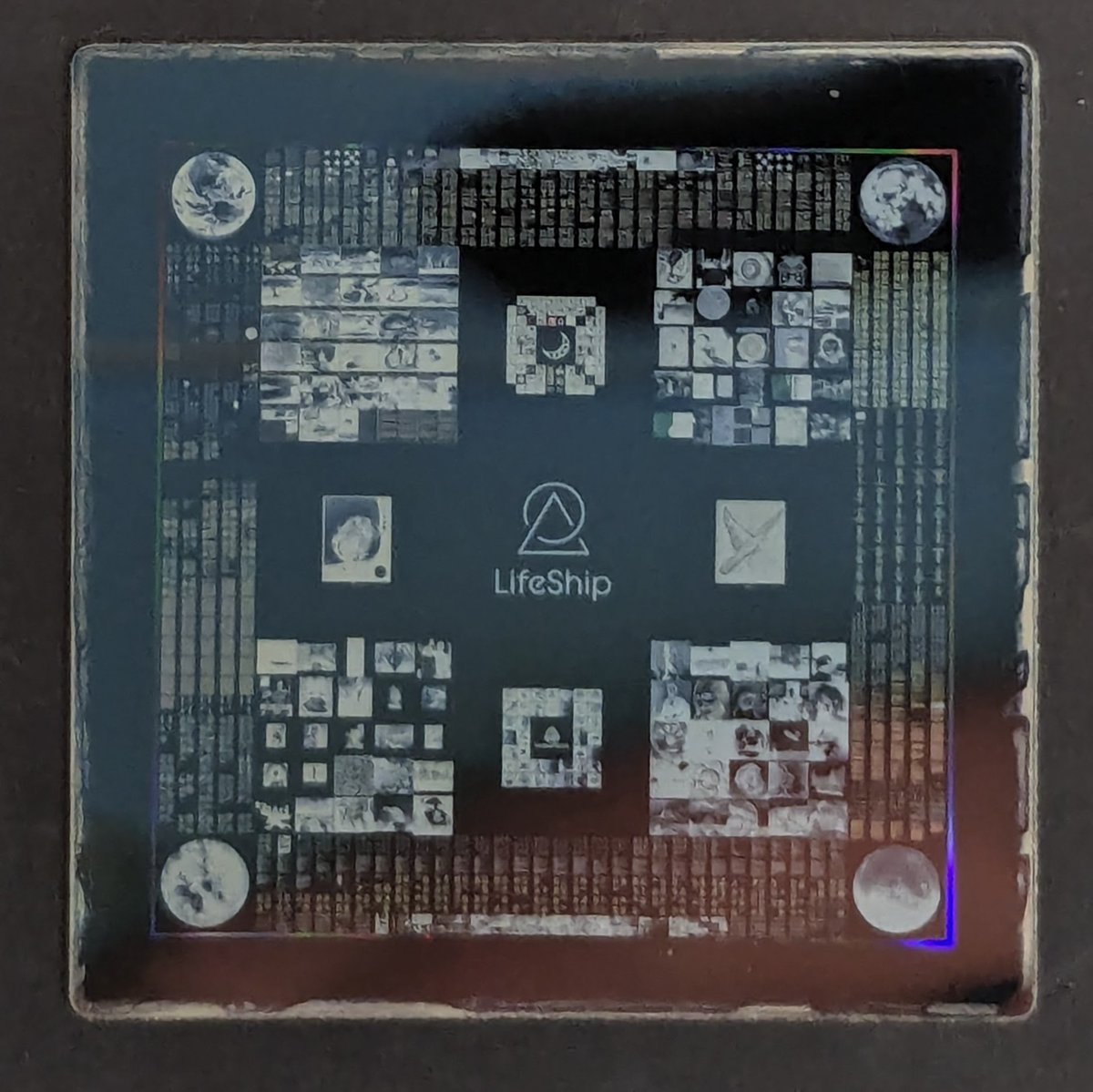
This is the second mission (behind Intuitive Machines' IM-1 over a year ago) to put my name and message on the Moon. Much thanks to @fireflyspace and @goLifeShip for this amazing opportunity!
#AdLunam
@HugoHebR The Earth is 7,900 miles in diameter... Do you seriously expect us to feel the effects of it speeding through space at that scale? You can clearly tell that we're moving through the cosmos just by looking at the night sky and seeing the constellations change.
Enjoy the RATIO.
A tale of three shuttles: One on the launch pad, two in exhibits...
Pic 1: Space shuttle Discovery at LC-39A for STS-119, on 2/9/09
Pic 2: Space shuttle Atlantis at the KSC Visitor Complex on 3/26/22
Pic 3: Space shuttle Endeavour at the California Science Center on 11/14/26
All 15 composite over-wrapped pressure vessels (COPVs) are now integrated on Haven-1, bringing the vehicle one step closer to launch.
The COPVs are critical to systems such as propulsion for propellant storage and life systems for oxygen and cabin pressure maintenance.
Watch the DART impact site come into view, then see Dimorphos slip behind Didymos! ☄️🛰️ @ESA's #Hera captured a full orbit, congratulations to the whole team 🎉. Do check out the 4th image from JAXA's thermal infrared imager #TIRI, revealing surface temperature variations. 🌡️🌍
On a mountaintop in Chile’s Atacama Desert, a gleaming 80-meter-tall aluminum dome encloses what will be the world’s largest optical telescope when it opens in 2030. Inside, technicians will soon begin to piece together a 39-meter mirror from hundreds of hexagonal segments.
Yet even before the Extremely Large Telescope is finished, its builder, the European Southern Observatory, is asking astronomers what it should do next.
Learn more: https://t.co/692GKmjqkx
NASA’s spacecraft impact left stadium-sized crater in asteroid, @ESA_Hera reveals. It is also tumbling wildly, with hundreds of previously unknown boulders orbiting around it.
News just in – read more in our free article: https://t.co/jimOwgbRnv
Credit: ESA
The first images of an asteroid which was deliberately crashed into by a spacecraft have revealed a stadium-sized crater on its surface. More details: https://t.co/C5StIMu53o
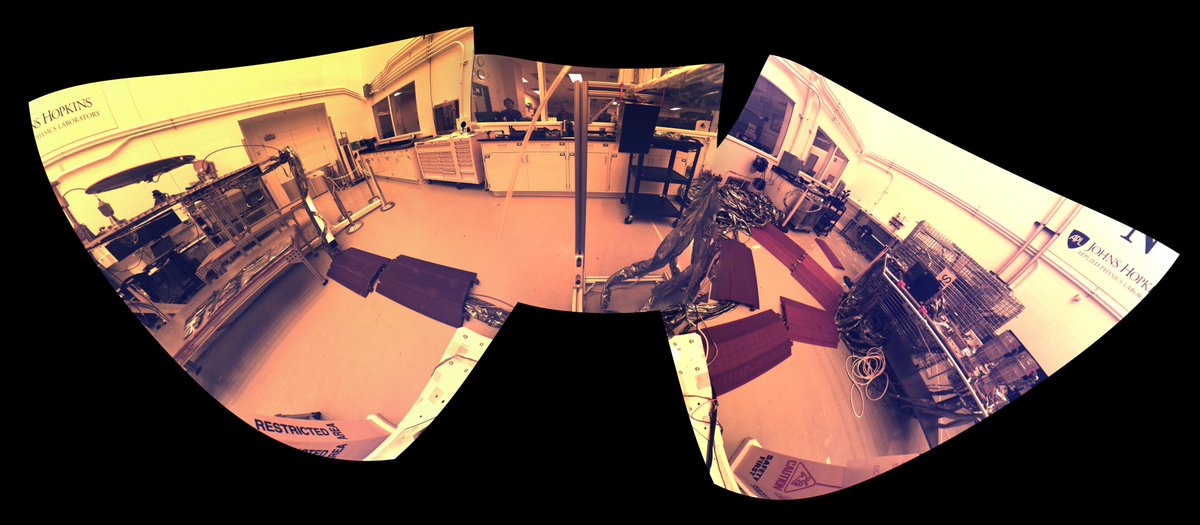
Dragonfly has eyes now!
All seven cameras have been installed in their insulated housings, tested, and integrated.
Here's a panorama taken by Dragonfly’s forward- and side-facing wide-angle cameras (WACs):
I can't help but tease what I'm sharing on Friday...
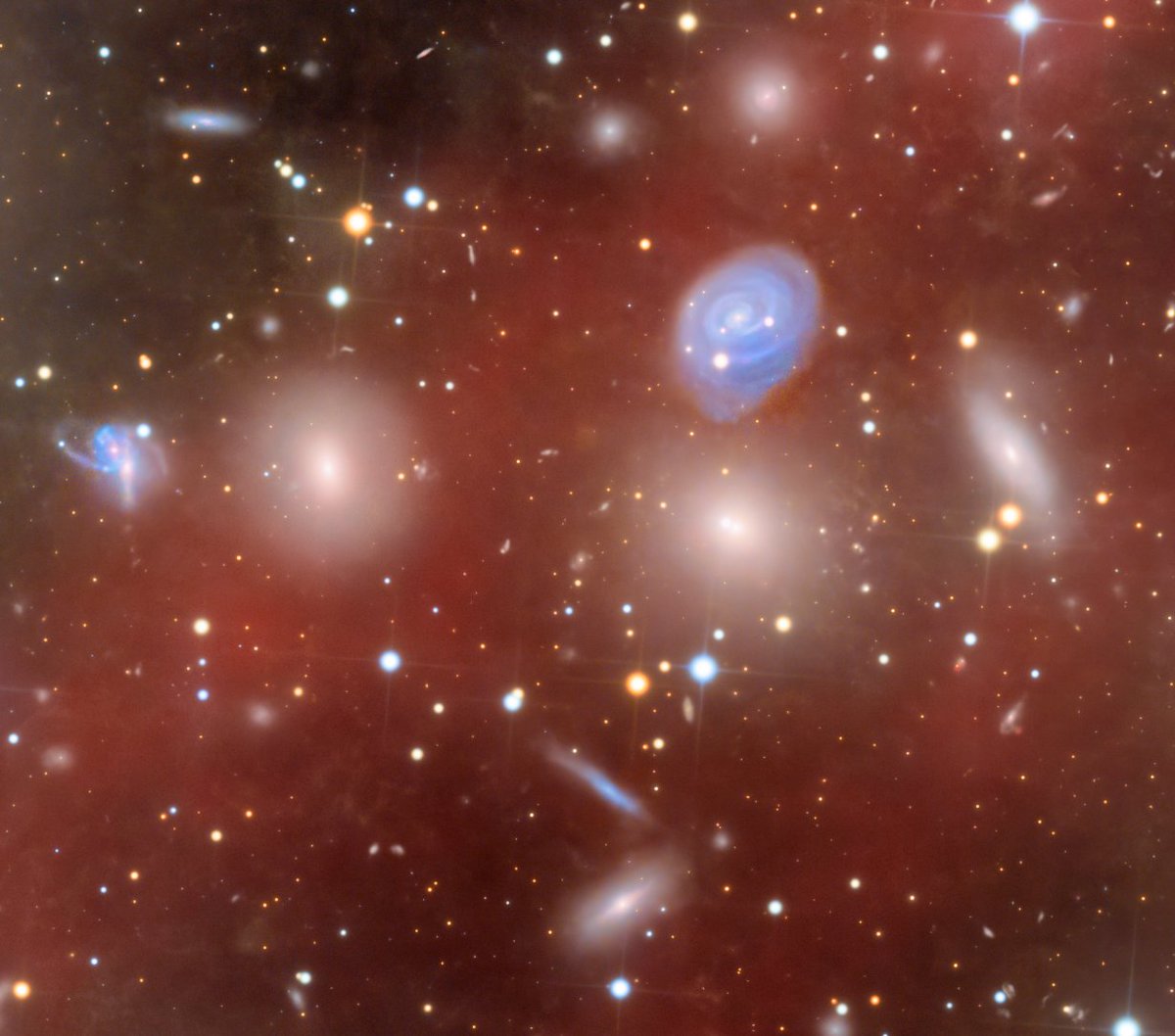
Inspired by JWST, I partnered with galaxy expert @TheVastReaches to shoot the most interesting and densely-packed galaxy cluster we could muster from Earth.
This is 1% of a massive image containing THOUSANDS of galaxies.
From boot up to complete in 4 hours and 45 minutes. That's the new time record set by our Wet Dress Rehearsal operators at Launch Complex 1 for our next mission.
The launch window for "Night Owls Never Sleep" for @synspective with our 101st Electron rocket opens:
🚀1:00 pm NZDT, Nov 27
🚀00:00 UTC, Nov 27
🚀9:00 am JST, Nov 27
🚀7:00 pm ET, Nov 26
🚀4:00 pm PT, Nov 26
Medicine or engineering? Military or civilian? We're looking for a variety of backgrounds to join our astronaut corps as we journey to the Moon, Mars, and beyond.
Applications for our next class of astronauts close in one week! Apply by Dec. 3: https://t.co/CaW5MpcrAd
A backyard observatory, complete with a Celestron telescope, a computer, and a front-row seat to Saturn! 🔭🪐
Chuck Baldwin has his planetary imaging station all set up for a night under the stars. Everything within arm's reach and Saturn looking good on the screen!
📸: Chuck Baldwin
#Celestron #BackyardAstronomy #Astrophotography #Saturn #PlanetaryImaging
Twilight over Madagascar, seen together from Earth and space. NatGeo photographer @BabakTafreshi views the Milky Way through baobab trees while I observed the island from the ISS. Setting sunlight reflects off Mozambique Channel and rivers in the dry west coast, while the wet, rainforested eastern half is shrouded in clouds. It is moving to see one of Earth's most unique places from two vantages!