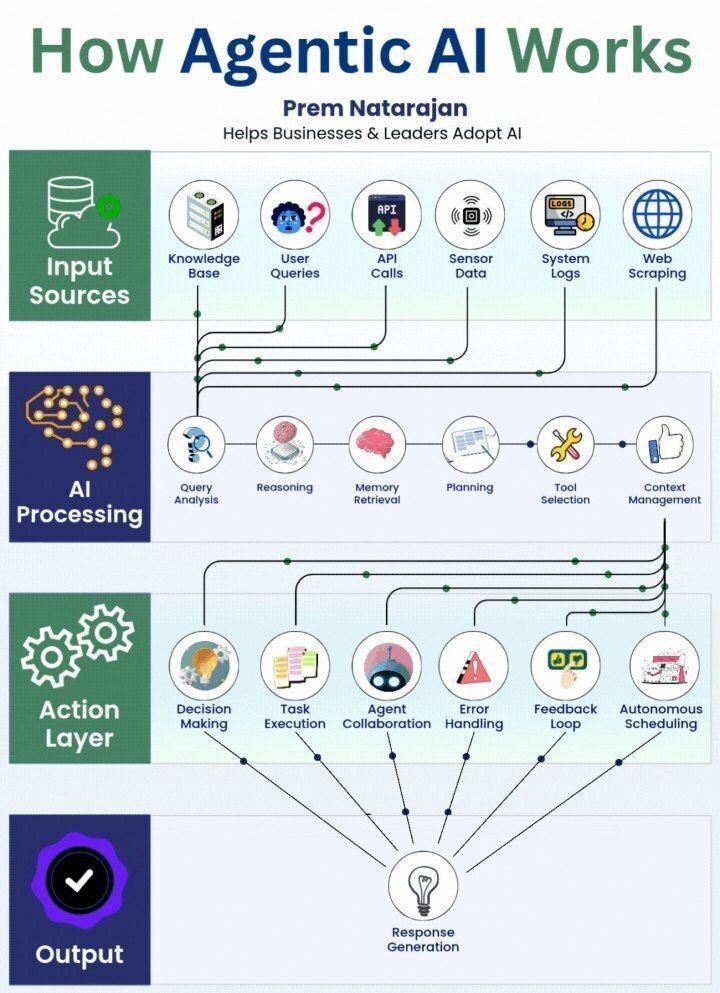
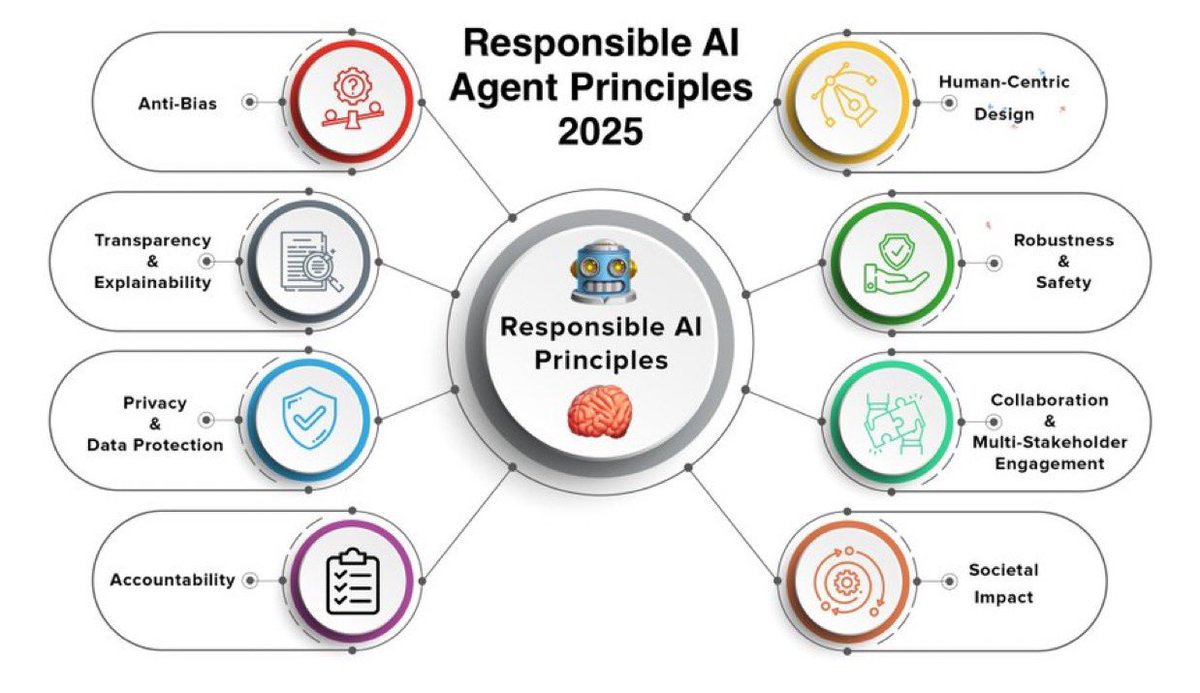
KPMG got its agentic AI tool certified for security and reliability. Small headline, big signal. Certification is how agents get into audited environments: banks, insurers, public sector. Expect this to become table stakes, the way SOC 2 did for SaaS. The firms that get certified first will win the regulated accounts. @KPMG@CIODive
https://t.co/E348t3JITb
Microsoft just banned its own engineers from using AI.
The tool was literally costing MORE than the humans it was supposed to replace.
They lied to you about AI adoption and now the whole narrative is blowing up:
Microsoft gave thousands of engineers access to Claude Code six months ago and encouraged them to use it.
Engineers loved it and adoption exploded. But then the invoices arrived.
Token-based pricing means every query, every code review, every debugging session costs money. At scale across 100,000 engineers, the numbers became so large that Microsoft issued an internal order to cancel nearly all Claude Code licenses by end of June and force everyone onto their own cheaper tool instead.
The company that invested $5 billion in Anthropic just told its own people to stop using Anthropic's product because it costs too much.
Uber's story is even worse...
Their CTO Praveen Neppalli Naga told The Information that the budget he planned for the full year was "blown away already" by April.
Uber had rolled out Claude Code in December 2025. By March, 84% of their 5,000 engineers were using it with 70% of all committed code coming from AI systems.
Heavy users were burning $500 to $2,000 per month each. Naga himself spent $1,200 in a single two-hour demo session.
The company had even built internal leaderboards ranking engineers by how much AI they used. They literally gamified the spending and then ran out of money.
Now look at what Nvidia's own VP of applied deep learning Bryan Catanzaro said to Axios last month. Direct quote:
"For my team, the cost of compute is far beyond the costs of the employees."
This is a VP at the company that SELLS the chips saying that using AI is more expensive than paying humans.
Think about what this means for the entire AI narrative.
Every CEO on every earnings call for the past two years has said the same thing:
AI will make us more efficient, reduce headcount, and cut costs.
The stock market rewarded every company that said it.
Fired workers, stock goes up. Announced AI adoption, stock goes up.
But the actual companies deploying AI at scale are discovering the math doesn't work. The MORE employees use AI, the HIGHER the bill.
Goldman Sachs forecasts a 24x increase in token consumption by 2030 as companies adopt AI agents. Gartner just published a report showing that even though individual token prices will drop 90% by 2030, total enterprise AI costs will go UP because agents consume exponentially more tokens per task than basic tools.
Meta built an internal dashboard called "Claudeonomics" to track which employees use the most AI. Amazon started pushing engineers to "tokenmaxx," their internal term for consuming as many AI tokens as possible.
Both companies are spending hundreds of billions on AI infrastructure this year alone.
And Microsoft, the company that bet its entire future on AI, just told 100,000 engineers to stop using the tool they liked best because the per-token bills got out of control.
The companies building AI are telling investors it saves money. The companies using AI are finding out it costs more than the humans it was supposed to replace. And even the company that makes the chips just admitted it through its own VP.
This is the gap nobody on Wall Street is pricing in.
$725 billion in AI infrastructure spending this year across Big Tech. And the first companies to actually deploy these tools at scale are already pulling back because the economics don't work.
What do you think?
🚨NEW: Details from the White House stablecoin yield meeting, per banking and crypto sources in the room:
People on both sides called the meeting ‘productive,’ but, again, no compromise was reached by the end of the meeting. However, deal specifics were discussed in more detail today.
For example, banks and the banking trades came prepared with a written set of ‘prohibition principles’ (in the pic below) which detailed what they are willing and not willing to compromise on when it comes to stablecoin rewards. One source pointed out a key concession from the banks being the “any proposed exemption” language in paragraph two, because they were previously unwilling to discuss any exemptions with respect to offering rewards on a transaction-based basis at all.
Chief Legal Officer at @Ripple, @s_alderoty, said “compromise is in the air.”
There was heavy focus on so-called “permissible activities,” aka what kinds of account activity could be allowed in order for crypto firms to offer rewards. Crypto wants definitions on this to be broad, banks want it to be narrowed.
For next steps, further discussions between the present parties are expected to happen in the coming days, but it’s unclear whether another meeting of this scale will take place before the end of the month. The White House has urged both parties to reach a deal on the matter by March 1st.
This gathering was also notably smaller than the first one. Led by Executive Director of the President’s Crypto Council @patrickjwitt, Senate Banking Committee staff were also present. On the crypto side, attendees included @iampaulgrewal of @coinbase, @milesjennings of @a16z, @s_alderoty of @Ripple, @JoshRosner from @Paxos, @SummerMersinger of @BlockchainAssn and @_jikim of @crypto_council.
Banks in the room were @GoldmanSachs, @jpmorgan, @BankofAmerica, @WellsFargo, @Citi, @PNCBank and @usbank, along with trade groups @bankpolicy, @ABABankers and @ICBA.
Bottom line: It was a smaller, more productive meeting than the first and both sides are talking about ways to solve the issues at hand, but no final resolution has been reached yet.
I'll be attending the amazing Tech Coast Conference 2025 in Jacksonville, FL. Let me know if you're planning to attend and we can meet up!
Or register now and join me at the event! https://t.co/SHDk6TQQcx
via #Whova event app https://t.co/SHDk6TQQcx
AI agents are rewriting the future of customer experience. Here's what developers and tech leaders need to know now.
Source: InfoWorld https://t.co/01t7b9tLRc
@ESPNCaddie It’s time for a Nittany Lions national championship! They’re loaded! You guys were heading to the Truist tournament. I noticed a couple of PGA guys on the flight too.
With cutting-edge technologies such as real-time language translation, natural language processing, and predictive analytics, banks are poised to address customer concerns swiftly and proactively.
Read our blog here https://t.co/eO9UkobKnG
#BankingInnovation