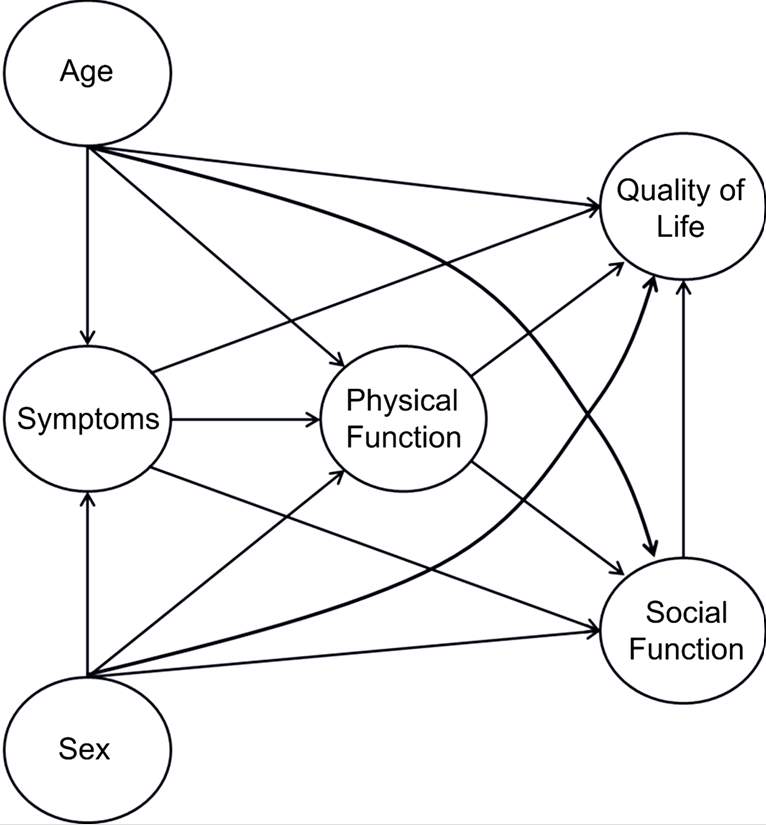
What actually drives quality of life(QoL) in #HFrEF?Analysis of 2 HFrEF registries finds low KCCQ-QoL score is driven by symptoms &social limitations(effect size 0.48-0.60)less by physical limitations alone(effect size=0.34) Findings held across age & sex
https://t.co/vqPCdpKTzA
Incredibly proud of this partnership between @Google & our faculty, led by Drs. @AdamRodmanMD, Mark Cohen, Jacob Koshy & Peter Brodeur, to test AMIE, Google’s patient facing conversational AI tool, in the first-of-its-kind, real world clinical study with primary care patients! ⬇️
After a decade of growth, we’re now the Richard A. and Susan F. Smith Institute for Evidence, Innovation, and Policy.
The Institute's centers will bring together bold ideas, rigorous science, and clinical expertise to improve people’s health and lives.
https://t.co/3YA6aTFxI0
@PulmCrit Journals like @opensourcecards hopefully will move the needle, but peer review, methods analysis, and revisions are tough on both ends. It’s also hard to balance truth with “fast enough”. Medicine is incremental and adoption is often the barrier - not scientific knowledge.
Acoramidis ⬆️ survival in #ATTR, but how do patients feel?
Read our 📄 in @JAMACardio!
Near 10-point KCCQ benefit, 2x more likely to be alive and stable (or even improved) with acoramidis.
Grateful for the mentorship @BrettSperryMD@MidAmericaHeart
https://t.co/GyoPeXiNxJ
Thanks sharing! I hope to see more analyses integrating health status and survival to better explain the patient centered treatment benefits. #acoramidis#ATTR#KCCQ
Additional ATTRibute-CM analyses suggest acoramidis was associated with a greater likelihood of survival with preserved or improved KCCQ-defined health status over 30 months versus placebo.
Interesting integrated look from @CharlesFoxIV at survival and patient-reported outcomes in ATTR-CM.
#HeartFailure26 #MedIQESCHF26
New in JCF–I: Do echo changes in diastolic function reflect patient health status in HFpEF?
📉 In this TOPCAT sub-study of 211 patients, changes in echo parameters over 12 mo were not linked with KCCQ changes.
🔗 https://t.co/aWD6eDls5X
#HFpEF#PatientOutcomes#JCFIntersections
@drjohnm Shared decision-making is the basis for decisions with trade offs. I think respecting patients’ preferences and empowering their voices when choosing between revasc, valve intervention, and initial oHCM treatments is highly important. I think our patients feel similarly…
@AnilMakam Kinda curious - any thoughts about the OCTAVE or OVERTURE trials? I often think about ARNI in the context of those rather than exclusively in other ACE/ARB when thinking about entresto.
@hvanspall@djc795@mad_sters@jspertus While not extensively validated, the KCCQ-SES has been linked to outcomes.
https://t.co/6ct1P8eFmc
John and I wrote the editorial as well. I think it’s an interesting relationship.
https://t.co/o2RXKuXv6m
At #ESCHF2025 🇷🇸 @MidAmericaHeart fellow Dr Omar Cantu-Martinez presents #CAREHKinHF real-world registry: >2,300 HF pts w/ hyperK risk with 9% on clinician selected patiromer.
Reduced severe HK and trend toward more optimal GDMT.
Take-home: early K⁺ control keeps GDMT on & protects heart + kidneys
Understanding patient-reported outcomes in obstructive hypertrophic cardiomyopathy (oHCM) is vital for managing treatment effectively.
We recently validated the Kansas City Cardiomyopathy Questionnaire-12 (KCCQ-12) in this population. Here’s why it matters:
A quick🧵
https://t.co/I6AI4zSCkw
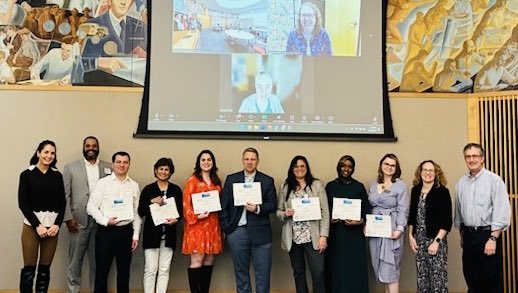
Congratulations TIARA Scholars implementing evidence into practice!
👏🏻
Today was the Certificate Ceremony & Keynote on the
“Future of Implementation Practice” with @AnneSales4@HealthcareUMKC@FrontiersCTSI
🩺📖💕
👑
https://t.co/7hl4Jb9A4Z