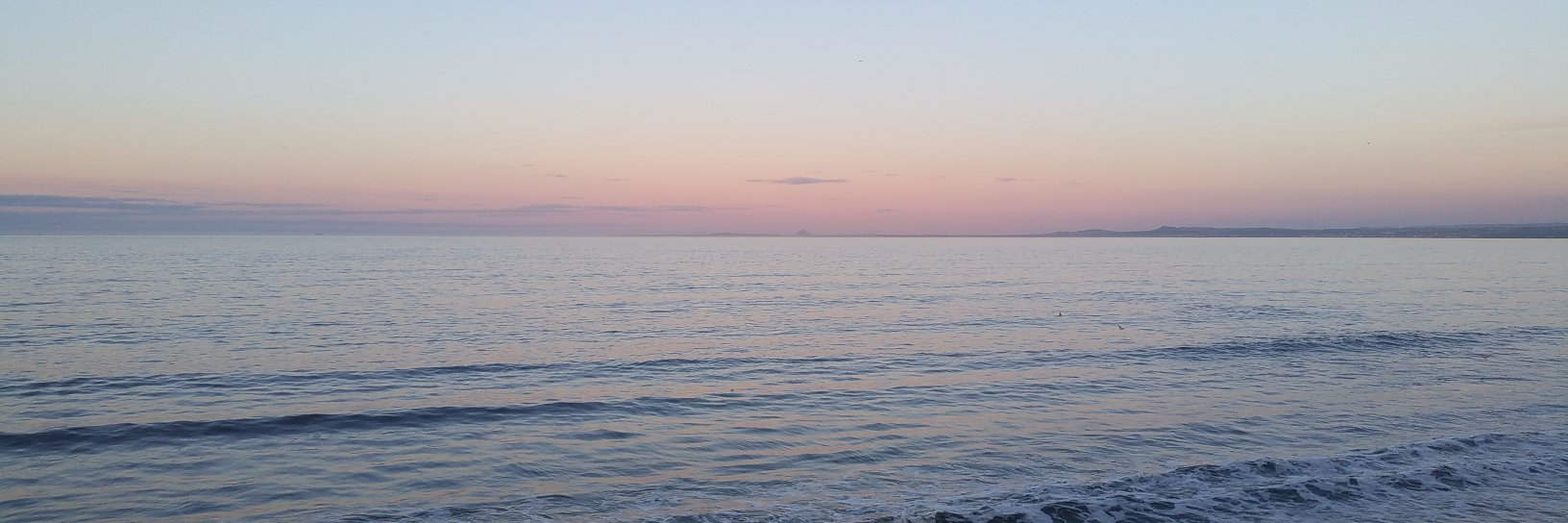
The end of an era - After almost a century we said goodbye this morning to our great companion of the airwaves Radio 4 198 LW. I shall miss her warmth and crackle. Here’s the final sign off at the end of #theshippingforecast before she fell silent… ❤️
🚨Governor DeSantis PRAISES the Scottish for being good guests in South Florida!
“We had all these Scottish people come, and they're wearing the kilts, and they're out in the streets. I mean, just drinking these bars dry, like all this stuff. Having a really, really good time, but yet, no problems. There's no rioting, no anything like that. I t was very cheerful, it was good!”
A spine tingling rendition of Flower of Scotland being belted out by The Tartan Army, before their first World Cup Finals game in 28 years.
A moment that many have waited a lifetime for. 🥹🏴❤️
Great piece from Daniel Finkelstein about Sturgeon, but why did you ever have to treat her as sage or a titan? Her calamitous failure in government on every metric, along with her inexplicable crusade against women's rights have damaged Scotland badly. All in plain sight.
Having seen horrifying bodycam of Henry Novak’s murder, I’m struck by the officers’ shocking incompetence
They accepted the killer’s story at face value, failed to properly assess the situation, and made errors with devastating consequences
IOPC need to expedite their inquiry
I’m making a show about buildings.
The concept is simple: do for the man-made world what Planet Earth did for the natural world.
But, when I pitched the idea, the answer was that nobody would watch it.
So I released a pilot episode on YouTube. It’s got 5.4 million views, 379k likes, and 23k comments.
People are interested, and now it’s time to make the full show.
Six episodes, filming in the UK, France, Belgium, Germany, Italy, and the USA, and releasing on a streaming service like HBO, Netflix, or Prime.
Why does this show matter?
First: we’re surrounded by buildings all the time. Look around yourself, right now… what do you see? Buildings are the logical conclusion of everything a society believes in. That’s the real focus of this show: not the buildings themselves, but what they say about us.
Second: there’s global dissatisfaction with modern architecture. This feeling gets written about online, but nobody’s given a voice to it on film or TV. That’s what this show will be. But this isn’t just about criticising modernity. That’s easy. This is about learning from the past in order to understand and improve the present, for everybody.
Third: there’s a drought of high-quality culture shows. When I spoke to film executives they said that only documentaries about sports, music, or true crime get funded. That’s a colossal missed opportunity. Galleries are always full, content about architecture goes viral online all the time, and people spend their precious holidays visiting beautiful cities.
Why no shows about architecture, then?
Tourists flock in their millions to see (for example) the buildings of Antoni Gaudí in Barcelona. But, if you asked those same people if they’re interested in “architecture”, they’d probably say no.
To put that another way: not many people want to watch “a show about architecture”, but lots of people want to watch a show that illuminates the real world they’re living in, each and every day.
What will the show be like?
Six episodes, going chronologically through history and arriving at the present, each focussing on the architecture and design of a specific period:
1. Middle Ages
2. Renaissance
3. Enlightenment
4. The Nineteenth Century
5. Art Nouveau & Art Deco
6. Present Day
But, in each case, the point isn’t just to learn about that era; the point is to learn about our modern world through those eras and what they’ve left behind. If you watch the pilot episode (included below) you’ll see what I mean.
So the show’s not really “about” the past; it’s about the twenty-first century.
That’s why it’s called The Modern World.
When you think of a typical history show there are loads of interviews, stock footage, archive photos, historical recreations, and graphics. We’re doing none of that. Everything will be filmed on location, because we’re telling our story only through the real world that exists right now. And, rather than going to the most obvious places, we’ll focus on buildings that aren’t well-known but should be more famous.
But that’s all big picture; what will it be like on screen?
Buildings used to look different in every country, and now they look the same. Why? Because the weather is different everywhere, and buildings were always a way of dealing with that weather, using local materials. Now we have air conditioning and we ship concrete around the world, so we don’t need to design our buildings with regard to local weather or rely on local materials.
Look at really old clocks and you’ll notice something: they don’t have a second hand… because it was only invented 300 years ago! Then you look at the present and you realise we’re surrounded by timers, by seconds ticking down and ticking up relentlessly. If we’re looking for a cause of our anxiety-inducing culture, that might be it.
When you spend time with the sun-softened bricks and time-warped timbers of old cities you notice that synthetic materials like plastic have taken over. When we’re surrounded by things that feel temporary, how do you think it makes us feel?
It’s only by seeing 19th century train stations, designed like cathedrals, that you realise tradition and technology aren’t enemies. New things don’t have to look boring: if the Victorians had designed AI data centres, they’d look like Medieval castles.
In the 1920s, at the zenith of Art Deco, people believed technology would uplift humanity. That’s why they decorated their buildings with statues inspired by electricity. Only by seeing their enthusiasm can we realise our own cynicism, and perhaps begin to fix it.
All of that… and much, much more.
But, above all else, this show is about a way of seeing. If you want to understand any society then you need to look at what it creates, not what it says about itself.
There’s a worldview in every single object; our skyscrapers are designed the same way as our phones. Learn to look at this world, to notice its details, and everything else starts to make sense.
What now?
I’ve been quiet online recently because I’ve been researching and working on scripts for six full-length episodes. Production begins when we’ve raised the funding.
The Modern World is coming.
Further to Blair. Literally every honest sensible person in all the main parties privately agrees with all these propositions:
- welfare spending is too high and is throwing good people on the scrapheap
- defence spending is too low
- the triple lock is unsustainable
- without cheap energy we cannot exploit the AI revolution
- we should be investing in EVERY form of energy: renewables, nuclear and the North Sea
- migration needs to be controlled to boost social cohesion and because the boats look like a huge failure of the state
- any new relationship with the EU will be imposed on us until we are stronger and cannot involve the closeness some desire without freedom of movement
- we are deeply embedded with America in ways which the public does not understand and cannot be told and however joyous it makes us feel to hate Trump, disengagement at the deep state level is not only wholly unrealistic but also undesirable
- Whitehall needs a total overhaul so specific project expertise and political appointees can be brought in quickly
Blair basically says all that.
The one thing he doesn’t say and which the same group of people agree on is this and it’s something Blair left behind:
- judges and quangos have too much power, are unaccountable and without redressing the balance in favour of parliament it is very difficult to do anything big fast
- the bare minimum that needs to change in this regard is to reform judicial review and planning law so we can put building and economic growth ahead of newts and NIMBYs
None of that above really ought to be up for discussion. It is all common sense but not one of our politicians will publicly say all of it
Whatever you think of Blair, engage with what he’s saying not how he makes you feel. The bare minimum we should expect from any leader is that they have an analysis of the current situation and a plan to deal with it which is as coherent and realistic as his intervention. Pretty well every critique I’ve read so far has failed to meet this requirement.
Over to Andy and Keir and Kemi and Nigel and Zack and all the others
The first definite error is they claim floorspace per person in London has increased 30% in a decade. For this to happen, every new home built in London would need to be 260 sqm (2800 sqft!). The likely explanation is mixing up data columns.
https://t.co/vtiRE1eQ7k
A thread on the 50 best fortifications to go and visit in the world according to me. They are all fun for at least one in the family. They are listed in reverse rank order as determined by how much fun, unique and awesome they are.
The European Service Module put on a powerful demonstration of Europe’s capability to deliver critical elements for ambitious international exploration missions. On behalf of @ESA, I would like to sincerely thank all our industrial partners across Europe for their dedication, professionalism and relentless focus on quality.
This success reflects years of close cooperation, engineering excellence and trust between ESA and European industry. In particular, I would like to recognise @AirbusSpace, as prime contractor of this complex and truly pan‑European effort.
Welcome home to the crew!
And splashdown!
America is back in the business of sending astronauts to the Moon and bringing them home safely.
Reid, Victor, Christina, and Jeremy did an outstanding job. These talented astronauts inspired the world and represented their space agencies and nations as humanity’s ambassadors to the stars.
This was a test mission, the first crewed flight of SLS and Orion, pushing farther into the unforgiving environment of space than ever before, and it carried real risk. They accepted that risk for all we stood to learn and for the exciting missions that follow, as we return to the lunar surface, build a Moon base, and prepare for what comes next.
And they were not alone. The entire NASA workforce, our commercial and international partners, and the hopes and dreams of people all over the world were with them. The astronauts know it, and you should too. This mission would not have been possible without you.
Congratulations. Artemis II, mission accomplished.
This is the shot you can’t get from the press site. This camera was sitting a few football fields from the SLS rocket at Pad 39B for days before launch, baking in the Florida sun, surviving rain, humidity, and whatever else the Cape threw at it. No photographer behind the viewfinder. Just a camera, a sound trigger, and a bet.
The way pad remotes work: you set your camera up days in advance, dial in your composition, lock everything down, and walk away. You don’t touch it again until after the launch. The shutter fires on sound activation
with a @MiopsTrigger smart+ trigger. With SLS, the four RS-25 engines ignite six seconds before the solid rocket boosters, so the camera is already firing before the vehicle even leaves the pad. You get home, pull the card, and find out if you nailed it or if a bird landed on your lens two days ago and left your a present and you got 400 photos of soemthing crappy.
There’s no formula for protecting your gear this close. Some photographers build wooden boxes with doors that pop open. Some use plastic bags and tape. Some do plastic or metal barn door rigs on hinges. I tend to leave mine open just in plastic rain covers because boxes limit my composition and setup time, but that means your cameras are more exposed to the elements and whatever energy and debris comes off the pad. You’re basically gambling a camera body every time you set one.
That’s what I love about this genre. There’s no playbook. You make it up as you go. Every time is an adventure.
📸 credit: me for @SuperclusterHQ - Artemis II pad remote | ~1,000 ft from Pad 39B | Kennedy Space Center