That's embarrassing!
Hundreds of cancer papers mention cell lines that don’t seem to exist
Finding could be an indicator of paper mill activity
#researchintegrity#ethics
https://t.co/KyAhuLGsfh
Important work from @Danielle_J_Oste revealing yet another example of the Replication Crisis and the ongoing issues with research integrity. This time in cancer cell lines.
H/T @tobyhudson
https://t.co/8vPv80K7TN
The ramifications of this @smh story on medical research are v. concerning. Once misinformation is published, even if retracted, it still exists to be quoted and requoted. Tks to @Danielle_J_Oste & @JAByrneSci for yr work. https://t.co/C3zL8ngAOb
♨️ ‘Keeping Up With Fakery’ in a @ScienceMagazine blog today: Derek Lowe covers 2 of my latest papers on ‘tortured papers’ (w/ @alexcla99 et al.) and misspellings of cell lines aka ‘miscellings’ (w/ @Danielle_J_Oste et al.) 😊 https://t.co/NQC4TNrd17
“Misspellings or ‘miscellings'-Non-verifiable and unknown cell lines in cancer research publications”
Oste D [..] Byrne J. Int J Cancer. 2024-05-15.
https://t.co/fVO7lM5OjH
@kaveh1000@STMAssoc gen AI in PS gives you 3 options to choose from, and it is also possible to rate the generated images, so that the software will learn to produce more rsuccuessful results going forward.
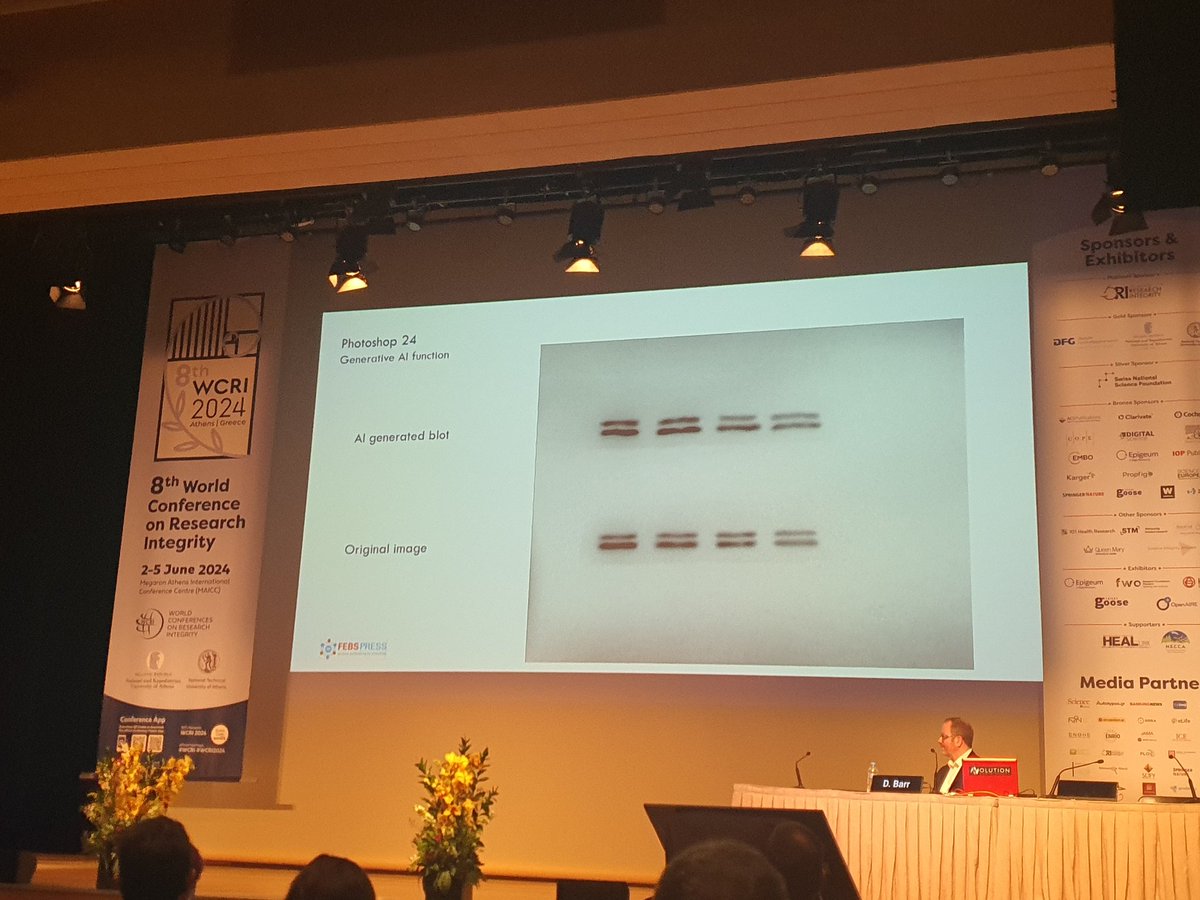
Special mention to @Image_Integrity for identifying how common visual processing softwares like photoshop can be used to manipulate images. Generative AI can be used to fill in western blot or micrograph images and this is hard to detect with our current tools... #WCRI2024
Congrats 👏👏👏 to our very own PRIMeR team member, the amazing @Danielle_J_Oste who presented "Non-verifiable cell lines in cancer research papers describing human gene research" (PP-068) at #WCRI2024. @JAByrneSci
Article available ⬇️
https://t.co/lK74XXXzM7
An amazing social night at #WCRI2024, very tired but also very happy to have met some amazing people. A great taste of #greek culture and diaspora with the dances that were performed at the end and the wonderful food. @Danielle_J_Oste @JAByrneSci
Research integrity sleuths may have found a new red flag for identifying fraudulent papers, at least in cancer research: Findings about human cell lines that apparently do not exist. https://t.co/dDiHM0anx7
Research integrity sleuths may have found a new red flag for identifying fraudulent papers, at least in cancer research: Findings about human cell lines that apparently do not exist. https://t.co/bPwlSZt2Ag