🏔️What can the Alps and the Himalayas learn from each other?
In #Sikkim, 🇨🇭🇮🇳 experts have been working together to better understand and prepare for #GLOFs.
🎬 Watch the collaboration in action: https://t.co/EgFcH62Gou
@SwissDevCoop@ndmaindia@SSDMA1
Remembering Ndakasi 🦍
What you see below is not just a photograph.
It is a final farewell.
A promise kept until the very last breath. It is an image of love ~ rare, quiet, stronger than fear, loneliness, and even death. A story that cannot be forgotten.
Ndakasi was a Mountain Gorilla. When she was just two months old, rangers in Virunga National Park — deep in the heart of Congo — found her clinging to the lifeless body of her mother, who had been killed by poachers. She didn’t run. She held on tightly to her mother, as if she could still save her.
That’s when André Bauma appeared ~ a young wildlife ranger. He had nothing but his bare hands. He picked up that small, trembling body and held her to his chest. He stayed with her the entire night, warming her with his own body, praying she would survive. And she did.
From that moment on, they were inseparable. Ndakasi was taken to the world’s only orphanage for mountain gorillas — the Senkwekwe Centre. There, she learned to breathe again. To trust again. To live again.
Over time, she became well known. In 2019, a photo of her went viral — standing upright, smiling, eyes fixed on the camera as if to say: “I’m here. And I’m okay.”
Millions shared that photo with a smile. But few knew the story behind it.
Because Ndakasi wasn’t just a “funny Gorilla.” She was a survivor. Of war. Of poachers. Of the destruction of her home. Of isolation. And despite everything ~ she still knew how to love.
Because for fourteen years, she had someone who never left her side. André was her home. Not just a caretaker — a friend. The one constant in a world full of chaos.
Then came illness. Her body grew weaker each day. But André never left her. He watched over her without pause. Without words. And when she knew the end was near, she did the one thing she knew best:
She laid her head on his chest ~ and fell asleep. Forever.
Imagine that moment. The silence after the last breath.
A heart still beating ~ shattered. And the gentle weight of trust that had just let go.
That is love. Not in grand gestures, but in presence.
In hands that never let go.
In eyes that never look away.
In a bond that needs no explanation.
Ndakasi wasn’t just a Gorilla.
She was a friend ~ a creature who walked through hell and still blossomed, thanks to care and tenderness. She was a piece of nature that looked us straight in the eye and asked: “And you? What are you doing with the love you’ve received?”
Remember her name: Ndakasi. The Gorilla who made the world smile, and passed away in the arms of the man who loved her until the very end.
Let her story enlighten us.
Let her memory remind us that every living being deserves respect, protection…and a heart ready to hold it ~ even in its final moment.
You will NEVER be forgotten Ndakasi. 😢
Strengthening 🇨🇭-🇮🇳 collaboration for #ClimateResilience & #DisasterRiskReduction!
At @ndmaindia’s 21st Formation Day, 🇨🇭shared efforts on #GLOFs & #heatwaves via:
🔹Delhi Heat Action Plan 2025 (Swiss Embassy's BeCool project)
🔹SCA-Himalayas II (GLOF risk management in Sikkim)
The Swiss government has adopted the regulatory amendments to national legislation needed for the free trade agreement (#TEPA) between 🇮🇳 and 🇨🇭.
The agreement, which has provisions on sustainable development, takes effect on 1 October.
Read more 👉https://t.co/qYmiZzFxYf
Switzerland has just released Apertus, its first large-scale open-source language model. Developed by EPFL, ETH Zurich and the Swiss National Supercomputing Centre, Apertus sets a new standard for transparent, multilingual and trustworthy AI.
ℹ️ https://t.co/Tsiwtl6eIs
Springs form the primary water source for over 50 million people in the Indian Himalaya. But springs are drying - and they’re drying fast.
This #WorldWaterWeek, our newly published booklet ‘Science in Spring Restoration’ brings you the stories, science, and results of our action research for springs revival across the Indian Himalayan Region.
Download the guide for:
🔹A proven six-step protocol for springshed management
🔹Success stories from Manipur, Uttarakhand and more
🔹Field-tested recharge interventions
🔹Policy insights for scaling across the region
Explore how this initiative – supported by the Swiss Agency for Development and Cooperation (SDC) under the Strengthening Climate Change Adaptation in Himalayas (SCA-Himalayas) project and implemented by ICIMOD and partners - has strengthened local capacities, empowered institutions, and delivered tangible gains to mountain communities in water security and climate resilience.
https://t.co/aW7fyvJLJw
#WorldWaterWeek #SpringRestoration #ActionResearch #IHR #HKH #WaterSecurity #ClimateResilience #SCAHimalayas @SwissEmbassyIND@SanjeevBhuchar
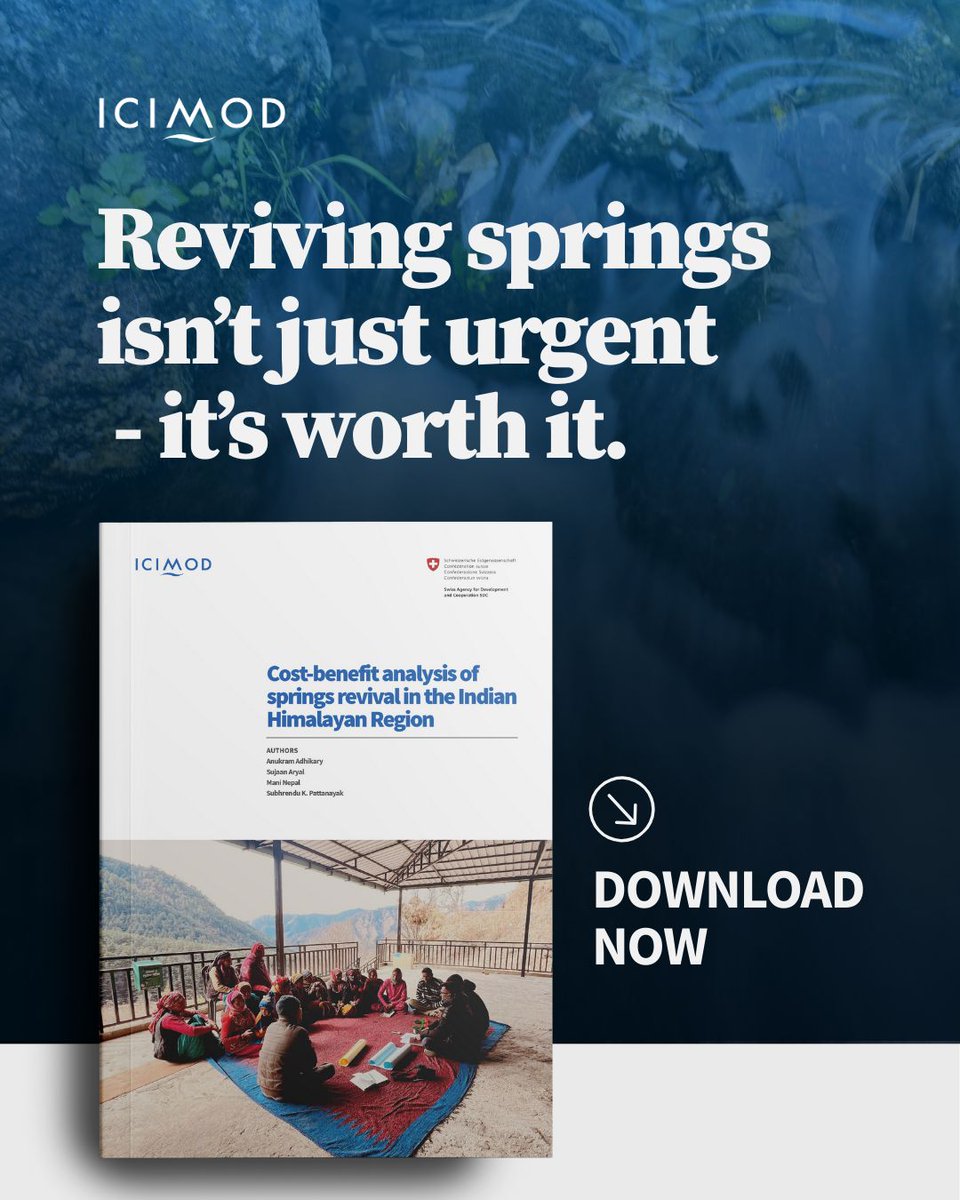
Since the 1990s, nearly 1.5 million springs in the Indian Himalaya have been disappearing.
Reviving springs is urgent.
But are the costs of revival worth the benefits from it?
A cost-benefit analysis of springs revival by a group of economists from the South Asian Network for Development and Environmental Economics (SANDEE) reveals the multifaceted benefits of investing in spring revival.
Household monthly gains worth USD 12 on account of access to safe water can go a long way in ensuring water, food, health and livelihood security of the mountain communities and in preserving the delicate ecosystems of the region.
To know more, read the full report here: https://t.co/oCRuiHPHQU
This report is supported by the Swiss Agency for Development and Cooperation (SDC) under the Strengthening Climate Change Adaptation in Himalayas (SCA-Himalayas) project.
#WorldWaterWeek #SpringRestoration #SANDEE #HKH #SCAHimalayas #WaterSecurity #ClimateResilience @SwissEmbassyIND@Mani_Nepal@SanjeevBhuchar@FromSANDEE
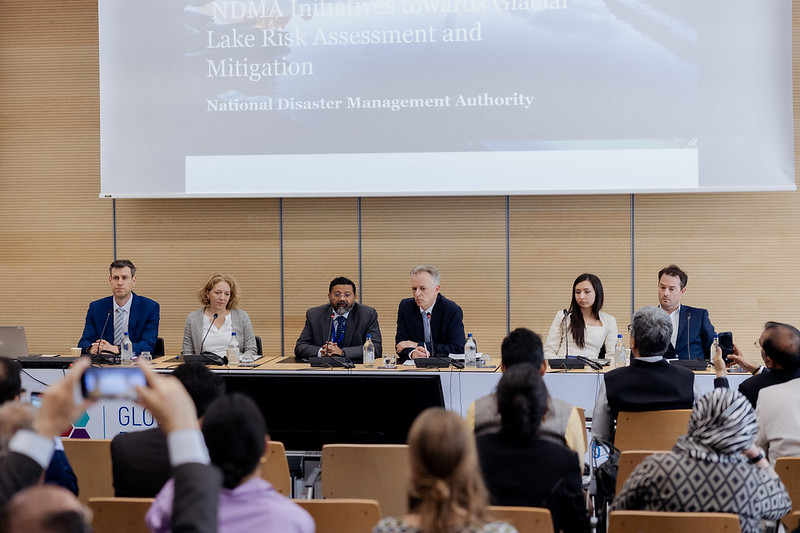
Mountains face rising GLOF risks due to climate change. At #GP2025, experts gathered to share solutions, strengthen partnerships, and showcase projects like Indo-Swiss #SCAHimalayas.
Watch the full session here👉https://t.co/BCB09y9h02
The tragic glacier collapse in Blatten 🇨🇭(28 May) shows why #GLOF risk matters now more than ever.
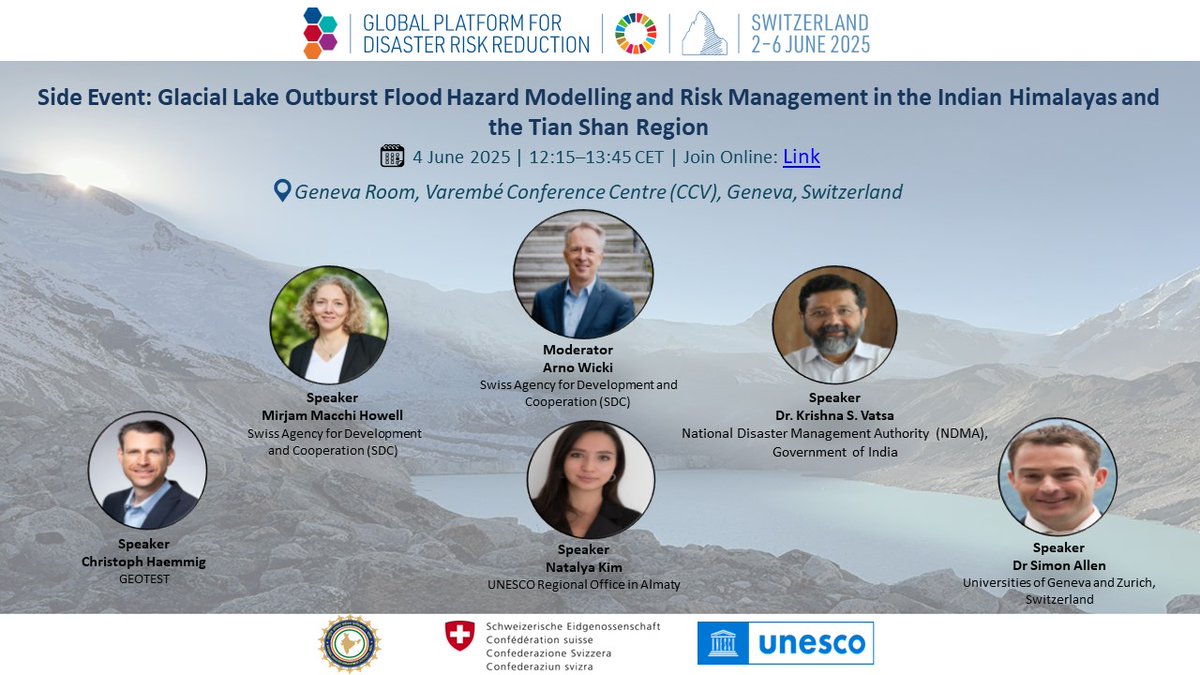
Join our side event at #GP2025 on 4 June in Geneva to explore how 🇨🇭🇮🇳🇰🇿 partnerships are advancing early warning & low-cost solutions.
🗓️Info & link: Join👉 https://t.co/xixpaTvsQD
As the Global Platform for Disaster Risk Reduction 2025 opens in #Geneva, watch our film on how #Swiss expertise contribute to #India’s @NDRFHQ efforts to meet int'l INSARAG standards, strengthening urban search & rescue capacity Asia.📽️ 👇 https://t.co/W5Lv9NmuFP
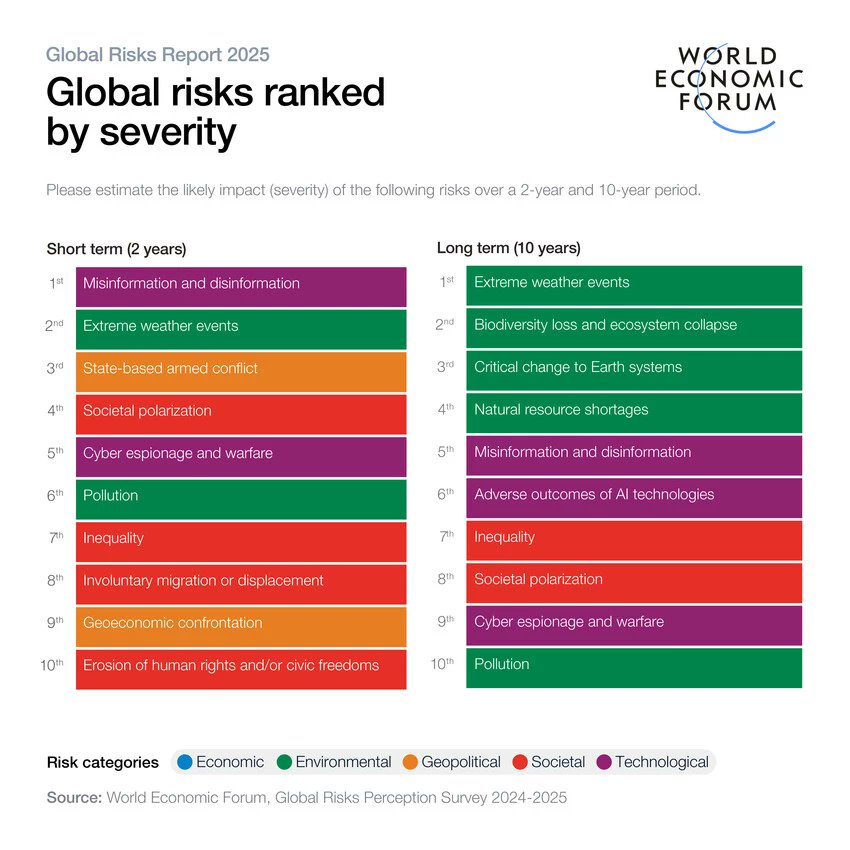
🚨 @WEF Global Risks Report 2025: Extreme weather events rank as the second-highest risk in the 2-year outlook and the top risk in the 10-year outlook.
🔗 https://t.co/fGFPjH4slN
🚨 New DRR Practitioner Handbook Alert!
Navigating disasters in fragile, conflict, and violence-affected settings (FCV) requires context-specific strategies. This handbook offers practical guidance, tools, and case studies to strengthen resilience and ensure inclusive, effective DRR.
📥 Be a driver of change: Access now and mainstream the learnings in your work 👉 https://t.co/TEAsaoBE5X
🤝@roteskreuz_de, @GermanyDiplo, @ICRC, @RCClimate
🌱 These 5️⃣ examples show AI is boosting climate adaptation in developing countries by boosting 📢early warning systems, 🪵🌲forest resource management, 🚜 agrifood systems, and 📊risk assessments.
Read more from @UNFCCC ➡️ https://t.co/HTna7qg7sV
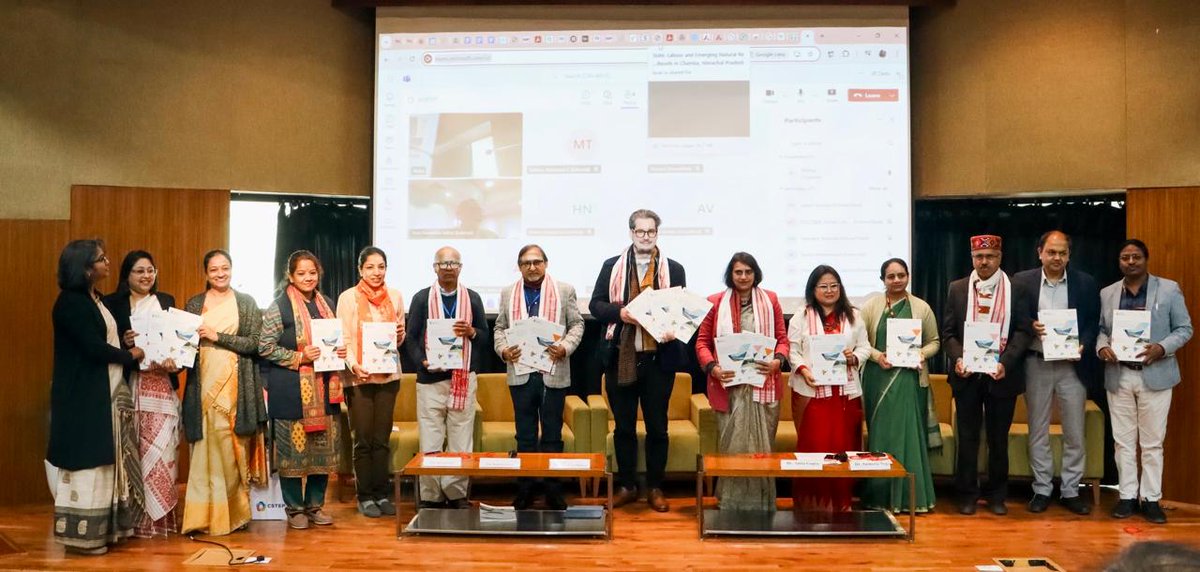
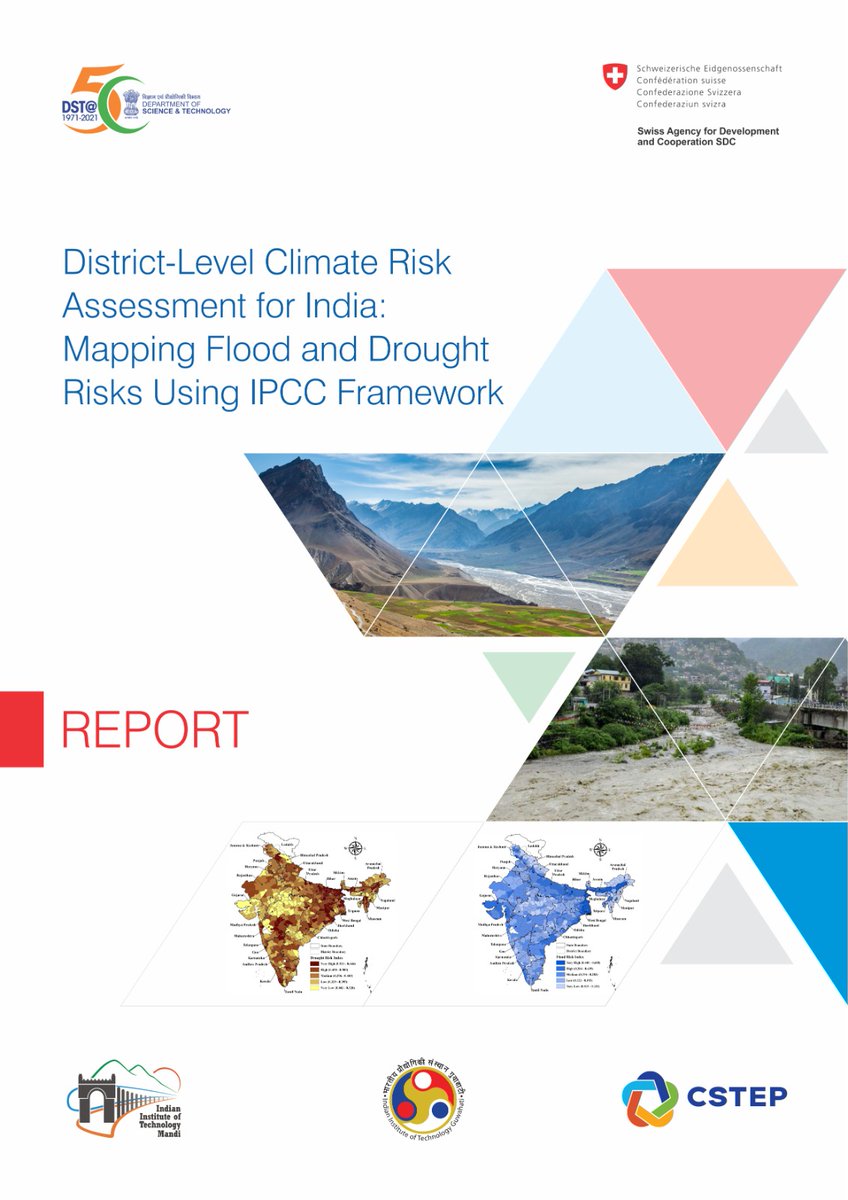
@IITGuwahati , @iit__mandi & @CSTEP_India Bengaluru release a landmark District-Level Climate Risk Assessment report mapping flood & drought risks for 690 districts using the IPCC framework. Report was released by DST and SDC in presence of @DirectorIITG and @Dir_IIT_Mandi .